
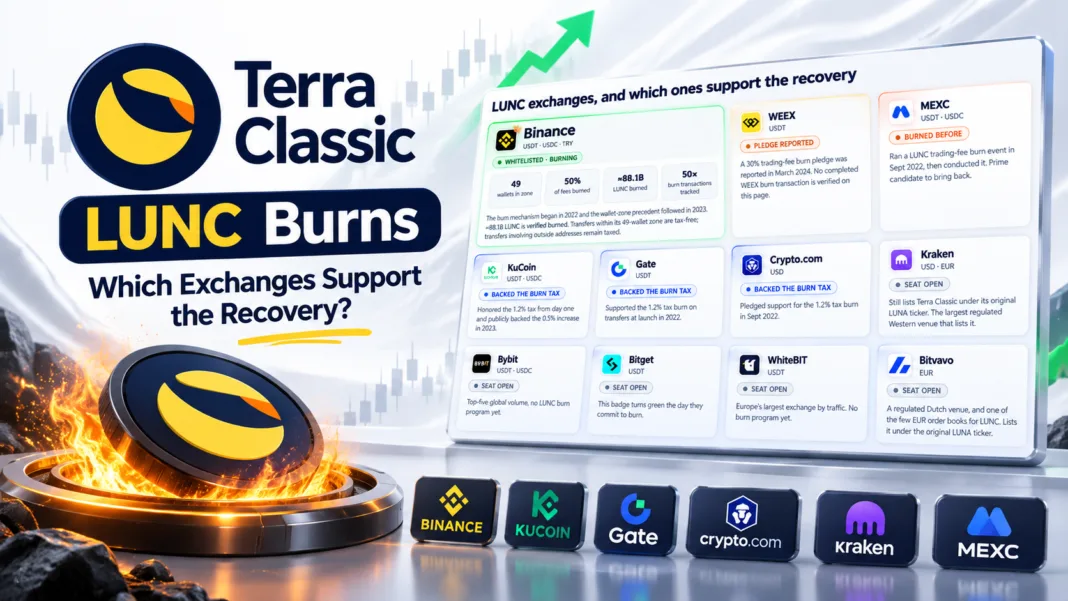

The Terra Classic ecosystem’s recovery depends on more than community activity and network upgrades. Exchange participation, trading access, and transparent token-burn mechanisms also play an important role. The exchange overview compares major trading platforms by their reported support for LUNC burns and their listing status.
Binance is highlighted as a key participant, with the dashboard identifying it as “whitelisted” and “burning.” The displayed figures include 49 wallets in the zone, 50% of fees burned, approximately 88.1 billion LUNC burned, and 50 tracked burn transactions. The accompanying note says the burn mechanism began in 2022 and that a wallet-zone precedent followed in 2023. It also describes transfers within the 49-wallet zone as tax-free, while transfers involving outside addresses remain taxed.
Other exchanges are assigned different status labels. WEEX is marked “pledge reported,” with the note referencing a 30% trading-fee burn pledge announced in March 2024; the page says no completed WEEX burn transaction is verified there. MEXC is marked “burned before,” referring to a LUNC trading-fee burn event in September 2022. KuCoin, Gate, and Crypto.com are shown as having backed the burn tax, while Kraken, Bybit, Bitget, WhiteBIT, Bitvavo, Bitkub, BingX, Phemex, and LBank are marked “seat open” in the overview.
These distinctions matter. A past contribution, public pledge, tax-support statement, and ongoing verified burn are not equivalent forms of participation. Clear status labels help readers assess the evidence without treating every exchange as an active burner.
For Terra Classic, broader exchange engagement could support visibility, liquidity, and community confidence. However, sustainable progress depends on transparent reporting and measurable follow-through. As exchange policies evolve, users should check current platform announcements and on-chain records before drawing conclusions.
The overview offers a useful snapshot of reported exchange involvement, while reinforcing the importance of verifiable data in evaluating LUNC’s long-term recovery.