
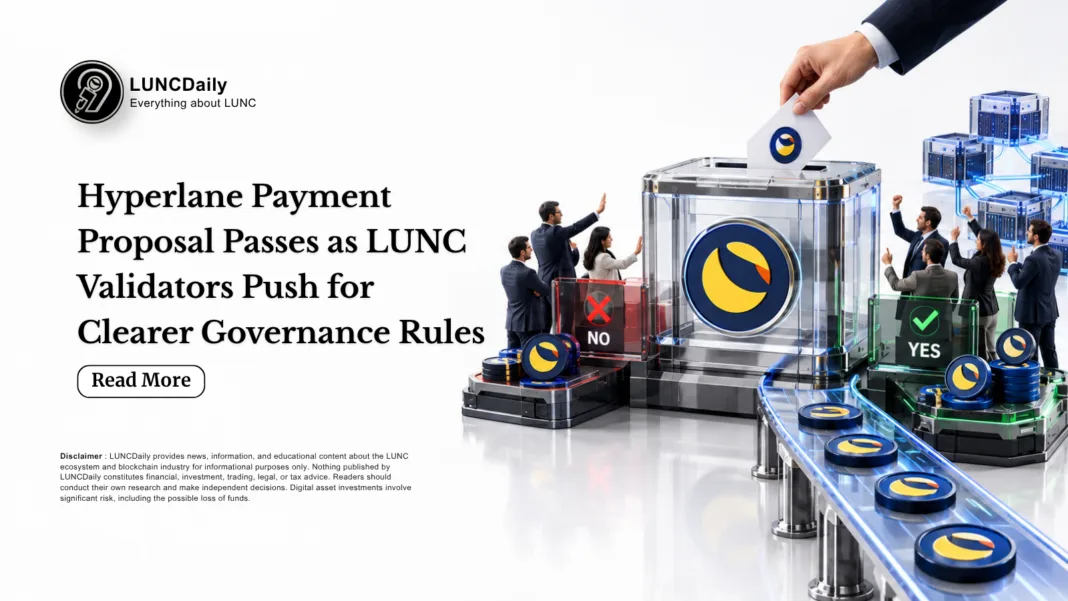

A Few $LUNC Validators Finally Step Up to Establish Governance Rules
Terra Classic governance has reached an important moment as several validators stepped up to support proposal #12232, which requests payment for completed Hyperlane work. The proposal was close to rejection before gaining enough support to pass.
The outcome highlights an important issue for the Terra Classic community: the need for clear governance rules covering development work, payment agreements, and accountability.
While some validators opposed the proposal, others voted in favor, helping it secure the support needed for approval.
However, the voting process also raised questions about the participation of major validators. Allnodes and DutchLUNC, identified as the top two validators in the information provided, did not cast votes on the proposal.
Proposal #12232 Highlights the Need for Clear Governance Rules
Proposal #12232 requests payment for Hyperlane work that has already been completed. The disagreement surrounding the proposal highlights the importance of establishing clear rules before development work begins.
For blockchain projects, payment agreements should ideally define the scope of work, approval requirements, payment conditions, and responsibilities of all parties involved. Clear agreements can help prevent disputes and provide developers with greater certainty when contributing to an ecosystem.
From this perspective, rejecting payment after work has been completed raises questions about whether the original agreement and its payment conditions were clearly established and followed.
However, completing the work does not automatically guarantee payment. The terms of the original agreement and the conditions attached to the proposal remain important when determining whether the requested payment is justified.
The broader lesson for Terra Classic is that governance procedures should be clear before funds are committed, rather than becoming a source of uncertainty after development work is finished.
A Few Validators Step Up to Support the Proposal
As proposal #12232 moved closer to rejection, several validators voted in favor, helping it secure enough support to pass.
Their participation demonstrated how validator decisions can influence governance outcomes. In Terra Classic, validators play an important role in determining whether proposals receive sufficient support from the network.
When a proposal faces rejection, active participation becomes particularly important. Validators must evaluate the proposal, consider its implications for the ecosystem, and communicate their voting positions to the community.
The passage of proposal #12232 also reinforces the importance of applying governance rules consistently to development agreements and funding requests.
For supporters, the decision represents a step toward establishing clearer expectations for how completed work should be handled within the Terra Classic ecosystem.
Top Validators Allnodes and DutchLUNC Did Not Vote
One of the most notable details surrounding proposal #12232 was the lack of participation from Allnodes and DutchLUNC, identified as the top two validators in the information provided.
Neither validator voted yes, voted no, or abstained on the proposal.
Not voting is different from abstaining. An abstention is an explicit voting choice, while not voting means the validator did not cast a ballot.
The absence of votes from these major validators raises questions about their participation in important governance decisions. Delegators may want to review how consistently their chosen validators participate in proposals that affect the network.
However, without an explanation from Allnodes or DutchLUNC, their reasons for not voting remain unknown. A single missed vote does not establish a broader pattern of inactivity.
Why Governance Rules Matter for the Future of $LUNC
Terra Classic depends on community governance to make decisions about development, funding, network upgrades, and other important matters. Clear procedures can help make these decisions more transparent and ensure that participants understand their responsibilities.
For development payments, this means establishing agreements before work begins, defining measurable deliverables, and making payment conditions clear. These steps can reduce disagreements and help protect both contributors and the community treasury.
Validator participation is equally important. By voting and explaining their decisions, validators help delegators and community members better understand how governance decisions are made.
The discussion surrounding proposal #12232 therefore extends beyond a single payment request. It highlights the need for consistent governance procedures and active participation from validators across the Terra Classic ecosystem.
Final Thoughts
The passage of proposal #12232 highlights how validator participation can influence the outcome of a governance proposal facing rejection. The support helped the Hyperlane payment proposal pass and brought renewed attention to the need for clear governance rules within Terra Classic.
At the same time, the absence of votes from Allnodes and DutchLUNC has raised questions about the participation of major validators in important decisions.
For Terra Classic to maintain a transparent and accountable governance process, clear payment agreements, consistent procedures, and active validator participation will remain essential.
The challenge is ensuring that these principles are applied consistently to future proposals, helping the community make informed decisions about the development and direction of $LUNC.