
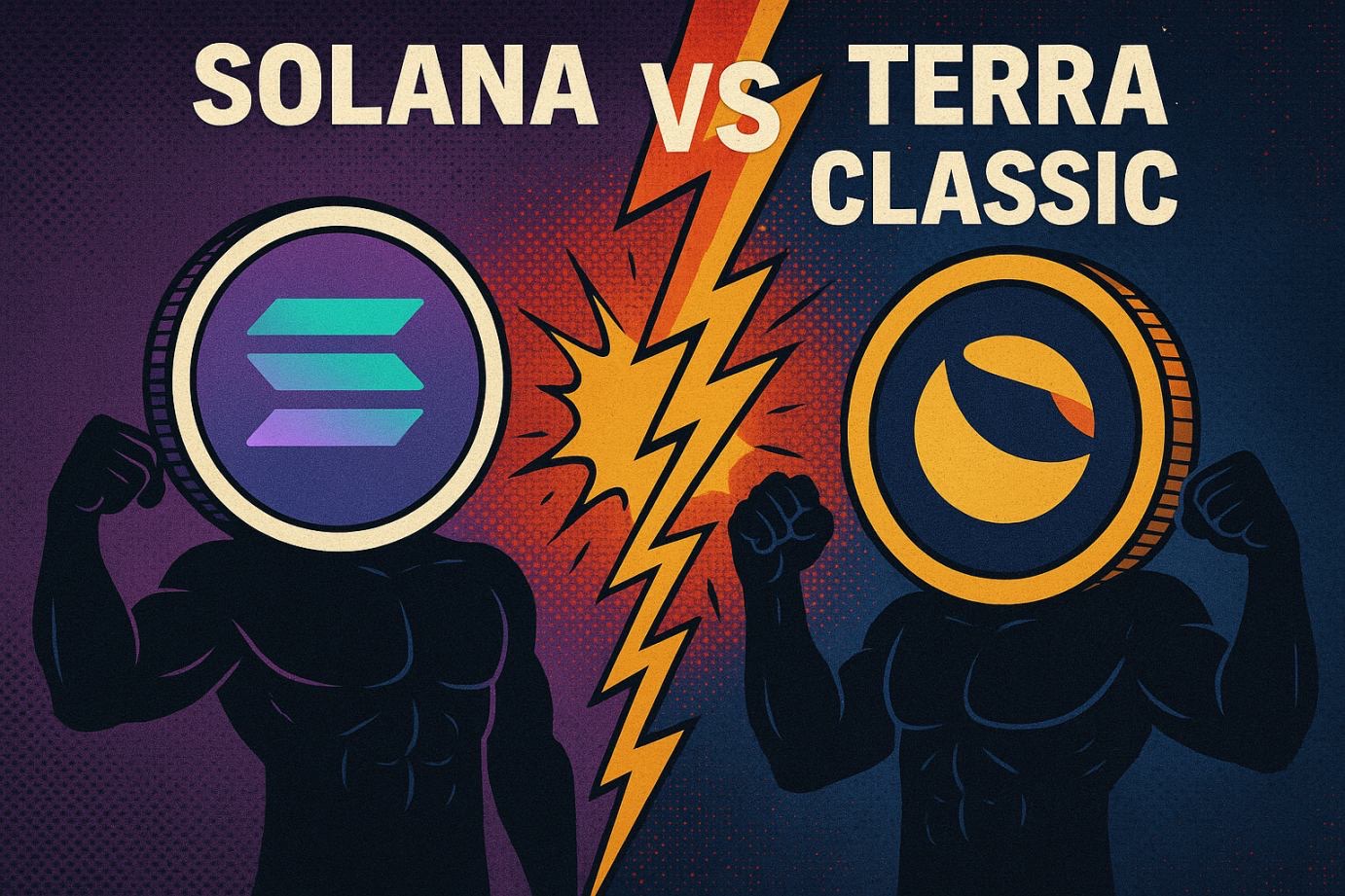

The U.S. Senate’s 66-32 vote on May 20, 2025, to advance the GENIUS Act, a bill regulating stablecoins, has thrust cryptocurrencies like Terra Classic (LUNC) into the spotlight, sparking renewed interest in its potential to compete with high-flyers like Solana. But how do these blockchains differ, and can LUNC siphon off Solana’s traffic?
Solana is a high-performance blockchain designed for speed and scalability, processing up to 65,000 transactions per second (TPS) with low fees, thanks to its Proof-of-History consensus. It’s a hub for DeFi, NFTs, and dApps, attracting developers with its censorship resistance and robust ecosystem, boasting a $78 billion market cap. However, its complexity and occasional outages raise reliability concerns.
Terra Classic (LUNC), the original Terra blockchain post-2022 UST collapse, focuses on fiat-pegged stablecoins for global payments. With a market cap of $1.4 billion, it’s a DeFi player emphasizing stablecoin liquidity and governance via staking. Its slower TPS and past instability deter some developers, but upgrades like tax simplification and enhanced security signal a comeback.
Solana prioritizes raw speed and dApp versatility, while LUNC leans into stablecoin-driven DeFi and payment systems. Solana’s developer-friendly Rust programming appeals to Web3 innovators, whereas LUNC’s community-driven model banks on loyalty and regulatory tailwinds.
To capture Solana’s audience, LUNC must leverage the GENIUS Act’s stablecoin clarity, which could spur USTC relisting on exchanges, boosting visibility. First, LUNC should accelerate its burn mechanism, reducing its 6.8 trillion token supply to drive scarcity and value, as seen in recent community proposals. Second, enhancing dApp development with developer grants could rival Solana’s ecosystem. Finally, marketing campaigns on X, highlighting LUNC’s low-cost stablecoin transactions, could lure Solana’s DeFi users.
The GENIUS Act offers LUNC a regulatory springboard, but competing with Solana demands technical upgrades and strategic outreach. By capitalizing on its stablecoin roots and community zeal, LUNC could carve out a slice of Solana’s traffic.