Home Blog Page 46

Game-Changing Proposal: Terra Classic May Skip to Cosmos SDK v0.53 with IBC v2 Eureka

0

Proposal Under Discussion: Terra Classic May Skip to Cosmos SDK v0.53 with IBC v2 Eureka

A new proposal under discussion could reshape the future of Terra Classic. Instead of upgrading first to Cosmos SDK v0.50, OrbitLabs has suggested skipping directly to Cosmos SDK v0.53.x. This approach would also enable IBC v2 Eureka support, consolidating the upgrade process and avoiding multiple mainnet disruptions.

Why the Change Is Being Considered

The proposal highlights three main benefits of a direct upgrade:

  • Efficiency: One mainnet event instead of two, reducing complexity.
  • Future proofing: Cosmos SDK v0.53.x is the latest stable release.
  • Interoperability: Full IBC v2 Eureka support, unlocking hub and spoke routing across the Cosmos ecosystem.

Key Points in the Proposal

The suggested plan includes:

  • Migrating directly to Cosmos SDK v0.53.x and Wasmd v0.61.x.
  • Upgrading IBC Go to v10.x with IBC v2 routing logic.
  • Testing on the rebel 2 testnet with extended validation for IBC v2 message flows.
  • Updating validator documentation for a single step upgrade process.

Budget Under Review

The proposed budget stands at $56,000 USD, divided into:

  • Phase 1 ($40,000): Testnet implementation, validation, and documentation.
  • Phase 2 ($16,000): Mainnet preparation, governance proposal, and post upgrade monitoring.

This is $8,000 higher than the earlier v0.50 proposal, reflecting the broader scope of work and extended testing required.

Timeline If Approved

The draft timeline outlines a 13 week process, starting with code migration and testnet deployment, followed by two weeks of extended IBC v2 testing, and concluding with governance submission and a potential mainnet upgrade.

Risks and Considerations

The community is reviewing potential risks such as optional SDK v0.53 features and interoperability bugs with IBC v2. Proposed mitigations include disabling unnecessary modules and running end to end multi chain tests before any mainnet rollout.

What This Means for Terra Classic

If the community approves this proposal, Terra Classic would:

  • Transition directly to the latest Cosmos SDK release.
  • Gain IBC v2 Eureka support for expanded interoperability.
  • Avoid the cost and downtime of two separate upgrades.

For now, the plan remains under community discussion, with validators and developers actively providing feedback before any governance vote.
Terra Classic Upgrade to Cosmos SDK v0.53 + IBC v2 (Eureka) from Orbit Labs

Executive Summary

Following Proposal 12142 and feedback from the community and validators on the original v0.50 upgrade plan, OrbitLabs proposes upgrading Terra Classic directly to Cosmos SDK v0.53.x — skipping the intermediate v0.50 mainnet deployment.

This approach is more efficient because we skip the intermediate SDK v0.50.x upgrade entirely and move directly to SDK v0.53.x

By going straight to SDK v0.53.x, we consolidate the migration effort, avoid two separate mainnet upgrade events, and still deliver all the benefits originally planned – plus IBC v2 (Eureka) support.


Motivation

  • Efficiency: Single mainnet upgrade event, reducing the collaboration/testing effort for mainnet upgrade
  • Future-proofing: SDK v0.53.x is the latest stable long-term release.
  • Interoperability: Enables IBC v2 (Eureka), unlocking hub-and-spoke routing through Cosmos Hub.

Scope of Work

1. SDK & Module Upgrade

  • Migrate main modules to SDK 0.53.x compatible – Cosmos SDK v0.53.x – Wasmd v0.61.x

2. IBC-Go v2 (Eureka) Enablement

  • Upgrade IBC-Go directly from v7.10.0 to v10.x.0 
  • Enable IBC v2 routing logic in app wiring and parameters.
  • Validate IBC v2 message flow (e.g. multi-hop MsgTransfer) between two Cosmos SDK v0.53 chains.

3. Testnet & QA

  • Deploy on rebel-2 testnet with v0.53.x + IBC v2 enabled.
  • Run: – Channel/connection handshake tests. – ICS-20 token transfer tests. – IBC v2 message routing tests (two-chain environment).
  • Further tests on Wasm and SDK messages to verify continued normal operation after the upgrade.
  • Publish test results and known issues for dApp developers and validators.

4. Documentation

  • Update validator runbooks for single-step upgrade to v0.53.x.
  • Document breaking changes if any
  • Provide examples of IBC v2 message format for integrators.

Comparison to Previous Proposal

Area Original Proposal (v0.50) Updated Plan (Direct to v0.53)
SDK v0.50.x v0.53.x (latest stable)
IBC IBC-Go v8 (classic) IBC-Go v10 (IBC V2 / Eureka) enabled
Workload Core migrations (store upgrades, SDK base changes) Same + small delta for SDK 53 changes + IBC v2 wiring
Test Focus dApp compat, store integrity Same + IBC v2 message flow between SDK chains
Execution Two upgrade events (v0.50 then v0.53 later) Single upgrade event

Budget

The total budget for this combined upgrade is $56,000 USD, split into two phases to ensure accountability and align with deliverables:

  • Phase 1: Testnet Implementation & Validation — $40,000 USD – Code migration directly to Cosmos SDK v0.53.x (including CometBFT v0.38.x, Wasmd v0.61.x and IBC-Go v10.x). – Rebel-2 testnet deployment and monitoring. – Extended IBC v2 (Eureka) message testing between two SDK v0.53 chains. – Publication of preliminary documentation and dApp guidance.

  • Phase 2: Mainnet Execution & Post-Upgrade Support — $16,000 USD – Preparation of mainnet upgrade governance proposal. – Validator coordination and upgrade support. – Mainnet upgrade execution and immediate post-upgrade monitoring.

Incremental Effort: The additional $8,000 USD (compared to the original $48,000 proposal) accounts for:

  • Migration to SDK v0.53.x instead of v0.50.x.
  • IBC-Go v10.x and IBC v2 (Eureka) enablement.
  • Longer testing phase to validate IBC v2 functionality.

The LUNC equivalent for each phase will be calculated at the time of its respective community spend proposal submission.


Timeline

Week Milestone
1-8 Core upgrade execution: code migration to SDK v0.53.x, Wasmd v0.61.x, ibc-go v10.x.0, and rebel-2 deployment
9-10 Extended two-week testnet phase: IBC v2 message testing (multi-hop routes, failure scenarios) and verification that optional SDK v0.53 features (x/protocolpoolx/epochs, unordered tx) remain disabled
11 Validator & dApp documentation, final review, governance proposal preparation
12-13 Governance proposal submission and mainnet upgrade execution

Note: This plan adds ~2 weeks to the original v0.50.x proposal timeline, ensuring sufficient time for IBC v2 validation before mainnet rollout.

Risks & Mitigation

  • SDK v0.53.x introduces three optional features:Mitigation: Disable x/protocolpool and x/epochs modules, as well as unordered transactions (disabled by default). These can be enabled at a later time if governance decides they are needed.

  • IBC v2 Interoperability Bugs:Mitigation: Full e2e tests with two / three Cosmos SDK v0.53.x chains to ensure packet flow works as expected.

An extended two-week testnet phase will be conducted to ensure IBC v2 works properly and that additional features of Cosmos SDK 0.53.x are correctly disabled.


Outcome

When completed, Terra Classic will:

  • Run the latest stable Cosmos SDK release (v0.53.x). – Be fully IBC v2 (Eureka) capable and hub-route ready.
  • Save the community from a second upgrade event, reducing downtime and coordination overhead.
  • Provide a validated and documented upgrade path for validators and dApps.

Altcoin Season Meets Fed Uncertainty: Is Luna Classic (LUNC) Preparing for a Big Pump?

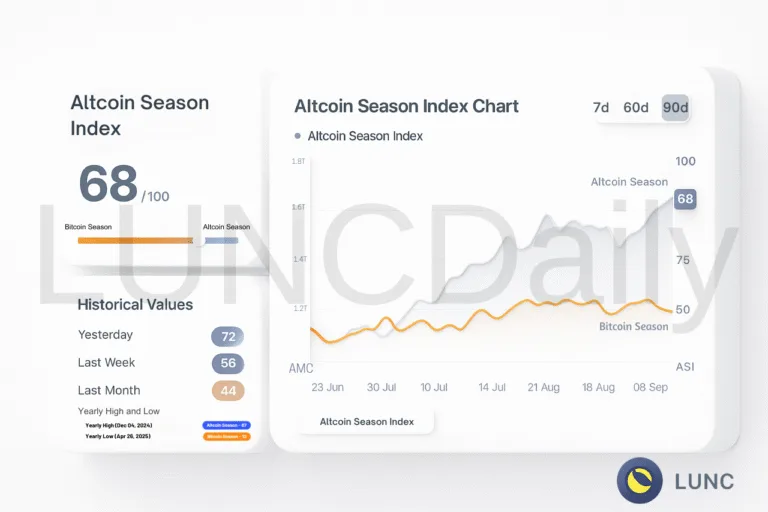
The crypto market is at a critical turning point. On one hand, the Altcoin Season Index has surged to 68 out of 100, a clear sign that altcoins are gaining strength against Bitcoin. On the other, the upcoming Federal Reserve FOMC meeting on September 16 and 17 is creating caution across the market.

Just a few weeks ago, the index was at 44. It climbed to 56 last week, touched 72 yesterday, and now sits at 68. Historically, a move above 60 has signaled the beginning of altcoin season, where smaller tokens outperform Bitcoin and trading volumes increase sharply. For Luna Classic (LUNC), this trend could bring new momentum as traders look for opportunities in established altcoins with strong communities.

Yet, instead of rallying, crypto prices including LUNC, have dropped in the past two days. Why is this happening if altcoin season indicators are flashing bullish? The answer may lie in the FOMC meeting.

The Federal Reserve’s decision on interest rates has a powerful effect on risk assets. When rates rise, investors often retreat to safer assets, causing crypto prices to dip. When rates fall or the Fed signals a supportive stance, liquidity returns to the market and risk assets like LUNC can rally. Investors appear to be waiting for clarity before committing large amounts of capital.

This cautious behavior could explain the current price pullback. Markets often pause before major economic events, as traders prefer to see the Fed’s direction before making bold moves. If the Fed signals a softer approach, it could unleash the liquidity needed to fuel a strong altcoin rally.

For LUNC, this creates a high-stakes setup. The combination of a strong Altcoin Season Index and a potential Fed boost means the conditions are forming for a significant pump. While nothing is guaranteed, the alignment of these factors suggests that patience may soon pay off for those waiting on the sidelines.

Altcoin Season Index Surges to 68: What It Means for Luna Classic (LUNC)

0

The crypto market is showing clear signs of shifting power. The Altcoin Season Index has surged to 68 out of 100, signaling that altcoins are starting to outperform Bitcoin in a big way.

Just one month ago, the index was at 44, and last week it stood at 56. Yesterday it reached 72, before slightly cooling off to 68 today. This rapid climb highlights a strong trend where altcoins are gaining dominance over Bitcoin.

The yearly data reflects how quickly sentiment can shift. The yearly high of 87 came on December 4, 2024, during one of the strongest altcoin rallies. By contrast, the yearly low of 12 was recorded on April 26, 2025, when Bitcoin firmly led the market.

The chart also shows that the altcoin market cap has been rising since early July, with stronger growth in August and September. Many investors are now watching closely to see if this momentum will push the index back toward its highs.

For Luna Classic (LUNC), this trend is especially important. As one of the established altcoins, LUNC could benefit from increased investor attention during altcoin season. With altcoins gaining momentum, coins like LUNC may experience higher trading volumes, stronger community activity, and renewed market interest.

If the current trend continues, traders may witness a full swing into altcoin season, where smaller coins like Luna Classic not only outperform Bitcoin but also create greater opportunities for high-risk, high-reward plays.

FOMC Meeting on September 16 and 17 Could Move the Crypto Market

0

The Federal Open Market Committee (FOMC) will meet on September 16 and 17, 2025. This event is one of the most important in global finance and it often has a direct impact on the crypto market.

The Federal Reserve sets interest rates to guide the United States economy, but its decisions also affect digital assets like Bitcoin and Ethereum. When the Fed raises interest rates, borrowing money becomes more expensive and the US dollar usually gets stronger. In this situation, investors often move their money into safer options such as bonds, which reduces demand for cryptocurrencies and can cause prices to fall.

When the Fed lowers rates or signals that it may do so in the future, more money flows into the market. Investors then look for higher returns in alternative assets, and crypto often benefits from this environment as risk appetite grows.

The reaction is not only about the rate decision itself. The way the Fed communicates its outlook is equally important. If the message is aggressive about controlling inflation, crypto prices may fall. If the message is more supportive of growth, digital assets often rise.

Crypto markets also tend to move in line with technology stocks, which react strongly to Fed announcements. This means any shift in policy on September 16 and 17 could quickly show up in the prices of major coins.

In short, the September FOMC meeting is a key event for crypto investors. The decision and the words of the Fed could shape the next big move in the digital asset market.

Beware! Fake Do Kwon Account Scams LUNC Community Using Stolen Art

0

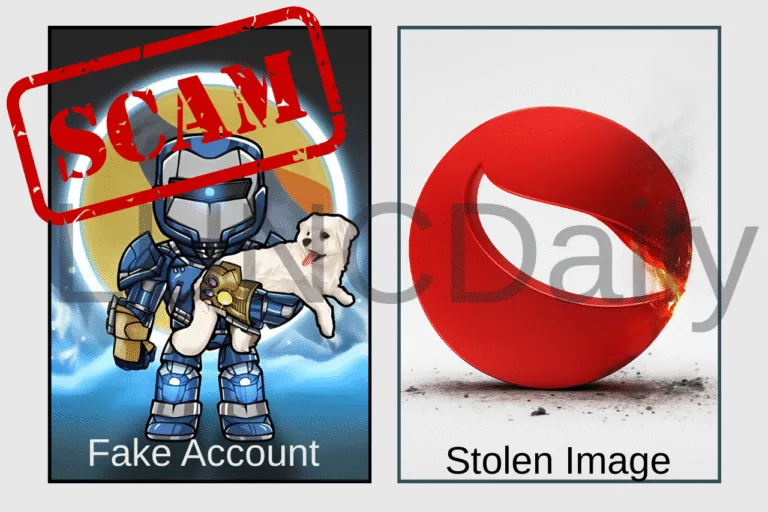
A fake account claiming to be Do Kwon is attempting to scam the Luna Classic (LUNC) community once again. This impersonator has used our related artwork to promote his fake token.

The account has gained traction by claiming to “revive LUNC,” but has not taken any real action to support the community. Instead, the impersonator exploits the trust of the community to steal funds from unsuspecting users.

It is important to note that LUNCDaily does not have its own token. LUNCDaily is part of the Orbit Wire ecosystem, where MIOFF is the only official token. Community members should remain vigilant and avoid interacting with accounts claiming to be Do Kwon or promoting unverified tokens.

Stay alert and protect your assets. Do not fall for these scams.

Proposal: Fix Legacy Contracts by Core Upgrade – What It Means and Why It Matters

0

A new proposal has been introduced to fix legacy CosmWasm contract execution on Terra Classic. This change involves a small patch (about 30–50 lines of code) to the chain core, aimed at restoring functionality that was broken during the v2.1.0 upgrade in 2022.

The fix would re-enable a number of liquidity pools, including several Astroport and possibly Terraswap pools, that are currently inaccessible. More importantly, it would also allow many legacy contracts with tax handling features to operate again without requiring contract migration.

Background and Context

During the v2.1.0 upgrade, changes to Terra’s custom query support broke contracts that relied on querying the on-chain tax rate or oracle exchange rates. This disrupted multiple liquidity pools holding large amounts of LUNC and USTC, along with other tokens.

As a result, liquidity became locked and traders were unable to use the affected pools—either fully (native ↔ native) or partially (cw20 ← native).

Testing at the node level has shown that the proposed patch allows transactions against these contracts to succeed again.

Example of currently locked balances:

● LUNC/USTC pool: ~700M LUNC, ~6M USTC

● bLUNA/LUNC pool: ~150M LUNC

● MIR/USTC pool: ~6M USTC

● ASTRO/USTC pool: ~3.9M USTC

● kUST/USTC pool: ~2.9M USTC

● Across 465 Astroport contracts: ~959M LUNC, ~27.4M USTC

These tokens are currently unreachable due to the broken execution path.

Why It Matters

Re-enabling execution would immediately “re-open” these pools and make the locked liquidity available again. This has both positive and negative implications.

Positive impacts:

● Liquidity and trading opportunities return to the ecosystem.

● Tokens that should be in circulation become usable again.

● Many legacy contracts resume functioning without the need for migration.

Negative impacts:

● The pools are heavily imbalanced. Arbitrage bots are expected to exploit price differences within minutes of the fix going live.

● Example: The LUNC/USTC pool is currently priced at roughly 2× the fair market ratio, which could cause rapid price swings for both LUNC and USTC across DEXes and CEXes.

Risks and Concerns

● Arbitrage drain: First movers, mostly bots, will capture the majority of profits rather than long-term holders.

● Public perception: Some may view this as “unlocking” a large supply of tokens, even though the liquidity was only locked due to the 2022 upgrade issue.

● Timing: Liquidity providers in broken pools cannot exit before the fix is applied.

● Precedent: Concerns may be raised about setting a precedent for L1 patches to support dApps. However, this patch addresses an issue originally caused by an L1 upgrade and is relatively small and contained.

Why Not Just Refund Liquidity Providers?

An alternative suggestion was to refund all liquidity providers directly, but this is considered technically unfeasible.

● It would require thousands of queries, calculations, and contract executions during the chain upgrade, raising risks of errors.

● Collecting all holdings upfront would require trust in those preparing the list, and refunds could end up going to inactive wallets.

● It would not guarantee catching all malfunctioning pools across the ecosystem.

Options Moving Forward

According to the proposal, there are only three realistic options:

1. Fix the contracts with a chain upgrade.

2. Leave everything as it is.

3. Migrate each affected contract individually.

While bots will likely capture early arbitrage opportunities, this will help bring pools closer to fair market value. Moreover, some users are currently stuck in one-way contracts (cw20 ↔ native), and fixing execution would restore full functionality.

Proposal: Re-Enable Legacy Contract Execution

0

Summary

This proposal seeks approval for a patch to the chain core that will re-introduce support for legacy CosmWasm contract execution. The change consists of a small fix (~30–50 lines of code) that restores functionality broken during the v2.1.0 upgrade in 2022.

Affected contracts include not only a number of Astroport pools and potentially some remaining Terraswap pools. While re-enabling these contracts would make currently locked liquidity accessible again without requiring contract migration, the fix would also allow a lot more legacy contracts that include tax handling on chain to work again.

Context

During the v2.1.0 upgrade, custom Terra query support was changed, which caused contracts to stop working, which query the tax rate on chain or exchange rates from the oracle module. This affected several liquidity pools holding significant amounts of LUNC and USTC (besides other tokens).

Key findings from a node-level patch test:

  • The patch allows transactions against these contracts to succeed again.
  • Pools currently contain large amounts of locked liquidity.
  • Example balances (rounded):
    • LUNC/USTC pool: ~700M LUNC, ~6M USTC
    • bLUNA/LUNC pool: ~150M LUNC
    • MIR/USTC pool: ~6M USTC
    • ASTRO/USTC pool: ~3.9M USTC
    • kUST/USTC pool: ~2.9M USTC
  • Across 465 identified Astroport contracts:
    • ~27.4M USTC
    • ~959M LUNC

These tokens are currently unreachable due to the broken execution path. That means, traders can not use those pools at all (native ↔ native) or only in one direction (cw20 ← native).

Implications

Re-enabling execution is expected to instantly “re-open” these pools. This has two sides:

  • Positive: The chain and its users regain access to their liquidity. Tokens that should be in circulation become usable again. Further, there will be a lot more contracts that will start working again without the need of contract migration.
  • Negative: The affected pools are highly imbalanced. Immediately after activation, users and most likely arbitrage bots will drain the obvious opportunities. Example: the LUNC/USTC pool trades at roughly 2× the fair market ratio. This means large swings will happen within minutes of the fix going live. This could affect the price of LUNC and USTC both positive or negative on other DEXes/CEXes, too, in the short term.

Risks

  • Arbitrage drain: First movers (mostly bots) will capture outsized profits, not long-term holders.
  • Public perception: Can be framed as “unlocking” large amounts of USTC/LUNC supply, which may be viewed negatively, although these coins where always meant to be unlocked. The “locking” happened due to a core upgrade side-effect.
  • Timing: Liquidity providers in affected and currently disfunctional pools cannot “exit early” before the patch is applied.
  • Precedent: Some may argue this sets a precedent for L1 patches to support dApps. However, the breakage was originally caused by an L1 upgrade, and the fix is small and contained.

Conclusion

The patch restores functionality that was unintentionally broken. It unlocks liquidity for affected users and contracts, and will restore contract functionality for legacy contracts on chain.

Voting Options:

  • YES – Approve the patch to re-enable legacy contract execution.
  • NO – Do not apply the patch, legacy contracts remain unusable.
  • NO WITH VETO – Strong opposition.
  • ABSTAIN – No opinion.

Further information (not part of the proposal text)

The code changes have been done and can be seen here: fix: Legacy contracts using terra query variants by StrathCole · Pull Request #602 · classic-terra/core · GitHub

Additional test information:
I created a local test script which contains the original wasm (contract) code of four astroport contracts. The steps the test script does:

  1. Start a local chain with only one node using v1.1.0 of the chain
  2. deploy all four astroport pair contracts, instantiate them and test providing liquidity, swapping and withdrawing liquidity.
  3. go through all upgrades of the chain (i.e. v2.0.1, v2.1.1, v2.2.1, …, v3.5.1) and re-test liquidity and swap operations
  4. as expected from v2.1 on the liquidity providing still works, but swaps (native tokens) and withdrawal results in
Error: rpc error: code =Unknowndesc= rpc error: code =Unknowndesc= failed toexecute message; message index: 0: Generic error: Querier system error: Unsupported query type: unknown terra query variant: execute wasm contract failed [classic-terra/wasmd@v0.46.0-classic.3/x/wasm/keeper/keeper.go:396] With gas wanted: '18446744073709551615'and gas used: '187740' : unknown request
  1. upgrade to the local patched version and then re-run the tests. This confirmed that the swaps and withdrawals worked again afterwards:
{"height":"901","txhash":"9539ECA6A4B0622643BCA9C208741F2C0AB17AFBC931E4B489E657133A0

Luna Classic Staking APR Surges Back to 6.27% After Recent Drop

0

Luna Classic Staking APR Surges Back to 6.27%

The Terra Classic (LUNC) network has seen a notable shift in staking rewards. On September 12, the annual percentage rate (APR) for staking dropped to just 3.89%. However, the rate has since rebounded, climbing to 6.27% today.

This change is significant for stakers in the Luna Classic ecosystem, as higher APR means greater potential rewards for delegators and validators. The sudden increase highlights the dynamic nature of staking incentives on the Terra Classic blockchain.

For long-term supporters of LUNC, the recovery of staking rewards can be seen as a positive sign. It may encourage more users to delegate their tokens, strengthening network security while also generating passive income.

As Terra Classic continues to evolve, fluctuations in staking APR remain an important indicator of ecosystem health and validator participation. With the latest rebound, the community will be closely watching whether the APR stabilizes or continues to shift in the weeks ahead.

LUNC Price Faces Sudden Drop: Can Terra Classic Hold Key Support Levels

The price of Terra Classic (LUNC) is showing fresh weakness on the daily chart after a sudden drop from its recent upward channel. Traders are now closely watching whether key support levels can hold or if the token will face further decline.

Current Market Position

LUNC is trading around 0.00006022 USDT, following a rejection at the 0.000062 resistance zone. The breakdown of the rising channel suggests that bullish momentum has weakened in the short term.

Support Levels to Watch

● Immediate Support: 0.000059 USDT. This level will determine whether buyers are still willing to step in.

● Major Support Zone: 0.000052 – 0.000055 USDT. A failure to hold above this area could trigger a deeper correction toward 0.000048 – 0.000050 USDT.

Resistance Levels to Overcome

● Immediate Resistance: 0.000062 – 0.000063 USDT. This zone rejected the recent rally and remains a difficult barrier for bulls.

● Major Resistance: 0.000072 USDT. A breakout above this level would indicate a strong bullish reversal and open the way for higher gains.

Trend Outlook

● Short-Term: Bearish, due to the sudden breakdown and lower rejection wicks.

● Medium-Term: Neutral, as long as LUNC trades between 0.000052 and 0.000072 USDT.

● Long-Term: Consolidation continues until a higher low or breakout confirms direction.

Market Sentiment

The recent sudden drop reflects rising caution among traders. Volume confirmation will be crucial in determining whether support holds or if sellers remain in control. A rebound from support zones could spark renewed bullish interest, but sustained weakness may invite further declines.

Conclusion

The coming days will be decisive for LUNC price action. Holding above 0.000059 – 0.000057 USDT could spark a rebound toward 0.000062 resistance. However, if sellers push the price below 0.000057, the next test lies near 0.000052 – 0.000050 USDT.

Traders are advised to monitor these levels closely before entering new positions, as the next move could define LUNC’s short-term direction.