Home Blog Page 51

LUNCDaily Launches New Community Section: Empowering the #LUNC Ecosystem

In the ever-evolving world of cryptocurrency, community-driven projects like Terra Luna Classic (#LUNC) thrive on collaboration and shared insights. Recognizing this, LUNCDaily, a leading news platform dedicated to Terra Classic developments, has unveiled its brand-new Community Section. This initiative aims to amplify the authentic voices of the #LUNC community, fostering deeper connections and meaningful dialogues among enthusiasts, investors, and developers.

Launched to support grassroots discussions, the Community Section provides a dedicated space where users can create topics, join ongoing conversations, and share their unique perspectives on all things #LUNC. Whether debating price trends, network upgrades, or innovative proposals like the USTD stablecoin revival, participants can engage in real-time exchanges that drive the ecosystem forward. LUNCDaily, known for its timely updates on LUNC and USTC (TerraClassicUSD) metrics—such as the recent Nakamoto Index drop to 4, Oracle Pool declines, and Binance’s monthly burns totaling millions of tokens—now extends its reach beyond news reporting. This forum-style hub integrates seamlessly with the site’s focus on on-chain activities, community pool growth, and global events, like the Warsaw meetup that highlighted the power of in-person networking.

Users are encouraged to visit https://luncdaily.com/community/ to get started. The interface features intuitive tools for notifications, topic creation, and sharing via platforms like Twitter and WhatsApp, making it accessible for both newcomers and veterans. Guidelines emphasize respectful discourse, ensuring a positive environment free from spam or misinformation. By funding community events through proposals like the Terra Classic wallet initiative, LUNCDaily underscores its commitment to decentralization and collective growth.

This launch comes at a pivotal time for #LUNC, as the token consolidates amid key support levels and ecosystem signals point to potential revivals. Joining the Community Section not only keeps you informed but also lets you shape the narrative. Dive in today and be part of the conversation that’s rebuilding Terra Classic—one post at a time.

Luna Classic Nakamoto Index Drops to 4 – What Does This Mean for Network Security?

0

The Luna Classic (LUNC) network has seen its Nakamoto Index fall to 4, signaling a potential shift in validator decentralization. Over the past three months, the index fluctuated between 4 and 6, showing periods of improved distribution followed by rapid declines.

The Nakamoto Index measures how many entities control over 33% of network voting power. A lower index means fewer validators have more influence, raising questions about network resilience against coordinated attacks or governance manipulation.

In July, the index climbed to 6, suggesting better decentralization. However, in mid-August, it sharply dropped back to 4, where it currently stands. This sudden change highlights the need for continuous community engagement and delegation strategies to maintain security.

For Luna Classic stakeholders, keeping the network decentralized is critical. Community delegators are encouraged to spread voting power across smaller validators rather than concentrating it among a few top ones.

The Oracle Pool Keep Decline: What’s Happening to LUNC and USTC Balances?

The Oracle Pool on the Terra Classic network has seen a consistent decline in both LUNC and USTC balances throughout the past month. According to the latest data, LUNC holdings have dropped to 62.21 billion, while USTC has fallen to 207.23 million.

From early August to early September, the chart shows a steady downward trend, with LUNC decreasing from around 64.8 billion to 61.8 billion and USTC dropping from about 218 million to 206 million. This indicates continuous outflows from the Oracle Pool, raising concerns among community members about long-term sustainability and potential impacts on staking rewards, validator incentives, and the broader network economy.

Analysts are watching this closely to see whether governance proposals or network upgrades will address the issue. The community is calling for more transparency on where these funds are going and how this trend may affect the Terra Classic ecosystem moving forward.

USTC Price Holds Key Support

0

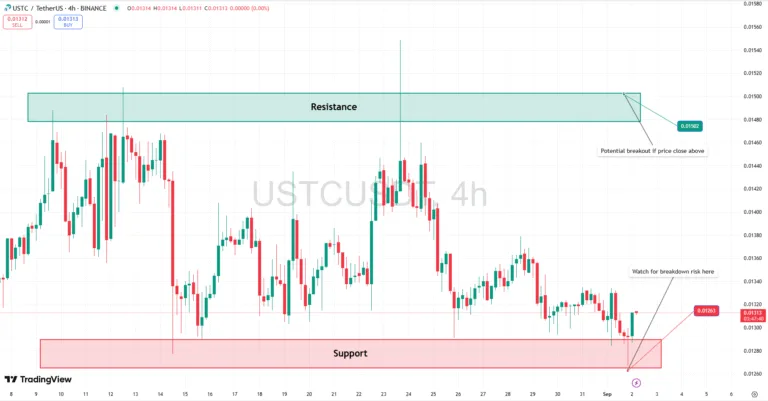
USTC is showing signs of consolidation as price trades within a defined range, creating a neutral market bias. On the 4-hour chart, USTC is moving between a resistance zone of $0.0150 – $0.0155 and a support zone of $0.0127 – $0.0130.

This price action suggests that both buyers and sellers are waiting for confirmation before making large moves. Volatility is shrinking, which often signals that a significant breakout may be approaching.

Key points from the chart:

● Resistance zone: $0.0150 – $0.0155. A close above this level may trigger momentum buying toward $0.0170.

● Support zone: $0.0127 – $0.0130. A breakdown here could lead to a move toward $0.0120 or lower.

● Volume is critical: Any breakout must be supported by strong trading volume to be reliable.

What this means for traders and investors:

● Traders may look for entries after a confirmed breakout above resistance or breakdown below support.

● Long-term investors may view this as an accumulation phase, taking entries near support with strict risk management.

This analysis reflects market structure, not speculation, and aims to provide a clear picture of current price behavior. As always, conduct your own research before making any investment decisions.

LUNC Price Consolidates: Key Levels to Watch

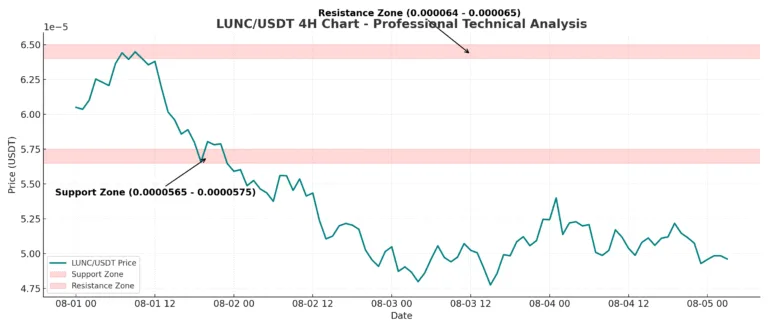
The price of LUNC (Terra Classic) is currently trading in a clear consolidation range. Over the past few weeks, the market has shown strong support around 0.0000565 – 0.0000575 and consistent resistance around 0.000064 – 0.000065.

This sideways movement suggests that traders and investors are waiting for a decisive breakout.

Key insights from the chart:

Support Zone (0.0000565 – 0.0000575):
1. LUNC has repeatedly bounced from this area, showing that buyers are accumulating at lower prices.

2. Resistance Zone (0.000064 – 0.000065):
Sellers have stepped in here several times, preventing a breakout to higher levels.

3. Market Outlook:

● If LUNC breaks and closes above 0.000065, it could trigger a move toward 0.000070 – 0.000072.

● If the support at 0.0000565 fails, the next potential target could be 0.000052 – 0.000053.

What this means for investors:
This range often represents an accumulation phase rather than a distribution top. Long-term holders may see this as a steady base, while short-term traders are likely watching for a breakout confirmation before entering positions.

Decoding the Signals: What’s Really Happening in the Terra Classic Ecosystem?

Over the past few months, the Terra Classic community has been buzzing with activity. From key legal developments to mysterious on-chain movements, there have been a mix of clear positive signs and curious signals that have everyone watching. Let’s break down the key points that are shaping the current narrative. 👇

Luna Classic Community Pool Keeps Increasing Past 7.5 Billion LUNC and 59 Million USTC

0

The Luna Classic community pool keeps increasing over time. It now reflects a cumulative net growth of 7,595,285,036 LUNC and 59,917,429 USTC, worth about $1,228,148 at today’s prices. This is not a one time increase. It is a slow and steady rise that builds day by day.

This ongoing growth often comes from regular on chain activity such as fees, swaps, and community driven initiatives. A steady inflow can support future development, grants, and ecosystem tools, while also signaling confidence across the Terra Classic community.

If this pace continues, the pool can become a stronger resource for builders and contributors. Observers should watch the inflow rate, spending approvals, and any changes in governance that shape how these funds are used.

Binance Burns 455 Million LUNC in Latest Monthly Event

0

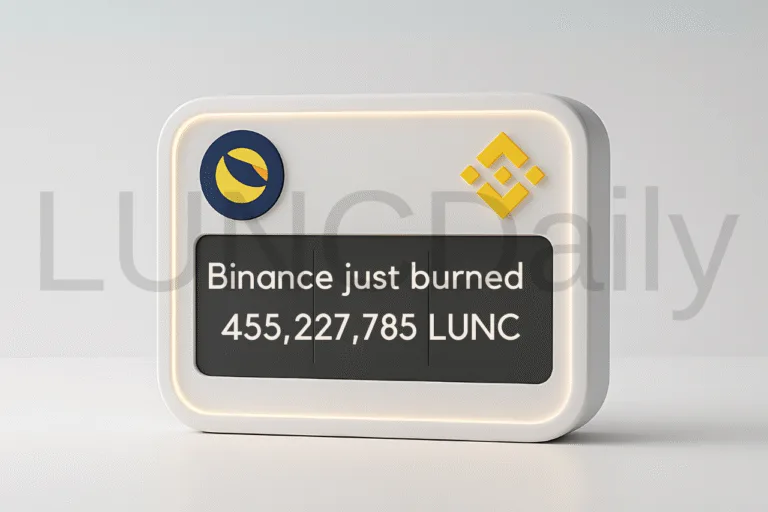
Binance has burned 455,227,785 LUNC today as part of its ongoing monthly LUNC burn program. This is another major step in reducing the circulating supply of Terra Classic (LUNC), which many traders believe could have long-term implications for price stability and growth.

The Binance LUNC burn initiative consistently removes hundreds of millions of tokens from circulation every month. By decreasing supply, this program aims to create a more balanced market and support the overall Terra Classic ecosystem.

The question now being asked across the community is whether this latest burn will influence market sentiment and trigger stronger price momentum. Historically, substantial token burns have often coincided with increased trading activity and speculation.

With Terra Classic’s trading volume remaining steady, all eyes are on whether this 455 million LUNC burn will provide the spark for a new phase of price action.

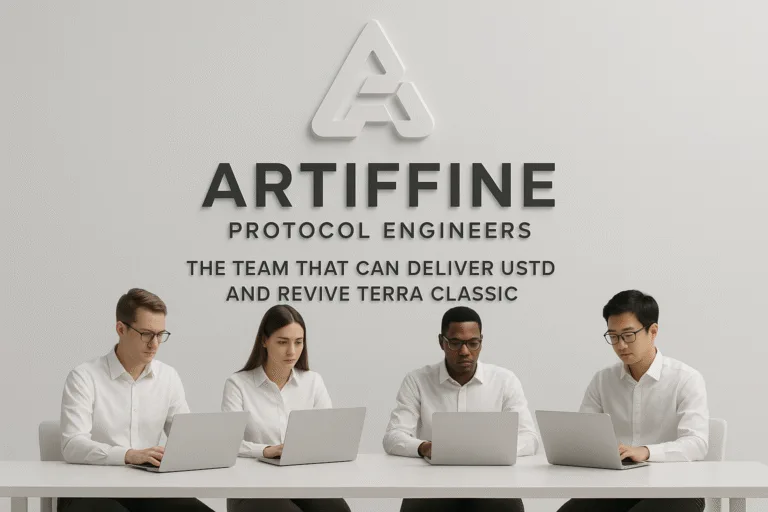
Artiffine’s Protocol Engineers — The Team That Can Deliver USTD and Revive Terra Classic?

The USTD Signal Proposal envisions a decentralized, fully automated, yield-bearing stablecoin on the Terra Classic Blockchain—a project that demands precision engineering, bulletproof security, and deep blockchain expertise. Under the leadership of Vojtěch Rychnovský, Artiffine (https://www.artiffine.com) joins RedlineDrifter, REDniks and CHALLENGE Studio (www.challengestudio.pl) to provide exactly the talent stack needed to make this vision a reality..

1. Tech Lead — Vojtěch Rychnovský

A blockchain strategist and full-stack architect, Vojtěch ensures the protocol’s design is secure, scalable, and aligned with community goals. He would oversee the entire USTD build, from concept to mainnet deployment.

2. Smart Contract Developer

USTD’s yield-bearing mechanisms would rely on highly optimized smart contracts. Artiffine’s Solidity experts can code secure, gas-efficient contracts with automated yield distribution, collateral management, and on-chain governance—ensuring transparency and resistance to exploits.

3. Backend Developer

The backend team can integrate USTD with off-chain price oracles, analytics dashboards, and liquidity management systems—critical for maintaining peg stability and facilitating decentralized trading.

4. Front-End Developer

Artiffine’s UI specialists can deliver a clean, intuitive dashboard for USTD users—simplifying actions like minting, staking, yield tracking, and governance voting, while keeping Terra Classic branding front and center.

5. QA / Testing Specialist

With rigorous auditing, simulation of extreme market conditions, and multi-chain test environments, Artiffine’s QA process ensures USTD launches without vulnerabilities—protecting both user funds and network stability.

By leveraging this multi-disciplinary team, USTD can be more than just another stablecoin—it can become the economic backbone that restores liquidity, utility, and investor trust in Terra Classic. With Artiffine’s proven blockchain delivery track record and Terra Classic’s passionate community, this collaboration could mark the beginning of a new era for the chain.

Connecting LUNC members across the world through collective support

The Terra Classic community is growing and evolving, and events and meetups (such as the recent one in Warsaw) play an important role in connecting people, educating, and strengthening our shared vision. However, many members do not have the financial means to attend these gatherings, even though they have a strong desire to contribute and be part of them.

I propose that we create a dedicated community wallet that would be used exclusively for collecting funds in LUNC. The purpose of this wallet would be to:

•support community members with limited financial resources,
•enable them to attend events, conferences, and meetups,
•and additionally, through a community decision, funds could also be used to organize a dedicated LUNC community meetup somewhere in Europe.

To ensure transparency and credibility, I believe the wallet should not be under my control (as I do not yet have a strong enough reputation in the community), but rather be created and managed by a well-respected member of the community such as Dawid Skinder, Vegas, or LUNALover69 or maybe even some validator like Allnodes.

Benefits:
•Increased participation of community members at events, leading to stronger connections and idea development.
•A transparent way of collecting and utilizing funds.
•Strengthening unity and a sense of belonging within the community.
•Possibility of organizing the first large-scale LUNC community meetup in Europe.

Funding the Support Fund

To make this initiative sustainable, we should define clear ways to fill the wallet. Here are several options the community can consider (they can also be combined):

1.Voluntary Donations in LUNC/USTC
•The simplest approach: any community member can contribute directly, in any amount.

2.Dedicated Validator – “Community Travel Fund”
•Launch a validator on the Terra Classic network with a low commission fee.
•All validator commission rewards would go directly into the community wallet.
•This creates a sustainable and transparent long-term funding model, as the wallet fills automatically over time.
•Delegators would still receive their staking rewards as usual, while a portion of the validator commission supports the fund.

3.NFT Collection – “Community Pass”
•Release a symbolic NFT collection (e.g. 1000 NFTs at a small price).
•Purchasing these NFTs would directly fund the wallet.
•NFTs could also act as a special “ticket” or badge for future community meetups.

4.Ecosystem Partners & Sponsors
•LUNC-based projects (e.g. Garuda, Juris, Selenium, etc.) could donate a small percentage of their earnings to the fund as a way to support the community.

5.Hybrid Model (Support + Burn)
•A portion of collected funds could be allocated to burning LUNC, while the rest supports community travel and events.
•This way, the initiative not only helps members but also directly contributes to the chain’s long-term health.

Conclusion:
This proposal aims to include more people in our community and provide opportunities for those who cannot finance their own travel to still take part in important events. I believe this step would further strengthen our chain and bring us closer together on a global level.

I invite the community to consider this idea and give a voice to those who wish to participate but do not have the means to do so.