
Home Blog Page 53

Nearly 90 Million LUNC Burned Today – Will the Final Hours Push the Total Even Higher?

0

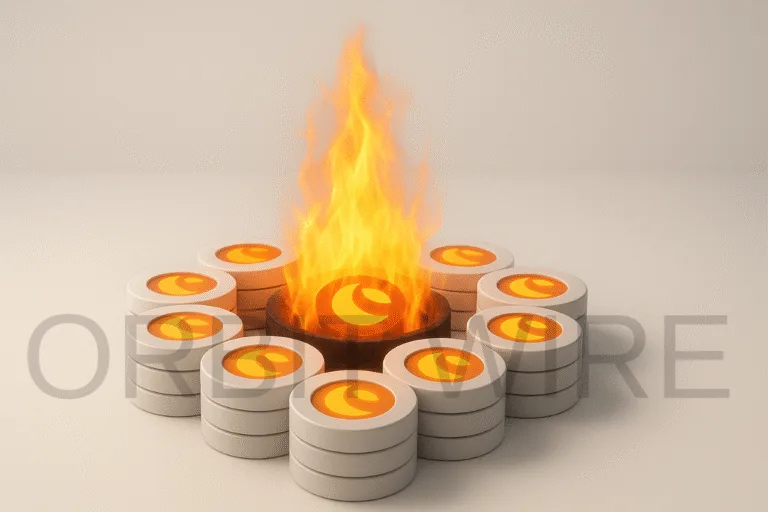
The Terra Classic (LUNC) community is witnessing another strong day of token burns, with 89.8 million LUNC already removed from circulation and 17 hours still remaining before the day closes in UTC time.

This surge highlights the growing commitment of validators, exchanges, and individual community members who continue to drive supply reduction. Large burns are often seen as a catalyst for price stability and long-term value recovery, especially when combined with ongoing network upgrades and utility initiatives.

With almost 90 million tokens already gone, the key question now is whether the community will push past the 100 million mark before the daily cycle resets. If so, it would signal renewed momentum for Terra Classic’s deflationary strategy and could further boost confidence among long-term holders.

As the clock ticks down, all eyes are on the burn tracker and the community efforts behind it. Will today become one of the highest burn days of recent weeks?
Terra Classic Burns 218.75 Million LUNC in 7 Days – Is It Enough to Move the Price?

0

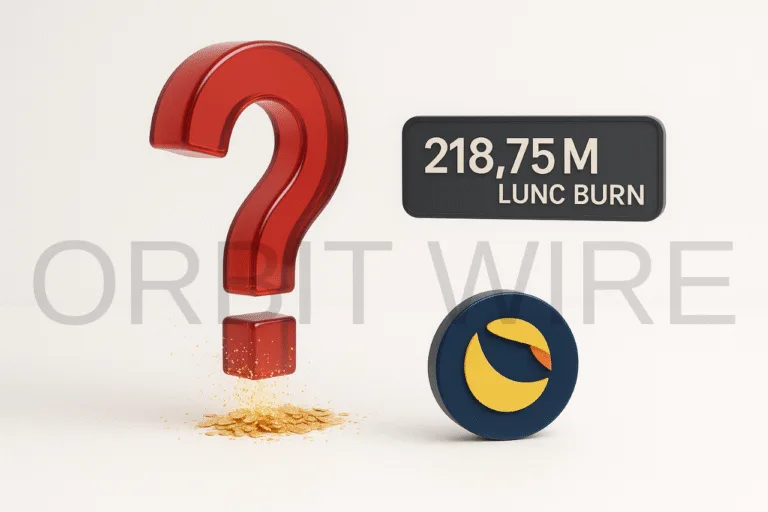
The Terra Classic community has successfully burned 218.75 million LUNC tokens over the past seven days. This steady pace demonstrates ongoing dedication to reducing supply, but opinions are divided on whether this level of burning is enough to make a meaningful impact on price.

For some, over two hundred million tokens removed in a single week is an encouraging sign that the network’s recovery is on track. For others, the figure highlights the need for faster and more coordinated efforts, especially considering LUNC’s large circulating supply.

The Key Question: Is This Sufficient?
● Does burning 218.75 million tokens in a week represent real progress?
● Or is the community still far from reaching the levels required to significantly influence LUNC’s value?

How Can the Burn Rate Be Increased?
If this rate is not enough, the community may need to explore additional strategies:
● Expanding burn contributions from validators and decentralized applications
● Developing partnerships and utility projects that integrate automatic burn mechanisms
● Driving greater on-chain activity and trading volume to naturally increase burns through transaction fees
The path forward depends on active participation and collaboration. Sustaining momentum and finding creative solutions will be critical to accelerating LUNC’s supply reduction.

What do you think? Is 218.75 million burned in a week a solid achievement or just a small step toward a much bigger goal?

Why Terra Classic Could Lead the Future of Stable Currencies

0

The Terra Classic blockchain is positioning itself as a hub for the next generation of stable digital currencies. Instead of relying on a single asset like the US dollar, Terra Classic can support multiple stablecoins pegged to national currencies and even the International Monetary Fund’s Special Drawing Rights (IMF SDR). This multi-currency approach could play a key role in restoring the value and utility of LUNC.

A Network Built for Stable Digital Assets
Terra Classic was originally designed as a platform for decentralized stablecoins, giving users seamless payment options with instant settlement and low fees. Its core architecture still supports the creation of assets pegged to a wide range of benchmarks — not just USD, but also currencies like the euro, yen, pound, and even the IMF SDR.

Why Multiple Pegs Matter
● Global reach: Stablecoins tied to different currencies allow users worldwide to transact in their preferred unit of value.
● Reduced dependency: No single currency dominates, making the system more resilient.
● Institutional appeal: An SDR-pegged stablecoin reflects a globally recognized reserve asset, strengthening credibility.

Restoring LUNC Through Utility
The path to reviving LUNC lies in real adoption. If Terra Classic issues stablecoins backed by various global benchmarks, it can create genuine demand for network activity.
● Transaction volume increases LUNC burn and utility.
● Wider adoption boosts validator confidence.
● Multiple stablecoins enhance ecosystem stability and attract developers.

A Vision for the Future
The best way to rebuild Terra Classic is to return to its original strength — a blockchain purpose-built for stable digital assets. By supporting a family of stablecoins, including one pegged to the IMF SDR, Terra Classic can provide real-world value while creating upward pressure on LUNC.

The Forgotten Stablecoin : SDTC the Stablecoin for IMF SDR

The Terra Classic blockchain once introduced SDTC, a stablecoin designed to track the value of the International Monetary Fund’s Special Drawing Rights (IMF SDR). This global benchmark was intended to make SDTC more stable than dollar-pegged coins, but the plan unraveled during the Terra ecosystem collapse.

What Was SDTC?

SDTC stood out because it was not tied to a single currency. Instead, it followed the IMF SDR, a basket of major currencies including the US dollar, euro, Chinese yuan, Japanese yen and British pound. This design was meant to reduce volatility and attract international users to the Terra Classic network.

Accumulation or Explosion? Why Terra’s LUNC and USTC Could Break Out Soon

The Terra Classic ecosystem is entering a pivotal phase as both Terra Classic (LUNC) and TerraClassicUSD (USTC) hold firm at critical price levels. Traders are closely watching for decisive breakouts that could set the tone for the next market trend.

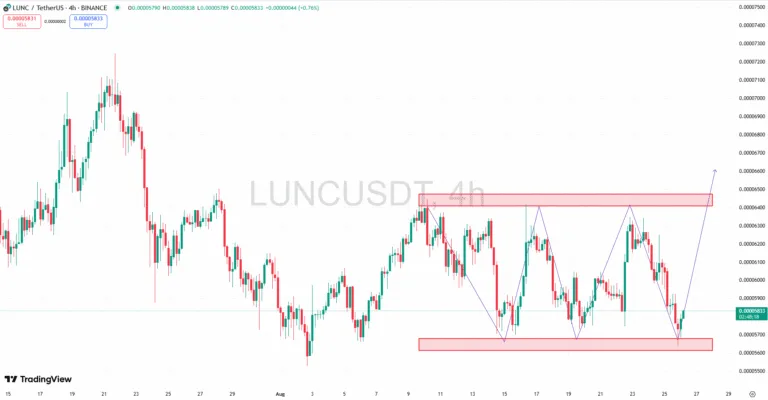
On the LUNC 4-hour chart, price has consolidated tightly between 0.000054 and 0.000064. Repeated defense of the lower boundary shows that buyers are stepping in aggressively, while resistance near 0.000064 continues to cap gains. This pattern reflects accumulation rather than weakness. A confirmed close above 0.000064 with strong trading volume could trigger a move toward 0.000067 to 0.000070. If price falls below 0.000054, however, this bullish setup would be invalidated.

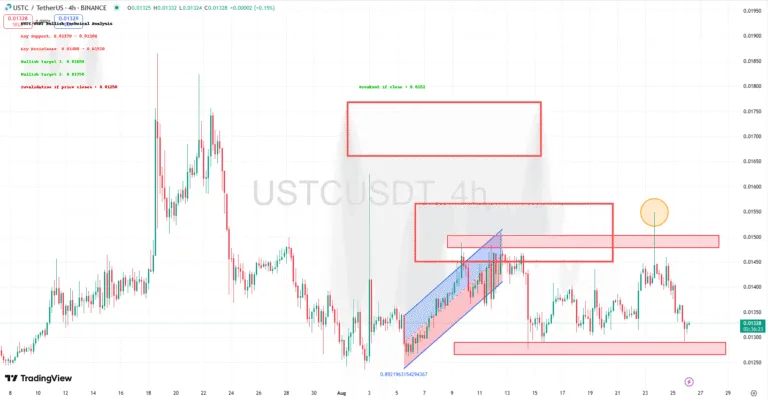
Meanwhile, USTC is showing a similar show of strength. Buyers continue to defend the $0.01270 to $0.01300 support zone despite recent volatility. The shallow pullback from the $0.01500 resistance level indicates sellers are losing control, and consistent dip buying is evident from long lower wicks on the chart. A close above $0.01520 with solid volume would likely open the door to $0.01650 and $0.01750 targets, while a move below $0.01250 would signal downside risk.

Both tokens are consolidating within well-defined ranges, suggesting that market participants are building positions ahead of a potential breakout. Whether these moves resolve to the upside or downside will depend on which price levels give way first.

USTC Price Poised for Breakout as Key Support Holds Strong

0

USTC is showing signs of strength as buyers continue to defend the $0.01270 to $0.01300 support zone. Despite recent volatility, price action suggests that accumulation is taking place rather than distribution.

Over the past weeks, USTC formed an upward channel and attempted to break through the $0.01500 resistance level. Although the first breakout attempt failed, the pullback was shallow and lacked strong selling pressure. This indicates that sellers are not in control, while long lower wicks at support highlight consistent dip buying.

If USTC can close above $0.01520 with strong volume, the next upside targets are $0.01650 and $0.01750. Holding the $0.01270 support zone is critical for maintaining this bullish outlook. A close below $0.01250 would invalidate the upward structure and signal further downside risk.

The current consolidation suggests that USTC is building a base for the next leg up. Market participants should watch for another test of the $0.01500 zone, as a clean breakout could trigger a rapid price move higher.

LUNC Price Poised for Breakout as Key Support Holds Strong

The price of Terra Classic (LUNC) is showing signs of strength after repeatedly bouncing from a major support zone. On the 4-hour chart, LUNC has been trading between 0.000054 and 0.000064, forming a clear consolidation range.

Buyers have consistently defended the lower boundary, while sellers have capped gains near resistance. This tight price action suggests accumulation rather than weakness.

If LUNC closes above 0.000064 with strong trading volume, it could trigger a short-term breakout targeting the 0.000067 to 0.000070 range. On the downside, a sustained drop below 0.000054 would invalidate this bullish setup.

Key points:

● Strong support at 0.000054 has been tested multiple times

● Resistance sits at 0.000064 and is the level to watch for a breakout

● Upside target is 0.000067 to 0.000070 if resistance breaks

● Breakdown below support would shift bias to bearish

LUNC traders are closely watching this range as a decisive move could set the tone for the next leg of price action.

2.72 Billion LUNC Burned in 30 Days – Is Terra Classic Heating Up Again?

0

The Terra Classic (LUNC) burn rate continues to accelerate, with 2.72 billion tokens destroyed in the past 30 days. This consistent reduction of circulating supply has sparked fresh optimism among community members and investors who have long awaited signs of recovery.

Token burns are a critical part of LUNC’s revival plan. By permanently removing tokens from circulation, supply gradually decreases, which can potentially support long-term price stability. While the overall LUNC supply remains large, these burns show that community-driven initiatives and exchange participation are actively contributing to the network’s deflationary efforts.

Although token burns alone do not guarantee price growth, they reflect ongoing support and engagement from validators, developers, and holders who are committed to restoring value to the ecosystem.

With momentum building, the next few months will be crucial. If burn rates remain steady or accelerate, Terra Classic may capture more attention from both retail traders and major platforms looking to support the community’s ambitious revival roadmap.

3 Out of 5 Altseason Signals Are Flashing — Is the Next Big Crypto Rally Starting?

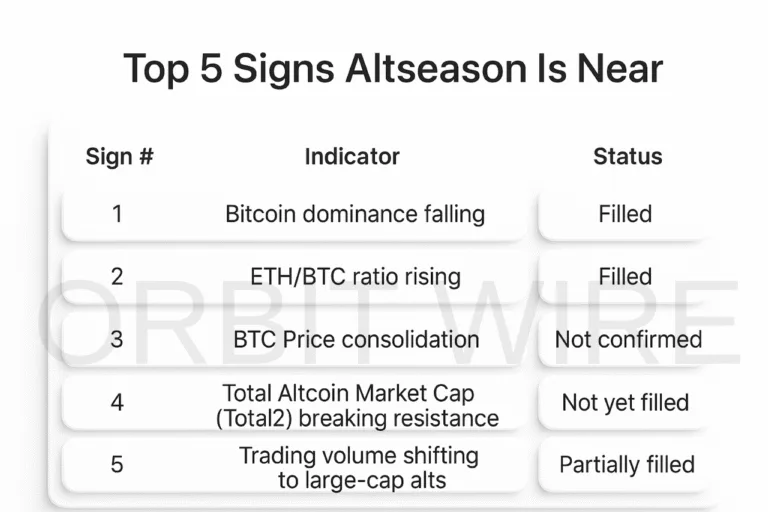
Altseason is the phase when altcoins outperform Bitcoin, and traders are starting to wonder if it is already underway. Analysts track five major signs to spot this shift and three of them are now showing clear momentum.

1. Bitcoin Dominance Is Dropping

Bitcoin dominance, which measures BTC’s share of the total crypto market, is falling from around 65 percent in mid-2025 to roughly 58–60 percent. Coinbase confirms this trend, and analysts note that cracking below 60 percent historically marks the start of capital rotation into altcoins.

Status: Confirmed.

2. Ethereum Outperforming Bitcoin

Ethereum’s performance against Bitcoin is another classic altseason trigger. In the last 30 days, ETH gained 46 percent while BTC barely moved. Over 90 days, ETH is up 71 percent compared to BTC’s 11 percent. Institutional flows and ETF demand are accelerating Ethereum’s leadership role.

Status: Confirmed.

3. Bitcoin Price Holding Steady

Altcoins usually thrive when Bitcoin trades sideways, not when it crashes or surges too fast. Right now, there is not enough clear evidence that BTC price action is stable enough to fully support an altcoin breakout.

Status: Not confirmed.

4. Altcoin Market Cap Needs a Clean Breakout

The total altcoin market cap (known as the Total2 chart) has climbed more than 50 percent since July, but it has not yet broken a major resistance level. Technical analysis shows the uptrend forming, but not finalized.

Status: Not yet filled.

5. Big Coins Seeing More Volume

Ethereum, Solana, XRP, and other large-cap coins are attracting higher trading activity. This suggests early rotation into altcoins, but a broad surge across all altcoins has not yet appeared.

Status: Partially confirmed.

Ethereum Breaks All-Time High as Bitcoin Dips — Is Altseason About to Explode?

0

Bitcoin drops from $117K to $110.5K as Ethereum hits a record $4,955. Is this the signal that altseason is starting?

Bitcoin Down After Record Run

Bitcoin has slipped from $117,000 to around $110,500, signaling a healthy correction after weeks of steady gains. Analysts note this decline is part of natural profit-taking rather than a shift in the long-term uptrend. Institutional demand, strong accumulation, and broader market optimism continue to underpin Bitcoin’s fundamentals.

Ethereum Leads the Market Higher
In contrast, Ethereum has surged past its previous all-time high, reaching $4,955. The breakout reflects growing confidence in Ethereum’s role as the backbone of decentralized finance, Web3 innovation, and staking participation. This momentum is attracting more capital to Ethereum and potentially to other altcoins.

Signs Pointing Toward Altseason
Altseasons typically occur when Bitcoin stabilizes or corrects slightly, allowing investors to rotate into other cryptocurrencies. If Ethereum sustains its price above $4,900, it could confirm bullish sentiment spreading across the altcoin market. Rising trading volumes in mid-cap and small-cap projects would further indicate that an altseason is underway.