Home Blog Page 57

MIOFF: 4 Months After Launched of Achievements and Community-Driven Growth

In the fast-moving world of blockchain and decentralized finance, projects are often judged by their ability to execute and deliver tangible results. Over the four months after launched, MIOFF has demonstrated exactly that turning a vision into measurable milestones that set a solid foundation for sustainable growth.

Tokenomics: Built for the Community

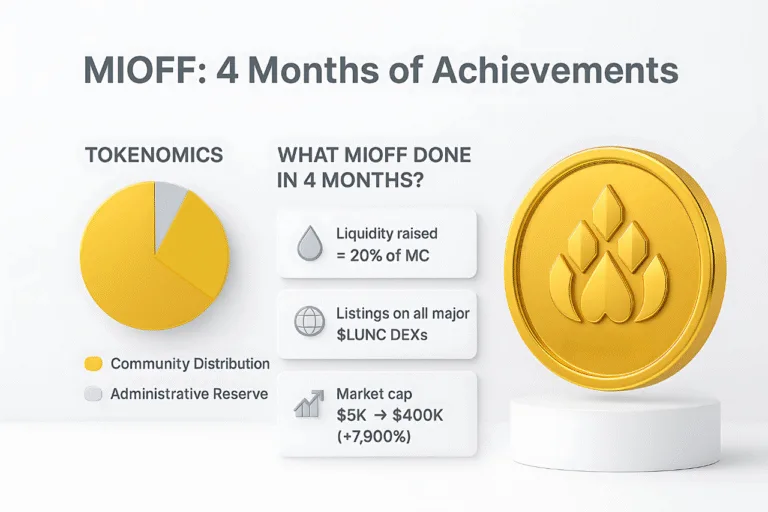
One of the defining features of MIOFF is its community-first tokenomics. With 96% of the total supply allocated to community distribution and only 4% reserved for administrative needs, MIOFF ensures that value creation is primarily driven by and for its holders. This distribution not only reinforces transparency but also strengthens long-term trust in the project.

Achievements in Just 4 Months

Despite being in its early stages, MIOFF has already achieved results that many projects take years to accomplish:

● Liquidity Raised: MIOFF secured liquidity equal to 20% of its market capitalization, ensuring price stability and robust market activity.

● Listings: The token successfully secured listings across all major Terra Classic decentralized exchanges (DEXs), expanding accessibility and visibility within the ecosystem.

● Market Capitalization Growth: Perhaps the most striking achievement is the increase in market capitalization from $5,000 to $400,000, representing a +7,900% growth in only four months.

A Foundation for the Future

These achievements highlight MIOFF’s ability to deliver results with precision and consistency. The strong focus on liquidity, exchange presence, and community-driven tokenomics reflects a project that is not only ambitious but also strategically prepared for the next stage of growth.

With a solid foundation already laid, MIOFF is well-positioned to expand its influence within the Terra Classic ecosystem and beyond. The coming months will be critical as the project continues to build momentum, scale its community, and pursue new opportunities in decentralized finance.
5.19 Billion USTC Burned Since May 2022, Only 6 Billion Left in Supply

0

The Terra Classic community has reached a major milestone. Since May 13, 2022, a total of 5.19 billion USTC has been permanently burned, reducing the circulating supply to around 6 billion tokens.

This large-scale burn has removed nearly half of all USTC from circulation. The goal of these efforts is to create scarcity and restore market confidence after USTC’s collapse in 2022.

Despite the significant reduction in supply, USTC is still trading far below its original one dollar value. Experts note that continued burns, higher trading activity, and stronger utility will be needed to drive real recovery.

The Terra Classic community views this progress as an important step forward. If the burning process continues, USTC could become one of the most deflationary assets in the digital currency market.

Terra Classic v3.5.0 Upgrade: What Changed and How It Shapes the Future

The Terra Classic blockchain has officially completed its v3.5.0 upgrade, marking another major milestone for the $LUNC community. This update is part of the ongoing effort to strengthen the network, improve stability, and pave the way for long-term growth. But what exactly has changed, and how will this impact the future of Terra Classic?

Key Changes in Terra Classic v3.5.0

The v3.5.0 upgrade focuses on performance improvements, security patches, and network optimization. One of the main enhancements is increased validator efficiency, ensuring smoother block production and reducing potential downtime. The update also includes codebase alignment with the latest Cosmos SDK improvements, making Terra Classic more compatible with future integrations and cross-chain projects.

Additionally, the upgrade optimizes gas fees and transaction handling, improving the overall user experience. For developers, these changes mean better tools and more reliable smart contract execution, which could encourage more projects to build on Terra Classic.

Impact on the Future of Terra Classic

With v3.5.0, Terra Classic takes another step toward sustainability and scalability. A more efficient and secure network increases trust among users, validators, and developers. This, in turn, could attract new decentralized applications (dApps) and partnerships to the ecosystem.

For the $LUNC community, the upgrade reinforces the message that development is active and progress is ongoing. As more technical upgrades are delivered, Terra Classic positions itself as a competitive blockchain in the wider crypto space.

In the long run, consistent improvements like v3.5.0 could help boost adoption, strengthen the LUNC economy, and potentially increase token demand — driving the network toward a stronger and more sustainable future.

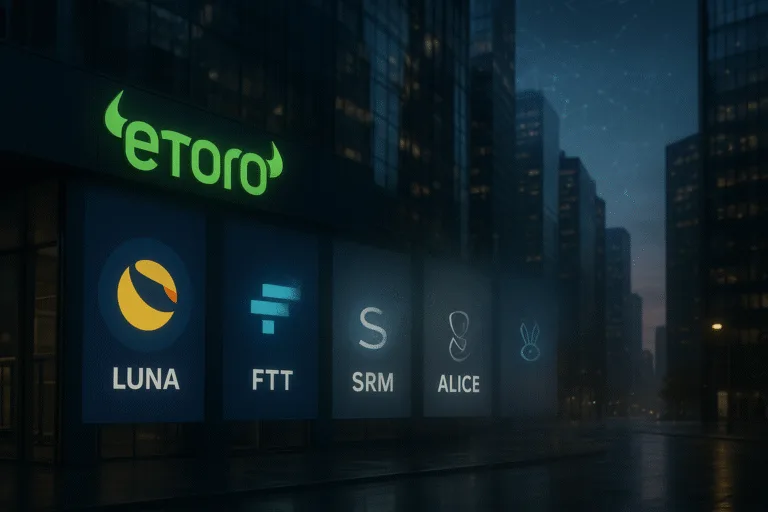
eToro to Delist Luna, LUNC, FTT, SRM, and ALICE Crypto Assets

eToro, a leading trading platform, will stop supporting five cryptocurrencies—Luna, LUNC, FTT, SRM, and ALICE—starting August 26, 2025. This eToro crypto delisting 2025 decision ensures assets meet strict standards for liquidity, trading volume, and marketability.

What Does the eToro Crypto Delisting Mean for Users?

For users with a Distributed Ledger Technology (DLT) account, you have until August 26, 2025, to close positions in these assets. After this 14-day period, closing positions won’t be possible. The USD value of closed Contract for Difference (CFD) positions will be credited to your eToro investment account. Non-CFD crypto holdings will remain but become non-tradable. However, you can transfer them to an external private wallet via Tangany by emailing forecast@tangany.com.

If you don’t have a DLT account, closing positions isn’t an option. Instead, you can transfer Luna, LUNC, FTT, SRM, and ALICE to an external wallet using the same Tangany email. For more details, visit eToro’s payment and transfer process page.

Why Is eToro Delisting These Cryptos?

eToro regularly reviews its assets to protect users. Consequently, cryptocurrencies failing to meet liquidity or marketability criteria are removed. This eToro crypto delisting 2025 ensures a reliable trading environment.

What’s Next for eToro Users?

eToro continues to offer a wide range of cryptocurrencies and plans to add more in the future. If you need help, contact eToro customer service. Stay informed about the eToro crypto delisting 2025 to manage your investments effectively.

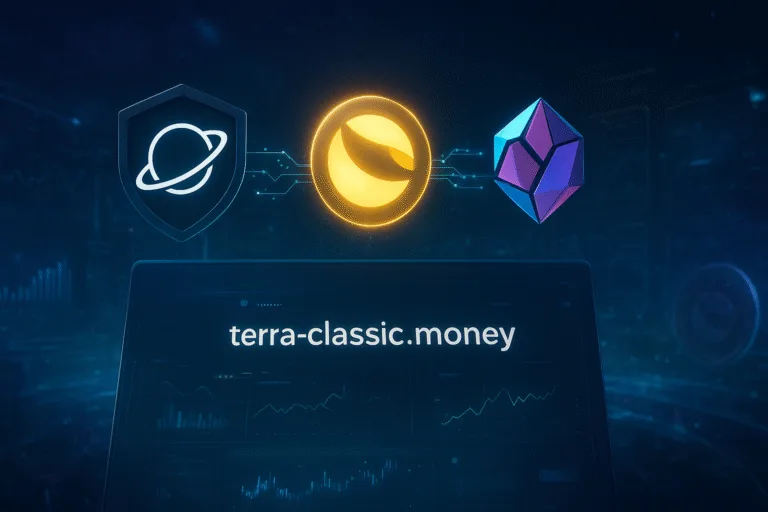
Terra Classic KOLs Vote to Add Orbitar Wallet and Theia Trading to terra-classic.money

The Terra Classic community is advancing its ecosystem by integrating new projects, with Key Opinion Leaders (KOLs) voting to feature Orbitar Wallet and Theia Trading on the official terra-classic.money website. This decision, led by TerraCVita, is a major step to enhance the $LUNC ecosystem, prioritizing native on-chain apps to boost decentralized finance (DeFi) capabilities.

Orbitar Wallet, available on the App Store and Play Store, is a dedicated Terra Classic wallet designed for seamless $LUNC transactions. Supporting validators, stakers, and traders, it simplifies access to Terra Classic tokens and trading pairs. Its inclusion on terra-classic.money highlights its role in strengthening the $LUNC ecosystem, offering users a secure and efficient platform for managing assets.

Theia Trading, accessible at Theia.trading, is a decentralized aggregator for Terra Classic, enabling users to swap assets and track wallets effortlessly. This tool enhances accessibility and user experience, making it a vital addition to the Terra Classic DeFi landscape. Its listing on terra-classic.money reflects the community’s focus on innovative solutions for $LUNC holders.

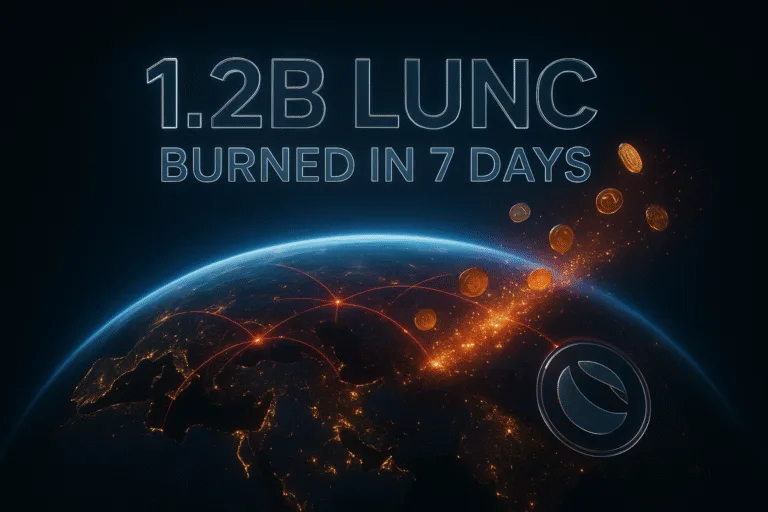
Massive Burn Alert: 1.2 Billion LUNC Wiped Out in Just 7 Days

0

The Terra Classic (LUNC) community has achieved another major milestone this week as more than 1.2 billion LUNC tokens were burned in just seven days. This significant reduction in circulating supply highlights the community’s continued dedication to reviving the Terra Classic ecosystem and strengthening its long-term value.

Token burns are an important mechanism designed to reduce overall supply, which can help balance market pressures and potentially improve price stability over time. The consistent burn activity reflects both individual contributions and organized efforts from validators, exchanges, and community initiatives working toward the same goal.

In the past months, LUNC burn rates have accelerated due to coordinated campaigns and growing awareness among holders. The latest burn figures demonstrate that the Terra Classic community remains fully committed to reshaping the network’s future through practical, transparent actions rather than speculation alone.

As more burns are expected in the coming weeks, all eyes are on how this steady reduction in supply could impact LUNC’s market performance. While burns alone cannot guarantee price increases, they show strong community momentum and reinforce confidence in the project’s ongoing revival strategy.

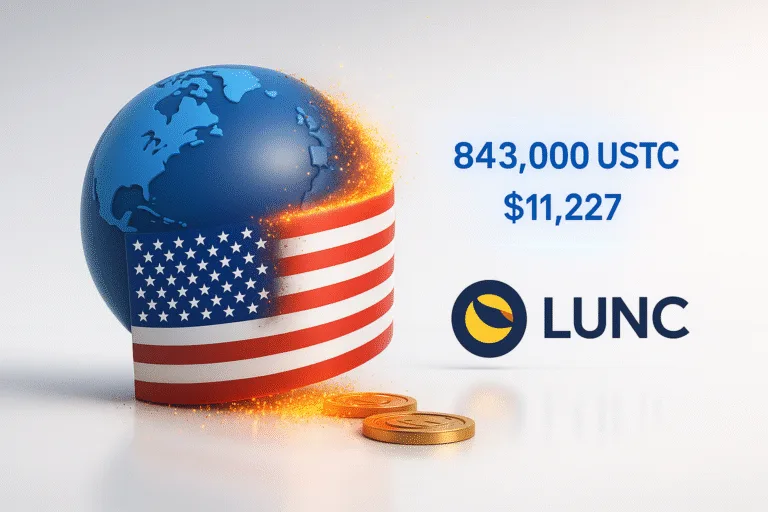
Massive USTC Burn: 843,000 Tokens Worth $11,227 Wiped Out in Just 30 Days

0

The Terra Classic community has executed a significant burn, removing 843,000 USTC from circulation in the past 30 days. This reduction, valued at approximately $11,227, marks another step toward restoring stability and confidence in the embattled stablecoin.

Burns like this are part of the broader strategy to decrease USTC supply and potentially bring its price closer to its intended peg. While the amount burned may appear modest compared to the total supply, every reduction contributes to the long-term recovery efforts of the Terra Classic ecosystem.

The recent burn underscores the ongoing commitment of validators, developers, and community members who continue to push for a stronger and more sustainable future for Terra Classic assets. Market watchers will be keeping a close eye on how these initiatives impact both liquidity and investor sentiment in the coming months.

Crypto Market Wiped Out: $264 Billion Vanishes in Sudden Flash Crash

0

The cryptocurrency market has been rocked by a sudden and severe sell-off, erasing more than $264 billion in market value within hours. Traders were hit hard as $1.03 billion in positions were liquidated, with long positions taking the brunt of the impact.

According to data from Coinspeaker, nearly $700 million of these liquidations occurred in just the last four hours, underscoring how quickly the market turned against over-leveraged positions.

The most dramatic move came from Bitcoin, which plunged from over $121,000 to below $118,000 in a flash. This sharp decline triggered automated liquidations across the market, causing additional downward pressure as traders were forced to close positions.

Analysts point to a combination of macroeconomic pressure, unexpected market data, and high leverage as key factors behind the drop. When prices fell below critical support levels, trading platforms automatically closed large positions to protect lenders and exchanges, accelerating the sell-off.

Despite the violent move, some market observers believe this may only be a short-term correction rather than the end of the broader crypto rally. However, the event serves as a stark reminder of how quickly digital asset markets can reverse and why risk management is essential when trading highly volatile assets.

Terra Classic Oracle Pool Decline: Impact on LUNC and USTC Staking

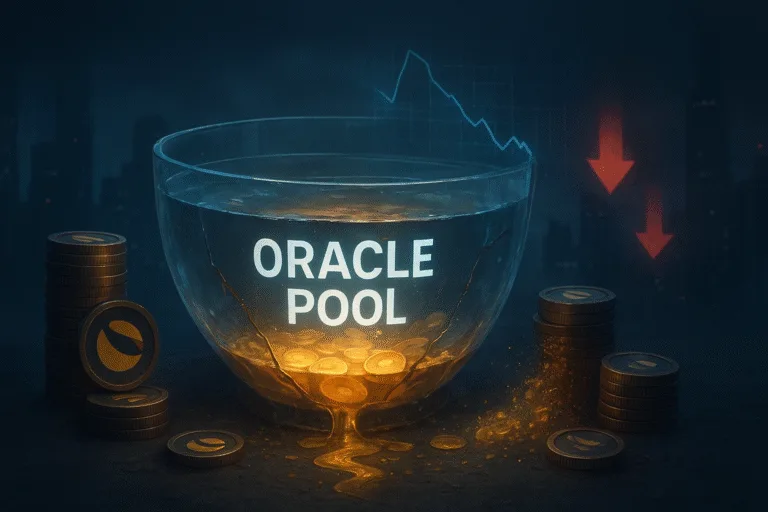
The Terra Classic Oracle Pool, a vital component of the Terra Classic ecosystem, is facing a critical decline in its $LUNC and $USTC funds. This pool, essential for providing staking revenue to validators and users, is funded by 10% of the burns on the Terra Classic chain. Despite these inflows, the pool’s reserves are shrinking, leading to a significant reduction in the Annual Percentage Rate (APR) for $LUNC staking.

Currently, the Terra Classic Oracle Pool holds 63.9 billion $LUNC. While this may seem substantial, it is a small fraction of the 6.5 trillion $LUNC total supply. The diminishing funds directly impact staking returns, threatening the ecosystem’s sustainability. As the APR for $LUNC and $USTC staking decreases, fewer users are motivated to stake, and validators—many already operating at a loss—struggle to continue their services. The low market value of $LUNC and $USTC further complicates the situation, making it challenging to attract and retain validators crucial for the chain’s security.

The decline of the Terra Classic Oracle Pool raises serious concerns about the long-term viability of the Terra Classic chain. For the pool to remain effective, $LUNC and $USTC prices must rise significantly. Without this, the ecosystem risks reduced staking participation and validator support, undermining its stability.

Reactivating the Market Module is essential to address these challenges. This step could stabilize the Terra Classic Oracle Pool, enhance validator incentives, and restore confidence in the ecosystem. The Terra Classic community must act swiftly to reverse the decline and unlock the chain’s bullish potential.

Do Kwon’s Exit: Who Will Lead TFL and Luna Foundation Next?

Do Kwon’s definitive exit from Terraform Labs (TFL) and the Luna Foundation Guard (LFG) has sparked intense speculation about the future of these entities and their impact on Terra Classic ($LUNC) and TerraClassicUSD ($USTC). As the co-founder and former CEO, Kwon’s departure, following the 2022 Terra-Luna crisis, leaves a leadership vacuum. The critical question is: who will take over TFL and LFG, and what does this mean for the Terra ecosystem?

TFL’s current CEO, Chris Amani, recently addressed the transition, emphasizing the community’s growing role. After Kwon stepped down in March 2023, TFL transferred control of the Terra Classic chain to the community, though TFL retains primary ownership. Amani indicated that TFL’s future hinges on the ongoing liquidation process, part of a $4.47 billion SEC settlement. Post-liquidation, TFL could either be acquired by a new owner or shut down entirely, leaving the blockchain ownerless. In either case, the Terra Classic community will have significant influence through governance voting, shaping the chain’s direction.

The outcome of these processes will directly affect $LUNC and $USTC prices. Recent burns of 211 million LUNC and 1.75 billion USTC tokens signal efforts to stabilize the ecosystem, yet prices remain volatile, with LUNC at $0.00005455 and USTC trading at pennies. The community’s optimism is tempered by legal uncertainties, including Kwon’s upcoming April 10, 2025, hearing in New York, which could redefine TFL’s trajectory.

As legal proceedings conclude, the resolution is viewed positively, potentially restoring investor trust. With community-driven governance and possible new leadership, Terra Classic could regain momentum. Stakeholders are closely monitoring these developments, as they will shape the future of $LUNC, $USTC, and the broader Terra ecosystem. Stay updated as events unfold.