Home Blog Page 61

Luna Classic’s Survival Depends on This Tax – Here’s Why We Can’t Cut It

The burn tax has become one of the most crucial mechanisms in maintaining and rebuilding the Terra Luna Classic (LUNC) ecosystem. Some voices in the community have recently suggested lowering the tax rate to encourage higher trading volumes. While this argument might sound appealing at first, reducing the tax at this stage could severely harm the network’s recovery efforts.

1. The Burn Tax Fuels the Community Pool
Without the current tax, the Community Pool would be starved of resources. This pool is essential for funding development, marketing, and initiatives that drive long-term growth. A premature tax reduction would cut off the ecosystem’s ability to reinvest in itself, leaving projects underfunded and progress stalled.

2. Maintaining the Oracle Pool
The Oracle Pool plays a vital role in the network’s infrastructure by funding validator rewards and ensuring blockchain stability. The burn tax directly contributes to sustaining this pool. Reducing the tax now would undermine validator incentives, potentially weakening network security and decentralization.

3. Deflationary Pressure is Needed
One of the biggest goals of the LUNC community is to reduce the token’s massive supply. The burn tax is the primary deflationary mechanism currently in place. Cutting it back would slow down token burns dramatically, delaying supply reduction and making price recovery much harder to achieve.

4. No Better Alternative Exists Yet
Some argue that the ecosystem could switch to a different funding model. However, until a more effective and sustainable alternative is fully designed, tested, and implemented, removing or reducing the tax would be a step backward. The current system, while not perfect, is the backbone of LUNC’s deflationary and funding structure.

Conclusion
The burn tax is more than just a number, it is the lifeline of Luna Classic’s recovery. It powers the Community Pool, sustains the Oracle Pool, and ensures a deflationary trend necessary for long-term success. Until the community agrees on and implements a superior mechanism, reducing the tax would only weaken the network’s ability to rebuild and thrive.

Why Terra Luna Classic Could Be the Next Big Crypto Comeback in 2025

Many people in the crypto space overlook Terra Luna Classic (LUNC), but beneath the surface it holds the potential to become one of the biggest hidden gems in the market.

The strength of LUNC lies in its massive and active community which continuously drives meaningful change through governance proposals and ongoing development. This community-led approach ensures that progress is made based on the collective vision of its holders rather than a centralized leadership.

One of the most significant ongoing efforts is the plan to repeg USTC to one dollar. Achieving this milestone would not only restore confidence but also attract new investors into the ecosystem paving the way for sustainable growth.

Behind the scenes developers are actively building new tools, decentralized applications and modules aimed at making LUNC more stable, scalable and practical for real world use. Unlike many abandoned blockchain projects LUNC thrives because of its fully community driven nature where every major decision is made collectively by token holders.

Additionally the project places a strong emphasis on burning tokens and reducing overall supply which sets the stage for potential long term price recovery.

With its combination of an engaged community, technical improvements and a clear long term vision Terra Luna Classic is quietly preparing for a major comeback. Sometimes the best opportunities in crypto are the ones most people ignore and LUNC might just be one of them.

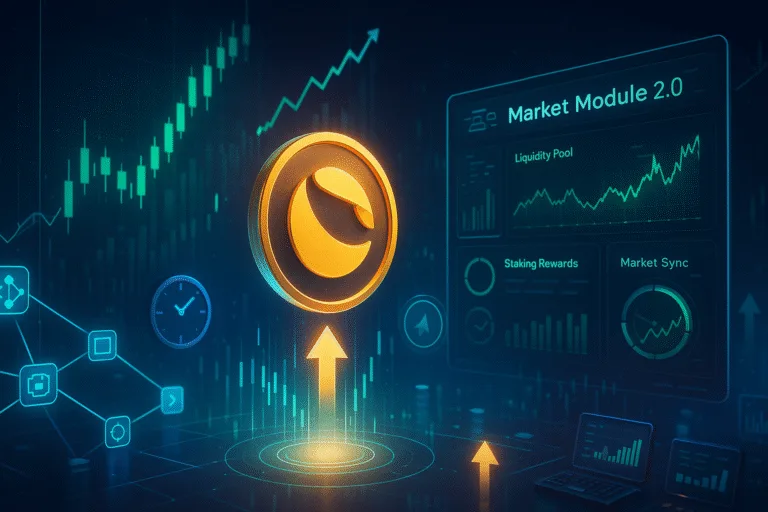
Market Module 2.0: A Catalyst for LUNC and USTC Recovery

The Terra Classic community’s approval of Market Module 2.0 is a game-changer for LUNC and USTC recovery. This upgrade restarts the swap spiral mechanism with a net deflation system, adjusting dynamically to supply changes for a stable market. Its long-term benefits for LUNC and USTC are profound.

Firstly, Market Module 2.0 improves liquidity by optimizing LUNC-USTC swaps, reducing volatility. Enhanced liquidity attracts traders and investors, increasing trading volumes and stabilizing prices. This makes LUNC and USTC more appealing for long-term investment, supporting price recovery.

Secondly, the deflationary mechanism triggers consistent token burns every 30 days, reducing LUNC and USTC circulating supply. By managing the base pool and recovery period, it minimizes manipulation risks, building investor trust. A shrinking supply with steady demand could drive LUNC’s value and aid USTC’s repeg to $1.

Additionally, the module strengthens Terra Classic’s infrastructure, improving security and reliability. Combined with updates like v2.3.2, which resolves sequence mismatches, it positions Terra Classic as a competitive blockchain, potentially attracting institutional interest.

In summary, Market Module 2.0 fosters liquidity, enforces deflation, and enhances ecosystem stability, paving the way for LUNC and USTC recovery. These changes signal a promising future, restoring confidence in Terra Classic’s market relevance.

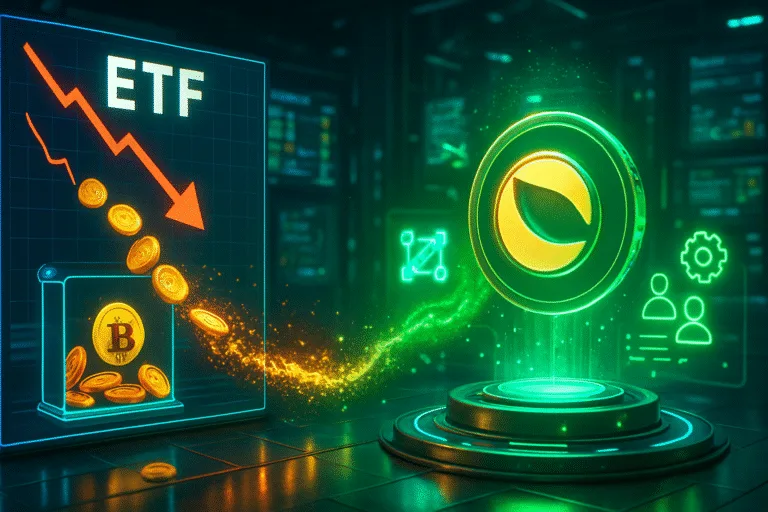
Bitcoin ETF Outflows Boost LUNC: How Terra Classic Can Gains Traction

Crypto traders have withdrawn millions from U.S.-listed Bitcoin ETFs for four consecutive days, with outflows reaching $464.8 million on August 1, 2025, led by BlackRock’s iShares Bitcoin Trust (IBIT). Weak U.S. economic data, including rising inflation and sluggish labor market indicators, has fueled stagflation fears, dampening investor confidence in Bitcoin. This shift is redirecting attention to alternative cryptocurrencies like Terra Classic (LUNC), which is gaining traction amid the market turbulence.

LUNC, the native token of Terra Classic, can benefits as investors seek diversification. The Terra Classic ecosystem, recovering from its 2022 collapse, is seeing renewed interest due to community-driven initiatives like token burns and NFT integrations.

Terra Classic’s potential to capitalize on Bitcoin ETF outflows lies in its low price point ($0.000059) and high trading volume ($8.9M daily), making LUNC an appealing speculative play. Community efforts to expand DeFi and cross-chain interoperability further enhance Terra Classic’s visibility. As Bitcoin faces pressure from stagflation concerns, LUNC’s affordability and ecosystem developments position it as a compelling alternative.

The crypto market’s reaction to U.S. economic data underscores LUNC’s opportunity to shine. While Bitcoin ETF outflows signal caution, Terra Classic’s resilience and strategic advancements could drive LUNC’s growth. Investors are watching closely as Terra Classic leverages this moment to rebuild trust and market presence, potentially sparking a rally for LUNC in the evolving crypto landscape.

The Bitcoin August Curse: Why Crypto Often Struggles This Month and What It Means for You

0

Many crypto investors have noticed a recurring trend: Bitcoin often performs poorly in August. Analysts and market commentators have even labeled this seasonal pattern the “Bitcoin August Curse.” Understanding where this idea comes from and what drives it can help investors avoid panic and make smarter decisions during periods of market weakness.

What Is the Bitcoin August Curse
The August Curse refers to a historical tendency for Bitcoin prices to drop or stagnate during the month of August. Over the last decade, Bitcoin has experienced negative returns in most Augusts. Data shows that in about 70 to 80 percent of these years, Bitcoin posted losses ranging from 5 to 20 percent.

There have been exceptions. In 2017 and 2021, both strong bull market years following Bitcoin’s halving events, August delivered double‑digit gains. However, these outliers have not changed the overall perception that August is usually a challenging month for Bitcoin.

Why Bitcoin Often Struggles in August
Several factors contribute to this seasonal weakness:

1. Lower Trading Activity
August is part of the summer vacation period in major financial markets. This leads to lower trading volumes and less liquidity. When fewer buyers and sellers are active, price swings become more pronounced, often tilting to the downside.

2. Profit‑Taking After Rallies
Bitcoin frequently performs well in the first half of the year. By August, many institutional and retail investors lock in profits, leading to temporary sell‑offs and market consolidation.

3. Market Volatility and Macro Events
August is historically more volatile for global financial markets. Stock market turbulence, changes in economic policy, or unexpected geopolitical events can spill over into crypto, pushing prices lower. Bitcoin’s correlation with riskier assets, like technology stocks, amplifies this effect.

The 2025 Outlook: Will History Repeat Itself
In 2025, Bitcoin entered August after a strong July rally. Early trading showed slight weakness, echoing past seasonal patterns. Analysts have highlighted potential price dips toward 105,000 to 110,000 dollars, and some forecasts even suggest a deeper correction toward 90,000 dollars.

Notably, this year also follows a Bitcoin halving event. In past cycles, post‑halving years have sometimes defied seasonal weakness, as seen in 2017 and 2021. With increased institutional adoption and long‑term bullish momentum, there is a chance that August 2025 could break the traditional pattern.

Robert Kiyosaki and the August Curse Narrative
Robert Kiyosaki, author of Rich Dad Poor Dad, has helped popularize the idea of an August Curse for Bitcoin. He believes that August could bring a notable price drop but sees it as an opportunity rather than a threat.

Kiyosaki has stated that if Bitcoin falls below 90,000 dollars, he plans to significantly increase his holdings. He views these seasonal dips as temporary and believes they often set the stage for future price growth as broader economic instability drives demand for Bitcoin.

What This Means for Crypto Investors
● For beginners and experienced investors alike, understanding seasonality is important. Here are a few takeaways:

● August has historically been a weaker month for Bitcoin, so short‑term price drops are not unusual.

● Seasonal weakness does not signal the end of long‑term upward trends. Many past declines were followed by strong recoveries.

● Periods of lower prices can present buying opportunities for long‑term investors who believe in Bitcoin’s future.

● It is essential to combine seasonal data with on‑chain metrics, market sentiment, and technical analysis before making trading decisions.

Final Thoughts
The Bitcoin August Curse is less about superstition and more about recurring market behavior shaped by lower liquidity, profit‑taking, and broader financial volatility. While 2025 may follow historical patterns, post‑halving momentum and growing institutional support could create a different outcome this time.

For most investors, the best approach is to stay informed, avoid emotional trading during seasonal dips, and focus on long‑term fundamentals rather than short‑term fluctuations.

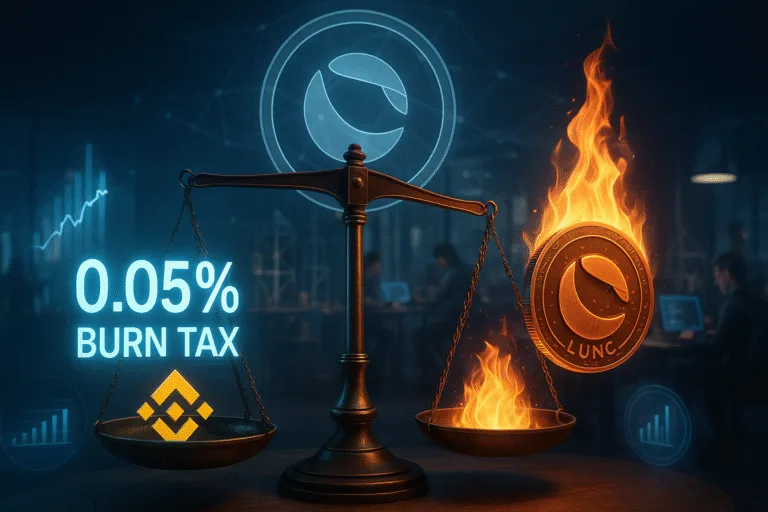
Is It Time to Align the Burn Tax to 0.05%?

The Terra Classic community is once again faced with an important strategic question: Should we set the on-chain burn tax to 0.05% to better align with the real-world trading environment, particularly with the example set by our largest supporter, Binance?

Currently, the on-chain burn tax is higher, which means that decentralised trading and simple token transfers are penalised more heavily than many off-chain alternatives. By adjusting the rate to 0.05% — the equivalent of burning 50% of Binance’s 0.1% trading fee — we would be directly mirroring a proven and sustainable model.

This change could open the door for greater arbitrage opportunities and increased transaction volumes across decentralised applications. Higher on-chain activity means more liquidity, more engagement, and more opportunities for the Terra Classic ecosystem to thrive.

The potential benefits go far beyond short-term market movements:

📈 Increased Demand for LUNC

A friendlier environment for traders and arbitrageurs would drive more use of LUNC, increasing market depth and liquidity.

🫂 Support for Sustainable Project Teams

More volume creates more fee revenue for builders, ensuring teams working on Terra Classic can continue delivering innovation.

👨‍🎓 A Sign of Maturity

Adopting a commercially sensible tax rate shows the market that Terra Classic has grown into a pragmatic, forward-thinking ecosystem.

🔥 Recognition of Off-Chain Partners

Setting a realistic tax respects and supports partners like Binance and encourages other exchanges to contribute sustainably without harming their competitiveness.

By setting the burn tax at a level that works for both decentralised users and centralised exchange partners, we send a clear message: Terra Classic is ready to balance community ideals with commercial viability. This small change could be the spark that fuels the next phase of our growth.

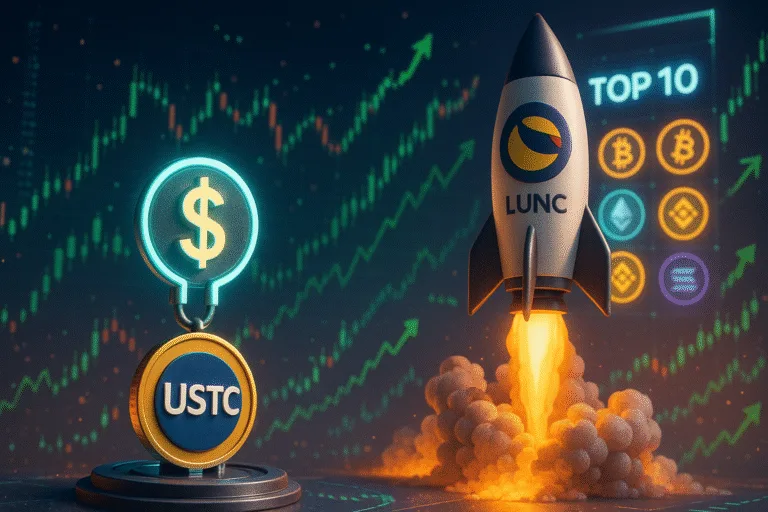
How USTC Repeg Can Propel LUNC Back to Top 10 Cryptos

Terra Luna Classic (LUNC) aims to reclaim its spot among the top 10 cryptocurrencies, and repegging TerraClassicUSD (USTC) to $1 is a critical step. After the 2022 collapse, where USTC lost its dollar peg, causing LUNC’s value to plummet, the Terra Classic community is rallying to restore stability and investor confidence.

Repegging USTC involves developing a robust system to stabilize its value at $1. Proposals like Vegas Morph’s include oracle integration for real-time price feeds, a 20% burn mechanism on transaction fees, and a hard cap on LUNC and USTC supply to prevent excessive minting. These measures aim to avoid past mistakes, such as the 2022 death spiral, ensuring a secure, decentralized stablecoin. A $250,000 bounty, potentially rising to $1 million, incentivizes developers to create this flawless system.

A successful USTC repeg could significantly boost LUNC’s value. By restoring trust in USTC, the Terra Classic ecosystem could attract investors and projects, increasing on-chain activity. Initiatives like the Tax2Gas proposal and token burns, which reduced LUNC’s supply by 17.87 billion last year, further support price growth. Higher trading volumes and staking, as seen in recent 15% price spikes, indicate renewed interest.

However, challenges remain. LUNC’s current price of $0.00005934 and market cap of $333.51 million pale compared to its $119.01 all-time high. Outpacing 63% of top 100 cryptos requires consistent demand and flawless execution. If the community’s efforts succeed, LUNC could see substantial gains, potentially returning to the top 10. Continued burns, upgrades like v3.3.5, and community-driven projects like Ceramics Repeg will be key to this revival.

Why Now Is the Time to Invest in LUNC with Market Module 2.0

Terra Luna Classic (LUNC) is emerging as a promising investment in 2025, especially with the anticipated approval of Market Module 2.0. This upgrade positions LUNC for a bright future, making now an ideal time to invest in LUNC. Here’s why LUNC is gaining traction and how Market Module 2.0 can drive its growth.

Market Module 2.0 is set to enhance the Terra Classic blockchain by improving transaction efficiency, validator incentives, and network stability. These changes aim to make LUNC more attractive for DeFi projects and developers, boosting its ecosystem. Additionally, the Terra Classic community’s ongoing token burn program reduces LUNC’s circulating supply, potentially increasing its value. With a current price of around $0.000059 and a market cap of $332.58M, LUNC offers a low entry point for investors.

Recent upgrades, like v2.3.2, highlight the community’s commitment to technical improvements and rebuilding trust. Analysts are optimistic, forecasting LUNC could reach $0.00014 by 2030, driven by burns and ecosystem growth. Events like the Cosmos InterChain Summit further fuel positive sentiment, as proposals like Market Module 2.0 gain support.

Binance’s backing, including its token burn contributions, adds credibility to LUNC’s recovery. Investing in LUNC now allows you to capitalize on its potential before wider adoption. While cryptocurrency carries risks, LUNC’s proactive development and strong community make it a compelling choice.

Why invest in LUNC now? The combination of Market Module 2.0, token burns, and growing DeFi interest signals a bullish outlook. Research thoroughly, but don’t overlook LUNC’s potential for long-term gains in the evolving crypto market.

LUNC vs Rune? Why Luna Classic Outshines the Competition

When pitting Luna Classic against Rune, the native token of THORChain, it’s clear that Luna Classic emerges as the superior choice for investors seeking true decentralisation, community-driven growth, and long-term potential.

Price Performance: LUNC’s Steady Recovery vs. RUNE’s Steep Dive
● Over the past week, Luna Classic has demonstrated impressive grit in a volatile market.
● Starting from a low of $0.000056, LUNC reached a high of $0.000065 before settling at around $0.000059—a net decline of about 7.79%, but with a notable 5% rebound from its weekly bottom.
● This stability comes amid healthy trading volumes exceeding $10 million daily, signalling sustained investor interest and liquidity that cushions against broader market dips.
● In contrast, RUNE has suffered a much harsher blow, plummeting 13.70% over the same period, from highs around $1.47 to a current price of about $1.31.
● With trading volumes at $52 million, RUNE’s drop highlights its vulnerability to market swings, underperforming the global crypto average which fell only 4%.
● Luna Classics smaller weekly decline (7.79% vs. RUNE’s 13.70%) underscores its defensive strength—it’s not just weathering the storm; it’s positioning for a comeback.

12-Month Performance: LUNC’s Resilience vs. RUNE’s Significant Losses
● Extending the lens to the past 12 months (from August 4, 2024, to August 4, 2025), Luna Classic has shown far greater resilience amid ongoing market challenges.
● Luna Classic started the period around $0.000079 and is now trading at approximately $0.000059, representing a decline of about 25%.
● While this reflects broader crypto volatility, Luna Classic losses are mitigated by its strong community initiatives, including aggressive token burns by Binance.
● In sharp contrast, RUNE has endured a much steeper downturn, dropping around 62.45% over the same 12-month span—from roughly $3.50 to its current $1.31.
Luna Classics comparatively milder decline demonstrates its ability to hold value better in prolonged bearish conditions, reinforcing why it’s a standout for those seeking a token with proven endurance and recovery potential.

Future Potential: LUNC’s Bullish Horizon
In summary, while RUNE maintains its specialized role in cross-chain liquidity provision, Luna Classic distinguishes itself as a more resilient and promising asset in the current cryptocurrency landscape. Backed by exceptional durability, a highly engaged community driving continuous innovation and a compelling trajectory for future growth.
Luna Classic not only competes effectively but consistently outperforms its peers. For investors navigating volatile markets, Luna Classic represents a strategic opportunity for sustained value appreciation and long-term success.

Terra Classic in Crisis: Market Module 2.0 Proposal Tears Community Apart

The Terra Classic blockchain is once again at a turning point as the latest proposal : Market Module 2.0 (No-Mint), sparks intense debate within the community. This proposal has divided the network into two clear camps: those who support it as a necessary step forward, and those who strongly oppose it.

From the perspective of Orbit Wire Validator, this proposal represents something Terra Classic desperately needs. For nearly three years, the chain has struggled to find major innovation capable of pushing it forward. Without bold steps like Market Module 2.0, Terra Classic risks remaining stagnant.

Freedom of Speech vs. Personal Bias
Healthy debate is essential for any decentralized ecosystem. Supporters and opponents alike should have the freedom to express their opinions. However, the current rejection of the proposal seems less about its technical merits and more about personal conflicts surrounding its author. Instead of constructive criticism aimed at improving the proposal, much of the opposition feels rooted in validator politics.

The Layer 1 Dilemma
Some argue that innovation is already happening through multiple developers and projects. But a closer look reveals that most activity is happening on Layer 2, while Layer 1 development faces hostility. Developers who attempt to work on the core chain often face backlash and heavy criticism, discouraging much-needed progress on the blockchain itself.

The $1 Dream and False Promises
Many in the community share a vision of LUNC returning to $1. Unfortunately, this dream is often paired with unrealistic promises, such as claims that Binance will burn 2–3 trillion tokens. In reality, these narratives have served more to attract delegators than to create actionable strategies.

The Real Question: What Now?
How long can the community afford to wait, hoping for change without taking bold action? Division and hesitation only delay progress. The ecosystem doesn’t require everyone to agree, but it does need professionalism, an environment where developers can introduce meaningful proposals without fear of personal attacks.

If Terra Classic truly aims to evolve, it must allow space for innovation on Layer 1 and focus on constructive dialogue, not validator politics. Market Module 2.0 (No-Mint) may be controversial, but it could also be the catalyst the chain needs to break free from years of stagnation.