Home Blog Page 67

Solana (SOL) vs. Terra Luna Classic (LUNC): Why LUNC Stands Out

Solana (SOL) and Terra Luna Classic (LUNC) are prominent layer-1 blockchain tokens, each with distinct features. Solana is renowned for its high scalability, fast transaction speeds, and low fees, leveraging a Proof of History consensus mechanism for censorship resistance.

Its ecosystem supports smart contracts, NFTs, and DeFi, but it has faced network outages, raising concerns about stability. LUNC, the original token of the Terra blockchain, rebranded after the 2022 UST collapse, focuses on community-driven governance and decentralization, operating without a stablecoin peg.

Solana’s strengths lie in its technical prowess, with a robust team delivering frequent updates. However, its centralization and venture capital influence have drawn criticism. LUNC, despite its turbulent past, has shown resilience through community-led revival efforts, including a 1.2% tax burn policy to reduce its 5.6 trillion circulating supply, aiming for a 10 billion token target. This deflationary mechanism could enhance LUNC’s value over time.

LUNC’s edge over SOL stems from its community focus and lower entry price, attracting investors seeking high growth potential. As of February 2025, LUNC trades at $0.000065, with a market cap of $361.7 million, while SOL is at $145.58. LUNC’s staking ratio has climbed to 15.85%, signaling growing investor confidence. Over 406 billion tokens have been burned, reducing supply and potentially driving price appreciation. Solana’s higher fees and occasional network issues contrast with LUNC’s stability in high-data scenarios.

While Solana excels in scalability, LUNC’s community-driven approach, deflationary strategy, and lower cost make it a compelling choice for risk-tolerant investors betting on its ecosystem revival.
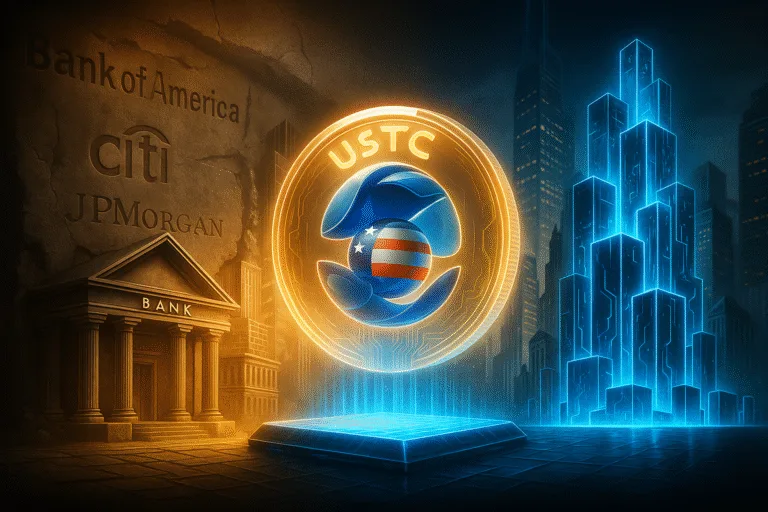
Big Banks Are Changing Their Mind About Stablecoins — USTC Still Has a Shot

For a long time, banks didn’t trust crypto. But now, big names like Bank of America, Citigroup, and JPMorgan are starting to look at stablecoins more seriously. They aren’t launching anything yet, but they’re studying it, testing ideas, and waiting for clear rules.

This shows a big shift in traditional finance banks are no longer ignoring crypto.

So, What Is USTC?
USTC is a stablecoin from the Terra Classic chain. It was meant to stay at $1 using an algorithm. But in 2022, that system failed and USTC crashed. Many thought it was dead.

But the Terra Classic community is still trying. They stopped creating new USTC and are working to bring it back. Some even talk about KRTC (a Korean version) and EUTC, Euro versions of USTC.

Why It Matters
Banks are only now starting to look at stablecoins. But Terra Classic already built one and is trying to fix it. Even though USTC failed once, it shows how crypto can move faster than banks. Now both sides are watching each other.

Altcoin Explosion Unleashed: Ethereum ETF Frenzy Ignites Crypto Mania as LUNC Joins the Surge

The crypto market is roaring back with a vengeance. After weeks of sideways action, a powerful wave of optimism is sweeping through altcoins, driven by massive capital inflows into Ethereum ETFs, explosive meme coin rallies, and a rising appetite for risk. At the center of this altcoin revival is a familiar name, Terra Luna Classic (LUNC) now catching fire alongside Ethereum and other top gainers.

Ethereum ETF Inflows Set the Stage
Ethereum is leading the altcoin charge as institutional investors pour billions into newly approved spot ETFs. Just this past week, U.S listed Ethereum ETFs attracted between 700 million and 900 million in fresh capital. Over the last 12 weeks, ETH focused funds have seen nearly 1 billion in inflows, outpacing Bitcoin related products.

The excitement is fueled by the long-awaited listing of products like the iShares Ethereum Trust and the VanEck Ethereum ETF. Ethereum’s price has responded in kind, jumping over 43 percent in just 20 days and reclaiming levels above 3300 dollars.

These developments are not just about Ethereum. Historically, strong ETH momentum has triggered broader altcoin runs and that pattern is playing out again now.

Meme Coins Ignite Retail FOMO
With Bitcoin stabilizing near all-time highs, the attention has shifted to speculative altcoins and meme-driven tokens. Coins like Dogecoin and BabyDoge are seeing massive volume spikes, while Solana-based meme tokens are making headlines with sudden triple digit gains.

This kind of market behavior typically signals the early stages of an altcoin season, where retail investors chase volatility and undervalued tokens start outperforming. And in this environment, LUNC is beginning to turn heads.

LUNC Emerges as a Comeback Contender
Terra Luna Classic is quietly becoming one of the most watched altcoins in this rally. Often overlooked, LUNC has gained over 10 percent in the past week and is trading above 0.000065 dollars. Its 24-hour trading volume sits around 14 million dollars, signaling increasing market interest.

While not driven by a single event, LUNC’s resurgence is being supported by a mix of market dynamics. As money flows into ETH and meme coins, traders are rotating into lower-cap assets with high upside potential. LUNC fits that profile perfectly.

Its historical significance, combined with a dedicated community and low current valuation, makes it an attractive speculative play in the current cycle. If the broader altcoin trend holds, LUNC could emerge as one of the surprise winners.

What It Means for the Market
This wave of euphoria is not just a flash in the pan. Ethereum’s ETF momentum is institutional in scale. Meme coin rallies show retail interest is alive and well. And altcoins like LUNC are proving that the market is ready to reward high-risk bets once again.

As long as Ethereum ETFs keep attracting capital and Bitcoin holds its ground, the current cycle may continue pushing altcoins higher. For traders and investors, the message is clear—the altcoin season is not just coming. It may already be here.

And LUNC might just be getting started.

Crypto Comeback Shocks the Market as 92 Out of 100 Coins Turn Green Overnight

0

After a sharp pullback last week, the crypto market has staged an unexpected and powerful rebound. As of today, 92 of the top 100 cryptocurrencies are back in the green, catching many investors and analysts off guard.

The turnaround appears to be driven by a surge in global risk appetite, a wave of renewed institutional interest, and strong technical support across major assets like Bitcoin and Ethereum. According to TradingView data, the total crypto market cap excluding Bitcoin is now back above key support levels, signaling a potential continuation of the upward trend.

Bitcoin and Ethereum Lead the Charge

Bitcoin surged past the 119000 mark today, gaining over 2 percent from its previous session. Ethereum followed closely, rising more than 9 percent in 24 hours to reach above 3370 dollars. Both assets have regained momentum as optimism builds around regulatory clarity and broader economic stability.

Altcoins Join the Rally

This is not just a Bitcoin and Ethereum story. Altcoins across the board have flipped green. Coins like Solana, Avalanche, and Chainlink have posted double-digit gains, benefiting from improved liquidity and renewed market confidence. The fact that over 90 percent of top cryptocurrencies are now rising indicates a broad and healthy recovery, not just isolated rallies.

Risk Appetite Returns

Investors are once again embracing risk. With the stock market pushing higher and global inflation data easing, traders are turning to crypto as a potential high-return opportunity. This shift in sentiment has helped reverse last week’s losses in just a matter of days.

Caution Still Remains

Despite the excitement, analysts warn that volatility remains high. The market is still sensitive to macroeconomic news, especially from the United States and China. Any unexpected policy change or global shock could quickly undo recent gains.

Conclusion

Today’s dramatic shift in market momentum is a reminder that crypto moves fast. With 92 of the top 100 coins turning green, the recovery appears strong and widespread. But while this rebound is promising, traders should remain alert as the next few days will be crucial in confirming whether this rally has real staying power.

Trump Secures Support for GENIUS Act to Boost Stablecoins and LUNC

On July 16, 2025, President Trump rallied support for the GENIUS Act, a bill to regulate stablecoins, set for a House vote during “Crypto Week.” This legislation, already Senate-approved, promises to stabilize the $250 billion stablecoin market, significantly benefiting Terra Classic (LUNC).

The GENIUS Act mandates liquid-asset backing, audits, and disclosures for stablecoins, fostering trust and adoption. For LUNC, this means increased liquidity and investor confidence as stablecoins thrive on Terra Classic’s blockchain. With clearer regulations, institutional players are likely to engage more with platforms like Terra Classic, boosting LUNC’s utility in DeFi and payments.

The Act’s ban on central bank digital currencies further strengthens LUNC’s position by reducing competition. As stablecoins integrate into mainstream finance, LUNC could see heightened demand, driving its value. With a projected $2 trillion stablecoin market, LUNC is primed for growth in this regulated, innovative crypto landscape.

LUNC Soars as US Congress Kicks Off “Crypto Week” to Debate Key Bills

The U.S. House of Representatives launched “Crypto Week” on July 14, 2025, sparking a surge in Terra Classic (LUNC) as lawmakers debate three pivotal bills: the CLARITY Act, GENIUS Act, and Anti-CBDC Surveillance State Act. LUNC, the native token of the Terra Classic blockchain, has stolen the spotlight, climbing over 15% this week as investors anticipate regulatory clarity fueling its revival.

The CLARITY Act aims to define digital asset oversight, splitting regulatory roles between the SEC and CFTC to resolve long-standing uncertainties. This could bolster LUNC’s ecosystem by fostering institutional trust. The GENIUS Act, already Senate-approved, targets stablecoin regulation, requiring 1:1 cash reserves and strict compliance, indirectly supporting LUNC’s stablecoin integrations like USTC. Meanwhile, the Anti-CBDC Act seeks to block the Federal Reserve from issuing a retail central bank digital currency, aligning with crypto advocates’ push for decentralized assets like LUNC.

However, Crypto Week hit a snag on July 15 when a procedural vote failed, with 12 Republicans, including Rep. Marjorie Taylor Greene, opposing the bills over concerns about potential CBDC loopholes and insufficient amendments. Despite the setback, LUNC’s price surged, reflecting market optimism about eventual passage.

For LUNC investors, Crypto Week is a game-changer. Clear regulations could unlock mainstream adoption, driving LUNC’s utility in DeFi and payments. While political tensions persist, with Democrats like Rep. Jim McGovern criticizing the bills as industry-biased, the crypto community remains hopeful. LUNC’s rally underscores its potential as a key player in the evolving U.S. crypto landscape.

LUNC Holders Shocked as Almost 100 Billion Tokens Suddenly Unstaked

In a surprising and dramatic move on July 15, 2025, nearly 100 billion LUNC tokens were undelegated from Terra Classic validators, sparking widespread discussion and concern across the LUNC community.

What Happened?
According to on-chain data, multiple large wallets suddenly withdrew their staked LUNC, a process known as undelegation. This massive activity resulted in one of the largest undelegation events in Terra Classic’s recent history.

Such a large-scale undelegation can significantly impact both network security and market confidence, since staking is crucial to keeping the Terra Classic blockchain secure and stable.

Why Did It Happen?
At the time of writing, there is no official explanation from the involved parties.
However, the event has raised several questions within the community:

● Was it a coordinated move by a few large validators or whales?

● Is a new proposal or event triggering a shift in staking strategy?

● Are these tokens being prepared for trading or off-chain use?

Speculation ranges from strategic repositioning before governance votes to concerns over future upgrades or validator rewards.

What It Means for LUNC Holders
While this event does not necessarily mean panic, it’s a wake-up call.
Undelegating such a massive amount of LUNC could lead to:

● Increased LUNC supply on the market if tokens are sold

● Validator rank reshuffling, as power shifts to new players

● More voting power concentration or decentralization, depending on re-delegation patterns

The community is advised to monitor validator movements closely and stay engaged with ongoing proposals and governance decisions.

A Turning Point?
This undelegation event may signal a critical shift in the Terra Classic ecosystem. Whether it’s the start of a major realignment or a temporary repositioning, the move reflects the dynamic and evolving nature of the LUNC network.

Community leaders and developers are expected to comment on this in upcoming governance calls. Until then, eyes remain on the blockchain and the wallets holding the now-liquid 100 billion LUNC.

Over 1.2 Billion LUNC Burned in Just 7 Days – Is This the Spark Terra Classic Needed?

In a surprising turn of events, the Terra Classic (LUNC) community has burned more than 1.2 billion LUNC tokens in the past week alone. This massive token reduction is part of the ongoing effort to restore the value and long-term sustainability of the LUNC ecosystem. For new investors and community members, this burn is more than just a number, it signals increasing momentum behind the revival of Terra Classic.

What Is a Token Burn and Why Does It Matter?

A token burn is when cryptocurrency tokens are permanently removed from circulation by sending them to a dead wallet. This reduces the total supply of tokens, which can increase scarcity. Just like rare collectibles or limited edition items, the fewer tokens that exist, the more valuable each one can become over time, if demand continues to rise.

In the case of LUNC, burning is a key part of the community-led strategy to reduce the oversized supply left after the 2022 collapse of Terra. From trillions in circulation, the goal is to bring the number down to a healthier level and restore confidence in the ecosystem.

What Triggered This Week’s Burn Surge?

This week’s burn of over 1.2 billion LUNC was largely driven by contributions from major community platforms, validator fees, and user-generated transaction fees. One of the biggest contributors continues to be Binance, which has been regularly supporting LUNC burns through its trading fee contributions.

In addition, many individual community members are now using dApps, wallets, and services that automatically support burning, showing that awareness and participation are on the rise.

Why This Is a Big Deal for the Terra Classic Community

The weekly burn of more than 1.2 billion LUNC shows that the burn mechanism is alive and well. It also means that more people are using the network, trading LUNC, and participating in ecosystem activities.

For long-time holders, this burn is a reminder that the community is still strong and focused. For new investors, it shows that Terra Classic is not just surviving but steadily progressing through community effort and strategic actions.

Looking Ahead

If this pace continues or even accelerates, LUNC could see meaningful changes in its tokenomics. While price movements depend on many factors, a decreasing supply is often viewed as a positive sign by the market.

The Terra Classic community has proven again that it is committed to rebuilding. And this 1.2 billion burn may be just the beginning of a much larger shift.

Stay informed. Stay involved. The LUNC story is still being written.

Why the Crypto Market Suddenly Dropped — What New Investors Must Know

The crypto market saw a noticeable dip today after a strong upward run over the past few days. Major coins like Bitcoin, Ethereum, Solana, LUNC and Dogecoin experienced price declines ranging from 3 to 7 percent. While this may be concerning for some investors, especially those new to crypto, analysts say the correction is both expected and healthy.

Here is a breakdown of the main reasons behind the drop:

1. Investors Are Taking Profits After a Strong Rally
Over the past month, many cryptocurrencies reached new highs. For example, Bitcoin briefly touched above 123 thousand US dollars, and Ethereum climbed past 6 thousand. After such a strong rally, many investors chose to take profits. In fact, an estimated 3.5 billion dollars in gains was realized in the last 24 hours. This kind of selling can cause prices to fall temporarily across the market.

2. Large Holders Triggered Selling Pressure
Another factor is the behavior of large crypto holders, often called “whales.” Some of these whales moved their holdings to exchanges, a move that often signals they are preparing to sell. When large amounts of crypto are sold at once, it can lead to price drops. These big moves can also trigger automatic sell orders or liquidations in the futures and margin markets, which adds to the downward pressure.

3. Natural Cooling After a Hot Market
Markets rarely move in a straight line. After a strong rally, it is common for prices to take a breather. Analysts call this a “cooling-off period” or “correction.” It helps the market find a healthier balance between buyers and sellers. While the price drop may feel sharp, it is a natural part of how financial markets work and not necessarily a sign of deeper problems.

4. Caution Ahead of Key U.S. Crypto Regulations
This week is being called “Crypto Week” in Washington, D.C., where lawmakers are discussing several important bills that could shape the future of cryptocurrency in the United States. Some of these bills are expected to give clearer legal definitions to crypto assets and stablecoins. While many in the industry are hopeful, investors are still waiting to see how the debates unfold. This uncertainty can cause short-term hesitation in the market.

What Should New Investors Keep in Mind?
● Price dips are normal after strong rallies.

● Big players sometimes cause short-term price swings.

● Regulations can create short-term uncertainty but may help the market in the long term.

● It is important to look at the long-term potential of the technology, not just the day-to-day price movements.

Final Thoughts
The drop in the crypto market today is part of a normal cycle. While some investors may be nervous, especially those new to crypto, the broader outlook for the industry remains strong. Clearer regulation, increased adoption by banks and institutions, and continued interest from global investors are all signs that crypto is becoming a permanent part of the financial world.

As always, new investors should take time to research, manage risk, and focus on long-term goals rather than short-term price changes.

The Altseason Sign: What It Means and Why LUNC Matters

In the world of cryptocurrency, you may hear the term “altseason” being used a lot. If you are new to crypto, this article will help you understand what altseason means, how to recognize it, and why it could be important for a coin like LUNC.

What Is Altseason?
Altseason is short for “altcoin season.” It is a period when altcoins, which are any cryptocurrencies other than Bitcoin, begin to rise in value much faster than Bitcoin. During this time, many altcoins can give much higher returns compared to Bitcoin, especially small to mid-sized projects.

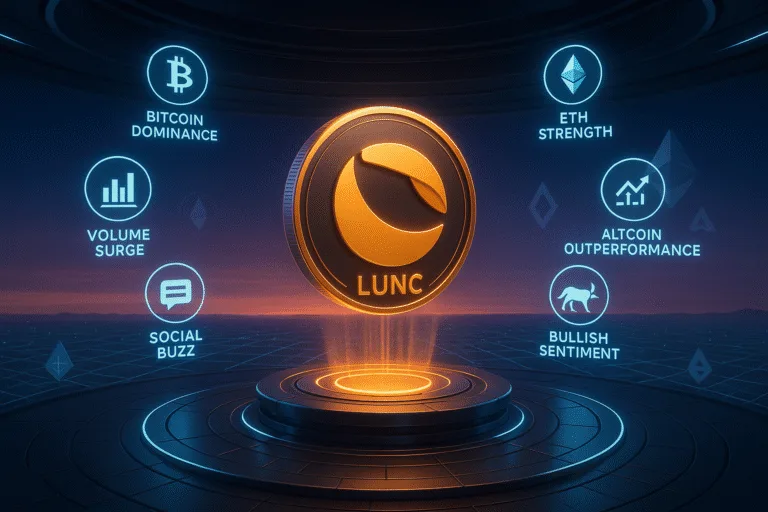
Signs That Altseason Is Starting
There are some common signs that help traders and investors know when altseason might be starting:

1. Bitcoin Dominance Goes Down
Bitcoin dominance refers to how much of the total crypto market value is held in Bitcoin. When this percentage begins to fall, it usually means money is moving into altcoins. A drop in Bitcoin dominance is one of the first signs that altseason is starting.

2. Altcoins Outperform Bitcoin
Another sign is when many altcoins are going up in price faster than Bitcoin. Some altcoins can go up 10 percent to 50 percent or more in a single day, while Bitcoin moves more slowly.

3. Ethereum Leads the Way
Ethereum is usually the first altcoin to perform well before others follow. If the ETH to BTC chart is going up, it often signals that altcoins in general are gaining strength.

4. More Online Buzz Around Altcoins
When more people start talking about altcoins on social media, in Telegram groups, and on YouTube, it usually means interest in altcoins is growing. You will see more content about lesser-known tokens and their potential gains.

5. Crypto Market Is Bullish
Altseason usually happens during a bullish market. That means prices are generally going up across many tokens. Investors feel more confident and are willing to take more risks with smaller altcoins.

6. Altcoin Trading Volume Increases
A strong signal is when the daily trading volume of altcoins increases. This means more people are buying and selling altcoins, showing that the market is active and moving.

Why LUNC Could Benefit During Altseason
LUNC, also known as Terra Classic, is one of the altcoins that many people are watching closely. While it has faced a difficult past, the community around LUNC is still strong. With new developments, burns, and ongoing efforts from the community and developers, LUNC has the potential to perform well during an altseason.

In times when investors are looking for opportunities beyond Bitcoin and Ethereum, coins like LUNC can gain more attention. The lower market cap compared to major coins means that even a small increase in interest can lead to large price movements.

Conclusion
Altseason is an exciting time in the crypto market when altcoins can outperform Bitcoin. For newcomers, it can be a chance to learn and possibly benefit from fast market changes. Keep an eye on key signs like Bitcoin dominance and Ethereum strength, and remember that altcoins like LUNC could see major action during this period.

Always do your own research and invest carefully. The crypto market moves quickly, and being informed is your best tool.