
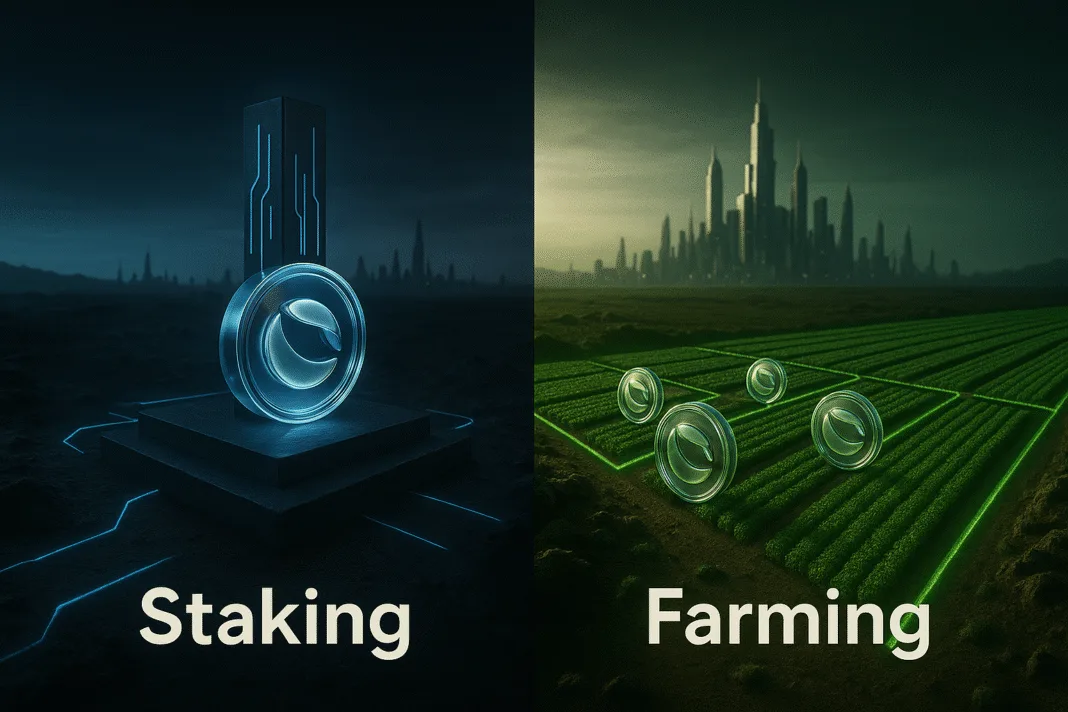


In the world of crypto, two popular ways to earn passive income are staking and farming. They both let you grow your tokens over time, but they work in different ways. Understanding the difference can help you make smarter decisions and avoid risks.
What Is Staking?
Staking is when you lock your crypto tokens in a blockchain network to help keep it running. In return, you earn rewards. This is most common in proof-of-stake blockchains like Terra Classic, Ethereum 2.0, and Cosmos.
When you stake your tokens:
1. You are helping secure the network
2. You earn a fixed or variable reward
3. You can usually un-stake after a short waiting time
Example: On Terra Classic, staking LUNC with a validator can give you steady rewards over time.
What Is Farming?
Farming, also known as yield farming or liquidity farming, is when you deposit tokens into a DeFi (decentralized finance) platform, usually into a liquidity pool. You earn rewards from trading fees and bonus tokens.
When you farm:
1. You provide liquidity to a token pair (for example, LUNC and USDC)
2. You earn rewards based on how much your tokens are used
3. You take on more risk, including impermanent loss
Example: You can farm by adding LUNC and USDC to a DeFi platform and earn a percentage of trading fees and extra tokens.
Which One Should You Choose?
1. Choose staking if you want a safer and simpler way to earn.
2. Choose farming if you understand DeFi and are willing to take more risk for higher rewards.
You can also combine both: stake some tokens for safety and farm with others for growth.