
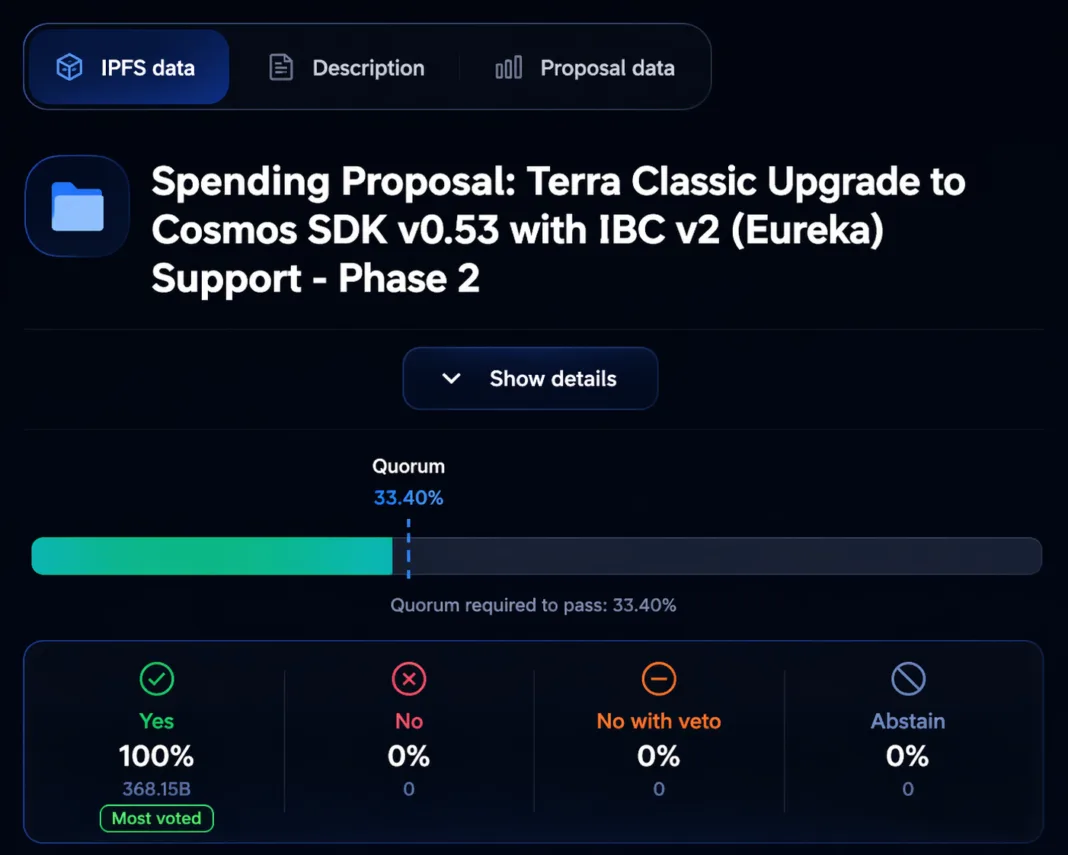

The Terra Classic (LUNC) ecosystem is once again at a pivotal moment, as the community actively votes on a key spending proposal aimed at advancing the network’s long-term technical evolution. The proposal—titled “Terra Classic Upgrade to Cosmos SDK v0.53 with IBC v2 (Eureka) Support – Phase 2”—represents the next step in a broader modernization strategy designed to strengthen interoperability, scalability, and developer adoption.
Following the successful completion of Phase 1, which initiated the groundwork for upgrading the chain, Phase 2 focuses on finalizing implementation and ensuring the network is fully aligned with the latest Cosmos infrastructure. This upgrade is particularly significant because it introduces Cosmos SDK v0.53, a major release that enhances performance and provides a smoother upgrade path for future developments.
At the core of this proposal is the integration of IBC v2 (Eureka), a next-generation version of the Inter-Blockchain Communication protocol. This upgrade simplifies cross-chain interactions and enables more efficient connectivity with external ecosystems, allowing Terra Classic to interact seamlessly with major blockchains. The result is a more open and liquid network capable of attracting new decentralized applications and liquidity flows.
The governance vote reflects Terra Classic’s community-driven nature, where validators and delegators directly shape the chain’s future. The proposal is currently in the voting phase, reinforcing the importance of decentralized decision-making in steering critical upgrades.
From a strategic perspective, this upgrade aligns with LUNC’s broader roadmap, which emphasizes cross-chain expansion, infrastructure stability, and renewed developer engagement. Enhanced interoperability is widely viewed as a bullish catalyst, as it can increase network utility, transaction volume, and overall ecosystem relevance.
As voting progresses, the outcome of Phase 2 could mark a defining milestone for Terra Classic—positioning it not just as a recovering chain, but as a competitive player in the evolving multichain landscape.