


Luna Classic Falls 30 Percent as Bitcoin Led Market Sell Off Pressures Altcoins
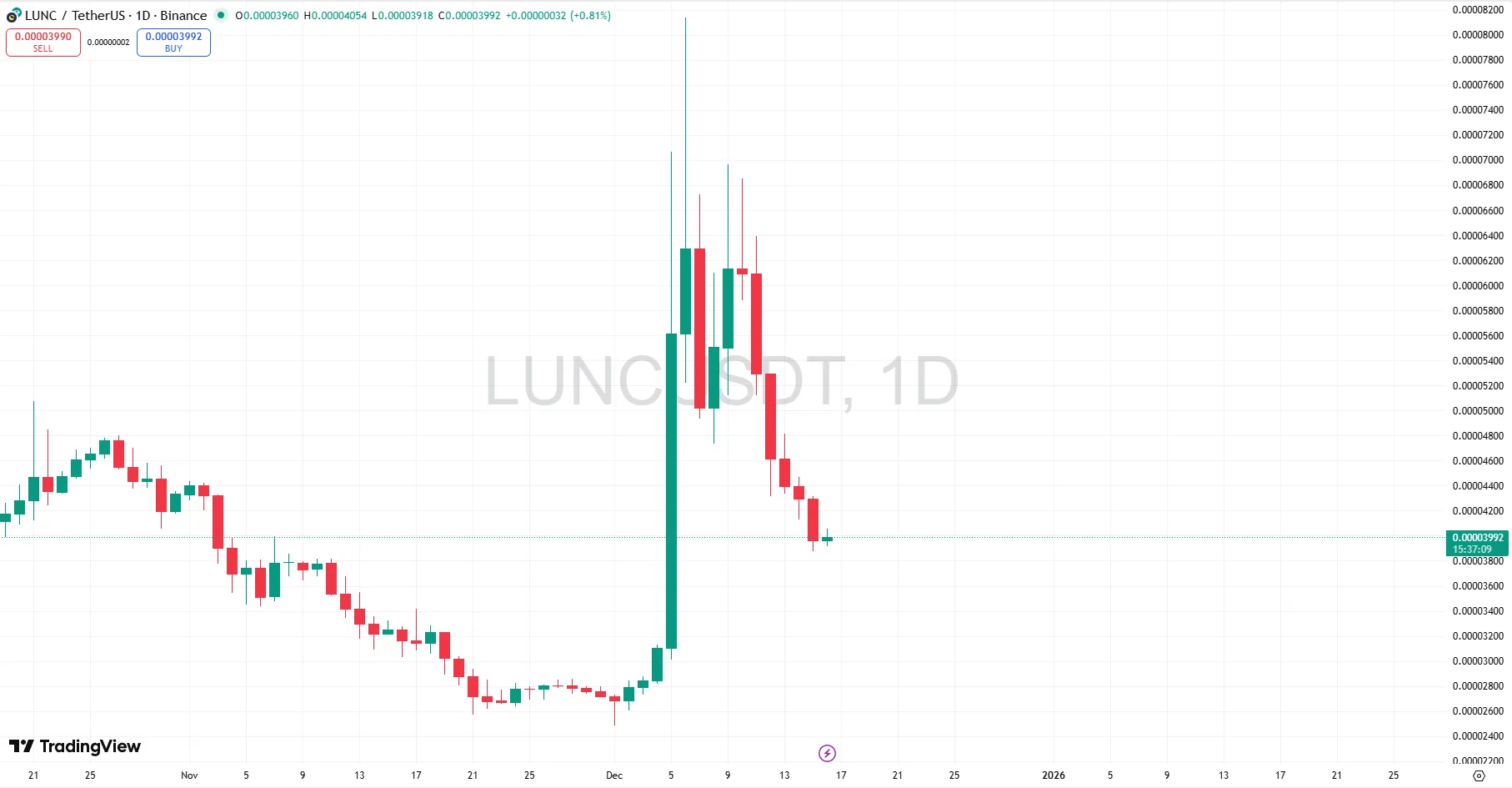
Luna Classic has declined by nearly 30 percent over the past seven days, reflecting broader weakness across the cryptocurrency market. This move closely followed Bitcoin’s recent price drop, reinforcing the strong relationship between Bitcoin and altcoins.
Bitcoin continues to act as the primary driver of market sentiment. When Bitcoin experiences sharp corrections, altcoins such as Luna Classic typically follow. The latest downturn was driven by a combination of global macroeconomic developments, policy uncertainty, and structural market selling.
1. Bank of Japan Rate Hike Fears Triggered Global De Risking
The first major factor came from Japan. Markets reacted ahead of an expected Bank of Japan rate hike that could push interest rates to levels not seen in decades. Even a modest increase matters because Japan has long supported global risk assets through the yen carry trade.
For years, investors borrowed low interest yen to invest in higher risk assets such as equities and cryptocurrencies. As Japanese rates rise, this trade begins to unwind. Investors sell risk assets to repay yen liabilities, creating broad market pressure.
Historically, Bitcoin has reacted sharply to similar policy shifts. During the last three Bank of Japan tightening cycles, Bitcoin declined between 20 percent and 30 percent in the following weeks. Traders began pricing in this pattern ahead of the decision, pushing Bitcoin lower in advance.
2. US Economic Data Reintroduced Policy Uncertainty
The second factor was growing uncertainty around US monetary policy. Markets became cautious ahead of key inflation and labor market data. While the Federal Reserve recently cut interest rates, officials signaled that future easing would be gradual and dependent on economic data.
Bitcoin has increasingly traded as a liquidity sensitive macro asset. With inflation still above target and signs of potential labor market weakness, investors struggled to anticipate the Fed’s next move. This hesitation reduced speculative demand and encouraged short term traders to step aside.
As a result, Bitcoin lost momentum as it approached important technical levels, increasing downside pressure.
3. Wintermute’s Bitcoin Sales Added Spot Market Pressure
The third factor came from market structure. Wintermute, one of the largest crypto market makers, added significant selling pressure during the decline.
On chain and exchange data showed Wintermute offloading a large amount of Bitcoin, estimated at more than 1.5 billion dollars. The sales were reportedly part of risk rebalancing following recent volatility and derivatives market losses.
Because Wintermute provides liquidity across both spot and derivatives venues, its selling had an outsized impact. The timing was also critical, as the activity occurred during relatively low liquidity conditions. This accelerated Bitcoin’s drop toward the 85,000 dollar level and intensified market wide weakness.
As Bitcoin moved lower, Luna Classic followed the broader market trend. The recent price decline does not point to a network specific issue but highlights the continued dependence of altcoins on Bitcoin’s direction. Until Bitcoin stabilizes and macro uncertainty eases, Luna Classic and the wider altcoin market may remain under pressure.