
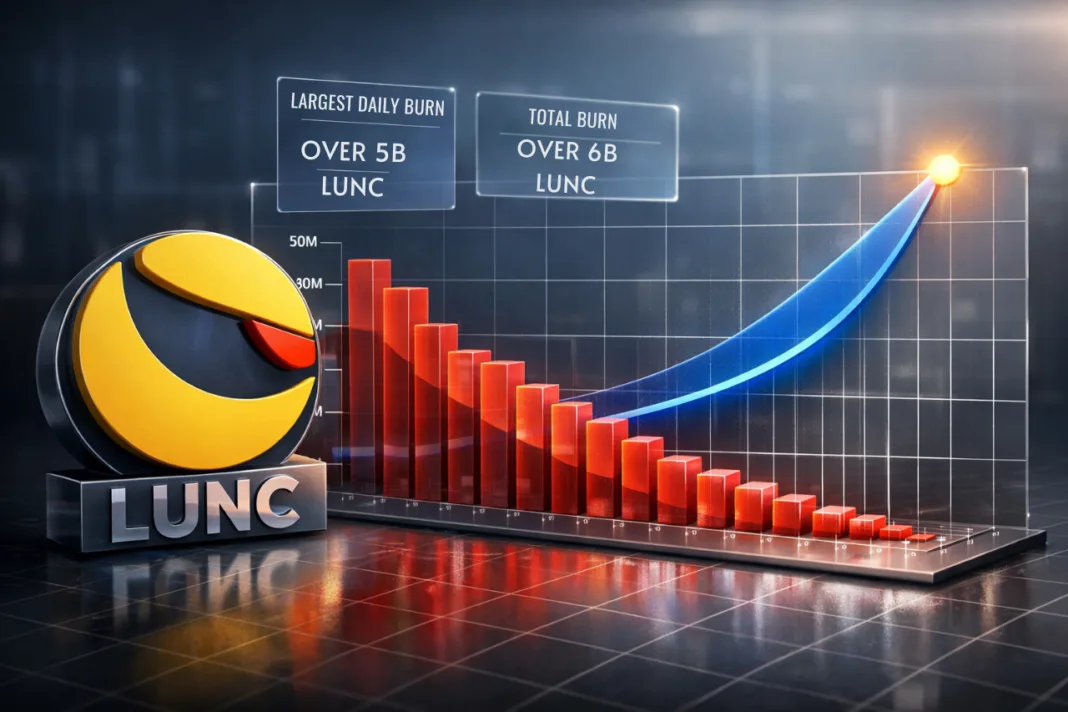


Luna Classic Burn Rate Slows as Daily LUNC Burns Drop Below 50 Million per Day in Last 6 Days
The Luna Classic network has recorded a noticeable slowdown in its burn rate during January, raising concerns among community members who closely track LUNC supply reduction.
Over the past six days, daily LUNC burns have consistently failed to surpass 50 million tokens. This marks a significant decline compared to earlier periods when higher trading activity and large burn events contributed to stronger daily reductions.
The situation worsened on January 13, when the network recorded its weakest daily burn of the month. In a full 24 hour period, only 18.7 million LUNC tokens were burned. This figure stands out as the lowest daily burn recorded so far in January.
While the total monthly burn remains substantial due to a massive burn on January 1 by Binance, recent data shows that ongoing daily burn performance is heavily dependent on sustained on chain activity rather than isolated large transactions.
Lower daily burn numbers generally indicate reduced transaction volume across the network. This does not signal the end of the burn mechanism, but it does highlight the importance of increasing real usage, trading activity, and ecosystem participation to restore stronger burn momentum.
Daily LUNC Burn Breakdown
| Month | Date | LUNC Burned |
|---|---|---|
| January | 1 | 5,367,757,097 |
| January | 2 | 36,700,121 |
| January | 3 | 194,515,792 |
| January | 4 | 59,068,461 |
| January | 5 | 22,184,507 |
| January | 6 | 55,976,794 |
| January | 7 | 58,298,205 |
| January | 8 | 85,060,487 |
| January | 9 | 22,167,180 |
| January | 10 | 22,949,053 |
| January | 11 | 34,617,148 |
| January | 12 | 33,911,987 |
| January | 13 | 18,745,561 |
| January | 14 | 35,139,054 |
| Total | 6,047,091,447 |
What This Means for Luna Classic
The data clearly shows that while large one time burns can significantly boost total figures, long term supply reduction depends on consistent daily activity. Without higher on chain volume, daily burns are likely to remain low.
For the Luna Classic ecosystem, improving utility, increasing transactions, and encouraging broader participation remain key factors in accelerating future LUNC burns and supporting long term network sustainability.