


Market Volatility Hits LUNC as Geopolitical Tensions Intensify
The Terra Classic token LUNC has recorded a decline of 5.4 percent over the past three days, reflecting increased volatility across the broader cryptocurrency market. This movement comes as Bitcoin dropped to the 65000 level, triggering a wider pullback among altcoins.
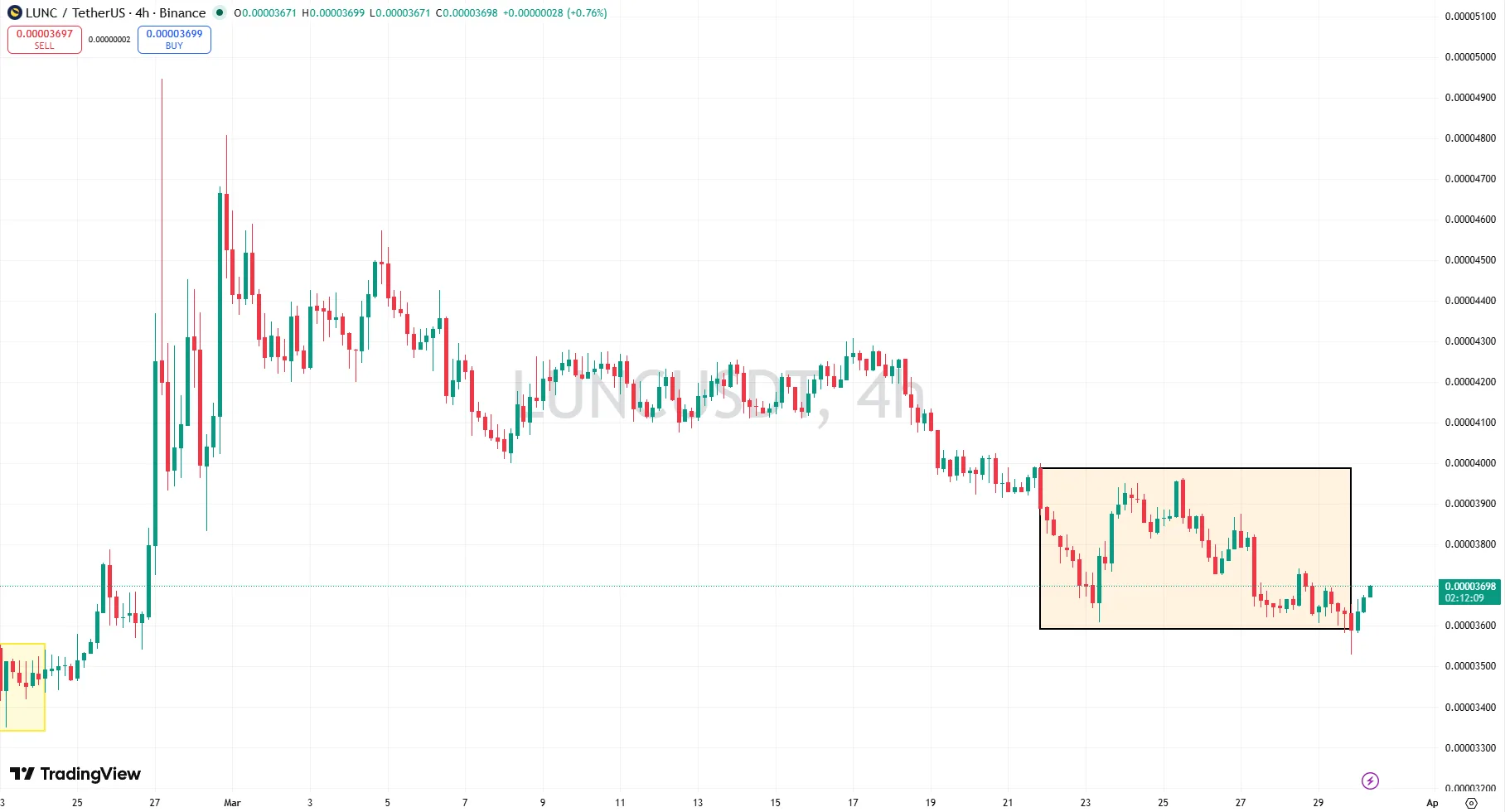
As an altcoin, LUNC tends to follow the overall direction of Bitcoin. When Bitcoin experiences downward pressure, market confidence often weakens, leading to reduced buying activity and increased selling across smaller assets. This correlation explains why LUNC mirrored the recent decline.
The primary driver behind this market movement is rising geopolitical tension. On Friday, March 27, escalation in the conflict involving the United States, Israel, and Iran created uncertainty in global financial markets. Such developments often lead investors to shift away from risk assets.

Bitcoin, despite being viewed by some as a hedge, still behaves like a risk asset during periods of global instability. When uncertainty increases, institutional and retail investors may reduce exposure to volatile assets and move capital into safer options such as cash or government bonds. This results in selling pressure on Bitcoin.
As Bitcoin declines, the impact extends to altcoins like LUNC. Altcoins generally carry higher risk and lower liquidity compared to Bitcoin, making them more sensitive to market sentiment. When Bitcoin falls, altcoins often experience larger percentage declines as traders exit positions more aggressively.
In the short term, LUNC price action is likely to remain closely tied to Bitcoin performance and broader macroeconomic developments. Any continued escalation in geopolitical tensions may sustain volatility, while stabilization in global conditions could help restore market confidence.
Investors are advised to monitor both geopolitical developments and Bitcoin price trends, as these remain key factors influencing LUNC and the wider cryptocurrency market.