Home Blog Page 38

The Largest Single-Day Liquidation Event in Crypto History

0

The Largest Single-Day Liquidation Event in Crypto History

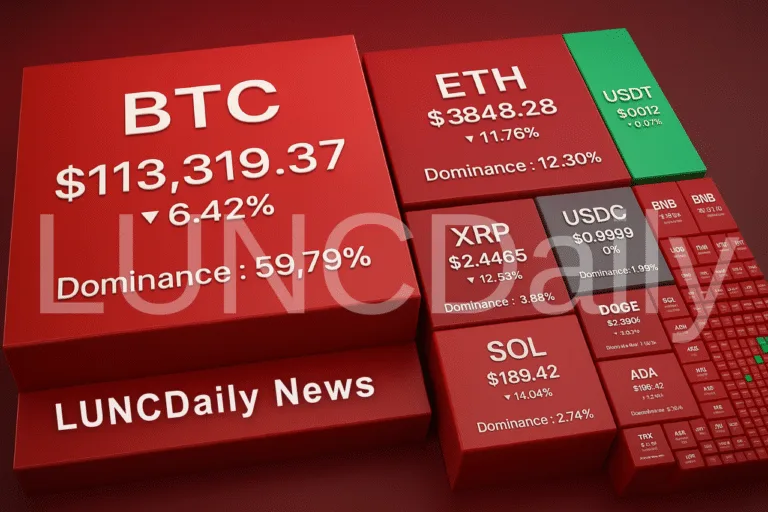
In the past 24 hours, the cryptocurrency market experienced the largest single-day liquidation in its history. A total of 1,659,381 traders were liquidated, resulting in losses of $19.29 billion.

The largest single liquidation took place on the Hyperliquid exchange, involving the ETH-USDT pair valued at $203.36 million. This record event reflects the high leverage and volatility driving current market conditions.

The liquidation wave caused a widespread sell-off across the entire crypto market. Terra Classic (LUNC) was among the most affected, falling sharply to $0.00016 from $0.00054 as panic selling spread.

Analysts attribute the liquidations to sharp price swings in major assets like Bitcoin and Ethereum, which triggered automatic margin calls and a chain of forced sell-offs.

As the market searches for stability, many are watching to see if this historic liquidation signals a deeper correction or a short-term reset in overleveraged positions.
365.25 Million LUNC Burned Today

0

365.25 Million LUNC Burned Today

A total of 365.25 million LUNC tokens were burned today as part of the ongoing Terra Classic supply reduction effort. The burn activity reflects continued participation from community members, validators and exchange partners who support lowering the circulating supply of LUNC.

Regular token burns are designed to help stabilize the supply demand balance within the Terra Classic ecosystem. While the market impact depends on broader trading conditions, consistent burning remains one of the main strategies to strengthen LUNC’s tokenomics over time.

The community continues to monitor daily burn data to assess progress and maintain transparency in the network’s recovery process.

Luna Classic Layer 2 Ecosystem Gains Strength as Projects Show Solid Performance

0

Luna Classic Layer 2 Ecosystem Gains Strength as Projects Show Solid Performance

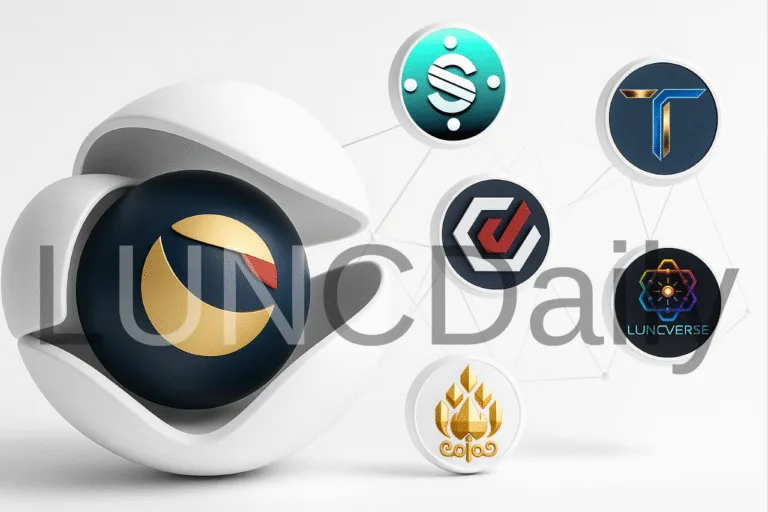
The Luna Classic Layer 2 ecosystem continues to gain strength as several key projects demonstrate consistent progress and positive performance across the network.

The upcoming Juris Token staking feature has already been successfully tested on the Testnet and will soon go live on the Luna Classic mainnet. This marks an important step forward in expanding the ecosystem’s DeFi capabilities.

Meanwhile, Selenium has introduced sUSD, a synthetic stablecoin designed to mirror the value of the U.S. dollar while being fully backed by crypto collateral. This innovation enhances Luna Classic’s DeFi stability and usability for traders and developers alike.

Terraport (TERRA), the native token of the Terraport DEX built on the Luna Classic blockchain, has surged by 82% this week, showing strong market confidence in the platform’s growth and contribution to the network.

In addition, LUNCVERSE, the metaverse built on Luna Classic, is scheduled to launch this month, offering an immersive Web3 experience that connects entertainment, creativity, and blockchain interaction within the LUNC ecosystem.

With these projects showing steady development and adoption, the Luna Classic Layer 2 ecosystem continues to become more attractive to both investors and builders. Each advancement contributes to the long-term sustainability and visibility of the network.

Layer 2 activity is also an important revenue source for Luna Classic. Since Layer 2 projects use LUNC as the main trading currency, every transaction generates tax revenue that flows into the community pool and supports the ongoing LUNC burn mechanism.

As the ecosystem continues to evolve, hopefully our own project, MIOFF—a token dedicated to promoting Luna Classic through real-world festivals and community engagement which play a vital role in maintaining LUNCDaily News activity and supporting the Orbit Wire Validator, can grow as others.

Terraport (TERRA) Surges 82% as Market Confidence Grows on the Luna Classic Layer 2

0

Terraport (TERRA) Surges 82% as Market Confidence Grows on the Luna Classic Blockchain

The price of Terraport (TERRA), the native token of the Terraport DEX built on the Luna Classic Blockchain, has shown remarkable growth this week. According to the latest data, TERRA is trading at $0.01169, marking an impressive 82% increase over the past seven days.

Market Overview

The Terraport token has captured strong attention from traders and investors, reflecting increasing activity across the Luna Classic ecosystem. Below is a snapshot of the current market data based on recent reports:

Metric Value
Current Price $0.01169
7-Day Change +82%
Market Capitalization $814,670
24-Hour Volume $327,500
Fully Diluted Valuation (FDV) $7.46 million
Total Supply 638.74 million TERRA
Circulating Supply 69.66 million TERRA

Performance and Momentum

Over the last week, the TERRA price demonstrated consistent upward momentum, breaking above key resistance levels and maintaining steady growth. This performance reflects renewed market confidence in the Terraport project and the underlying Luna Classic network.

The rise in trading activity suggests that the Terraport DEX continues to gain traction as a decentralized trading platform within the Luna Classic ecosystem, offering users secure and efficient swap mechanisms.

About Terraport

Terraport DEX is a decentralized exchange designed to empower users on the Luna Classic Blockchain. It enables seamless trading of tokens within the ecosystem while supporting community-driven growth and sustainability initiatives. The native token, TERRA, plays a vital role in powering transactions, governance, and liquidity incentives within the platform.

As the Luna Classic community continues to rebuild and expand its decentralized infrastructure, Terraport stands out as one of the leading DeFi projects driving innovation and ecosystem engagement.

Conclusion

The recent surge in TERRA’s price signals growing optimism among investors and developers in the Luna Classic ecosystem. With Terraport DEX positioning itself as a cornerstone of decentralized finance on LUNC, the coming months may reveal further growth opportunities and technical advancements for the project.

Selenium Finance Launches sUSD: The First Synthetic Asset on Terra Classic

0

Selenium Finance Launches sUSD: The First Synthetic Asset on Terra Classic

Selenium Finance has officially introduced sUSD, its first synthetic asset built on the Terra Classic network. This launch marks a major step in developing a more secure and accessible decentralized financial ecosystem.

What is sUSD?

sUSD is a synthetic stablecoin designed to mirror the value of the U.S. dollar while being fully backed by crypto collateral. Rather than holding physical dollars, the system uses digital assets as backing, ensuring transparency and decentralization.

Users can mint, trade, and liquidate sUSD directly on the official platform at selenium.finance.

Why sUSD Matters

sUSD serves as the foundation of Selenium Finance’s synthetic asset ecosystem. It has been selected as the first asset to stress test the protocol, verifying the system’s reliability and scalability before the introduction of additional assets.

The asset is designed with 150 percent over-collateralization, meaning each sUSD is backed by at least 1.5 times its value in crypto assets. This approach provides extra security and helps maintain price stability during periods of market volatility.

Supported Collateral

At launch, users can mint sUSD using the following assets as collateral:

  • USDC
  • LUNC
  • USTC
  • bLUNC

Additional assets such as SELE, TERRA, and JURIS will be integrated in upcoming phases, expanding the system’s flexibility and liquidity.

What Comes Next

Following the initial release, Selenium Finance will activate its liquidity incentivization system, rewarding users for contributing to liquidity pools. Shortly after, new synthetic assets will be introduced on a regular basis, allowing users to gain exposure to more diverse and innovative financial instruments.

A Step Toward the Future of DeFi

The launch of sUSD represents the beginning of a new era for decentralized finance on Terra Classic. By combining security, over-collateralization, and on-chain transparency, Selenium Finance aims to create a resilient foundation for future synthetic markets.

The future of decentralized finance on Terra Classic begins with sUSD.

Terra Classic Network Schedules Major Upgrade to v3.6.0 on October 20, 2025

Terra Classic Network Upgrade to v3.6.0 Scheduled for October 20, 2025

The Terra Classic network is scheduled to upgrade to version 3.6.0 on October 20, 2025, at 14:21:46 UTC. The upgrade will occur at block height 25619230, marking a significant step in the network’s ongoing development and stability improvements.

As of October 9, 2025, at 05:00:36 UTC, the network reached block height 25453933, keeping it on track to hit the target height within the planned timeline.

About the v3.6.0 Upgrade

The upgrade introduces key improvements to enhance stability, security, and performance across the Terra Classic blockchain. These include:

  • Optimized consensus for faster and more reliable block processing
  • Improved node performance and transaction throughput
  • Updated dependencies aligned with the latest Cosmos SDK standards
  • General maintenance and protocol fixes to ensure long-term reliability

Preparation for Validators and Node Operators

To ensure a smooth transition, node operators and validators should:

  • Review the official v3.6.0 release notes and instructions
  • Backup all essential configuration files and data
  • Test the upgrade in a staging environment before mainnet deployment
  • Coordinate with delegators and peers for maintenance windows
  • Confirm readiness before the halt height to minimize downtime

Community and Network Impact

This upgrade reflects the ongoing commitment of the Terra Classic community to strengthen the blockchain’s performance and security. Following the upgrade, users and developers should monitor network stability and report any irregularities through official channels.

Conclusion

The Terra Classic v3.6.0 upgrade represents an important milestone in the network’s evolution. With careful preparation and collaboration from validators and developers, the upgrade is expected to deliver a smoother, faster, and more resilient blockchain experience.

Terra Classic Nakamoto Index Falls to 4, Highlighting Centralization Risks

0

Terra Classic Nakamoto Index Falls to 4, Highlighting Centralization Risks

The Nakamoto Index for the Terra Classic (LUNC) network has declined to 4, indicating that a smaller number of validators now control one third of the network’s total stake. This metric is a key measure of decentralization. A higher index indicates more distributed voting power.

Over the past three months, the index has moved between 4 and 6, showing periods of stability followed by sudden drops. The recent decline to 4 represents the lowest level within this period, reflecting a higher concentration of influence among top validators.

A lower Nakamoto Index can pose governance challenges because it increases reliance on a few validators and may reduce voting diversity. This concentration could affect decision making and the network’s overall security if not addressed.

The Terra Classic community is monitoring these developments closely. Initiatives such as delegation balancing, community pool rewards, and staking incentives are being developed to promote fairer distribution of voting power and strengthen network decentralization.

To help maintain a healthy governance structure, community members are encouraged to delegate their LUNC to smaller validators. Supporting smaller validators helps distribute voting power more evenly and improves the network’s resilience.

If you wish to support LUNC Daily News and contribute to a more decentralized ecosystem, consider staking with Orbit Wire Validator:
https://validator.info/terra-classic/terravaloper1yquun32a79838jrgu7l5wrpa529kd555q60u7v

A stronger, more decentralized validator base will be essential for the long term health, governance, and trust of the Terra Classic network.

Wasmd Unforking to v0.36.0 Successfully Tested Ahead of October 20 Upgrade

0

Comprehensive Testing Confirms Stable Wasmd Unforking to v0.36.0

Testing for the Wasmd unforking to version 0.36.0 has been successfully completed. The tests confirmed that data integrity and smart contract functionality remain stable, ensuring a smooth upgrade on October 20.

Overview

This testing focused on moving from the forked Wasmd version (v0.35.0) to the main upstream version (v0.36.0). The process required detailed checks to make sure all stored data, contracts, and queries continued to work correctly after migration.

Testing Process

The testing followed a step-by-step approach to confirm that both the migration and post-upgrade results were consistent:

  • Pre-Migration Setup: A local test chain was launched using Wasmd v0.35.0.
  • Contract Deployment: Test contracts were deployed to cover different CosmWasm features.
  • Data Population: Transactions were executed to create active contract states.
  • Upgrade Execution: The upgrade to Wasmd v0.36.0 was applied with all store migrations.
  • Post-Migration Validation: Contract data, queries, and state were verified to ensure accuracy and full functionality.

Main Test Areas

Test Area Description
CW20 Token Contract Test CW20 tokens were tested through deployment, minting, transfers, and allowance operations. After the upgrade, token balances, total supply, and metadata were checked and confirmed to be correct.
Stargate Query Test A stargate-tester contract was used to test queries for bank, staking, and governance data. All stored queries remained intact after migration. New Stargate functionality and query response formats were also validated.
TerraSwap DEX Test Swap and liquidity contracts were deployed and tested on the Rebel-2 testnet. Liquidity additions, swaps, and limit orders worked correctly. Post-upgrade checks confirmed that liquidity pools, LP tokens, and swap records were preserved.

Rebel-2 Testnet Validation

Additional end-to-end testing on the Rebel-2 testnet confirmed that all Wasm-related queries using Terrad ran without errors. This included contract info, contract-state, smart queries, and raw queries.

The updated contract query format now includes a top-level address and a new extension field, matching the structure used in the mainnet. This ensures better compatibility and consistency for contract developers.

TerraSwap Functionality

TerraSwap testing after the upgrade verified that all swap and liquidity operations continued to function correctly. This confirmed that the decentralized exchange remains stable on Wasmd v0.36.0.

Conclusion

All testing for the Wasmd unforking to v0.36.0 has been completed successfully. Data integrity, contract states, and query functionality have been validated, ensuring the upcoming October 20 upgrade will be stable and secure for the Terra Classic network.

Can Terra Classic Ever Regain the Same Adoption Level It Once Had?

Terra Classic (LUNC) has faced a turbulent past, but its community’s resilience and vision for recovery continue to inspire optimism. The big question many investors and blockchain enthusiasts ask is: Can Terra Classic ever regain the same adoption level it once had? The answer, viewed positively, is yes — with continued dedication and innovation, Terra Classic can rebuild and even surpass its previous success.

One of Terra Classic’s strongest assets is its passionate and active community. Through grassroots efforts, governance voting, and transparency, the LUNC community has demonstrated an unmatched commitment to revitalizing the network. These decentralized contributions are essential in restoring trust and attracting new developers and users.

Moreover, technical improvements and ecosystem upgrades play a vital role in the project’s comeback. Ongoing efforts to enhance interoperability via IBC (Inter-Blockchain Communication), improve staking rewards, and optimize the burn mechanism create a solid foundation for future growth.

Another key factor is strategic partnerships and real-world utility. As Terra Classic continues to evolve, integrating with other blockchains, dApps, and DeFi platforms will reignite user interest and bring new liquidity to the ecosystem.

While challenges remain, Terra Classic’s road to recovery is filled with opportunity. With a united community, transparent governance, and a focus on innovation, the project has every chance to regain — and even exceed — its former adoption levels in the ever-evolving crypto landscape.

Main Challenges to Achieving Sustainable Growth for Terra Classic

Terra Classic has been striving to rebuild trust and momentum after its turbulent past. While the project still holds a dedicated community, achieving sustainable growth for Terra Classic requires overcoming several complex challenges. These include governance issues, tokenomics instability, and ecosystem revitalization.

1. Token Supply and Price Volatility
One of the most significant barriers to Terra Classic’s growth is its massive circulating supply. The community’s ongoing token burn initiatives aim to reduce inflation, but price volatility continues to impact investor confidence. Without stable economic mechanisms, long-term growth remains uncertain.

2. Governance and Coordination
Terra Classic’s decentralized governance model relies heavily on community proposals and validator consensus. However, differing opinions and inconsistent leadership often slow progress. Sustainable growth demands unified decision-making and strategic long-term planning.

3. Developer and Ecosystem Revival
Rebuilding a strong developer base is another challenge. Many developers moved to other chains after the 2022 collapse, leaving Terra Classic with fewer active projects. Attracting new developers and integrating innovative dApps are vital steps for ecosystem recovery.

4. External Competition
The blockchain landscape is increasingly competitive. To remain relevant, Terra Classic must focus on interoperability, innovation, and community-driven utility rather than solely relying on nostalgia and token burns.

In conclusion, Terra Classic’s sustainable growth depends on addressing its internal governance, economic stability, and ecosystem expansion. With coordinated community efforts and strategic innovation, Terra Classic can gradually rebuild its foundation for long-term success.