Home Blog Page 56

GRDX is now officially listed on CoinGecko

In a significant boost for the Terra Classic ecosystem, GarudaX ($GRDX) has officially been listed on CoinGecko, the world’s leading cryptocurrency data aggregator. This achievement recognizes the relentless efforts of the Garuda DeFi team in building innovative decentralized finance (DeFi) solutions on #LUNC (Terra Luna Classic). The listing, announced via the project’s official X account, marks a pivotal moment for $GRDX, enabling greater visibility, liquidity, and investor access.

Garuda DeFi, a permissionless DEX launched on Terra Classic, positions $GRDX as its native payment token. Designed to facilitate seamless transactions within the platform, $GRDX powers utilities like staking, fee payments, and governance. The token’s deflationary model is a standout feature, incorporating automatic burns from platform fees generated by affiliated projects such as Big Bang Platform and Airforce LUNC. Recent burns have reduced the total supply to approximately 95 million tokens, with over 32,000 $GRDX incinerated in a single event, enhancing scarcity and long-term value. Staking adoption is robust, with nearly 50% of the supply locked, offering stakers up to 20% APR rewards.

As of August 19, 2025, $GRDX trades at around $0.005, with a market cap of $214,398 and a fully diluted valuation of $474,738. Daily trading volume hovers at $186, primarily on decentralized exchanges within the Terra Classic network. The circulating supply stands at 43 million, out of a max supply of 1 billion, signaling ample room for growth.

The Garuda team expressed gratitude to the CoinGecko crew for spotlighting their #LUNC-based innovations, emphasizing that this is just the beginning. With ongoing developments like expanded DeFi tools and partnerships, $GRDX is poised to drive adoption in the Terra Classic revival. Community sentiment is bullish, as evidenced by high engagement on X and increasing on-chain volumes. As Garuda DeFi continues to evolve, $GRDX embodies the resilient spirit of #LUNC, promising a deflationary, utility-driven future for holders and builders alike.
Over 1 Billion LUNC Burned in a Week as Staking Passes 2 Billion

The Terra Classic community has delivered major results in just seven days. More than 1 billion LUNC tokens have been burned, while staking has surged by over 2 billion tokens, pushing network participation to 14.85 percent.

This rapid reduction in supply comes from ongoing community-led burn initiatives designed to lower circulation and increase scarcity. At the same time, the strong rise in staking shows growing confidence in Terra Classic’s long-term recovery and stability.

The network’s stablecoin, USTC, also saw a slight supply drop of 137,214 tokens, adding to overall progress in balancing the ecosystem.

These numbers underline a clear message: the Terra Classic community is actively reshaping the chain’s tokenomics. If this pace continues, LUNC’s supply could see even deeper cuts while staking further secures the network.

The Real Difference Between Luna Classic Mainnet and Testnet

Understanding the Networks That Power Luna Classic
In the world of blockchain, two terms often confuse newcomers: mainnet and testnet. If you’re following Luna Classic (LUNC), knowing how these networks differ is critical to understanding how the blockchain evolves and stays secure.

What Is the Mainnet?
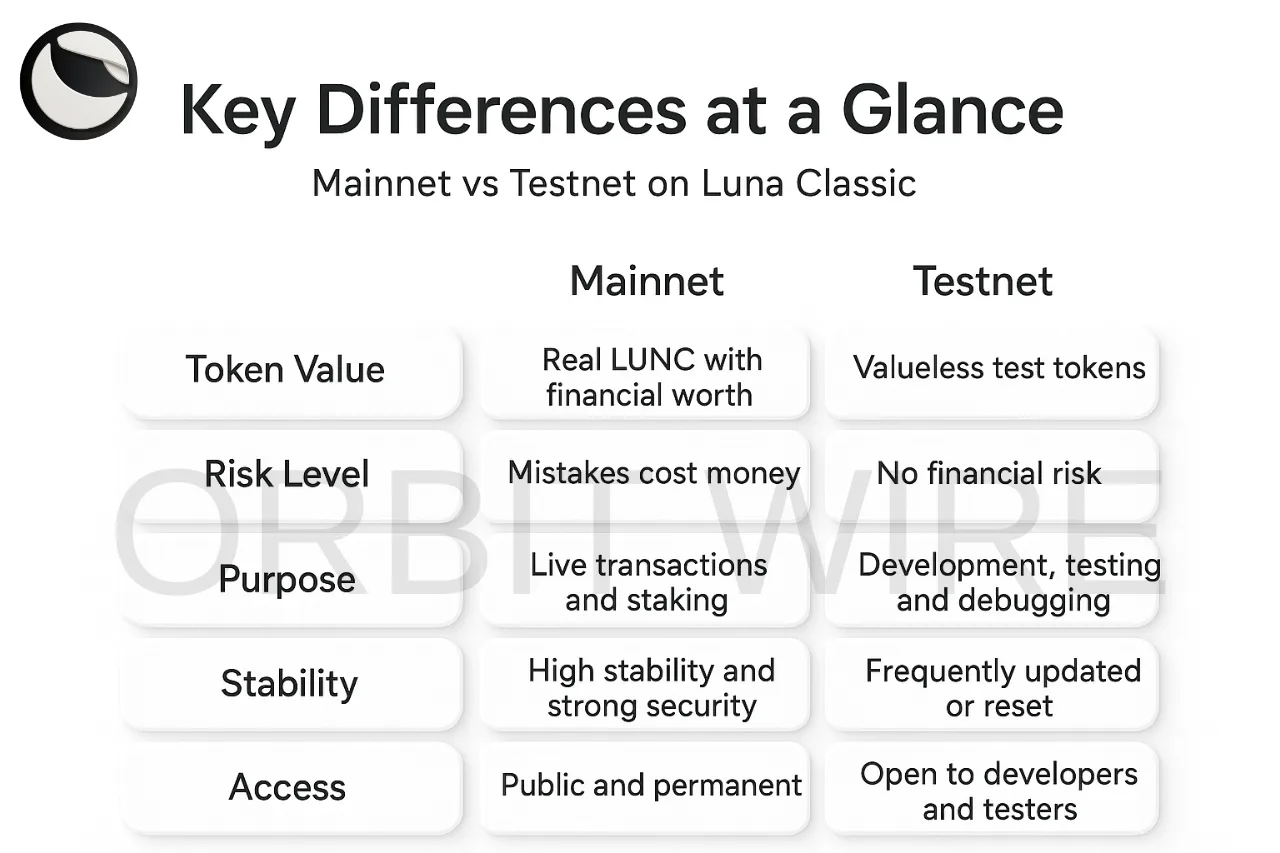
The mainnet is the live blockchain where real transactions happen using real LUNC tokens. Every transfer, stake, or trade is permanent, and mistakes can have real financial consequences. Because of this, the mainnet prioritizes security, stability, and reliability.

What Is the Testnet?
The testnet is a risk-free copy of the blockchain designed for developers. Here, tokens have no value and are distributed freely via faucets. This environment allows developers to test new features, deploy smart contracts, and perform upgrades without risking real assets.

Why This Matters for Luna Classic
Luna Classic developers use the testnet to ensure upgrades, patches, and new features work perfectly before applying them to the mainnet. For example, the recent testnet upgrade to version 2.0.0 using Cosmos SDK v0.45 was an important step toward preparing similar improvements for the mainnet.
This dual-network system ensures innovation continues without risking the real LUNC economy, protecting both developers and token holders.

Final Thoughts

1. Mainnet = live blockchain with real value and strict security.

2. Testnet = safe playground for development and innovation.

By separating these networks, Luna Classic can grow, adapt, and remain reliable while safeguarding its community’s assets.

Binance Burns 73.8 Billion LUNC Worth $4.35 Million (in this current price): Can This Spark a Terra Classic Comeback?

0

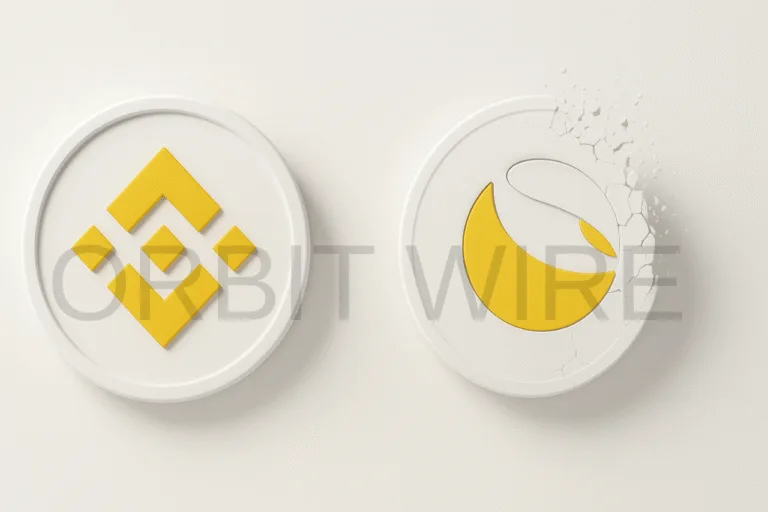
Binance has burned 73,858,807,310 LUNC, worth roughly $4.35 million, reinforcing its commitment to reducing Terra Luna Classic’s massive supply. This latest burn comes as part of Binance’s monthly program using trading fees to permanently remove LUNC from circulation.

With over 5.5 trillion LUNC still in circulation, the community sees token burns as a key method to slow inflation and stabilize the network. Binance remains the largest contributor, accounting for a significant portion of the total 416 billion LUNC burned by all participants since mid-2022.

At a current price of $0.000059 per token, the impact of these burns on market value has been modest. Analysts say real recovery will require more than just deflation, it will also depend on new ecosystem applications, increased utility, and sustained community involvement.

Binance has confirmed these burns will continue on a regular basis, providing long-term support for Terra Classic’s revival strategy.

Do Kwon Has No Ties to LUNC Anymore — What This Means for Terra Classic’s Future

0

Do Kwon, the founder of Terraform Labs, is no longer involved with Terra Classic (LUNC). This fact has become increasingly clear through several key developments, particularly recent court decisions affecting Terraform Labs.

One significant ruling required Terraform Labs to burn all LUNC coins held in its wallets. This was not a symbolic move, the company has already burned 249,692,396,261 LUNC, demonstrating its compliance and distancing itself from direct involvement in LUNC.

Today, LUNC operates as a community-owned token, governed by validators and on-chain proposals rather than a central authority. This structure reinforces that LUNC is no longer under Terraform Labs’ control.

Even though Do Kwon no longer has any connection to LUNC, some major investors are still watching his ongoing court case carefully. These large holders want absolute certainty that the project is completely free of any legal risk before committing substantial capital.

Recent developments suggest progress. The latest court sessions have given what many see as a green light toward resolving the case. A major decision is expected in December, and its outcome could mark the final chapter in this long legal battle.

When this uncertainty ends, analysts believe major investors will move into LUNC. Terra Classic still holds strong potential in the crypto market, and such a shift could trigger a significant price surge.

USTC vs Other Stablecoins: The Key Differences You Need to Know

0

Not all stablecoins are created equal. While many are backed by real-world assets or collateral reserves, TerraClassicUSD (USTC) stands apart because of how it was originally designed and how it functions today. Understanding these differences is essential for anyone following the crypto market or considering an investment in digital assets.

What is USTC?
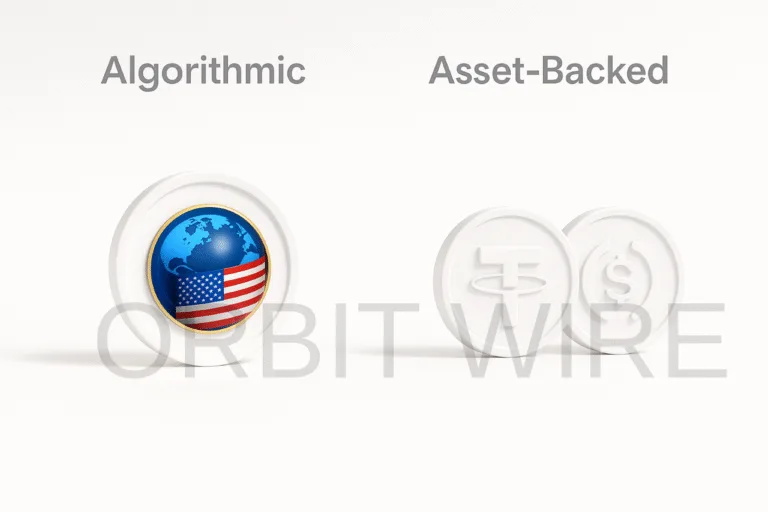
USTC, short for TerraClassicUSD, was launched in 2020 as part of the Terra blockchain ecosystem. Unlike many other stablecoins that are fully backed by cash, bonds, or other tangible assets, USTC was an algorithmic stablecoin. Its value was meant to be maintained through automated mechanisms rather than direct collateral reserves.

How Most Stablecoins Work
Popular stablecoins such as USDT (Tether) and USDC (USD Coin) maintain their value by holding equivalent reserves in fiat currency or liquid assets. For every token issued, there is usually a dollar or dollar-equivalent asset kept in reserve. This model is more transparent and less volatile, making these stablecoins widely trusted by traders, investors, and institutions.

How USTC Was Different
USTC used an algorithmic model linked to the LUNA token (now LUNC). Instead of being backed by dollars in a bank account, its price stability depended on automated supply-and-demand balancing. When the price moved above or below one dollar, the system minted or burned tokens to push it back to parity.
This mechanism worked well at first but collapsed in May 2022 during extreme market stress, causing USTC to lose its dollar peg. Unlike other stablecoins, it no longer functions as a reliable one-to-one substitute for USD, and its value now fluctuates like a regular cryptocurrency.

Why This Matters Today
Understanding USTC’s unique history explains why it is fundamentally different from stablecoins backed by reserves. While USDT and USDC continue to serve as stable digital dollars, USTC is now part of a recovery effort within the Terra Classic community rather than a fully stable asset.

Key Takeaway

USTC – Algorithmic, no direct fiat backing, no longer pegged to USD.

Other stablecoins (USDT, USDC) – Backed by real assets, designed to hold a steady one-dollar value.

For investors, this means USTC should be viewed more as a speculative token tied to the future of Terra Classic rather than a traditional stablecoin used for payments and trading stability.

Over 2.54 Billion USTC worth $33.95 million Destroyed Since 2022 Via Burn Wallet

0

Since 2022, a total of 2,543,430,032 TerraClassicUSD (USTC) valued at approximately $33.95 million has been permanently removed from circulation through the official burn wallet. This milestone underscores the community’s sustained efforts to reduce supply and strengthen USTC’s long-term stability.

The burn mechanism is designed to decrease the number of tokens in circulation by sending them to an unrecoverable address. Over time, this reduction in supply is expected to support price recovery and restore market confidence.

Terra Classic community members have continued to push for coordinated burns alongside staking and ecosystem development initiatives. Although the road to full recovery remains challenging, these figures highlight steady progress and strong commitment from long-term supporters.

Experts note that if the burn rate continues or accelerates with broader network adoption, USTC could see improved price dynamics. However, the outcome will ultimately depend on market conditions and the success of ongoing governance proposals.

2.64 Billion USTC or $35.4M Burned On-Chain

0

The Terra Classic community has reached a major milestone with more than 2.64 billion USTC tokens permanently removed from circulation. This burn, recorded directly on-chain, represents an estimated value of over 35.4 million US dollars.

Burning tokens reduces the overall supply, which is often seen as a step toward restoring price stability and rebuilding confidence in the Terra Classic ecosystem. Community members and supporting projects have been actively contributing to these burns to accelerate recovery efforts.

This achievement highlights ongoing commitment from developers, validators, and investors who believe that reducing supply is key to unlocking USTC’s long-term potential. As the burn rate continues, market participants are closely watching for signs of improved demand and price performance.

Why LUNC is Very Undervalued: New Proposals, L2 Projects, and Explosive Pump Potential

Are you searching for the next big opportunity in the cryptocurrency market? Terra Luna Classic (LUNC) stands out as one of the most undervalued cryptos right now. As of August 2025, LUNC is trading at approximately $0.000062, with a market cap of around $330 million. Despite its challenging history, LUNC’s cutting-edge algorithm, dedicated community, and active developments make it primed for a major comeback. In this article, we’ll explore why Terra Luna Classic could surge unexpectedly and reclaim its former glory in the crypto space.

Rapid Developments Driving LUNC’s Ecosystem Growth

One key reason to watch Terra Luna Classic (LUNC) is the fast-paced approval of new proposals that are supercharging its ecosystem. For instance, the Tax2Gas proposal has revolutionized tax management, improving both security and operational efficiency for users.

Recent network upgrades are also game-changers. The v3.3.0 update, along with the anticipated v3.5.0 release on August 15, introduces advanced features like oracle integrations, a 20% burn on transaction fees, and strict supply caps for LUNC and USTC. These changes combat inflation and enhance scarcity, making LUNC more attractive to investors.

To date, over 408 billion LUNC tokens have been burned, thanks in part to major contributors like Binance. This ongoing burn mechanism is setting the stage for a potential supply shock, which could drive up the LUNC price significantly.

Global Promotions Boosting LUNC’s Visibility

Terra Luna Classic is gaining momentum through strategic promotions led by validators, community leaders, and high-profile events. These efforts are putting LUNC in the global spotlight, emphasizing its potential in decentralized finance (DeFi).

Community-led campaigns are particularly effective, showcasing real-world utilities that attract new users and investors. If you’re interested in undervalued cryptos with strong DeFi foundations, LUNC offers exciting possibilities for growth and adoption.

Explosive New Projects and Layer 2 Innovations on Terra Luna Classic

The real excitement around Terra Luna Classic (LUNC) comes from its booming Layer 2 (L2) projects, which are enhancing scalability and driving demand. These initiatives echo LUNC’s pre-crash era, when it dominated as a leading Layer 1 blockchain for payments and DeFi.

  • Garuda DeFi: This permissionless decentralized exchange (DEX) recently listed on CoinGecko, featuring 49 trading pairs for maximum exposure and liquidity.
  • Juris Protocol: A innovative on-chain lending platform that’s making borrowing and lending seamless within the LUNC ecosystem.
  • 0xSelenium: Provides robust liquidity pools, helping users maximize their returns on Terra Luna Classic assets.
  • LUNC Cookies: Combines memecoin appeal with metaverse utilities, adding fun and functionality to the network.
  • Terraport Finance: With its updated tokenomics, including dynamic burns and staking rewards, it’s designed to benefit long-term holders and boost overall adoption.
  • Orbit Wire: An ecosystem designed to promote Luna Classic (LUNC) through real-world events and digital media platforms.

These L2 developments not only improve scalability but also position LUNC for widespread use, potentially leading to a massive price pump that surprises the market.

In summary, Terra Luna Classic (LUNC) combines innovation, community strength, and strategic upgrades to emerge as a top undervalued crypto in 2025. Keep an eye on the LUNC price—its resurgence could be just around the corner. For more insights on cryptos like LUNC, check out reliable sources like CoinMarketCap or join the official Terra community forums.

The Rise, Collapse, and Revival of Terra Classic

0

In 2018, Terraform Labs introduced Terra, an ambitious blockchain project with a vision to create a truly decentralized financial system. Its core was the LUNA token, which supported the stability of TerraUSD (UST), an algorithmic stablecoin designed to maintain a one-to-one value with the US dollar. This innovation attracted rapid adoption and positioned Terra as one of the most prominent projects in the digital asset sector.

By early 2022, Terra had reached extraordinary heights. The LUNA token climbed from only a few cents to a peak of 119 dollars, while UST became the fastest growing algorithmic stablecoin. Billions of dollars entered the ecosystem, drawn by its efficiency, global accessibility, and high-yield DeFi platforms. Terra appeared to have achieved the impossible.

The success, however, masked a critical weakness. When UST began to lose its dollar peg in May 2022, confidence eroded quickly. Investors rushed to exit, creating a feedback loop that flooded the market with newly issued LUNA. In just days, LUNA supply grew from hundreds of millions to trillions of tokens, and its value collapsed to a fraction of a cent.

More than 60 billion dollars in value disappeared almost overnight. The event became one of the most significant crises in cryptocurrency history, drawing global regulatory attention and shaking confidence across the entire market.

In the aftermath, the Terra blockchain was renamed Terra Classic, and its token became LUNA Classic (LUNC). Rather than abandoning the network, the community of developers, validators, and supporters came together to rebuild. A burn initiative was launched to reduce token supply, restore credibility, and lay the groundwork for a stronger ecosystem. Major industry participants, including Binance, joined efforts by supporting the burn movement.

Today, LUNC represents both a lesson and an opportunity. It demonstrates the risks of rapid, unsustainable growth but also highlights the resilience of decentralized communities determined to recover and innovate.