Home Blog Page 58

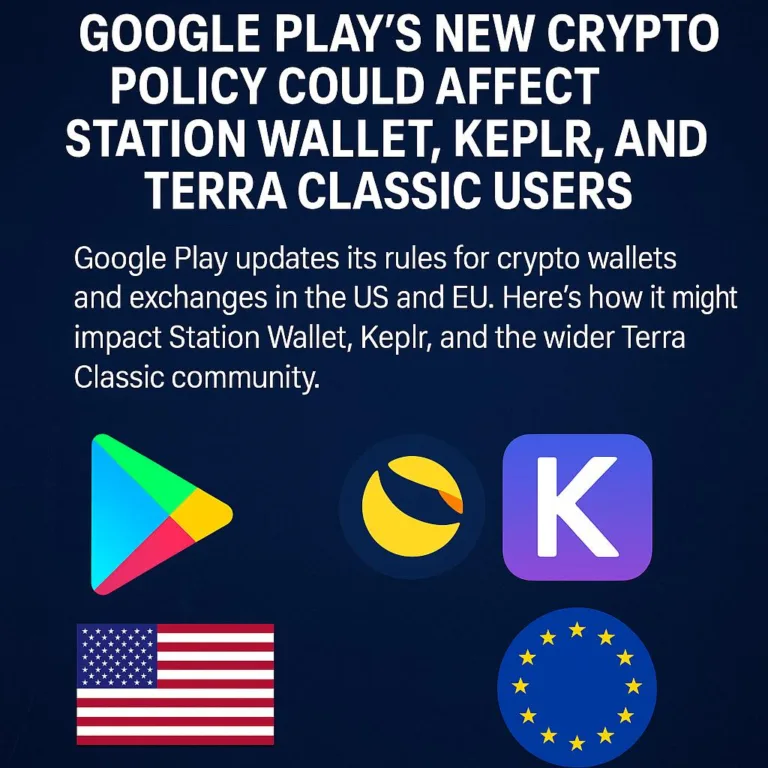
Google Play’s New Crypto Policy Could Affect Station Wallet, Keplr, and Terra Classic Users

Breaking Down Google Play’s Policy Update

Google Play has rolled out a significant policy change targeting cryptocurrency wallet and exchange applications.

Starting now, developers must declare their financial features and meet local licensing requirements if they want to remain available on the Play Store in specific regions.

This could directly affect popular Terra Classic ecosystem apps like Station Wallet and Keplr — especially in the United States and the European Union.

Key Requirements by Region

United States

Crypto wallet and exchange apps must:

  • Be registered with FinCEN as a Money Services Business (MSB)
  • Hold state-level money transmitter licenses (or be a chartered bank)

Without these licenses, developers cannot target US users through Google Play.

European Union (MiCA Regulations)

Under the Markets in Crypto-Assets (MiCA) framework, apps must be authorized as Crypto-Asset Service Providers (CASP).

  • Without CASP authorization → No targeting EU users on Google Play.
  • France: Until June 30, 2026, an AMF DASP registration is accepted.
  • Germany: Until Dec 31, 2025, a BaFin license is accepted.

After these dates, MiCA CASP authorization becomes mandatory.

Non-Custodial Wallets: In or Out?

Google specifies that non-custodial wallets are “out of scope” for these specific financial licensing rules.

However, all apps — custodial or not — must still comply with local laws and Google Play’s general policies.

The distinction matters:

  • Non-custodial wallets like Keplr may be unaffected if they do not offer integrated exchange or fiat ramps.
  • Custodial wallets or hybrid apps may need full licensing.

Potential Impact on Terra Classic Apps

If Station Wallet or Keplr fail to meet these new licensing requirements:

  • They could be removed from Google Play in the affected regions.
  • Users might lose access to updates or new installs.
  • The LUNC community could be forced to shift to alternative wallets.

However, some community members believe this won’t be a major issue, suggesting Trust Wallet as an alternative — though it too would need proper licensing to remain on the store.

Why This Matters for the LUNC Community

For many users, Android apps are the primary gateway to managing Terra Classic assets like LUNC and USTC.

A removal from Google Play in key markets would:

  • Limit accessibility for new users.
  • Increase reliance on sideloading APKs (with associated risks).
  • Potentially reduce transaction volume in the ecosystem.

Bottom Line

Google Play’s updated policy could reshape how crypto wallets operate globally.

For Terra Classic, the outcome will depend on whether Station Wallet, Keplr, and other ecosystem apps can secure the right licenses or adjust their offerings to remain compliant.
MORE INFO

Why Now Is the Time to Invest in LUNC After Massive Token Burns

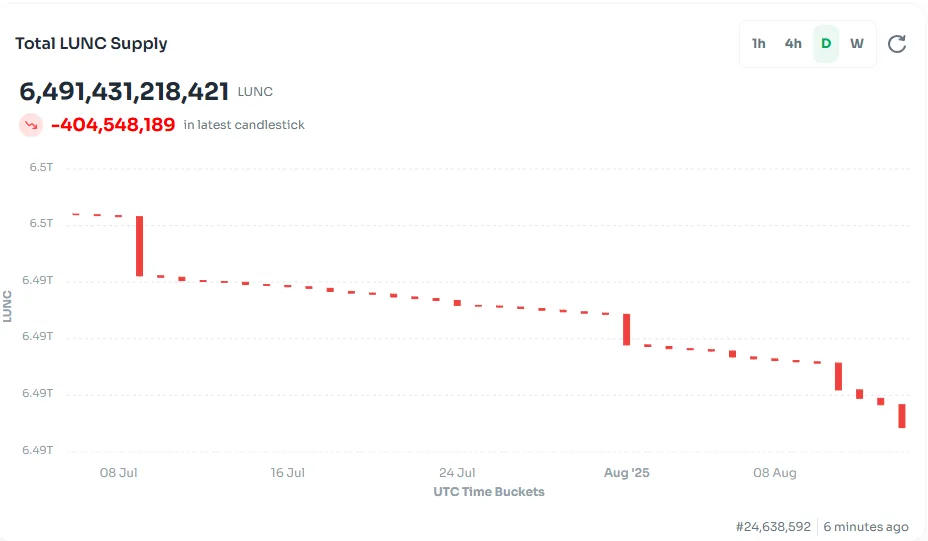
Terra Luna Classic (LUNC) is making waves in the crypto world, thanks to aggressive token burns that are slashing supply and setting the stage for potential price surges. In the latest developments, more than 836 million LUNC tokens have been burned over the past seven days, pushing the cumulative burn total to an impressive 415 billion. This burn mechanism, supported by major exchanges like Binance, reduces circulating supply, creating scarcity that could drive up value for investors searching for high-potential altcoins.

But why invest in LUNC now? The timing couldn’t be better. As of August 2025, the Terra Classic ecosystem is gearing up for a major chain upgrade scheduled for August 15. This update promises enhanced compatibility with platforms like Binance, improved security, and better functionality, which could attract more users and developers. Combined with ongoing burns, this positions LUNC for a revival, especially after its turbulent history.

Technical indicators are also flashing green. LUNC’s price pattern suggests a potential 14% rally, even amid legal challenges in the Terra ecosystem. Analysts point to sustained burns as a key catalyst, with reduced supply countering inflation and boosting investor confidence. Community-driven initiatives, including regular burns by Binance and other projects, have already incinerated billions, showing strong commitment to LUNC’s long-term viability.

Investing in LUNC offers exposure to a resilient token with real utility in decentralized finance (DeFi) and staking. While volatility remains, the current burn momentum and upgrade hype create a compelling entry point. For those eyeing altcoin gains, LUNC’s low price and high burn rate make it a smart pick. Don’t miss out—research shows that token burns often precede rallies in similar projects.

In summary, with massive LUNC token burns reducing supply and an imminent upgrade, now is prime time for investment. Stay informed, diversify, and consider LUNC for your portfolio in this bullish phase.

Binance Announces Full Support for Terra Luna Classic (LUNC) Network Upgrade Scheduled for August 15, 2025

Binance has confirmed its support for the upcoming Terra Luna Classic (LUNC) network upgrade, which is scheduled to occur on August 15, 2025.

According to the announcement, Binance will suspend deposits and withdrawals of tokens on the Terra Luna Classic network starting at approximately 14:30 UTC. This temporary measure is intended to ensure a smooth transition and protect user assets during the upgrade process.

The network upgrade itself is expected to take place at block height 24,660,000, which is projected to occur around 15:30 UTC on the same day. Trading of LUNC and related tokens on Binance will not be affected during this period.

Binance emphasized that deposits and withdrawals will be reopened as soon as the network is confirmed to be stable after the upgrade. Users are advised to plan ahead and complete any necessary transactions before the suspension window.

This upgrade represents another step forward for the Terra Luna Classic ecosystem as the community continues to implement technical improvements and maintain the security and performance of the network.

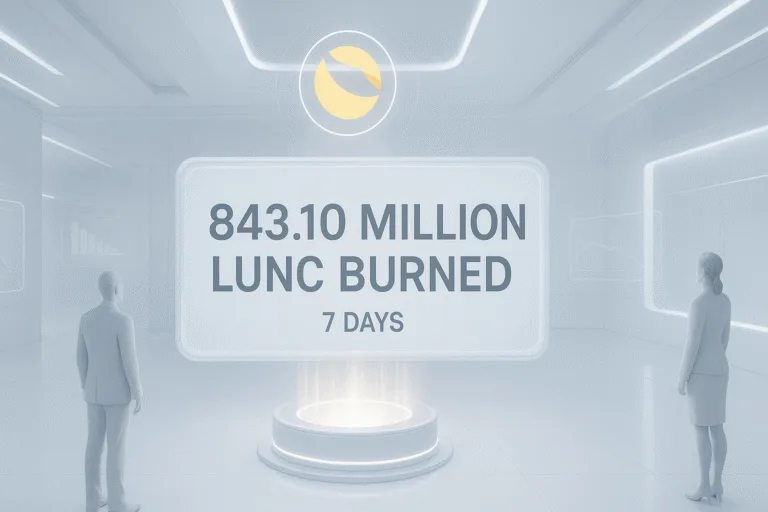
843.10 Million LUNC Burned in Just 7 Days

0

The Terra Classic (LUNC) community has witnessed a remarkable burn rate this week, with 843.10 million LUNC permanently removed from circulation over the past seven days. This accelerated pace reflects ongoing efforts by validators, projects, and individual holders to reduce supply and boost the long-term value of the token.

The latest burn figures demonstrate growing momentum behind community-driven initiatives, which have been at the heart of Terra Classic’s revival strategy. Analysts note that consistent burns of this scale could help tighten circulating supply and improve overall market sentiment.

Participants in the LUNC ecosystem remain optimistic as weekly burn totals continue to climb, signaling strong alignment around reducing excess token supply and reinforcing confidence in the network’s future.

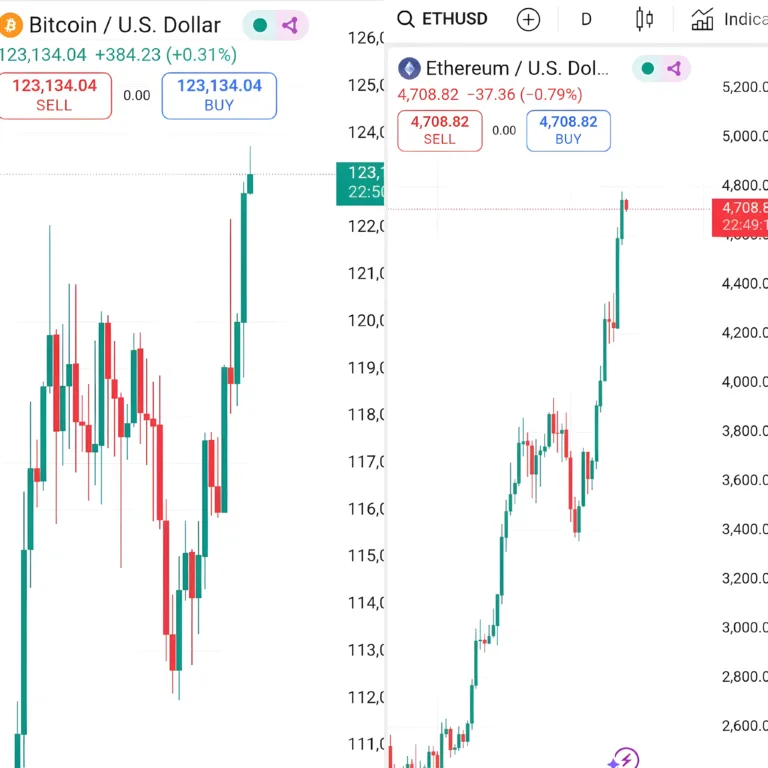
Bitcoin Smashes Records at $124K While Ethereum Surges Toward Historic Highs – Is $130K Next?

Bitcoin (BTC) has officially broken through its previous all-time high, trading around $123,700 and peaking intraday at $124,234. Ethereum (ETH) is also closing in on its own record, climbing to $4,716 amid massive institutional inflows.

The cryptocurrency market is surging to new heights as investor confidence grows. Expectations of interest-rate cuts by the U.S. Federal Reserve and favorable regulatory signals are driving a wave of capital into digital assets. According to market data, Bitcoin has attracted more than $260 million in fresh institutional investment over the past week alone, reinforcing its dominant position in the sector. Analysts are now watching closely for a push toward the $130,000 to $134,000 range.

Ethereum is not far behind. The world’s second-largest cryptocurrency is benefiting from over $2.3 billion in inflows to newly launched spot Ethereum ETFs, with nearly $1 billion arriving in a single day. Network upgrades have improved speed and reduced transaction costs, while institutional demand continues to accelerate. Corporate treasuries and major funds are now accumulating ETH at record levels, prompting some analysts to project a price target of $7,500 by the end of the year, with more bullish scenarios pointing even higher.

The broader crypto market capitalization has surged above $4 trillion, signaling a powerful rally that extends beyond Bitcoin and Ethereum. As institutional participation deepens and regulatory clarity improves, traders believe both assets may continue their upward trajectory.

For now, all eyes remain on whether Bitcoin can maintain momentum beyond $124,000 and if Ethereum will finally surpass its previous peak near $4,867. Both milestones would confirm that the latest crypto bull run is gathering unprecedented strength.

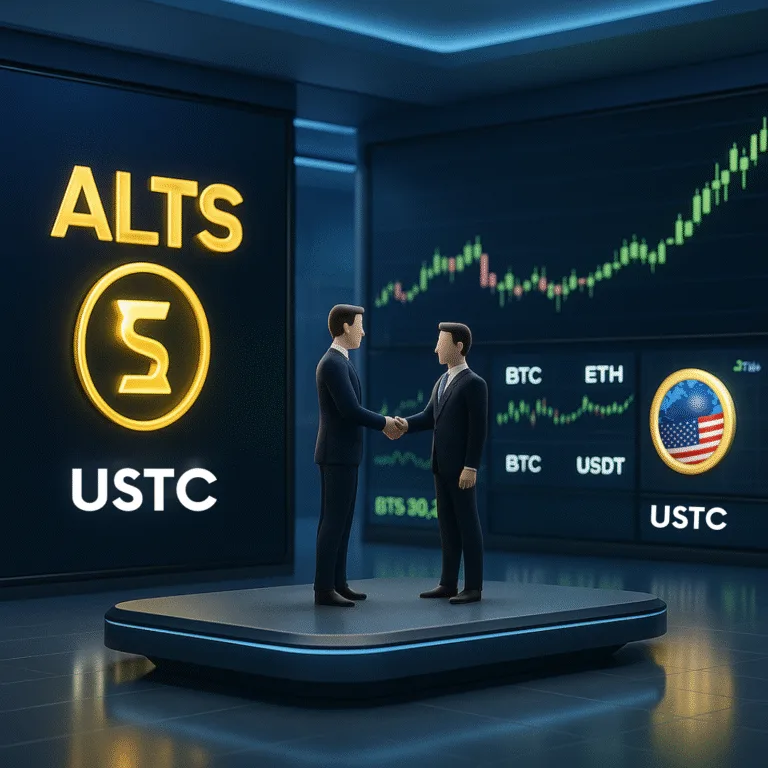
ALTS Sigma Adds USTC to Its Institutional Trading Platform

0

A recent U.S. SEC filing has revealed that ALTS Sigma, a global financial technology company, is providing access to Terra Classic’s stablecoin (USTC) through its institutional trading platform, ALTS Prime. This move places USTC alongside leading digital assets such as Bitcoin (BTC), Ethereum (ETH), and USD Coin (USDC), highlighting its growing relevance in professional markets.

ALTS Sigma and its Canadian subsidiary focus exclusively on business-to-business (B2B) clients, including banks, broker-dealers, investment funds, proprietary trading firms, and payment providers. With more than 1,900 corporate clients in 50 countries, the company is building a global network where large financial institutions can directly trade digital assets.

Through ALTS Prime, approved clients can buy and sell a wide range of cryptocurrencies using U.S. dollars, Canadian dollars, euros, and British pounds. The platform is accessible through both a mobile application and secure trading APIs, ensuring fast and reliable transactions.

For Terra Classic (LUNC) supporters, USTC’s inclusion on a platform of this scale is a positive sign. It demonstrates that institutional investors now have a simple way to access and trade the asset, potentially increasing liquidity, credibility, and adoption in global markets.

This development reinforces the idea that USTC is not just surviving but gaining institutional recognition. As more regulated platforms list USTC, its role in the evolving digital asset economy may grow stronger.

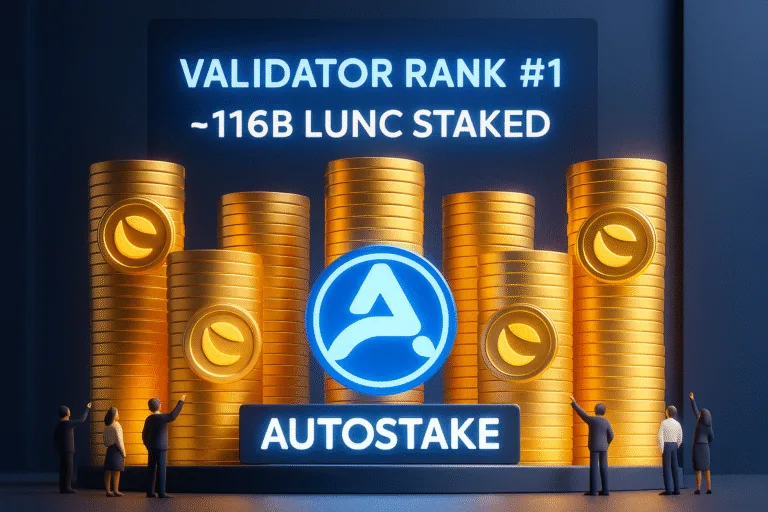
Autostake Becomes Top Validator on Terra Classic With 116 Billion LUNC Staked

Autostake has emerged as the leading validator on the Terra Classic (LUNC) network after an extraordinary surge in staking activity within just 24 hours.

In a single day, more than 100 billion LUNC were delegated to the Autostake validator, pushing its total stake to 116 billion LUNC. This rapid growth has made Autostake the number one validator on the entire network, surpassing all other validators by a wide margin.

With this milestone, Autostake is now positioned as a major player in Terra Classic governance and security, as validator voting power plays a critical role in shaping network proposals and upgrades.

Do Kwon Pleads Guilty in New York Court, Faces Up to 25 Years

0

Do Kwon, the founder of Terra, has pleaded guilty in a New York court to two counts of conspiracy and fraud. The plea deal significantly reduces his possible prison time and sets the stage for his eventual transfer back to South Korea.

Originally facing eight criminal counts and a potential sentence of 130 years, Do Kwon admitted guilt to Count 1 and Count 4. By doing so, his maximum sentence drops to 25 years, and he gives up his right to appeal. As part of the agreement, prosecutors will recommend a sentence of no more than 12 years and will support transferring him to South Korea after he serves half of his sentence. However, Judge Paul Engelmayer made it clear that the final decision rests with the court, meaning the sentence could still exceed 12 years.

During the hearing, Judge Engelmayer asked Do Kwon to describe his crimes in his own words. Do Kwon stated, “I knowingly agreed with others in a scheme to defraud and in fact did defraud investors. What I did was wrong and I want to apologize for my conduct.” When pressed further, he admitted that he knew his actions were wrong at the time.

Under the terms of the deal, Do Kwon must also pay $19 million in forfeitures. The amount of restitution to investors has not yet been decided.

The next court conference is scheduled for December, when Judge Engelmayer could announce the final sentence.

This plea deal could mean Do Kwon serves as little as six years before being transferred to South Korea, depending on how the sentencing is finalized.

Why the Crypto Market Suddenly Dropped

0

The crypto market has seen a sudden drop as many traders rushed to sell their holdings. This sharp sell off was made worse when leveraged trades were closed, forcing more people to sell and pushing prices down faster.

Another reason for the fall is technical reactions. Many cryptocurrencies reached price levels where traders expected the rally to slow. These levels often lead to profit taking, especially when the price gets close to big round numbers that feel like a barrier. This combination of selling pressure and trader psychology caused the quick pullback we see recently.

Do Kwon, co-founder of Terraform Labs, is taking a major step in his long legal battle.

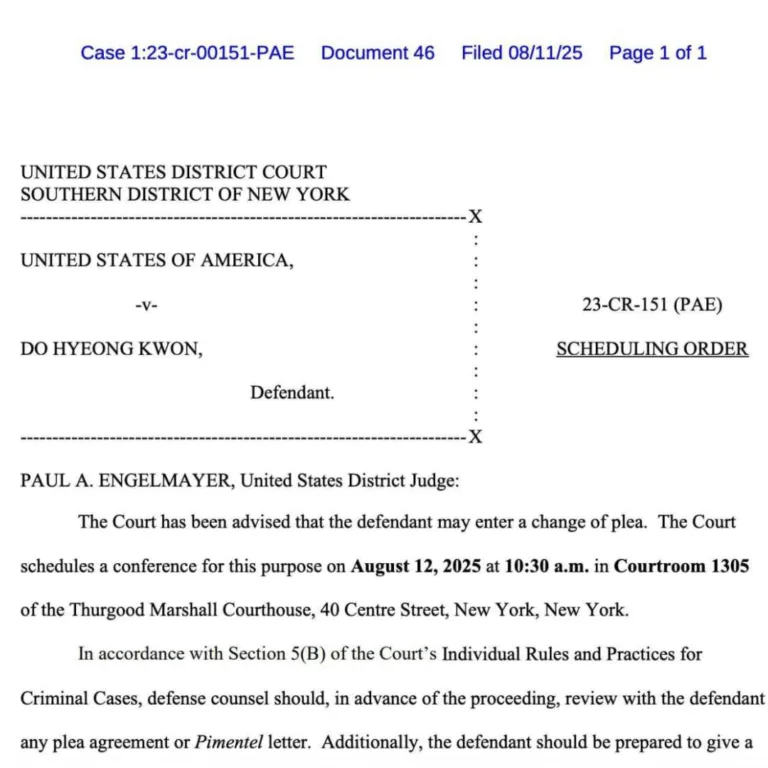
Do Kwon, co-founder of Terraform Labs, is approaching a pivotal moment in his long-running legal battle. A court hearing is scheduled for August 12, 2025, in New York to address a potential change of plea.

The session will be presided over by Judge Paul A. Engelmayer at the Thurgood Marshall Courthouse. If the change of plea is confirmed, it could mark the beginning of the final chapter in one of the most high-profile cases in cryptocurrency history.

The collapse of the Terra ecosystem in 2022 erased billions of dollars from the market and dealt a severe blow to the LUNC community. Since that time, LUNC has been steadily rebuilding under community-driven governance.

For many investors, the legal proceedings have been a persistent shadow over the project’s future. With the possibility of a resolution now in sight, that uncertainty could finally start to fade.

Institutional investors and high-net-worth traders, often referred to as whales, tend to wait for clear and stable conditions before making significant moves. A conclusion to this case could be the signal that brings LUNC back into their strategic plans.

If confidence is restored and momentum begins to gather, LUNC could experience a renewed wave of capital inflows and market attention. The coming 24 hours will be a crucial period for both sentiment and strategy.

While no one can predict the exact market reaction, one fact remains, this moment could redefine LUNC’s trajectory for years to come.