Home Blog Page 60

LuncScan Launches Real-Time Terra Classic Stablecoin Tracking for Transparency and Revival

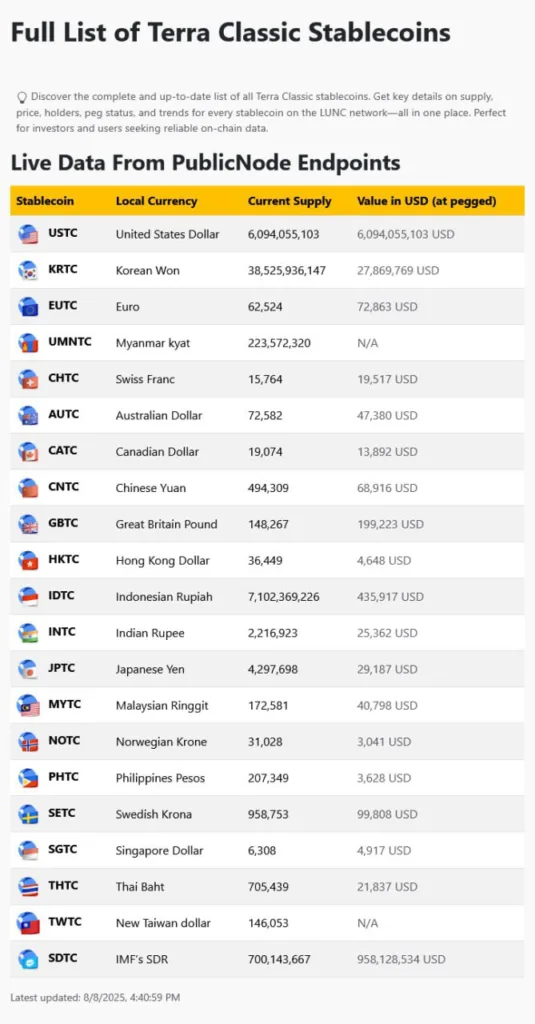
The Terra Classic (LUNC) ecosystem has reached another milestone in transparency and blockchain analytics. LuncScan, the leading explorer and data platform for Terra Classic, has introduced real-time stablecoin supply data and peg value tracking for all Terra Classic–based assets.

This powerful new feature allows the community to instantly view the total circulating supply of each stablecoin — including USTC — alongside its peg value. With accurate, live data, users can now easily monitor the health, stability, and performance of every stable asset in the network.

For the Terra Classic revival movement, this upgrade is more than just a technical improvement. Real-time tracking empowers developers, validators, traders, and the broader #LUNCArmy to make informed decisions, coordinate strategies, and push forward with USTC repeg initiatives.

Transparent supply and peg data also strengthen community-led burn campaigns, liquidity plans, and governance proposals. Whether you’re a small holder or a major stakeholder, you now have the same clear insight into progress toward restoring Terra Classic’s full economic model.

With LuncScan’s real-time Terra Classic stablecoin tracking now live, the path to stability becomes clearer. Every decimal matters — and now, the community can measure every step of the revival, block by block, peg by peg.

LUNC Price Analysis: Bullish Break Above Key Fibonacci Levels Signals Uptrend

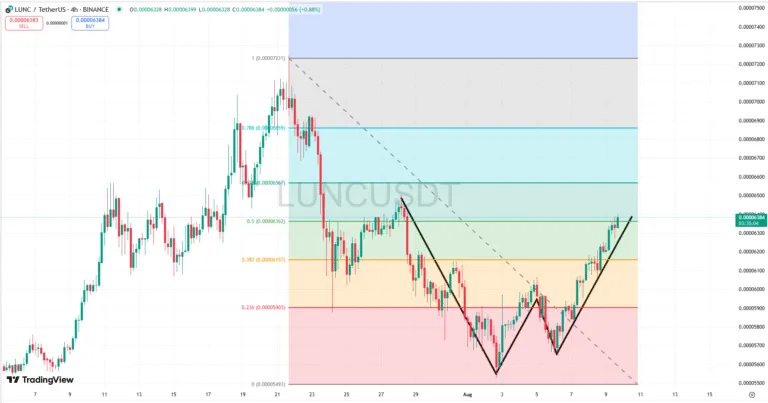
LUNC has demonstrated notable bullish momentum in recent sessions, breaking above the 0.5 Fibonacci retracement level. This move signals increasing buyer confidence and opens the path toward higher resistance levels.

The immediate resistance is positioned near 0.00006567, corresponding to the 0.618 Fibonacci level, followed by 0.00006859 at the 0.786 level. A sustained breakout above these points could propel the price toward the recent peak of 0.00007231.

Chart patterns suggest a clear “W” recovery formation, often regarded as a bullish reversal indicator. This structure reflects a strong shift from a bearish phase toward potential upward continuation.

Momentum indicators remain positive, with higher lows and consistent upward candle formations reinforcing the current trend. As long as the price maintains levels above 0.00006362, the bullish outlook remains intact.

If buying pressure persists, LUNC could challenge higher Fibonacci levels in the coming days, with the potential to revisit recent highs and extend the rally further.

Reviving Terra Classic: The Promising Path to Re-Pegging USTC to 1 Cent and Empowering Luna Classic

In the ever-evolving world of cryptocurrency, few stories capture the resilience and innovation of a community like that of Terra Classic.

Once a powerhouse in the stablecoin arena, TerraClassicUSD (USTC) faced unprecedented challenges, but today, exciting discussions are bubbling up about re-pegging it to a realistic and achievable target: 1 cent ($0.01).

This move could not only restore stability but also supercharge Luna Classic (LUNC), the ecosystem’s native token, paving the way for renewed growth and investor enthusiasm. Let’s explore this optimistic vision and why it’s generating so much buzz.

The Vision: Re-Pegging USTC to 1 Cent

Imagine USTC regaining its role as a reliable stablecoin, pegged firmly at $0.01. This isn’t a far-fetched idea—community forums have long discussed how USTC has “almost naturally pegged” at around 1 cent due to market dynamics, and proposals suggest formalizing this through updated mechanisms.

Why 1 cent? It’s a pragmatic starting point that aligns with current trading levels, making it easier to achieve than jumping straight back to $1.

This re-peg could involve enhanced algorithmic adjustments, strategic buybacks, and community-driven staking incentives to maintain the peg without over-relying on external collateral.

The Bright Benefits: Stability, Growth, and Community Empowerment

Re-pegging USTC to 1 cent offers a multitude of positives. First, it restores trust—users could once again rely on USTC for everyday transactions, remittances, and yield farming without the fear of extreme volatility.

This stability would draw in new capital, revitalizing DeFi protocols on Terra Classic.

For LUNC holders, the upside is enormous. Reduced supply through burns could lead to significant price appreciation, rewarding long-term supporters and attracting fresh investment.

Broader ecosystem growth is another win. With USTC at a stable 1 cent, partnerships with payment platforms and merchants become feasible, expanding real-world adoption. It’s a win-win: holders see value accrual, while the network regains its status as an innovative blockchain hub.

Looking Ahead: A Thriving Future for Terra Classic

The road to re-pegging USTC to 1 cent is filled with promise, symbolizing the unbreakable spirit of the Terra Classic community.

By leveraging Luna Classic’s integral role and building on existing proposals, this initiative could mark the beginning of a new era—one of stability, innovation, and prosperity.

As discussions evolve and upgrades roll out, the potential for USTC and LUNC to shine brighter than ever is undeniable. For investors and enthusiasts alike, now is the time to get excited about Terra Classic’s comeback story.

The future looks bright—let’s watch it unfold!

Fiat Onramp Coming Soon to Garuda DeFi – Low Fees & No CEX Needed!

Garuda DeFi is preparing to revolutionize crypto access with the launch of its new fiat onramp—a direct gateway into DeFi that requires no centralized exchange (CEX) and charges low fees.

With this new feature, users can easily purchase crypto using traditional fiat currencies like USD or EUR. The fiat onramp will be integrated directly into Garuda-Defi.org, offering a simple, secure, and decentralized experience for both newcomers and experienced users.

🔒 No CEX Needed

Avoid complicated KYC procedures and withdrawal delays. Garuda DeFi’s onramp enables direct crypto purchases—no exchange accounts required.

💰 Low Fees

This update is built with user value in mind. Competitive transaction fees make it one of the most cost-effective entry points into DeFi.

🌍 Global & User-Friendly

The fiat onramp will support multiple currencies and be accessible in many countries. Whether you’re investing in LUNC, USTC, or other tokens, the platform is designed for speed and simplicity.

🚀 Launching Soon

Currently in final testing, the fiat onramp will launch very soon. Follow Garuda DeFi on social media or visit the official site for updates.

This onramp marks a major milestone for DeFi mass adoption. It’s not just an upgrade—it’s a new beginning for permissionless finance.

Garuda DeFi – Powering the decentralized future.

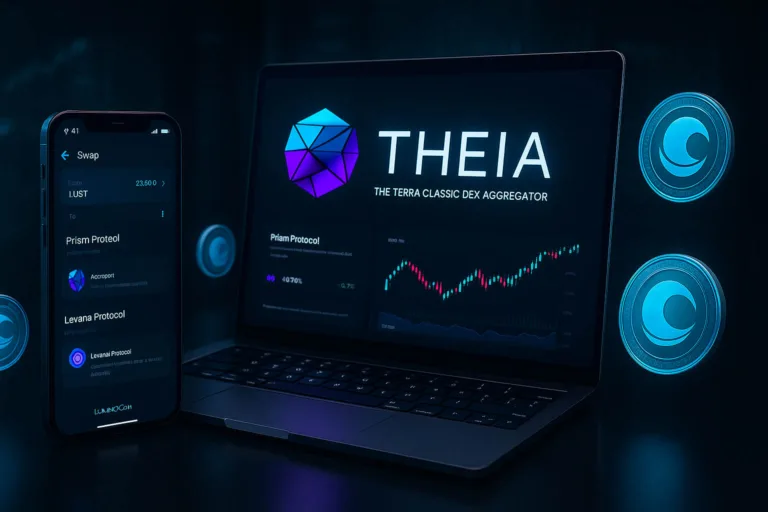
Theia: The Terra Classic DEX Aggregator Fueling LUNC’s Comeback

In the dynamic world of decentralized finance, Theia Terra Classic Aggregator is quickly establishing itself as a vital infrastructure within the Terra Classic (LUNC) ecosystem. Built as a powerful DEX aggregator, Theia enables users to seamlessly trade tokens across multiple decentralized exchanges using a single, user-friendly platform. As the Terra Classic community continues to rebuild and innovate after the events of 2022, Theia plays an essential role in enhancing transparency, liquidity, and user experience.

What makes Theia stand out is its tight integration with the Terra Classic blockchain. Theia delivers real-time price data, detailed token charts, and efficient swap functionality—all while sourcing liquidity from various DEXes. This allows users to find the best prices with minimal slippage, which is especially valuable for smaller traders and emerging Terra-based tokens that aren’t listed on major centralized platforms.

More than just a trading tool, Theia offers robust analytics and market insights that empower users to make informed decisions. With a sleek interface, responsive design, and LUNC-native features, Theia is becoming indispensable for both active traders and ecosystem developers.

As the Terra Classic network continues evolving through governance proposals, burns, and project launches, Theia stands at the forefront—bridging accessibility, decentralization, and community spirit. With platforms like Theia, Terra Classic is proving that innovation and resilience remain its strongest assets.

LEARN MORE HERE

Final Phase of Proposal #12142 (WASMD Unfork) Completed and Under Review

The final implementation phase of Proposal #12142 (WASMD unfork) has been completed for the Terra Classic (LUNC) blockchain. This major technical milestone is a key step toward re-aligning Terra Classic with the latest CosmWasm and Cosmos SDK standards.

The WASMD unfork process aims to restore compatibility with upstream CosmWasm modules, allowing developers to build and deploy smart contracts more efficiently on Terra Classic. This will enable more advanced dApps, improved tooling, and better cross-chain interoperability.

Currently, the proposal is under active code review, with Terra Classic core developers working closely with other ecosystem maintainers. This collaborative review process ensures the upgrade is secure, stable, and ready for production.

After the review, the code changes will be deployed to the testnet. This allows for live testing of the WASMD unfork upgrade and helps detect any potential bugs before proposing a mainnet rollout.

This upgrade is a major move for Terra Classic as it works to rebuild and modernize its smart contract capabilities. Bringing WASMD back in sync with upstream code will make the network more developer-friendly and future-proof.

Why the WASMD Unfork Matters

  • Restores compatibility with CosmWasm and Cosmos SDK
  • Enables more powerful smart contract features
  • Prepares Terra Classic for greater adoption and utility

Stay updated as Terra Classic continues to evolve with key infrastructure improvements like this. The WASMD unfork marks a new era of innovation and opportunity for the LUNC ecosystem.

TerraClassic Revival: 1-Cent USTC Peg to Boost LUNC Volume

We strongly believe that a USTC pegging to approximately 1 cent could help achieve this.

A 1 cent USTC peg would enable TerraClassic (LUNC) to have a reliable on-chain store of value. This means traders could operate against a consistent US dollar-based value, increasing trading opportunities and liquidity.

This peg would also exist within a decentralized blockchain ecosystem, which in most legal jurisdictions is kept at arm’s length from regulation to promote ingenuity, innovation, and open financial systems.

Being a decentralized chain, TerraClassic allows for secure, low-cost, KYC-free capital transfers — delivering one of the core aspirations of cryptocurrency: borderless, unregulated, jurisdiction-neutral, and secure transactions. This empowers individuals and organizations to maintain full control over their wealth and financial future without excessive fees from traditional banks, restrictions based on location, or exposure to the single points of failure often found in centralized systems.

Legal compliance with jurisdictions would still apply should capital or money transfer to centralized exchanges (CEXs), as per local legal and tax requirements. However, while operating in the decentralized proof-of-stake environment, funds would remain largely exempt from such regulations. This is possible because the majority of security-conscious validators remain anonymous, ensuring safety is maintained through code and decentralization rather than centralized control. Anonymity also reduces the risk of validator owners being tracked, attacked, exploited, or victimized.

We believe restoring TerraClassic’s original concept with an on-chain store of value — potentially multiple stores — using dozens of low-volatility coins that track multiple currencies and enable foreign exchange (Forex) trading will be a unique service offering for the TerraClassic network. This approach could create massive opportunities for individuals and organizations to move funds globally, maximize self-custody, and generate significant trading volume for TerraClassic, thereby increasing burns and driving LUNC deflation.

While some still wish for USTC to return to $1, validators have already agreed that USTC should not currently be classified as a stablecoin, but rather a speculative token. Those hoping for an immediate $1 repeg have had over three years to act, yet no viable or deliverable plan has emerged. We believe this period was more than sufficient for the “repeg lobby” to prove its case.

It is now time to move forward — to redefine TerraClassic’s unique selling point, reignite the chain’s innovative potential, and create new global opportunities for individuals and businesses. This will restore the possibility of generating life-changing wealth through TerraClassic and owning LUNC.

Luna Classic Weekly Update: Governance Wins, Exchange Upgrades, and Technical Milestones

Luna Classic (LUNC) continues to advance with steady momentum as the ecosystem pushes forward on multiple fronts. This week’s updates highlight strong coordination between governance, development teams, and exchange partners—driving both security and innovation. Here’s the full breakdown of the most important milestones:

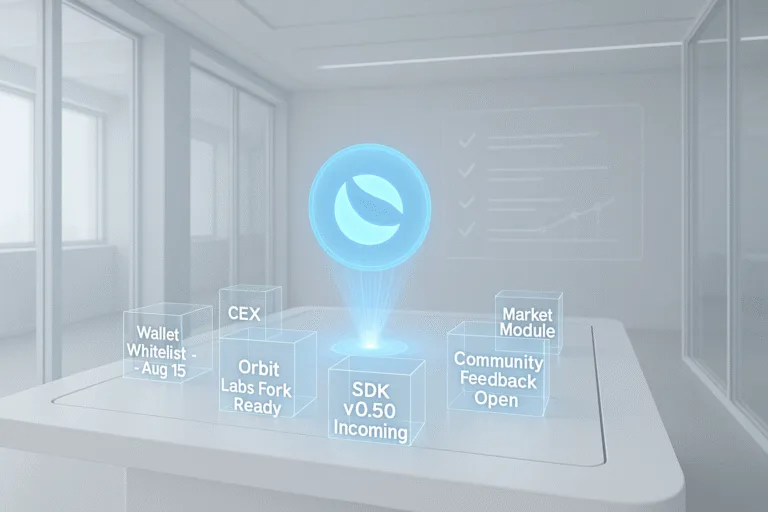
1. Wallet Whitelist Proposal Approved

The wallet whitelist proposal has passed governance approval and is set for implementation on August 15. This upgrade marks a significant step toward improving network security, reducing vulnerabilities, and building greater trust across the Luna Classic ecosystem.

2. Centralized Exchange Coordination Underway

Ongoing technical coordination with centralized exchanges ensures upcoming upgrades will be deployed smoothly without service interruptions—protecting user experience while enabling faster integration of new features.

3. Orbit Labs Fork Successfully Completed

Orbit Labs has finalized its forking work, establishing a stronger technical foundation for the network. This critical step clears the way for future developments, advanced capabilities, and improved performance within Luna Classic.

4. Proposal for Cosmos SDK v0.50 Coming Soon

A new proposal will soon be introduced to upgrade to Cosmos SDK v0.50. If passed, it will deliver improved stability, enhanced performance, and better compatibility with the broader Cosmos ecosystem—marking a major technical leap forward.


5. Market Module 2.0 Passes Governance

The Market Module 2.0 proposal has been approved. Development teams are now reviewing backlog tasks and preparing for integration. Initial GitHub documentation is live, enabling community members to participate in open discussions and reviews.

6. Increased Quantitative Analysis & Community Input

Data analysts are contributing structured feedback on proposals, while GitHub discussions are now open for transparent community collaboration. Luna Classic continues to prioritize community-driven governance and technical decision-making.

Conclusion
This week reflects clear progress in governance, infrastructure, and community collaboration. Luna Classic is not only maintaining momentum—it’s accelerating toward greater scalability, security, and adoption. Stakeholders are encouraged to stay involved, contribute insights, and support the network’s continued growth.

The Power of Governance in Luna Classic: A Community Debate on Burn Tax

Luna Classic Burn Tax Debate: Should the Tax Be Reduced, Maintained, or Increased?

In any blockchain ecosystem, real strength comes from its community. For Luna Classic (LUNC), one of the most important and debated topics right now is the burn tax. The community is divided on the best path forward for this key mechanism.

The Case for Reducing the Luna Classic Burn Tax

Some community members support lowering the burn tax on Luna Classic transactions. Their main reasons include:

  • Increased trading activity on exchanges

  • Higher liquidity for LUNC tokens

  • Greater adoption of LUNC in decentralized finance (DeFi) applications

The argument is simple: reducing the burn tax lowers transaction costs, encouraging more traders and users to participate. This could accelerate the growth and adoption of the Luna Classic ecosystem.

Why Some Want to Keep or Increase the Burn Tax

On the other side, many believe the burn tax should be maintained or raised. They see the burn tax as essential for Luna Classic’s recovery because it:

  • Provides funding for the community pool

  • Supports the oracle pool for accurate price feeds

  • Creates deflationary pressure to reduce token supply

For these supporters, the burn tax is the driving force behind ongoing development and sustainability. Until a better alternative emerges, the tax must stay in place or be increased.

Why the Burn Tax Debate Is Crucial for Luna Classic’s Future

This ongoing debate highlights the importance of on-chain governance in the Luna Classic blockchain. It’s not just about differing opinions but about how diverse perspectives come together to shape the future of LUNC.

How You Can Influence the Luna Classic Burn Tax Decision

Ultimately, the future of Luna Classic depends on its community. Your vote, your voice, and your participation in governance decisions will determine whether the burn tax is reduced, maintained, or increased.

Join the discussion and help decide the future of Luna Classic today!

Tiered Undelegation Periods for Terra Classic

Tiered Undelegation Periods for Terra Classic

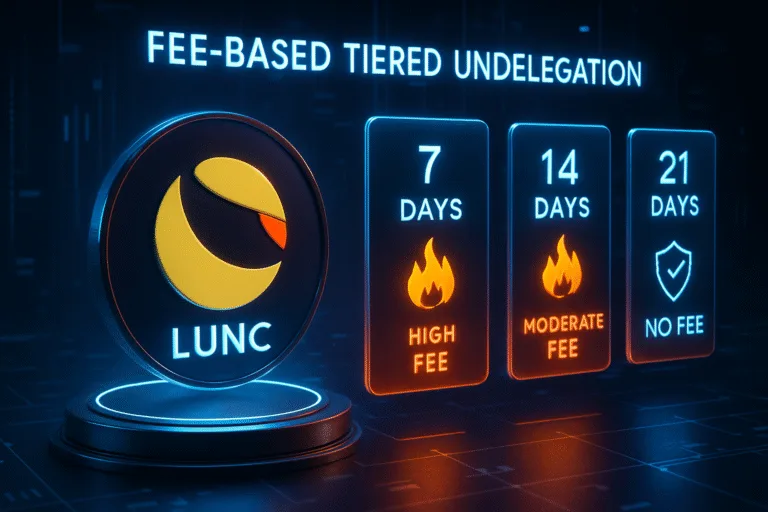
This proposal introduces fee-based tiered undelegation periods of 7 and 14 days, in addition to the existing 21-day option. The goal is to give stakers greater flexibility while accelerating the LUNC burn rate. While the current 21-day undelegation period supports long-term staking, its rigidity can limit liquidity and discourage potential participants. Shorter, fee-based options would improve the staking experience, appeal to a wider range of stakers, and create an additional mechanism to burn LUNC.

Proposed Solution: Tiered Undelegation with set Fees

To balance flexibility with network stability, we propose three undelegation options with defined durations and fees. All fees collected from the shorter undelegation options will be burned immediately, creating an ongoing supply reduction mechanism:

7-Day Fast-Undelegation:

  • Set Fee: 1% (double the current 0.5% on-chain tax), entirely burned.
  • This option offers fast access to liquidity at a transparent cost, while significantly boosting the LUNC burn rate.

14-Day Fast-Undelegation:

  • Set Fee: 0.5% (equal to the current 0.5% on-chain tax), entirely burned.
  • A middle-ground option that delivers quicker liquidity with a burn rate stakers already know.

21-Day Standard Undelegation:

  • No Fee (unchanged).
  • Remains the default choice for users who prefer longer-term staking commitments.

By introducing these tiers, stakers can opt for faster unstaking if needed, while contributing to a burn that benefits the entire community.

Benefits

  • Enhanced Liquidity & Staking Participation: Adding 7 and 14-day options provides users with greater control over their staked assets, which may attract a broader group of stakers and increase the total amount of LUNC staked.
  • Accelerated, Measurable Deflation: Fees from the new tiers will create an additional and consistent burn stream, complementing the existing tax. This new, trackable burn source directly supports the community’s goal of rapid supply reduction.
  • Governance: This proposal establishes stable and predictable parameters through the use of set durations and fees. This framework is designed to be adaptable and can be amended by the community at any time through the standard governance process.
  • Competitive Position: Offering multiple undelegation periods balances flexibility with supply reduction goals. This approach is not common across Cosmos-based blockchains and may help Terra Classic attract and retain more stakers

Security & Stability Measures

This tiered system is designed to improve user experience without compromising network security. Several measures are built in to protect the integrity and stability of Terra Classic:

  • Fee-Based Safeguards: The implementation of fees for the shorter 7-day (1%) and 14-day (0.5%) undelegation periods acts as a direct deterrent against speculative and large-scale, coordinated unstaking. The cost of a quick exit makes it less appealing for malicious or volatile actors to manipulate the system for short-term gain.
  • 21-Day Standard Maintained: The existing 21-day undelegation period remains the default, fee-free option. It serves the needs of investors and validators who prefer a long-term, fee-free staking commitment, which benefits the overall health of the network.
  • Defined and Transparent Timelines: The 7, 14, and 21-day undelegation periods provide clear, predictable timelines, ensuring transparency for all unstaking events. By excluding immediate undelegation, we prevent chaotic exits and ensure that any unstaking still involves a waiting period that can be monitored.

Community Support and Path Forward

This framework is introduced with set durations and fees to provide clarity and predictability from the start. However, we recognize that real-world conditions may require adjustments over time. The community, through governance, can fine-tune the undelegation periods or fee rates as needed based on network performance, security considerations, and user feedback. This adaptive approach ensures the system remains balanced, secure, and aligned with Terra Classic’s long-term vision for sustainability and growth.

Overall, the proposal offers the LUNC community a new burn mechanism. By adopting tiered undelegation options, we can improve staking liquidity, increase participation, and accelerate LUNC burning through a predictable, on-chain system.

This proposal is intended to gauge community interest and gather feedback on the concept. If the community supports it, BLV Labs will submit a follow-up technical proposal detailing the implementation plan, costs, and development timeline for review and approval.

By voting YES, you support giving stakers more flexibility, increasing liquidity, and accelerating LUNC burning through a new fee-based system. A NO vote means you do not agree with the proposal. Choosing ABSTAIN means you’re neutral but want your vote to count toward quorum. A NO WITH VETO means you strongly oppose the proposal and believe it could harm the network.