Home Blog Page 70

Learn What Cryptocurrency Is

What Is Cryptocurrency?
Cryptocurrency is a type of digital money designed to work through the internet, without needing a central authority like a bank or government. Instead, it uses cryptography (a method of securing information) to ensure that transactions are safe and verified.

Unlike traditional currencies such as the US dollar or Euro, cryptocurrencies exist only in digital form. They are powered by a technology called blockchain, which records all transactions in a public and secure way.

Why Is Cryptocurrency Important?
Cryptocurrency offers a new way to:

● Send and receive money across the world instantly

● Protect privacy and ownership without relying on banks

● Build new financial tools through smart contracts and decentralized applications

It also opens the door to decentralized finance (DeFi), NFTs, and blockchain-based communities.

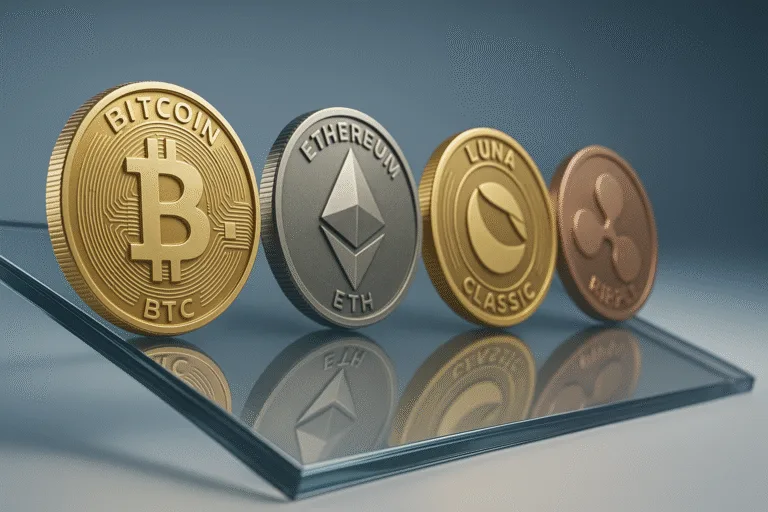
Popular Cryptocurrencies You Should Know
1. Bitcoin (BTC)
Launched in 2009, Bitcoin is the first and most well-known cryptocurrency. It was created as a peer-to-peer payment system that allows people to send money online without intermediaries. Many see it as “digital gold” because of its limited supply and strong market position.

2. Ethereum (ETH)
Ethereum introduced the idea of smart contracts—programs that run automatically when conditions are met. This opened the door to DeFi (Decentralized Finance), gaming, and NFTs (Non-Fungible Tokens). Ethereum is the second-largest crypto by market value and continues to lead innovation in the space.

3. LUNC (Terra Classic)
LUNC is the native token of Terra Classic, a reborn and community-led blockchain ecosystem. After facing a major collapse in 2022, the project has been revived by developers and its global community. LUNC is now known for its efforts in rebuilding trust and creating new use cases in DeFi, governance, and more.

4. Stablecoins (USDT, USDC)
Stablecoins are cryptocurrencies pegged to traditional currencies like the US dollar.
For example:
● USDT (Tether)
● USDC (USD Coin)
They are widely used for trading and saving because their prices remain stable, unlike most other cryptos that are volatile.

Final Thoughts
Cryptocurrency is changing how people think about money and technology. Whether you’re interested in investing, using digital wallets, or exploring blockchain apps, understanding the basics of popular coins is the first step.

Always remember: start small, do your own research, and never share your wallet’s private keys or seed phrase.

“Crypto Week” in Congress: A Turning Point for LUNC?

The United States House of Representatives is preparing for “Crypto Week” in mid-July. Lawmakers will focus on three key bills that could shape the future of digital assets across the country.

These laws aim to make crypto rules clearer and more supportive of responsible innovation. This move is important not just for Bitcoin or Ethereum but for smaller blockchains like Terra Classic (LUNC) as well.

1. Genius Act
This bill would require stablecoin issuers to hold strong financial reserves. For Terra Classic, this is especially relevant. After the collapse of the original UST stablecoin in 2022, stronger laws around stablecoins could help rebuild public trust in the LUNC ecosystem and reduce future risks.

2. Clarity Act
This bill aims to clearly divide responsibilities between the SEC and CFTC. This could finally bring regulatory clarity to tokens like LUNC, which often face uncertainty about whether they are considered securities or commodities. Clearer classification could open the door to safer listings on U.S. exchanges and more institutional use.

3. Anti-CBDC Surveillance State Act
This bill pushes back against the idea of a U.S. government-controlled digital currency. Supporters believe that public blockchains like Terra Classic offer more open and decentralized alternatives to government-run digital money. This bill could increase interest in LUNC as people look for private, transparent blockchain solutions.

Why It Matters for LUNC
“Crypto Week” shows that the U.S. government is starting to take crypto more seriously. If these bills pass, the Terra Classic community could benefit from a stronger legal foundation, new exchange opportunities, and more user confidence. It may also attract more developers, projects, and investors who want to build on chains that align with transparent and fair regulations.

LUNC holders and supporters should watch these developments closely. Real legal clarity could be the next big step in the long-term revival of the Terra Classic ecosystem.

U.S. Government Transfers $218K in Ethereum to Coinbase — Is Altseason Starting?

0

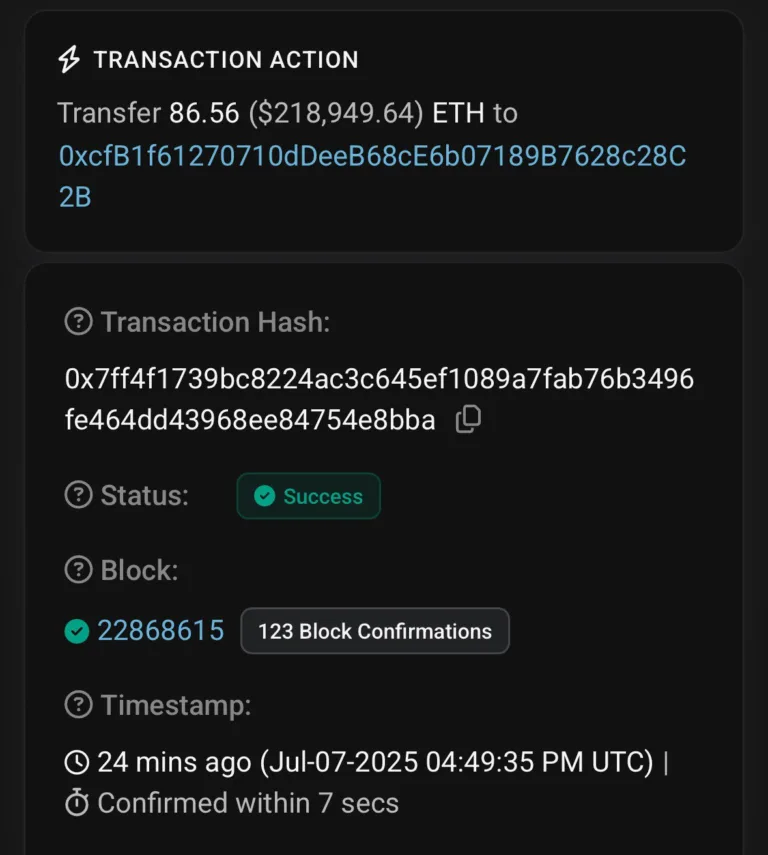
Blockchain data confirmed that a wallet labeled as U.S. government-linked transferred 86.56 ETH, valued at approximately $218,949, to Coinbase, one of the largest cryptocurrency exchanges.

The transaction was executed at 4:49 PM UTC, recorded in block #22868615, and was confirmed in under 7 seconds. The receiving address was: 0xcfB1f61270710dDeeB68cE6b07189B7628c28C2B.

What Does This Mean?
This kind of transfer often suggests a potential sale or liquidation. The Ethereum sent likely comes from digital assets previously seized by federal authorities in criminal cases. Historically, such government actions have drawn close attention from traders, especially when they happen during key market phases.

Why It Matters Now
The timing is especially important. Ethereum has shown renewed strength in the last several days, outperforming Bitcoin in some sessions. Market analysts often watch Ethereum’s momentum as a lead indicator of altseason—a period when alternative cryptocurrencies (altcoins) begin to surge.

With ETH regaining dominance and the broader altcoin market starting to trend upward, this transfer could mark more than just a routine government move—it may serve as a signal that institutional players are repositioning and the next altcoin cycle is underway.

Final Take
Whether this sale impacts the market directly or not, it comes during a sensitive and potentially explosive phase for altcoins. As investor sentiment heats up, all eyes are on ETH and its role in triggering the next wave of crypto growth.

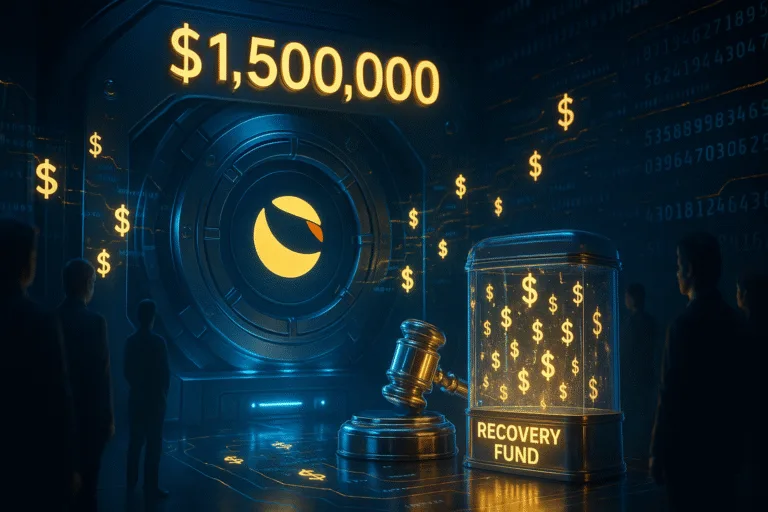
Retrieve and Deposit at Least $1,500,000 From Off-Chain Sources Into a Terra Luna Classic Recovery Fund via an Authorized Legal Entity, for the Benefit of the TC Community & Token Holders

1. Simplified Overview

● The following is a quick and simple overview of this proposal:

● The proposal co-signers (Rex Wu & Victoria Critchley) have located off-chain assets worth over $1,500,000 which they wish to retrieve for the TC community

● The co-signers propose the formation of a legal entity that can interface with government authorities and regulators, for the purpose of securing those funds

● The co-signers will cover legal expenses, and have already queried attorneys while searching for off-chain assets… the co-signers will doxx / KYC to authorities

● The co-signers will not be requesting any money from LUNC’s Community Pool, but will instead be paid a 20% finder’s fee on all assets they manage to retrieve

● Net assets retrieved by the legal entity will be deposited within a “Terra Classic Recovery Fund”, after an 80/20 split (80% for the community, 20% for the co-signers’ fee)

● Depending on legal mandates, the money will be disbursed as a single deposit into a KYC-validator multisig and/or via direct airdrops & grants to TC community & builders

● After the funds have been secured and disbursed, the legal entity will be handed over to the Terra Classic community, to staff and use, as voted by community governance

● The co-signers pledge to handle the proceedings with full transparency, and if this proposal passes will act for the benefit of the Terra Classic community & and its holders

● The legal fees for this endeavour are somewhere in the range of $100,000 due to the estimated complexity of the proceedings, and will be covered fully by the co-signers

● If no assets are retrieved, then the co-signers will not be paid anything, regardless of how much money they’ve spent on legal fees throughout the retrieval effort

● The co-signers intend to secure at least $1,500,000 for the Terra Classic community, and possibly even more if their attorneys’ efforts are successful

Please note that the above is just a general outline for the sake of brevity.

For full details, see the individual sections below…

2. Introduction

The Terra Luna Classic community has long endured the consequences of being under-resourced and fragmented following the events that led to the collapse of the original Terra ecosystem, and subsequent abandonment of the chain by Terraform Labs and Kwon Do-Hyung. Despite its resilient and active community, Terra Classic remains financially constrained, severely limiting its growth potential, development initiatives, and ability to rebuild long-term value. What it needs is funding to pursue recovery and revitalization for its token holders.

The authors of this proposal have identified credible leads regarding off-chain assets that could be legally proven to have belonged to the Terra Classic ecosystem. If successful, potentially $1,500,000 or more will be secured and brought over to a transparent Recovery Fund, to be used for the benefit of the Terra Classic community. However, retrieving these assets requires the creation of a formally recognized legal entity – one capable of representing the interests of Terra Classic in legal proceedings and financial processes such as court briefs and public filings.

Thus, we propose the Terra Classic community authorizes the use of such a legal entity, for the purpose of laying claim to and retrieving said assets which used to belong to the chain. This entity will serve primarily as a liaison between the community and regulators, will have no control or claim over the current Terra Classic blockchain, will not influence its governance, nor will it impact this chain’s future development direction! Its purpose is to engage with financial institutions, asset custodians, and potentially regulatory bodies to reclaim funds that could be rightfully attributed to the Terra Classic community and its token holders.

3. Executive Summary & Detailed Course of Action

The purpose of this proposal is to seek community approval for the formation of a formalized and authorized legal entity, to transparently and lawfully pursue off-chain funds on behalf of TC’s community via the following steps:

● Establish a legal entity under the auspices of the proposal co-signers to represent the Terra Classic stakeholders in legal and financial matters related to asset recovery.

● Lawfully and transparently pursue over $1,500,000 in off-chain assets that can potentially be proven to have belonged to the Terra Classic blockchain and its community.

● Secure funding for the independent blockchain and validator set without new ties to Terraform Labs, in order to avoid regulatory breaches and ongoing entanglements.

● When required, make in-person appearances before regulatory bodies, government agencies, and disbursement courts, for the purpose of securing said funds.

● The co-signers will be fully KYC’d to the relevant authorities and jurisdictions, ensuring full transparency, accountability, and compliance in these matters.

● The co-signers will not seek any upfront funding from the LUNC Community Pool, neither now, nor at a later date, regardless of success in this endeavour.

● The co-signers pledge to ensure long-term sustainability and regulatory alignment under the banner of the legal entity by adhering to governmental mandates.

● The legal proceedings and entity will be self-funded by the co-signers, with them being prepared to invest up to $100,000 in judicial and administrative costs.

● The co-signers will receive a 20% finder’s fee on any money recovered, but only if funds are successfully retrieved. The community pays nothing if no funds are secured.

● All recovered assets will be vetted by authorized government entities like courts, which upon successful resolution will forward the money to the Terra Classic Recovery Fund.

● Control over the TC Recovery Fund will be entrusted to KYC’d chain representatives who volunteer for the duty. This will be done under the watchful eyes of accredited attorneys.

● Retrieved monetary assets (minus expenses like taxes & the finder’s fee) will remain in the Recovery Fund until at least five (5) fund stewards are selected as transitory guardians.

● Once secured and received by the Recovery Fund, the assets will be used for the benefit of the LUNC community. The co-signers lay no claim to those assets, outside of their finder’s fee.

● Final asset disbursement will be made pursuant to legal mandates. Depending on proceedings outcome, it may be necessary to prove absence of TFL affiliation to satisfy regulatory compliance.

● If the chain fails compliance, or fails to secure at least five (5) KYC’d volunteer-representatives, then asset disbursement will be handled by the legal entity via airdrops/grants to the TC community.

● Upon successful completion of its task, the legal entity will be handed over to the Terra Classic community for future use, and can be staffed by KYC’d community members who volunteer for the duty.

Note: We would have preferred to deposit all recovered assets directly into the chain’s Community Pool, but for reasons tied to TFL’s ongoing legal entanglements we are forced to set things up as outlined above on the advice of our legal counsel. Still, the extra administrative work is worth the effort because any money we manage to recover through the legal entity will be made available to the Terra Classic community as soon as possible via the Recovery Fund. Please note that it is critically important for the Terra Classic community to legally distance itself from Kwon Do-Hyung and Terraform Labs (TFL), due to both the former and latter currently being under judicial scrutiny for allegedly fraudulent conduct. In order for us to pursue, secure, and retrieve assets for the chain’s holders, we must comply with regulatory bodies and do things ‘by the book’! Otherwise we risk legal consequences and loss of securable assets. Likewise, any chain representatives (a la validators) who wish to volunteer as asset guardians will need to satisfy legal compliance (KYC).

All in all, we are looking to retrieve at least $1,500,000 from off-chain sources… possibly even more, if our intel is correct and things go according to plan.

4. Elaboration

i) Why the Terra Classic Community Is Struggling

Despite a massive loss of confidence after the initial crash in 2022, Terra Luna Classic has remained afloat thanks to its dedicated grassroots community and validator network. However, unlike many Layer-1 blockchains in the current market, LUNC operates without the financial support of a centralized foundation, VC backing, or significant institutional partners. Thus, the chain’s development and ecosystem growth relies almost exclusively on community-driven initiatives and the limited funds available in the Community Pool.

Unfortunately, the chain’s existing funding mechanisms are insufficient to support robust ecosystem development, technological innovation, large-scale marketing, long-term sustainability, or ambitious USTC repeg plans. While there is strong community interest in proposals such as USTC repeg strategies, buyback-and-burn initiatives, validator delegation incentives, and development grants, all of these efforts remain constrained by the financial limitations of the Community Pool! Not only that, the Oracle Pool itself is steadily dwindling, and validator payouts will be running thin in the near future.

In short, the Terra Classic community is in desperate need of restitution, and the off-chain assets we’ve identified will go a long way toward that. If we are successful in our endeavour, we will bring some of that money back to the people it rightfully belongs to – you!

ii) Why Off-Chain Funds Are Worth Pursuing

In light of this situation, the proposal authors have spent considerable time and money researching and identifying credible off-chain financial sources that may contain mothballed assets. Multiple bank accounts, custodial holdings, exchange balances, and escrowed funds were once linked to or earmarked for Terra (pre-crash), but were never reclaimed or disbursed. The LUNC community has a legitimate claim to some of these! Such funds could now, if legally validated, be redirected back to the Terra Classic community, which in some instances is the rightful heir of the abandoned or orphaned assets from the former ecosystem!

To be clear, this is not about speculative donations or hopeful funding appeals. The focus is on pursuing real, tangible, legally substantiated and recoverable funds, grounded in ownership records, transactional evidence, and historical documentation. However, pursuing such claims requires legal standing… which unfortunately the blockchain, as a decentralized entity, cannot provide on its own. Without a recognized lawful interface and representation, the Terra Classic community has no voice in courtrooms, no authority to sign documents, and no legal presence to assert rightful claims.

This is where the formation of a centralized legal entity becomes essential.

iii) Why This Approach Benefits the TC Community

This proposal offers holders a high-reward, zero-risk model:

1. If no money is recovered, the community loses nothing. The proposal co-signers cover upfront all administrative, legal, and judicial costs.

2. If funds are successfully retrieved, the net proceeds go directly into a transparent Recovery Fund, for the community’s benefit.

3. The community retains autonomy, transparency, and oversight pertaining to the final distribution of recovered assets.

The potential upside is tremendous! Based on preliminary legal scoping and early discussions with confidential sources, there is a highly credible chance of recovering at least $1,500,000 in off-chain assets for the Terra Classic community, perhaps even more depending on legal interpretation! Even if only a portion of that is secured, it would mark a seismic shift in the economic health of the original chain’s token holders.

A stronger asset balance empowers stakeholders to potentially:

1. Support community initiatives and grants programs.

2. Fund independent project developers and protocol upgrades.

3. Deploy validator support packages to help them stay profitable and engaged.

4. Provide liquidity for ambitious token strategies that require upfront investment.

5. Execute significant, long-term buyback-and-burn campaigns alongside marketing pushes.

6. Offer validator or staking incentives to attract new participants and builders.

In short, this proposal gives LUNC’s community a realistic path toward revitalization and recovery on a TFL-independent blockchain, without needing to raise or spend any current on-chain capital. It taps into external resources and converts them into actionable, decentralized value aimed at recovery and restitution!

5. Potential Difficulties & Legal Obstacles

While the potential upside of recovering these off-chain funds is significant, it’s equally important to acknowledge the inherent challenges, complexities, and risks involved in this kind of legal and financial endeavour. This is not a simple or guaranteed process; what we’re proposing is time-intensive, procedurally complicated, and above all, costly.

Below are the primary categories of obstacles the legal entity will need to overcome:

i) Legal and Jurisdictional Barriers

Asset recovery is governed by varying legal systems across multiple jurisdictions, depending on where the assets are located or where the custodians are incorporated. The legal entity must:

1. Retain competent legal counsel via an accredited law firm with expertise in cross-border asset recovery, crypto asset tracing, and banking law.

2. Successfully navigate KYC/AML compliance, proof-of-beneficiary requirements, and data privacy regulations… all while pursuing multiple sources of funding.

3. Demonstrate that the Terra Classic community (via its governance approval and backing) is the legitimate successor and beneficiary of the funds in question.

4. Present a coherent case in jurisdictions that may be sceptical of decentralized governance models and non-corporate entities such as crypto chains.

This requires precise documentation, expert representation, and well-prepared legal briefs… each of which adds to the time and financial burden.

ii) Institutional Resistance

Current custodians of the potentially recoverable assets may not be cooperative or responsive by default. These institutions will probably:

1. Require notarized legal claims or court orders before releasing any money to the Terra Classic community.

2. Demand detailed structure and compliance information from the legal entity and its officially authorized handlers.

3. Challenge the legitimacy or authority of the claim, especially when dealing with a decentralized blockchain community.

4. These challenges may necessitate prolonged legal correspondence, official demands, or even litigation, which can escalate legal costs and timelines significantly.

iii) Financial Commitment and Risk

The authors of this proposal are prepared to commit upwards of $100,000 in out-of-pocket legal and administrative expenses, including but not limited to:

1. Engagement of professional attorneys

2. Official formation of the legal entity

3. Ongoing filing and court / judicial costs

4. Due diligence and asset (forensic) tracing

5. Compliance consultations and documentation fees

Importantly, these upfront costs will be funded regardless of overall success or failure in retrieving the off-chain assets. If no assets are successfully recovered, then the proposal co-signers absorb the full financial loss, and the Terra Classic community incurs zero cost or legal liability. Essentially, this is for the co-signers a risk-intensive, front-loaded endeavour, requiring personal capital, patience, and legal endurance. The decision to undertake this initiative was not made lightly, but is being done in service of the long-term sustainability for stakeholders. A legal entity is required to act as liaison between the community and authorized government agencies, as well as to shield the LUNC community and act as a bridge between it and regulatory organs!

This recovery effort may take multiple weeks to reach resolution. Court cases, compliance reviews, asset release negotiations, and inter-jurisdictional document processing all involve slow-moving timelines. Community patience and trust will be required as the legal entity and our attorneys work through this process, providing periodic updates as progress is made. What complicates matters is the fact that the sourcing and retrieval of these funds is a time-sensitive matter. The window of opportunity is rapidly closing, and the Terra Classic community must lay claim to these assets as soon as possible. Then once the legal matters are underway we will be able to pursue the money, but it is critically important to get moving sooner than later, lest the community loses this opportunity.

6. Guardrails & Guarantees

Crypto itself is a trustless space, but as mentioned above, both proposal co-signers will be known to the authorities as compliant via disclosed identities, and their names will be on legally binding documents.

For the sake of thoroughness, we are including a list of what the Terra Classic community can expect from us and this plan, which clearly defines the scope of our endeavor :

● Formal audit of all retrieved fund flows

● Frequent public updates (where legally permissible)

● Payments, reports, and legal updates both posted and tracked

● The entire retrieval effort will be self-funded by the proposing team

● The Terra Classic treasury and Community Pool will not be drawn from at all

● Fiduciary duties (we must act in the best interest of the community at all times)

● This appointment does not give control over LUNC’s governance, treasury, or chain development

● The community-approved mandate cannot be sold, reassigned, or delegated without a new governance vote

● Only if recovery is achieved will a 20% success fee be paid to the proposers… if there is no recovery, no fee is due

● Terra Classic’s community is indemnified and shielded by the legal entity, and will receive 80% of all recovered net assets

● The legal entity used for the proceedings will be handed over to the community upon conclusion, and can be staffed via governance votes

● These terms will be formalized in a full Legal Agency Agreement, executed immediately upon passage of this proposal

● Final report to the community, and passing of acting powers upon conclusion of fund disbursement endeavours

Once this proposal is approved through governance, the legal entity shall be granted an irrevocable and exclusive mandate to pursue the recovery of specific off-chain funds on behalf of the Terra Classic community, until such a time as the court proceedings are completed, and the legal entity is handed over to the Terra Classic community. This mandate shall not be subject to reversal, revocation, or further governance votes, as such actions would interfere with legal standing and jeopardize ongoing or future recovery efforts. It is thus paramount that the conditions outlined herein remain binding for the duration of the legal entity’s involvement in this matter, to ensure an expeditious pursuit of off-chain assets for Terra Classic. Likewise, the terms and conditions outlined herein which bind the co-signers will remain unchanged, as will their fiduciary duties to the Terra Classic community!

Put simply: this governance proposal is legally binding for both sides (the Terra Classic community, and the co-signers).

7. Conclusion & Call to Action

We believe this initiative is a milestone opportunity for the Terra Luna Classic community… one that requires zero risk to it, but holds the potential to unlock over $1,500,000 in disbursable assets for community recovery!

This is not a vague promise or baseless endeavour, but rather a serious and professional effort to pursue real, legally claimable and quantifiable assets. The proposal authors are willing to act transparently, at great personal cost, and in full view of the community, to help restore financial strength to token holders harmed by LUNC’s impoverishment, and recover assets owed to the chain’s community. We have in detail weighed the risks of this endeavour, and after indepth discussion with attorneys we’ve decided to pursue this plan of action. If successful, we will bring a seven-figure sum for the recovery and revitalization of the Terra Classic community! But first, governance approval is needed before we can take legal action on behalf of the chain’s token holders.

So we respectfully urge the Terra Classic community to support this proposal and vote YES to:

✅ Authorize the creation of a centralized legal entity for asset retrieval
✅ Support the performance-based recovery model with a 20% net finder’s fee
✅ Empower the co-signers to represent the community in (IRL) legal channels
✅ Accept net retrieved assets into the TC Recovery Fund for TC community benefit
✅ Agree to comply with legal/court mandates for the purpose of asset disbursement
✅ Uphold the terms & conditions in this proposal until proceedings are finalized
✅ Inherit (and staff via KYC) the legal entity once its work has been completed

Together, we can take this first step toward reclaiming assets that rightfully belong to the Terra Classic community!

For discussion and transparency, we welcome feedback on this forum prior to submission for on-chain vote.

Co-signers,

Rex Wu
Victoria Critchley

8 Dormant Satoshi Era Bitcoin Wallets Wake Up After 14 Years, Moving 8.6 Billion Dollars in BTC

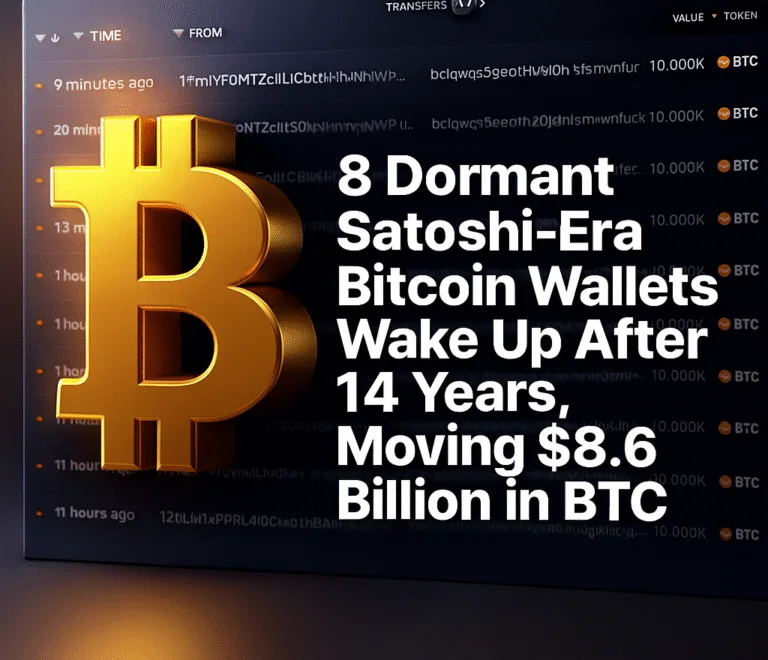
In a surprising event, eight Bitcoin wallets from the early days of Bitcoin, known as the Satoshi era, have suddenly become active again. These wallets had not moved any coins for more than 14 years. Since last night, they have transferred a total of 8.6 billion dollars worth of Bitcoin.

What is the Satoshi Era
The Satoshi era is the time between 2009 and 2011, when the creator of Bitcoin, Satoshi Nakamoto, was still posting and working on the project. Wallets from that time are very old and have often stayed quiet for many years. That is why people watch them closely when they move.

What Happened
Trusted crypto news source Watcher Guru reported that eight of these old wallets each moved 10,000 Bitcoin. At today’s price, that is more than 1 billion dollars per wallet. In total, 80,000 Bitcoin were moved. The wallets had not made any activity since the early 2010s.

Blockchain experts confirmed the moves and noted that these wallets had no record of transactions since they received their coins over a decade ago.

Why It Matters
This kind of activity is rare and can be very important. Many people believe these wallets belong to early miners or developers who were part of Bitcoin’s beginning. When coins from these wallets move, it makes people ask questions like:

1. Will this affect the Bitcoin price

2. Are these coins being sold

3. Who is behind these wallets

Could It Be Satoshi
Some people are guessing that Satoshi Nakamoto might be behind the movement. But most experts say this is unlikely. In the past, old wallets have moved coins and they usually belonged to early users who are finally moving or organizing their funds. There is no proof that these coins are connected to Satoshi.

Market Reaction
So far, the price of Bitcoin has not changed much. This shows that traders are not panicking. Still, many are watching to see what happens next. If more old wallets wake up, it could become a bigger story.

Summary :

1. Eight old Bitcoin wallets from the Satoshi era became active

2. They moved a total of 80,000 Bitcoin, worth around 8.6 billion dollars

3. These wallets were inactive for over 14 years

4. There is no proof the coins are being sold yet

5. The market is calm but watching closely

Pro and Cons: Retrieve Over $1.5M in Off-Chain Funds for Terra Classic Through a Legal Entity

Overview
Two long-time community members, Rex Wu and Victoria Critchley, have found potential off-chain assets worth over $1.5 million that may legally belong to the Terra Classic (LUNC) community. To recover these funds, they are proposing the creation of a legal entity that can represent Terra Classic in court and with regulators. This legal effort will be fully self-funded by the co-signers, with no money requested from the Community Pool.

If successful, 80% of the recovered funds will go to the Terra Classic Recovery Fund to benefit the community, and 20% will be paid to the co-signers as a finder’s fee. If nothing is recovered, the co-signers receive no payment and absorb all costs.

Why It Matters
Terra Classic is still underfunded and needs resources to grow. Unlike other blockchains, LUNC has no major funding, VC support, or foundation. Many community goals like USTC repeg, developer grants, and validator support need more funds.

The co-signers believe these off-chain assets, possibly linked to pre-crash Terra, can be recovered legally—but only through a legal entity. Blockchains can’t go to court, so human representatives are needed.

Key Details :
1. The co-signers will create and run a legal entity to handle the recovery.

2. They will cover legal costs, estimated up to $100,000.

3. They will KYC and doxx themselves to regulators.

4. The entity will recover funds and send them to a Recovery Fund (not the Community Pool).

5. The community will later take over the legal entity after its job is done.

6. If no assets are recovered, the community pays nothing.

Why Not Use the Community Pool?
Legal risks tied to Terraform Labs (TFL) make it dangerous to put recovered money directly into the chain. A separate fund ensures safety and compliance. Courts may reject funding to the blockchain if it’s seen as still connected to TFL.

Process :
1. The legal entity will file official legal claims for the off-chain assets.

2. If successful, the funds (minus taxes and fees) go to the Recovery Fund.

3. The co-signers get a 20% finder’s fee only if money is retrieved.

4. The remaining 80% is for the LUNC community.

5. The entity will later be handed over to the community via governance.

Q&A Highlights
Why is this proposal needed now?
Legal options to claim the assets are closing soon. We must act quickly.

Who is behind this?
Rex Wu and Victoria Critchley. They’re using their own money and asking for nothing unless successful.

Will they be doxxed?
Yes, to courts, regulators, and financial authorities.

Can we trust them?
Their real names are on this proposal. They’re legally accountable.

Why a legal entity?
Blockchains can’t file lawsuits. A human-run legal entity is required to act on the community’s behalf.

What happens if no funds are recovered?
The community pays nothing. The entity is closed.

What authority is granted?
Only to retrieve and return off-chain funds. Nothing more.

Can the entity be used for other deals?
No. Its role is limited to this proposal only.

Any cost to the LUNC community?
No. The entire legal cost is paid by the co-signers.

Can the 20% fee change later?
No. It’s fixed. If no funds are found, no fee is paid.

Is this like the lost $4.2M multisig?
No. That opportunity is gone. This is about new leads.

What if only enough money is recovered to cover the fee?
Then that’s what happens. No more will be requested.

Why spend $100,000 on legal fees?
They believe they have a strong case. If right, the community gains over $1.5M.

Can more than $1.5M be recovered?
Yes, possibly.

What if more is recovered?
It could help fund validators, but that’s a separate topic.

Will the 20% fee grow with bigger recoveries?
No. It stays 20% no matter how much is recovered.

Why 20%?
To cover risk, legal bills, and months of unpaid research.

What does “disbursement under legal mandates” mean?
Some funds may require proof LUNC is not tied to TFL or Do Kwon to be released.

Can they steal the money?
No. Courts and lawyers will oversee everything. Funds go to the Recovery Fund, not the proposers.

Will the proposers handle the money?
No. Only the legal entity and authorized representatives.

Will this block burns or funding?
No. It brings new money in. It does not touch on-chain funds.

Can the community file the paperwork instead?
No. Only a legal entity with attorneys can do this properly.

Will they post updates?
Yes, when legally allowed.

What if courts reject Terra Classic as a client?
That’s why the legal entity exists—to represent the community.

What if the funds are delayed or taxed?
The 80/20 split applies after legal deductions. Everything will be reported.

Can the case be settled without another vote?
Yes, if it follows the terms already approved.

What happens after the case is done?
The entity will be given to the community for future use.

Why not use a no-win-no-fee law firm?
Those firms ask for 30% to 40%. This plan saves money for the community.

Why keep funds off-chain?
To avoid legal problems tied to TFL and to prevent risks like asset freezing.

Can funds go to the Oracle Pool?
No, for the same legal reasons. It stays in the Recovery Fund.

What if no one wants to manage the fund?
The money will wait safely until legal KYC conditions are met.

Can you reveal the asset sources?
Not now. Revealing them early could harm the legal process.

Is this tied to Risk Harbor funds?
No, but a future effort could target that. This proposal is separate.

Can the legal entity go beyond its powers?
No. It is legally bound to this exact scope.

Do you believe you’ll succeed?
Yes. The team believes in the case and is prepared to cover the costs.

Pros :
1. Potential recovery of $1.5M+ for the community

2. No cost or risk to the LUNC community

3. Legal compliance ensures safe disbursement

4. Transparent and traceable fund movement

5. Entity ownership handed over to the community after the process

Cons :
1. No guarantee of success

2. Upfront legal cost carried by the proposers

3. Time-sensitive and slow legal process

4. Requires legal compliance by fund stewards (KYC)

5. Full fund details cannot be revealed until legally safe

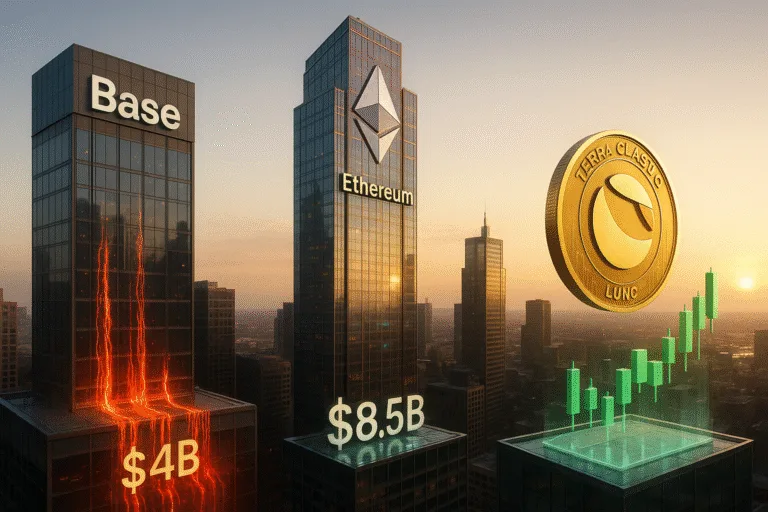
Base Outflows Hit $4B, Ethereum Gains $8.5B, LUNC Benefits

Coinbase’s Base, an Ethereum Layer 2 solution, has recorded over $4 billion in outflows through cross-chain bridges, signaling robust asset transfers to other blockchains. Meanwhile, Ethereum’s Layer 1 has seen substantial inflows of $8.5 billion, reinforcing its dominance in decentralized finance (DeFi) and tokenized assets. These movements highlight the dynamic interplay between Ethereum’s ecosystem and L2 solutions like Base, which offers low-cost, scalable transactions while leveraging Ethereum’s security.

The significant outflows from Base, facilitated by bridges like Wormhole and Axelar, indicate users are transferring assets to other chains for diverse DeFi opportunities, NFT trading, or cross-chain applications. Base’s integration with Coinbase’s user base and its EVM-compatible infrastructure make it a seamless bridge for assets, enhancing liquidity across ecosystems. Ethereum’s inflows, driven by institutional adoption and ETF interest, reflect confidence in its long-term value, despite occasional pressure from exchange inflows.

For the Terra Classic (LUNC) ecosystem, these cross-chain dynamics present opportunities. LUNC, the native token of the original Terra blockchain, supports a community-driven effort to stabilize its algorithmic stablecoin, USTC. Increased cross-chain activity could integrate LUNC into broader DeFi ecosystems, boosting its visibility and utility. Listing LUNC on platforms like Coinbase, as advocated by community petitions, could further amplify trading volume and burn mechanisms, reducing LUNC’s 5.5 trillion circulating supply. This aligns with Terra Classic’s revival strategies, such as the 1.2% tax burn on transactions, enhancing price stability. By leveraging cross-chain bridges, LUNC holders can access Base’s low-fee environment and Ethereum’s liquidity, potentially revitalizing the ecosystem and fostering adoption in global payment systems.

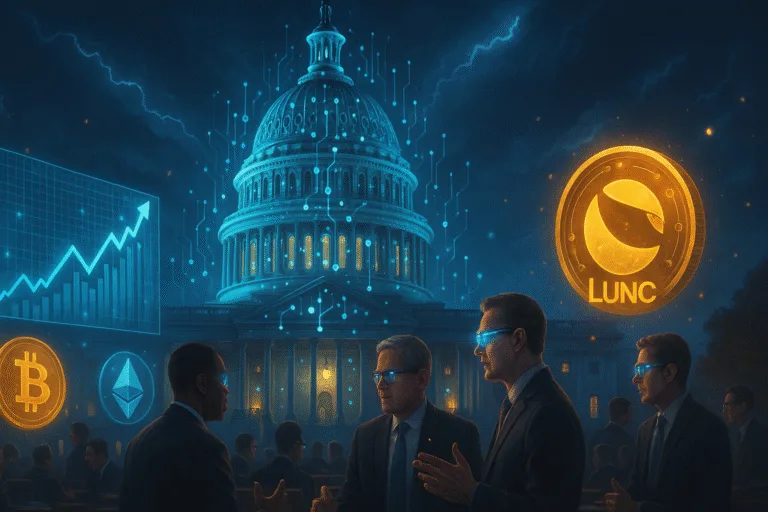
U.S. Congress’ Crypto Week: A Game-Changer for Blockchain and LUNC

Starting July 14, 2025, the U.S. Congress will launch “Crypto Week,” a pivotal initiative to advance blockchain and digital asset legislation through three key bills: the CLARITY Act, the Anti-CBDC Surveillance State Act, and the GENIUS Act. This legislative push aims to cement the U.S. as a global leader in blockchain innovation by providing regulatory clarity, fostering consumer protection, and promoting financial innovation. The CLARITY Act delineates regulatory boundaries between securities and commodities, reducing ambiguity for digital assets. The GENIUS Act establishes a framework for stablecoins, ensuring stability and oversight, while the Anti-CBDC Surveillance State Act blocks the Federal Reserve from issuing a central bank digital currency, prioritizing financial privacy.

For Terra Classic (LUNC), this initiative could be transformative. The CLARITY Act’s clear distinction between securities and commodities may classify LUNC as a non-security, freeing it from stringent SEC oversight and enabling broader adoption. This regulatory clarity could attract institutional investors, boosting LUNC’s market liquidity and price stability. The GENIUS Act’s stablecoin framework, though focused on dollar-pegged assets, indirectly benefits LUNC by fostering a blockchain-friendly environment, encouraging innovation in decentralized ecosystems like Terra Classic. By preventing a CBDC, the Anti-CBDC Act ensures LUNC’s decentralized model remains competitive, safeguarding its role in peer-to-peer transactions without government-controlled digital currencies overshadowing it.

LUNC, still recovering from the 2022 Terra collapse, stands to gain significantly from a U.S.-led blockchain renaissance. Enhanced regulatory certainty could spur developer activity on the Terra Classic network, revitalizing its ecosystem of decentralized applications. As Congress signals robust support for blockchain, LUNC’s potential to reclaim its position as a leading layer-1 protocol grows, promising a brighter future for its community and investors.

Crypto Market Trends and LUNC Growth Potential

The cryptocurrency market is navigating a complex landscape, with total market capitalization dipping by 2.9% recently. Despite this, Bitcoin (BTC) shows resilience, gaining 0.5% to trade above $109,000 after briefly crossing $110,300. Ethereum (ETH) also edges up by 0.7%, holding steady above $2,570. These modest gains in leading cryptocurrencies signal cautious optimism amid broader market volatility. However, Terra Classic (LUNC) is emerging as a focal point for investors due to its unique developments and growth potential.

LUNC, the native token of the Terra Classic blockchain, is gaining attention for its ongoing efforts to revitalize the ecosystem. Posts on X highlight strategic initiatives, including collaborations with the Cosmos ecosystem, market module enhancements, and dynamic commission changes to boost decentralization. These developments, coupled with ongoing token burns by Binance and reduced circulating supply, position LUNC for potential growth. The low trading volume and high staking ratio suggest that much of LUNC is locked in private wallets, potentially setting the stage for a supply-driven price surge if demand increases.

For LUNC to capitalize on current market conditions, continued progress on its market module 2.0, USTC repeg, and lending protocols like JURIS could be pivotal. These upgrades aim to enhance utility and interoperability with other Cosmos chains, potentially attracting more developers and users. While Bitcoin and Ethereum dominate, LUNC’s low price and high growth potential make it a speculative favorite during an anticipated altcoin season. However, investors should remain cautious, as LUNC’s success hinges on successful protocol implementations and broader market sentiment. With strategic advancements and a supportive crypto environment, LUNC could see significant gains in 2025.

Robinhood’s Crypto Revolution: LUNC’s Ticket to the Moon

Robinhood, a leading fintech platform, has launched blockchain-based trading, offering tokenized U.S. securities to 150,000 customers across 30 European countries. This service, powered by the Arbitrum blockchain, operates 24/5, providing commission-free access to over 200 U.S. stocks and ETFs, including giants like Nvidia and Apple. This move aligns with the growing trend of integrating blockchain technology into traditional finance, enabling faster settlements, lower costs, and enhanced accessibility for global investors. Robinhood’s initiative, announced on June 30, 2025, also includes plans for its own Layer 2 blockchain to support 24/7 trading, further revolutionizing financial markets.

The tokenized securities market, projected to reach $18.9 trillion by 2033, reflects blockchain’s transformative potential. For cryptocurrencies like LUNC (Luna Classic), Robinhood’s platform presents a significant opportunity. LUNC, backed by a passionate community and ongoing burn initiatives to reduce supply, could benefit from listing on Robinhood. A listing would expose LUNC to millions of retail investors, boosting liquidity and trading volume, as seen in posts on X advocating for its inclusion.

To be listed, LUNC would need to meet Robinhood’s criteria, including regulatory compliance and market demand. Its active staking and community-driven development make it a strong candidate. Conversely, Robinhood could benefit from LUNC’s vibrant community, attracting crypto enthusiasts and diversifying its offerings beyond tokenized equities. This mutual benefit could enhance Robinhood’s position in the crypto market while providing LUNC with a broader platform to thrive, aligning with the fintech’s goal of democratizing finance.