Home Blog Page 87

UPDATE: Binance Implements Additional $LUNC Whitelisted Addresses in Line with Governance Proposal #12175

0

Binance, one of the world’s leading cryptocurrency exchanges, has officially added three new whitelisted wallet addresses for Terra Classic (LUNC), as outlined in governance proposal #12175 passed by the Terra Classic community.This update is a significant development in the ongoing collaboration between Binance and the Terra Classic ecosystem.

The inclusion of these specific addresses into Binance’s whitelist infrastructure demonstrates the exchange’s responsiveness to decentralized governance decisions and its ongoing commitment to supporting the operational integrity and transparency of the Terra Classic network. Whitelisted addresses are typically used for authorized fund flows, including reminting, on-chain burns, or other protocol-level functions that require predefined trust parameters. The implementation of this update allows for seamless continuation of community-led initiatives, such as burn mechanisms or validator distributions, that contribute to the broader goal of restoring value and utility to the $LUNC token.

Binance’s continued engagement with Terra Classic represents a critical form of institutional support, providing both technical resources and credibility to the LUNC community. As Terra Classic evolves through community-driven development and governance, having alignment and technical integration with top-tier exchanges is essential for maintaining liquidity, trust, and functional infrastructure.

The successful adoption of proposal #12175 and Binance’s prompt execution of the whitelist changes also highlight the growing maturity of Terra Classic’s governance model. It signals a dynamic where exchange platforms and decentralized communities can coordinate effectively for mutually beneficial outcomes.

We extend our sincere appreciation to Binance CEO Changpeng Zhao (@cz_binance) and Binance CEO of Regional Markets, Richard Teng (@_RichardTeng), for their continued support and dedication to fostering a transparent and inclusive crypto ecosystem. Their efforts have been instrumental in maintaining operational alignment between centralized exchange infrastructure and decentralized community objectives.

This update reinforces the bullish sentiment surrounding $LUNC and underscores the potential for renewed growth and development within the Terra Classic ecosystem.
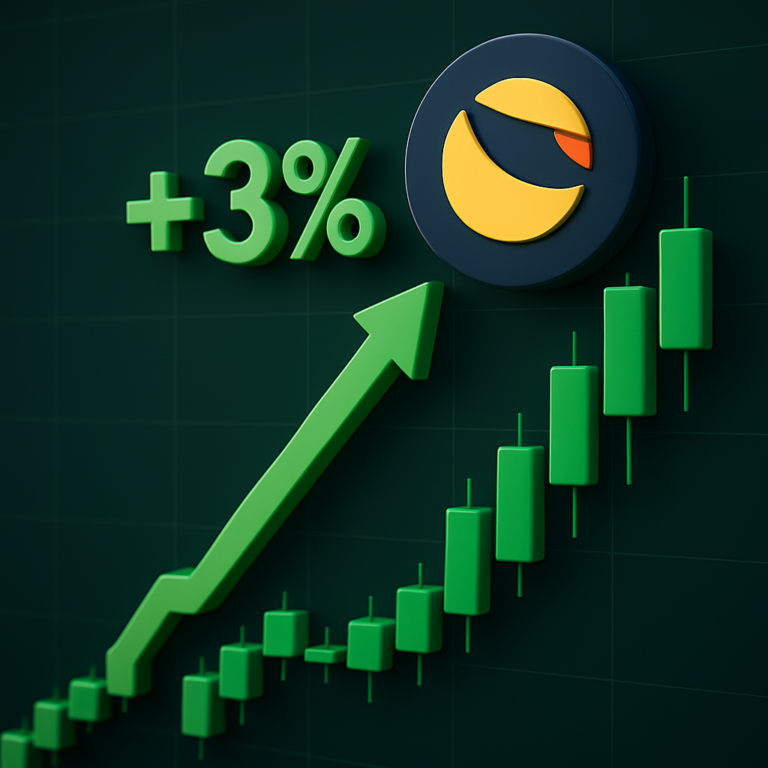
LUNC Gains 3 Percent as Market Confidence Builds

Terra Luna Classic (LUNC) delivered a strong performance today, rising by approximately 3 percent and drawing fresh attention in the crypto space. The price climbed from around $0.000061 to approximately $0.0000636, marking a clear shift in momentum after several quiet trading sessions.

This move comes as the LUNC community continues its focused efforts to revive and strengthen the project. To date, over 410 billion LUNC tokens have been burned, reflecting a serious commitment to reducing supply and enhancing long-term value for holders.

In parallel, governance discussions are heating up, with a new proposal aiming to increase the burn tax from 0.5 percent to 1.5 percent. If approved, this adjustment could significantly speed up the burn rate and add further upward pressure on the price.

A core community contributor commented, “We are seeing steady progress on all fronts, from tokenomics to governance. Today’s price action is just one sign that the ecosystem is gaining renewed energy.”

Technical analysts note that LUNC is currently holding above key support levels, with trading volume remaining stable. Many are watching closely to see if this gain signals the start of a larger move in the weeks ahead.

For now, LUNC appears well-positioned, and confidence in the project continues to build.

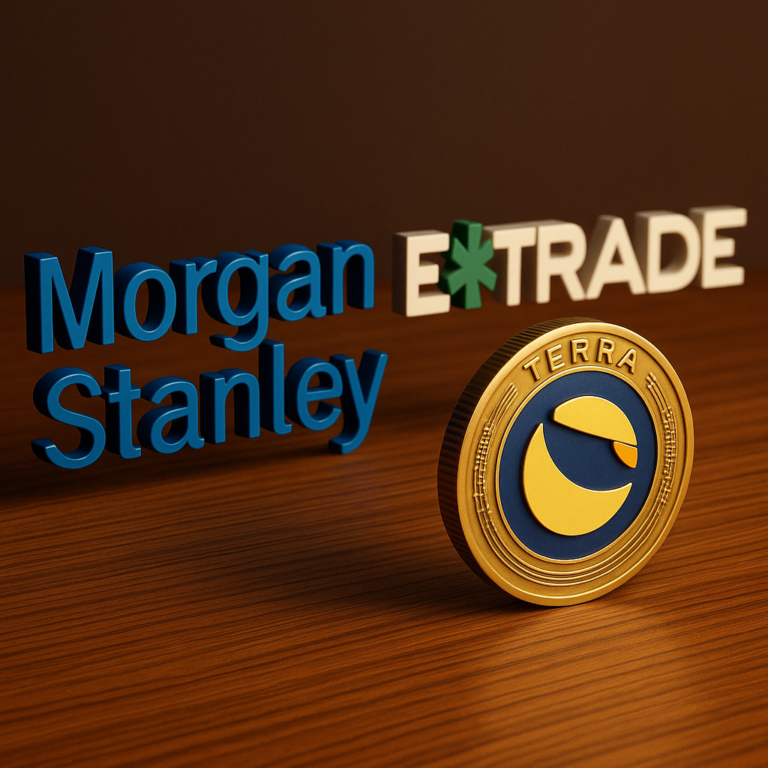
Morgan Stanley Is Bringing Crypto to E’Trade by 2026. Could Terra Classic LUNC Be a Hidden Winner in This Institutional Shift?

Morgan Stanley has announced its plan to integrate cryptocurrency trading into its E*Trade platform by 2026. This move marks a major step forward in bringing digital assets to the mainstream, allowing millions of retail investors to gain access to cryptocurrencies through a regulated and familiar brokerage environment.

As one of the most respected names in global finance, Morgan Stanley’s entry into crypto trading through E’Trade is a clear sign that digital assets are no longer seen as fringe investments. Instead, they are becoming an essential part of the modern financial landscape. While the initial offerings are expected to focus on leading assets like Bitcoin and Ethereum, this development could set the stage for a wider range of altcoins to be included in the future.

Institutional Confidence Is Rising
Morgan Stanley is not alone. Other major firms including Fidelity and BlackRock are also expanding into crypto. The addition of crypto to platforms like E’Trade will remove many of the barriers that previously kept traditional investors away from digital assets. This improved access is likely to increase demand and liquidity across the market.

Importantly, these shifts do not only benefit the top two or three cryptocurrencies. As the infrastructure for crypto matures, there will be more room for altcoins with strong fundamentals and active communities to gain recognition and adoption.

Where Terra Classic LUNC Could Fit In
Although LUNC may not be part of the first wave of assets offered on E*Trade, it is quickly becoming a serious contender in the altcoin space. After the collapse of the original Terra ecosystem in 2022, LUNC has re-emerged as a fully community-driven project that has defied expectations. Through on-chain governance, regular token burns, staking programs, and continued ecosystem development, LUNC is positioning itself as more than just a recovery story.

Some of the most notable features behind LUNC’s growing appeal include

• Transparent governance led by the community
• A continuous burn strategy that reduces circulating supply
• Expansion into DeFi, gaming, and metaverse applications like LUNCVERSE
• A global base of committed users and developers

As institutions expand their asset lists to include more altcoins, tokens that demonstrate utility, long-term development, and user demand will be top candidates. Terra Classic fits that profile.

A Path Forward for LUNC
With Morgan Stanley and others moving quickly to provide crypto trading on trusted platforms, the overall market is entering a new phase. Retail investors will soon be able to buy digital assets as easily as they trade stocks. This will benefit well-positioned altcoins that have strong ecosystems and reliable infrastructure.

LUNC still has work to do to meet the thresholds typically required for institutional platforms, including market depth, liquidity, and compliance readiness. However, the foundation being built by the Terra Classic community could support that future inclusion if current momentum continues.

Conclusion
The launch of crypto trading on E*Trade represents more than a new product offering. It is a shift in how the world views and interacts with digital assets. For Terra Classic LUNC, this change presents an opportunity. With its growing utility, committed community, and evolving ecosystem, LUNC may not just survive the next market cycle. It may thrive in it.

Altcoin ETFs Are Coming: Could Terra Classic Be the Unexpected Contender?

The cryptocurrency market is entering a new phase of mainstream integration, with analysts increasingly confident that the U.S. Securities and Exchange Commission (SEC) may soon approve spot ETFs for major altcoins. According to industry insiders, decisions on assets such as Solana (SOL), XRP, and Dogecoin (DOGE) could arrive as early as July 2, signaling the beginning of a broader shift in how digital assets are accessed by traditional investors.

With the successful rollout of spot Bitcoin ETFs and the likely approval of Ethereum ETFs next, attention is quickly turning toward which altcoins might be included in the next wave. These developments not only reflect the maturing status of the crypto sector but also present a major opportunity for altcoins with strong ecosystems, real-world utility, and investor demand.

What Qualifies an Altcoin for ETF Approval?
1. To be considered for a spot ETF, an altcoin must meet several critical benchmarks:

2. A high level of liquidity and market capitalization

3. Active network usage and clear demand

4. A strong development community and use case adoption

Regulatory clarity or a history of legal precedent

Solana and XRP, for example, benefit from high trading volumes and established ecosystems. XRP also gained regulatory momentum after its partial legal victory in 2023. Dogecoin, while often labeled a meme coin, has remained one of the most recognizable and traded cryptocurrencies globally.

Could Terra Classic (LUNC) Enter the Conversation?
While Terra Classic is not currently seen as a frontrunner in ETF discussions, it holds unique potential that sets it apart from many altcoins in its category. Since the collapse of the original Terra ecosystem, LUNC has undergone a remarkable transformation, driven almost entirely by its community.

The project now boasts:

1. A decentralized governance model

2. Ongoing token burns to reduce supply

3. Active development of DeFi, staking, and metaverse applications

4. Growing ecosystem efforts such as LUNCVERSE and community staking platforms

LUNC’s revival has become one of the most community-led turnarounds in crypto history. The scale of token burns, strategic staking mechanisms, and grassroots utility building could, over time, elevate LUNC’s market position.

For ETF consideration, however, LUNC would need to further solidify its legal clarity, improve market liquidity, and demonstrate broader institutional interest. These are not insurmountable goals, especially given the project’s current trajectory and momentum.

A Market Shift Is Underway
The path to ETF approval is ultimately about credibility, structure, and demand. The SEC is taking a more serious look at altcoins that meet these standards, and the market is watching closely. While Solana, XRP, and Dogecoin may be first in line, LUNC could eventually rise as a legitimate candidate, especially if it continues to evolve and attract long-term interest.

For investors seeking early opportunities in under recognized assets, Terra Classic represents more than a comeback story. It represents the possibility of future inclusion in a regulated, institutional-grade investment framework. As the crypto ETF landscape expands, LUNC may find itself exactly where no one expected to be the center of the next financial evolution.

Ethereum Struggles with Fifth Month of Losses! This is Why Terra Classic Is Emerging as the Future of Crypto

Ethereum (ETH), long considered a cornerstone of the blockchain ecosystem, ended April with a 1.58 percent decline. This marks its fifth consecutive month in the red, highlighting a prolonged period of market weakness. Over the past year, ETH has seen a sharp drop of approximately 36.7 percent, falling from $2,875 to $1,820. As the network continues to face challenges like high gas fees and scalability issues, investor confidence appears to be fading.

At the same time, Terra Classic (LUNC) is quietly building momentum. Once written off after its dramatic fall in 2022, LUNC is demonstrating the power of a community-led comeback. Through active governance, token burns, and renewed development, it is steadily positioning itself as a serious contender in the next generation of blockchain platforms.

Why LUNC Offers a Stronger Outlook :
1. Community-Driven Governance
Unlike Ethereum, which is often steered by core developer groups and larger stakeholders, LUNC operates on a truly decentralized governance model. Community proposals are actively discussed and voted on, giving power back to the people who hold the token.

2. Low-Cost, Scalable Transactions
Ethereum’s network congestion and high transaction fees continue to be a barrier for broader adoption. LUNC offers faster and more affordable transactions, making it a more practical option for everyday use, including micro-transactions, NFTs, and DeFi applications.

3. Aggressive Supply Reduction
One of the key pillars of LUNC’s resurgence is its burn mechanism. A significant portion of tokens are being permanently removed from circulation through community-led efforts, which could support long-term value appreciation by reducing overall supply.

4. Innovative Ecosystem Growth
LUNC is not just rebuilding; it is evolving. Projects like LUNCVERSE, staking-based income models, and other community dApps are adding new layers of utility to the ecosystem. These developments suggest that LUNC is not simply surviving — it is preparing to lead.

A Changing Landscape
Ethereum’s current trajectory underscores a broader shift in the crypto market. While once seen as untouchable, ETH is now being challenged by more agile and community-focused platforms. Terra Classic, driven by transparency, grassroots commitment, and real utility, represents a new kind of blockchain model—one that aligns with the original decentralized vision of cryptocurrency.

For investors seeking a platform with long-term potential and a clear roadmap for growth, LUNC is increasingly being seen not just as a recovery story, but as a blueprint for the future of crypto.

Breaking News: Binance Burns 413.65 Million LUNC Tokens

In a significant move for the Terra Classic community, Binance has announced the burn of 413,653,486 LUNC tokens. The burn, derived from trading fees accumulated in April 2025, highlights Binance’s continued support for the revitalization of the Terra Classic ($LUNC) ecosystem. This strategic burn marks yet another milestone in Binance’s ongoing efforts to reduce the circulating supply of LUNC, a key initiative in restoring value and confidence to the Terra Classic project.

Token burns serve as a deflationary mechanism, permanently removing coins from circulation and potentially increasing the value of remaining tokens. Binance’s commitment to regular LUNC burns has been instrumental in maintaining momentum and engagement within the Terra Classic community, especially in the wake of the 2022 Terra ecosystem collapse.

The impact of this latest burn is multifaceted. First and foremost, the circulating supply of LUNC is now lower, contributing to a healthier tokenomics model. A reduced supply can, over time, help mitigate inflationary pressures and promote long-term price stability. Additionally, this move signals continued confidence in the LUNC project from one of the largest players in the crypto industry.

Binance’s active involvement in Terra Classic’s recovery efforts has not gone unnoticed. The community continues to express appreciation toward Binance, CEO Richard Teng, and company founder Changpeng Zhao for their unwavering support. Their participation adds significant credibility and reassurance to an ecosystem still navigating its path to recovery.

With this burn, Binance reinforces its role not just as a trading platform, but as a stakeholder in the sustainable growth of key blockchain projects. The move is expected to strengthen investor sentiment and may encourage further participation from exchanges and individual contributors alike.

As the Terra Classic community rallies around this development, the outlook for LUNC continues to improve. The ongoing reduction in token supply, paired with growing market confidence, sets the stage for renewed interest and potential upside in the months ahead.

#LUNC #USTC #Binance #CryptoNews #BinanceBurn #TerraClassic

White House Update: U.S. Economic Policy in the First 100 Days and Its Impact on the Crypto Market

0

In the first 100 days of the current U.S. administration, economic policy has taken a prominent role in shaping investor expectations across traditional and digital markets. For the cryptocurrency sector, the administration’s actions have signaled both increased scrutiny and a more structured approach to regulation, with key developments involving the Department of the Treasury and the Securities and Exchange Commission (SEC).

A Strategic Shift in Crypto Oversight

Early in the term, the White House outlined a multi-agency strategy to review the status of digital assets in the U.S. financial system. This includes a renewed mandate for the Treasury Department to evaluate the systemic risks and monetary implications of stablecoins and decentralized finance (DeFi) platforms. Parallel to this, the SEC has continued its push for clearer rules around digital asset classification and investor protection.

Treasury Secretary Janet Yellen has emphasized the need for global cooperation in regulating cryptocurrencies, citing the rapid evolution of cross-border transactions and the rise of central bank digital currencies (CBDCs). The Treasury’s report released in March underscores the importance of stable regulatory frameworks to encourage innovation while safeguarding financial stability.

The SEC’s Renewed Focus

Under Chair Gary Gensler, the SEC has stepped up enforcement actions and initiated consultations aimed at refining the definition of securities within the crypto space. In recent weeks, the Commission has signaled that exchanges, token issuers, and even decentralized protocols could face more stringent compliance requirements in the months ahead.

At the same time, the SEC has reopened public comment on several proposed rule changes, including those impacting tokenized assets and crypto ETFs. This suggests a willingness to adapt regulatory tools rather than impose blanket restrictions.

Market Reaction and Sentiment

The initial market response to the administration’s policies has been mixed. Institutional investors generally welcome a more consistent regulatory environment, particularly if it paves the way for approved investment vehicles like spot Bitcoin ETFs or digital asset derivatives. On the other hand, parts of the crypto community remain concerned about overregulation and its potential to stifle innovation.

Despite short-term volatility, analysts believe the long-term effects could be positive if regulatory clarity helps increase capital inflow and user adoption in compliant environments.

Looking Ahead

As the administration moves beyond its first 100 days, the coming months are expected to bring more detailed proposals and inter-agency coordination. Stakeholders across the crypto ecosystem—including exchanges, developers, and investors—are watching closely for signs of how digital assets will be formally integrated into U.S. financial policy.

The tone from Washington suggests a shift from reactionary enforcement to structured oversight, with the goal of balancing innovation with risk management. For the crypto industry, this presents both a challenge and an opportunity: adapt to emerging rules, or risk being left behind.

Market Sentiment and Predictions: Outlook for Q2 2025 with a Focus on LUNC and USTC

As the cryptocurrency market moves through the second quarter of 2025, investor sentiment is gradually shifting toward cautious optimism. Bitcoin continues to test resistance near $95,000, while Ethereum, XRP, and other leading altcoins remain largely range-bound. The broader market tone is stabilizing after months of volatility, supported by institutional interest, regulatory clarity, and positive macroeconomic indicators.

Beneath this surface, certain tokens with strong community backing and reform narratives are beginning to attract attention again. Among them, Terra Luna Classic (LUNC) and TerraClassicUSD (USTC) stand out for their persistence and active development efforts despite their troubled past.

Market Sentiment Overview

Analysts are observing signs of renewed investor confidence. Bitcoin’s current breakout is viewed not as a short-lived rally, but as part of a broader trend. While many traders remain cautious, the increased trading volume and resilience of key support levels suggest the foundation for a stronger altcoin cycle is forming. Community-driven assets such as LUNC and USTC are particularly well-positioned to benefit if this trend continues.

LUNC: Steady Progress Amid Community Support

Terra Luna Classic (LUNC) has maintained relevance through consistent efforts from its developer community and governance participants. Despite its history, the asset has carved out a narrative of recovery focused on network utility, supply reduction, and staking incentives.

LUNC’s recent activity includes burn proposals, validator incentives, and smart contract enhancements aimed at increasing both adoption and ecosystem stability. The token has shown resilience around the $0.00012 support level, with technical analysts watching for a potential breakout above $0.00017. A push toward $0.0002 in the coming weeks is possible if broader market conditions remain favorable.

The key to LUNC’s growth lies in whether it can convert its momentum into real-world usage. Projects like LUNCVERSE and ongoing staking campaigns are helping rebuild its ecosystem, though long-term success will depend on sustained community involvement and practical utility.

USTC: Searching for a New Role

USTC, formerly the algorithmic stablecoin of the Terra ecosystem, continues to attract speculative interest, though it no longer functions as a dollar-pegged asset. Recent proposals have explored the possibility of re-pegging or repositioning USTC as a utility token within the Terra Classic network.

While re-pegging remains a long-term and uncertain goal, USTC is beginning to find a new role in decentralized finance. Some platforms are using it for swaps, liquidity pools, and staking programs. It currently trades below $0.03, and price action remains highly volatile, driven more by community sentiment than fundamentals.

For USTC to regain credibility, developers will need to formalize its purpose beyond speculation. Re-establishing trust and utility, even without restoring the peg, could offer a viable path forward.

Outlook for Q2 2025

The next quarter will be pivotal for both LUNC and USTC. If Bitcoin continues to lead the market higher, altcoins with strong communities and compelling recovery narratives could outperform. However, investors should remain mindful of the risks. Both LUNC and USTC are still considered speculative, and their long-term value will depend on measurable adoption and structural improvements.

For now, they serve as examples of how communities can drive momentum in the crypto space and even in the face of past failures. Whether that momentum leads to sustainable growth remains to be seen.

Market Sentiment and Trends Point to a Stronger Crypto Landscape — LUNC’s Road Ahead

The cryptocurrency market sentiment has shifted decisively into bullish territory. Bitcoin continues to hold above the 94,000 dollar mark, and many market analysts believe a push past 100,000 dollars could happen within weeks. If it does, analysts warn that over 4.5 billion dollars in short positions could be liquidated, setting off a powerful rally across the entire crypto sector.

Long-term holders are playing a critical role in this emerging trend. On-chain data reveals that investors who accumulated Bitcoin during previous cycles are refusing to sell, signaling strong conviction. Historically, when long-term holders accumulate during price appreciation, it has often foreshadowed explosive bull markets.

Ethereum is also seeing renewed optimism. Analysts predict Ethereum could reach 14,000 dollars in 2025, driven by the rise of decentralized finance (DeFi), the growing impact of layer-two scaling solutions like Arbitrum and Optimism, and continued institutional adoption.

However, it is not just the giants like Bitcoin and Ethereum that are set to benefit. Terra Classic (LUNC) is another project well-positioned to capitalize on the improved sentiment. After surviving a catastrophic collapse in 2022, LUNC’s community-driven approach to rebuilding has begun to pay dividends. Strategic token burns, the relaunch of dApps, and enhanced governance protocols have put LUNC back on many investors’ radar screens.

The current optimism is reflected in LUNC’s price action and trading volumes. As investors search for high-upside opportunities in the altcoin space, LUNC offers a compelling narrative: a project that learned hard lessons, implemented structural reforms, and is now working to become stronger than ever.

It is important to note that market sentiment is extremely high, as indicated by the Bitcoin Fear and Greed Index flashing “extreme greed.” While historically this level of sentiment can precede corrections, it also points to the strong momentum driving the crypto market forward. Projects with active communities, credible leadership, and a clear path to utility — such as LUNC — stand to benefit the most in the coming months.

The next phase of the cryptocurrency market will not be solely about speculation. It will reward projects that have real users, working products, and sustainable ecosystems. Terra Classic is aiming to be among them.

Regulatory and Institutional Developments Shape the Future of Crypto

0

Today marks a major turning point in how cryptocurrencies are integrating into national financial frameworks. Arizona’s legislature is poised to vote on a proposal to create a Strategic Bitcoin Reserve, allowing the state to hold Bitcoin as part of its treasury management strategy. If passed, this move would make Arizona a trailblazer in incorporating digital assets into government finances, potentially inspiring other U.S. states to follow suit.

At the federal level, the conversation around cryptocurrencies is also heating up. President Trump’s March executive order calling for a national Strategic Bitcoin Reserve and Digital Asset Stockpile reflects a significant shift. Cryptocurrencies are no longer viewed merely as speculative instruments but as strategic assets essential for economic resilience and national competitiveness.

Institutional players are rapidly adapting to this reality. Fidelity, BlackRock, and other major asset managers are expanding their digital asset offerings. Meanwhile, ProShares’ upcoming XRP ETFs signal that traditional finance is no longer on the sidelines, it is actively seeking to participate in the next evolution of financial infrastructure.

On the regulatory compliance front, Binance has taken a proactive approach. The world’s largest exchange announced a suite of advanced compliance measures, including upgraded Know Your Customer (KYC) processes, AI-driven monitoring systems, and stronger partnerships with regulators. The goal is simple: build trust, improve transparency, and create a safer environment for all market participants.

These developments suggest that cryptocurrencies are evolving beyond their early Wild West days. A regulated, institutionally-supported, and globally integrated digital asset economy is taking shape, opening up new opportunities while also demanding greater accountability and security from all players involved.