
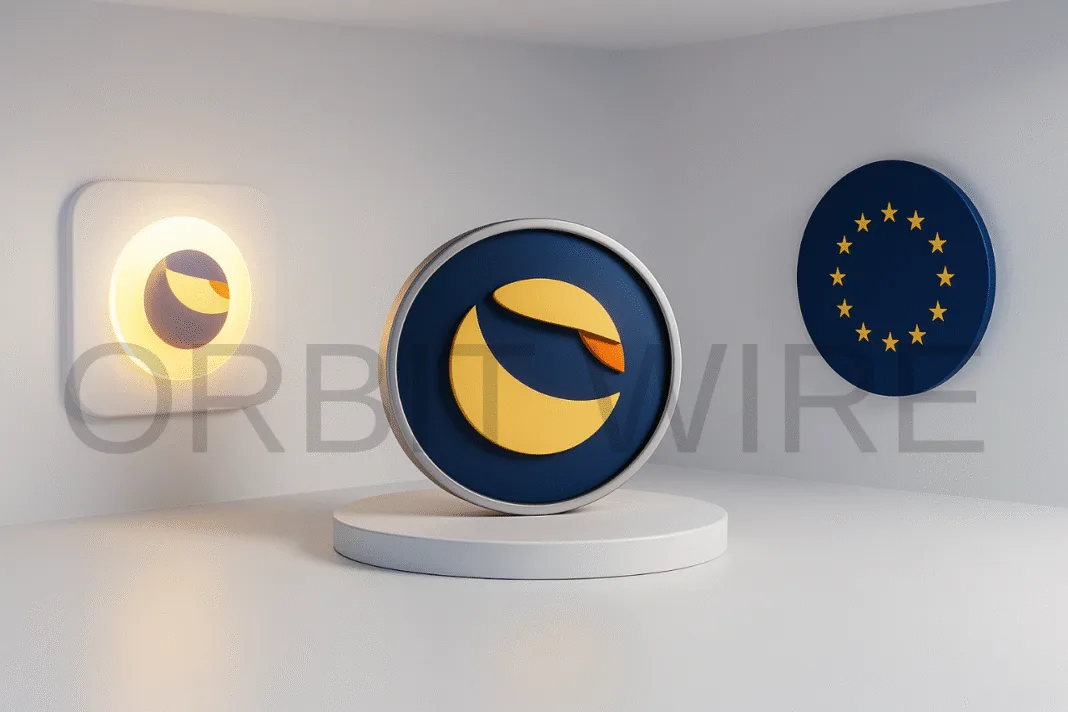


JUST IN: The European Union is expediting its digital euro plans and is now considering building it on Ethereum or Solana instead of private networks, according to the Financial Times.
The European Union is moving faster than expected on its digital euro project. According to a recent report from the Financial Times, EU officials are now considering public blockchains such as Ethereum and Solana as potential platforms instead of building the digital euro on a private network.
This signals a major shift in how central bank digital currencies could be developed. Public blockchains offer transparency and open participation, unlike permissioned systems controlled by a single authority.
Luna Classic Already Has a Euro Stablecoin
While Europe debates which blockchain to use, the Luna Classic network already runs a euro-denominated stablecoin called EUTC (Euro Terra Classic). This existing infrastructure shows that LUNC can host a European stablecoin today without starting from scratch.
EUTC was originally part of Terra Classic’s multi-currency framework. Restoring its peg would prove that Luna Classic remains capable of supporting real-world financial assets, especially as global demand for stablecoins grows.
Why Luna Classic Deserves Attention
Proven stablecoin framework – Luna Classic has already supported multiple fiat-pegged coins, including EUTC.
Efficient and scalable network – Transactions on LUNC are fast and inexpensive, making it practical for a high-volume currency like the euro.
Open and decentralized governance – Decisions are made by a global validator set and community vote, ensuring transparency.
Ready-made solution – Unlike other platforms that require new development, LUNC already has the technical foundation for a euro stablecoin.
A Critical Moment for the L1 Development Team
With Europe exploring public blockchains, this is an ideal time for the Luna Classic L1 team to take action. By launching an initiative to repeg EUTC, the team could demonstrate that Luna Classic is not only functional but also positioned as a viable option for European policymakers. Engaging directly with regulators could strengthen the case for LUNC as a public, compliant blockchain capable of supporting a digital euro.
Final Thoughts
The EU’s interest in Ethereum and Solana proves that public blockchains are part of the conversation for the future of European finance. Luna Classic already provides a working example with EUTC. A strong push to restore its peg could put LUNC back in the spotlight as a serious infrastructure candidate for Europe’s digital currency ambitions.