

On January 13, the Luna Classic network recorded one of its weakest burn performances of the month.
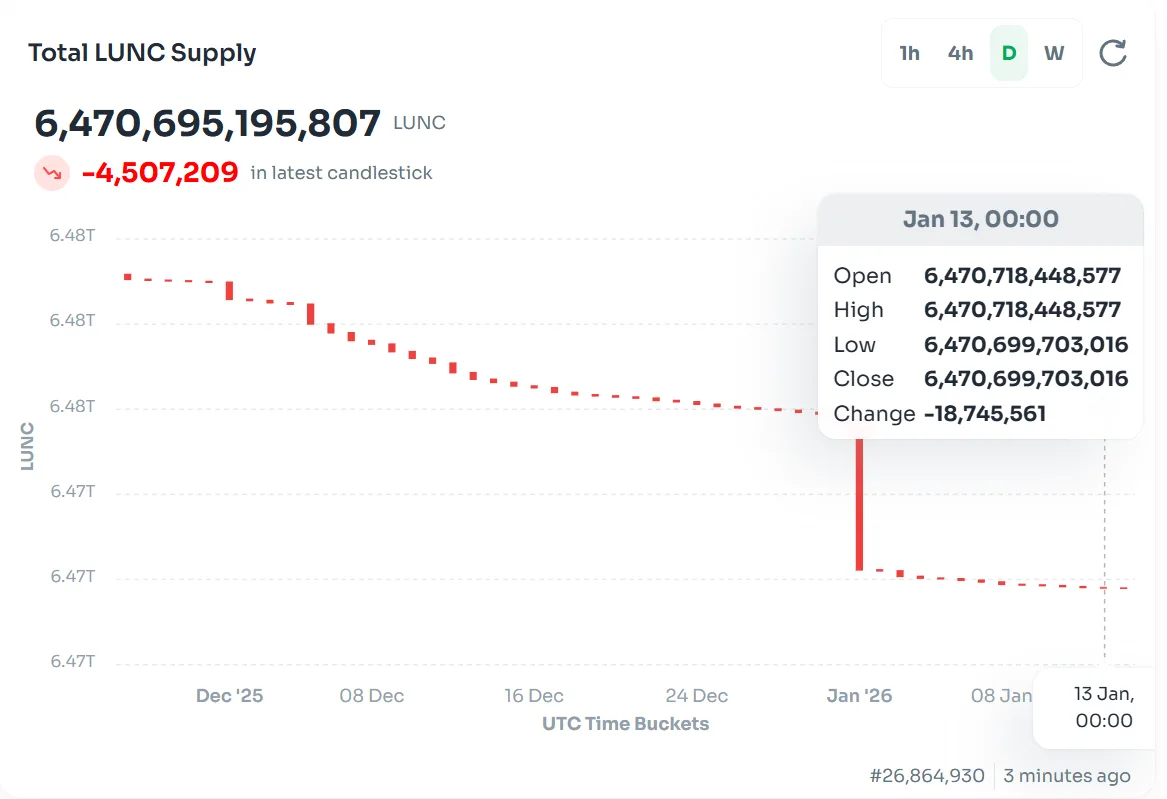
In a full 24 hour period, only 18 million LUNC tokens were burned. This figure marks the lowest daily burn recorded so far in January and raises serious concerns for the community.
What makes this situation more concerning is timing. This low burn did not occur on a weekend when market activity is usually slower. It happened on a weekday, when the crypto market is typically active and transaction volume is expected to be higher.
The reason behind this sharp decline is not complex. The LUNC burn mechanism is directly tied to on chain transaction volume. Every on chain transaction includes a burn tax. When activity on the blockchain slows down, the burn rate naturally declines.
On January 13, on chain volume was extremely low. As a result, the burn generated from network activity fell to just 18 million LUNC. This is not a failure of the burn mechanism itself. It is a clear signal that the network is not being used enough.
For the LUNC community to fully understand the burn process, one principle must be clear. Burns do not come from hope or external promises. They come from real usage of the blockchain.
Applications, smart contracts, decentralized finance platforms, and payment flows on layer one and layer two all contribute to on chain volume. When builders create tools that people actually use, transactions increase. When transactions increase, burns follow.
Without on chain usage, burn numbers will remain weak regardless of market sentiment.
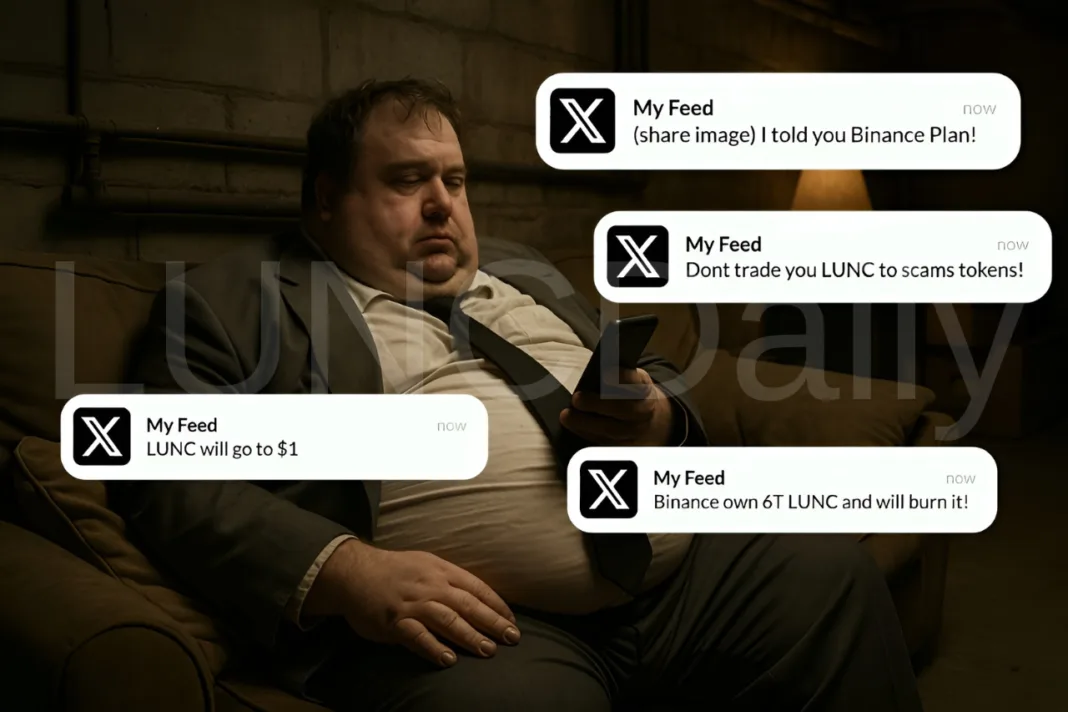
This low burn day should serve as a wake up call. For a long time, parts of the community have been influenced by voices that do not fully understand how blockchain economics work. Some influencers continue to dismiss layer two builders while promoting unrealistic expectations such as massive external burns removing most of the supply overnight.
Wallet screenshots and speculative narratives do not improve the network. They do not increase transactions. They do not burn tokens.
The community benefits most from following contributors who understand blockchain mechanics and actively work to increase real LUNC usage.
If the goal is long term success for Luna Classic, the focus must shift toward education and participation. Understanding how the LUNC blockchain functions is essential. Supporting builders who increase on chain activity is far more valuable than chasing unrealistic burn fantasies.
The January 13 burn data is not just a number. It is a reminder that real progress comes from real usage. If the community wants stronger burns, the path forward is clear. Build more. Use the chain more. Learn how the system truly works.