
Home Blog Page 15

How to Protect Your LUNC from Scammers and Hackers

0

Protect Your LUNC from Scammers and Hackers

The Luna Classic ecosystem is supported by a large and diverse community, ranging from newcomers to experienced builders. As the ecosystem continues to grow, it also attracts bad actors. Several scam incidents have already affected members of the LUNC community, making security awareness more important than ever.

Understanding how these scams work is the first step toward protecting your assets.

Common Scam Methods in the LUNC Community

1. Fake Community Accounts
Scammers create fake social media accounts that imitate well known community members or project teams. They then contact users and ask for sensitive information such as wallet secret phrases. Once they gain access, they transfer funds out of the victim’s wallet.

2. Fake Websites with Wallet Connection
Another common method is creating fake websites that look similar to legitimate platforms. These sites include a connect wallet feature. When users connect their wallet, malicious contracts can be approved, allowing scammers to drain the wallet balance.

How to Protect Your LUNC

1. Never Share Your Secret Phrase
Your wallet’s secret phrase is the key to your funds. No legitimate wallet provider or support team will ever ask for it. Sharing it with anyone will result in complete loss of access and funds.

2. Avoid Connecting to Unknown Websites
Only connect your wallet to trusted and verified platforms. Random or unfamiliar websites can contain malicious code designed to exploit wallet permissions.

3. Use Official Sources for Verification
Always verify project links through official sources. The official LUNC website provides a list of trusted applications and platforms:
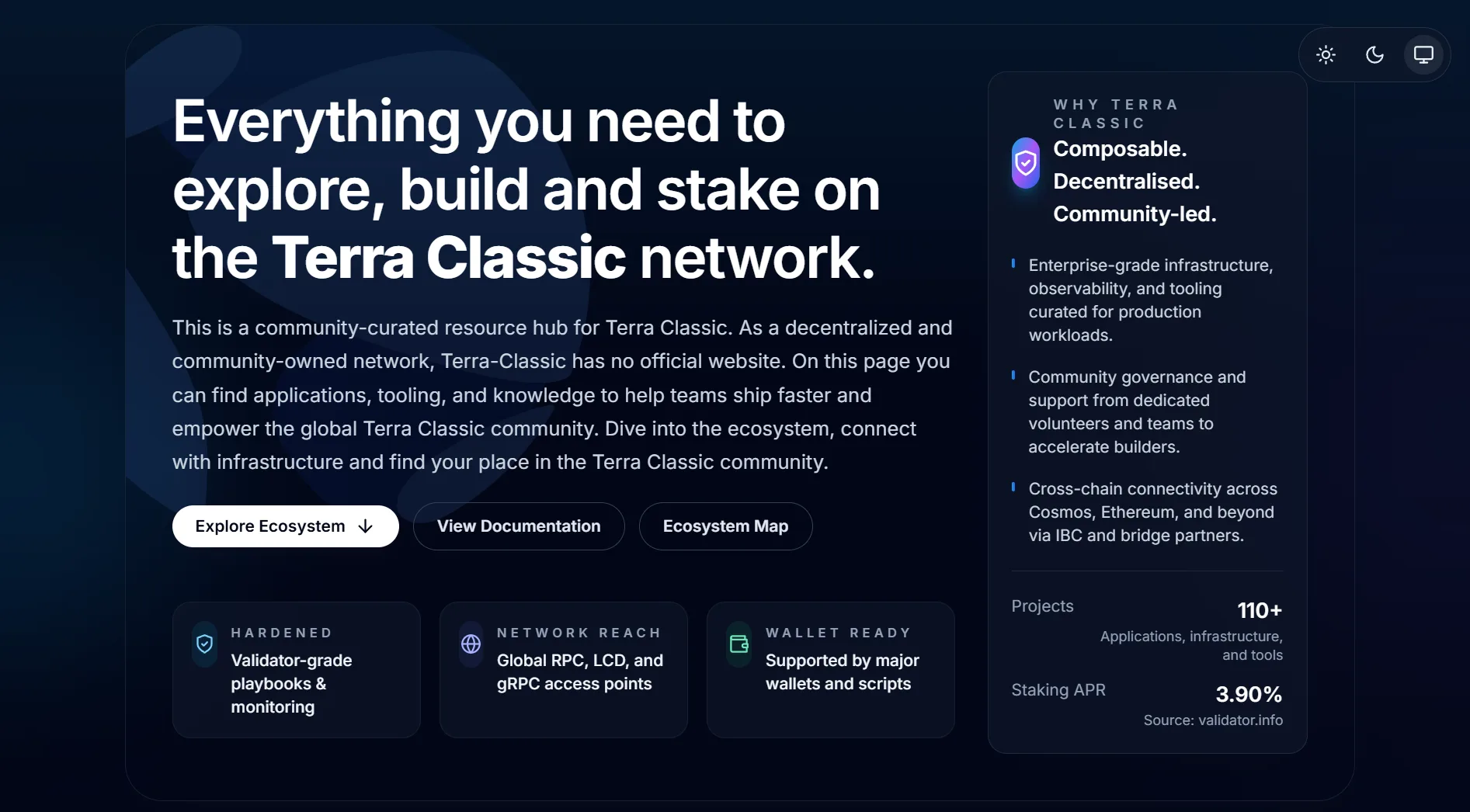

https://terra-classic.io/

Only use links from verified sources to ensure the platform is safe for wallet connection.

4. Review Transaction and Contract Requests Carefully
Before approving any wallet connection or transaction, take time to read the request details. Malicious contracts often rely on users approving actions without understanding the permissions being granted.

Final Thoughts

Security is a shared responsibility within the Luna Classic ecosystem. While the community continues to grow and innovate, users must remain cautious and informed. By understanding common scam tactics and following basic security practices, you can significantly reduce the risk of losing your LUNC.

Staying alert is the best defense against scammers.

The USTC Staking Proposal and Its Potential Impact on the Terra Classic Ecosystem

0

USTC Staking Proposal and Its Potential Impact on the Terra Classic Ecosystem

Introduction

A new proposal under discussion within the Terra Classic community introduces native USTC staking at the Layer 1 level. The initiative aims to expand the utility of USTC while strengthening the overall economic structure of the ecosystem.

If implemented, the proposal could play a significant role in reducing circulating supply, improving staking incentives, and supporting long term recovery efforts.

Potential Supply Reduction

One of the most important aspects of the proposal is its potential to remove a large portion of USTC from active circulation.

The plan targets locking between 20 percent and 33 percent of the circulating supply, which is estimated to be approximately 1.2 billion to 2 billion USTC. At the upper range, this would represent around one third of the total supply.

Reducing supply at this scale could create stronger scarcity, lower sell pressure, and improve overall market dynamics for USTC.

How the Staking Mechanism Works

The proposal introduces a simple on chain staking model.

USTC holders would be able to stake their tokens directly on the Terra Classic network and earn rewards over time. The primary objective is to encourage long term holding while reducing the number of tokens actively traded on exchanges.

By locking a significant portion of the supply, the mechanism is designed to stabilize USTC and create a more sustainable economic environment.

Reward Structure

The proposed reward system combines multiple sources to ensure sustainability.

Initial rewards would be supported by the Community Pool, with approximately 61 million USTC allocated to bootstrap the system. Over time, rewards are expected to transition toward protocol generated revenue, including fees from Market Module 2 arbitrage, gas fees, and decentralized exchange activity.

Additionally, a controlled level of USTC inflation may be introduced, subject to community governance, to maintain reward incentives.

Key Benefits for the Ecosystem

The proposal introduces several advantages for both USTC and the broader Terra Classic ecosystem.

First, it enhances LUNC staking rewards by incorporating USTC as part of validator and delegator incentives. This creates a more attractive staking environment.

Second, it expands the utility of USTC beyond its current use cases such as gas fees and trading pairs, giving it a more active role within the network.

Third, it supports the development of Market Module 2 by increasing on chain USTC availability, which is essential for improving liquidity and arbitrage efficiency.

Finally, the proposal encourages users to move assets from centralized exchanges back onto the blockchain, strengthening decentralization.

Community Impact

For many holders affected by the USTC depeg, this proposal offers a potential path toward recovery.

By enabling staking rewards, users gain an opportunity to generate yield from their holdings rather than relying solely on price appreciation. This creates a more stable and long term engagement model for the community.

Conclusion

The USTC staking proposal represents a meaningful step toward rebuilding the Terra Classic ecosystem. By reducing circulating supply, enhancing utility, and improving staking incentives, it introduces a new economic layer that could benefit both USTC and LUNC.

The proposal is currently under discussion on the official discourse forum. It was introduced by Vegas Morph, a Terra Classic builder and validator operator known for running the Vegas Node.

If approved, this initiative could become a key component in the long term recovery strategy of Terra Classic.

Over Half a Million USTC Burned in the Last 16 Days

0

Over Half a Million USTC Burned in the Last 16 Days

The Terra Classic ecosystem continues to demonstrate steady progress as more than 573,000 USTC tokens have been burned over the past 16 days. This consistent reduction in supply reflects ongoing community commitment to strengthening the long term value and stability of USTC.

A significant portion of the burn activity occurred on March 5, when over 350,000 USTC was removed from circulation in a single day. This spike highlights how coordinated efforts can accelerate supply reduction and create meaningful impact within a short period.

While daily burn amounts vary, the overall trend remains positive. Continuous contributions from validators, platforms, and community initiatives are helping maintain momentum.

USTC Burn Breakdown

Month Date USTC Burn
March 1 14,070.00
March 2 16,396.00
March 3 7,786.00
March 4 6,869.00
March 5 350,200.00
March 6 4,234.00
March 7 19,059.00
March 8 4,777.00
March 9 16,551.00
March 10 14,732.00
March 11 35,089.00
March 12 7,598.00
March 13 2,490.00
March 14 10,701.00
March 15 3,746.00
March 16 59,297.00
Total 573,595

What This Means for USTC

Token burns play a critical role in reducing circulating supply, which can support price stability over time if demand remains consistent or increases. The recent burn activity shows that the Terra Classic community is actively contributing to this process.

Although large single day burns can create noticeable impact, long term consistency is what ultimately drives sustainable results. The past 16 days reflect both strong participation and a growing commitment to the recovery of USTC.

Conclusion

With over half a million USTC burned in just over two weeks, the Terra Classic ecosystem continues to move in a positive direction. If this level of engagement is maintained, it could play an important role in shaping the future of USTC and the broader ecosystem.

Over 1.3 Billion LUNC Burned in the Last 16 Days as Supply Reduction Continues

0

Over 1.3 Billion LUNC Burned in the Last 16 Days as Supply Reduction Continues

The Terra Classic ecosystem continues to demonstrate strong commitment to supply reduction, with more than 1.3 billion LUNC burned over a 16 day period in March. This consistent burn activity reflects ongoing efforts to restore value and strengthen the long term outlook of the network.

Between March 1 and March 16, a total of 1,332,745,073 LUNC was permanently removed from circulation. The burn mechanism remains a key component of the Terra Classic recovery strategy, supported by both the community and major industry players.

Daily LUNC Burn Breakdown

Month Date LUNC Burn
March 1 893,838,598.00
March 2 20,150,519.00
March 3 28,273,814.00
March 4 86,426,717.00
March 5 25,557,466.00
March 6 20,131,764.00
March 7 23,569,133.00
March 8 12,580,442.00
March 9 25,561,534.00
March 10 17,562,991.00
March 11 45,688,509.00
March 12 26,446,204.00
March 13 32,944,907.00
March 14 19,548,720.00
March 15 19,410,340.00
March 16 35,053,415.00
Total 1,332,745,073.00

Binance Leads with the Largest Single Burn

The most significant contribution occurred on March 1, when a massive burn was recorded. This was largely driven by Binance as part of its monthly LUNC burn initiative.

Out of the total burned that day, 858,230,264 LUNC came directly from Binance’s program, making it the largest single burn event during this period. This highlights the continued role of major exchanges in supporting the Terra Classic ecosystem.

Sustained Momentum for Terra Classic

Beyond the initial spike, daily burns have remained consistent, showing steady participation from the broader community. While individual daily figures are smaller compared to the Binance contribution, the cumulative effect plays an important role in reducing overall supply.

As Terra Classic continues to evolve, sustained burn activity combined with ecosystem development may contribute to long term recovery and renewed market confidence.

Over 1.2 Billion LUNC Burned in the Last 15 Days

0

Terra Classic Burn Update: Over 1.2 Billion LUNC Burned in the Last 15 Days

The Terra Classic ecosystem continues to push forward with its long term supply reduction strategy. In the first fifteen days of March, more than 1.29 billion LUNC have been permanently removed from circulation.

Token burning remains one of the key mechanisms used by the Terra Classic community to gradually reduce the circulating supply of LUNC. These burns come from a combination of exchange initiatives, community driven actions, and on chain mechanisms.

The most significant contribution during this period came from Binance, which continues to support the ecosystem through its monthly LUNC burn program.

Binance Leads the Largest Burn

The largest burn recorded this month occurred on March 1, when 858,230,264 LUNC were burned as part of Binance’s monthly Terra Classic burn program.

On that day alone, the total burn reached 893,838,598 LUNC, representing the overwhelming majority of the burn activity during the first half of the month.

Binance remains one of the most consistent contributors to the Terra Classic burn initiative, regularly removing millions of LUNC from circulation through trading fee burns.

Daily LUNC Burn Recap (March 1 to March 15)

Month Date LUNC Burn
March 1 893,838,598
March 2 20,150,519
March 3 28,273,814
March 4 86,426,717
March 5 25,557,466
March 6 20,131,764
March 7 23,569,133
March 8 12,580,442
March 9 25,561,534
March 10 17,562,991
March 11 45,688,509
March 12 26,446,204
March 13 32,944,907
March 14 19,548,720
March 15 19,410,340

Total Burned: 1,297,691,658 LUNC

Continued Supply Reduction Efforts

The Terra Classic community continues to emphasize the importance of sustained burn activity as part of the network’s long term recovery strategy. While the largest contributions often come from exchanges like Binance, daily burns from various sources also play an important role in maintaining consistent supply reduction.

As burn initiatives continue across the ecosystem, the Terra Classic community remains focused on strengthening network utility, encouraging ecosystem development, and supporting long term value for LUNC holders.

With more burn events expected throughout the month, the total amount of LUNC removed from circulation is likely to continue growing.

LBank Exchange has officially resumed all operations related to Luna CLassic

0

LBank Fully Restores Services for LUNC

LBank has officially resumed all operations related to Terra Classic (LUNC). Deposits, trading, and withdrawals are now fully available again for users on the platform.

This update restores complete functionality for LUNC holders who use the exchange to manage their assets. Users can once again deposit LUNC to their exchange wallets, trade the token on the market, and withdraw funds without restrictions.

Normal Operations Return

The reopening of these services signals a return to normal operations for LUNC on LBank. With deposits and withdrawals active again, liquidity and trading activity can continue as usual on the platform.

For traders and community members within the Terra Classic ecosystem, the restoration of these features ensures uninterrupted access to the exchange and allows participants to move funds freely between wallets and trading pairs.

What Users Should Know

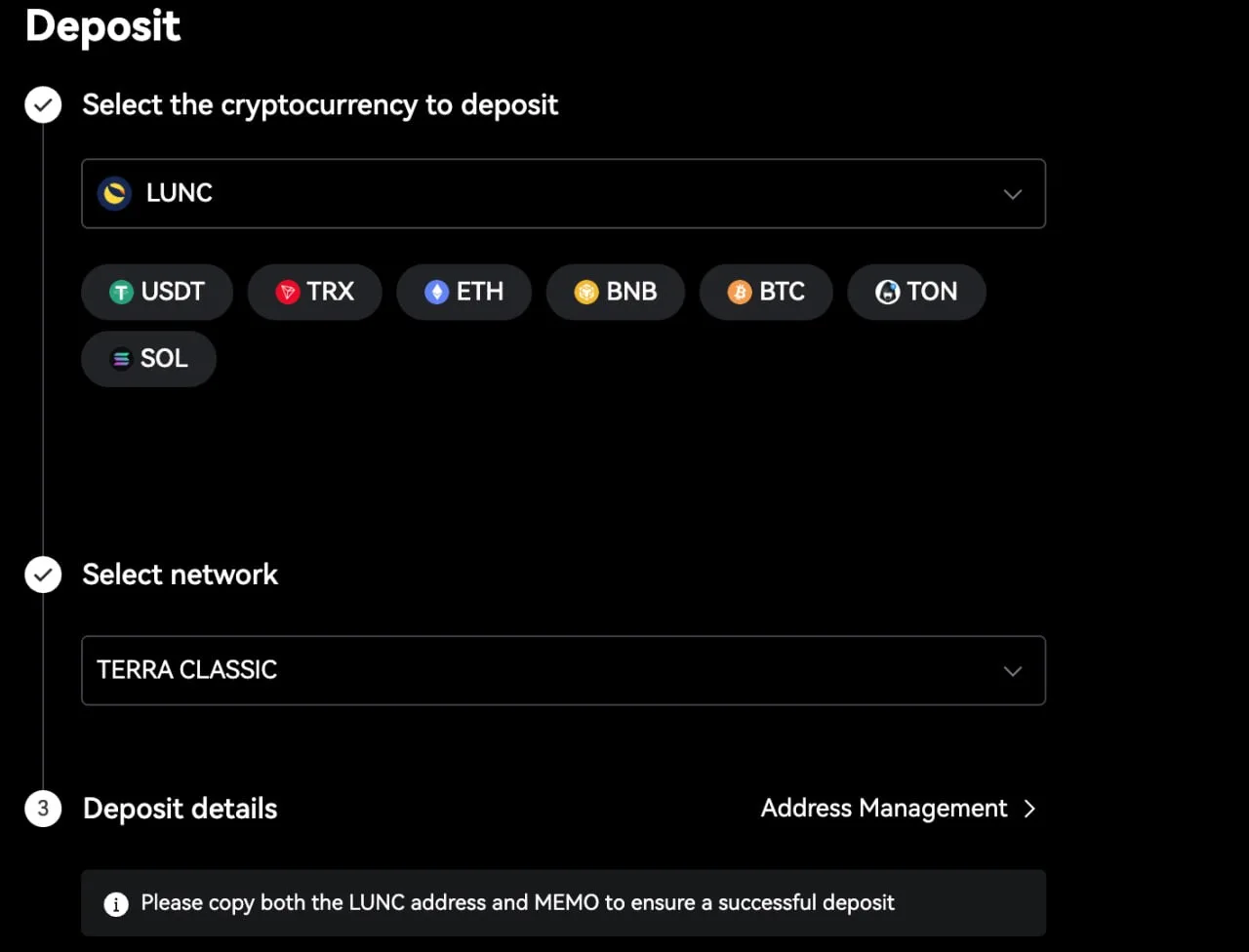
When depositing LUNC on LBank, users must ensure they select the correct network, which is the Terra Classic network. The platform also requires both the wallet address and the memo to be included when sending funds. This is necessary to ensure deposits are processed correctly and credited to the appropriate account.

Failure to include the memo could result in delays or issues with the deposit process.

Continued Support for Terra Classic

The restoration of deposits, trading, and withdrawals highlights continued exchange support for the Terra Classic ecosystem. For the community, exchange accessibility remains a key factor in maintaining market activity and enabling users around the world to interact with LUNC.

With services now fully restored, LUNC users on LBank can once again operate without limitations.

Lunanauts Validator Launches New LUNC Dashboard as StakeBin Prepares to Shut Down

0

Lunanauts Validator Launches New LUNC Dashboard as StakeBin Prepares to Shut Down

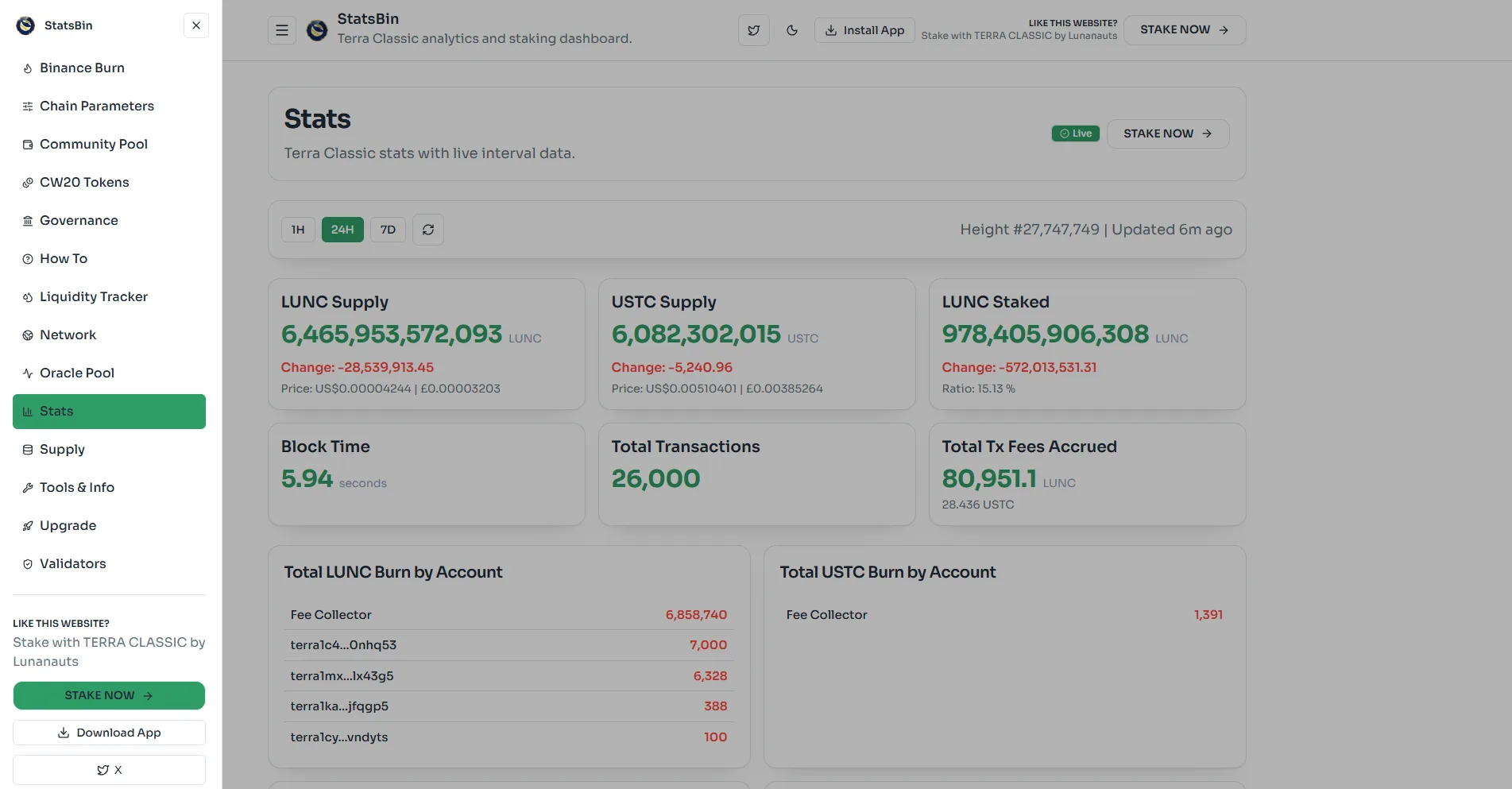
The Terra Classic community is preparing for an important transition as the StakeBin validator announces plans to shut down its services on March 31. Along with the validator closure, the well known StakeBin dashboard, which has long provided on chain data for the Terra Classic network, will also go offline.

For years, the StakeBin dashboard has served as a reliable source of information for LUNC users, offering insights into network activity, validator performance, and other important blockchain metrics. Its shutdown created uncertainty within the community about where users would access clear and reliable on chain data.

However, a new solution quickly emerged.

Lunanauts Validator Steps In

Shortly after the announcement, Lunanauts validator stepped forward and launched a new platform designed to continue providing Terra Classic on chain analytics. The new dashboard aims to fill the gap left by StakeBin and ensure that the community continues to have access to essential network data.

The platform delivers detailed information about activity across the Terra Classic blockchain. This includes important Layer 1 data that helps users track network health, transaction activity, and validator performance.

Expanded Data Coverage

One of the key advantages of the new Lunanauts dashboard is its expanded data coverage. In addition to core Layer 1 statistics, the platform also provides information about CW20 tokens within the Terra Classic ecosystem.

This broader view allows users to better understand activity across the network, including token movements and ecosystem development that may not have been easily visible before.

Designed for Accessibility

Another major focus of the new dashboard is usability. The interface has been designed with simplicity in mind, making it easier for beginners to understand blockchain activity.

Clear data presentation and a clean layout allow both experienced users and newcomers to quickly navigate the platform and explore important metrics related to the Terra Classic network.

Community Driven Continuity

The rapid response from Lunanauts highlights the strength of the Terra Classic community. When a key infrastructure provider announced its departure, another community validator quickly stepped in to ensure that essential services remain available.

As the March 31 shutdown of StakeBin approaches, the Lunanauts dashboard is expected to become an important resource for users who rely on accurate and accessible LUNC on chain information.

For the Terra Classic ecosystem, the transition demonstrates once again how community driven development continues to support the network’s long term growth.

Bullish Ahead on LUNC: Technical Outlook Signals Continuation Potential

0

LUNC Bullish : Technical Outlook Signals Continuation Potential

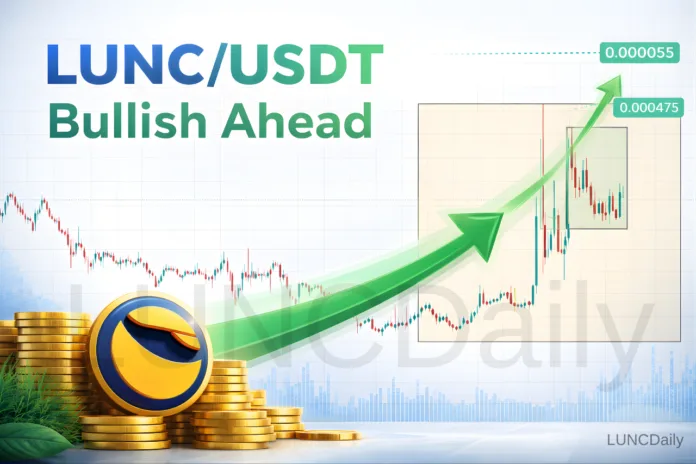
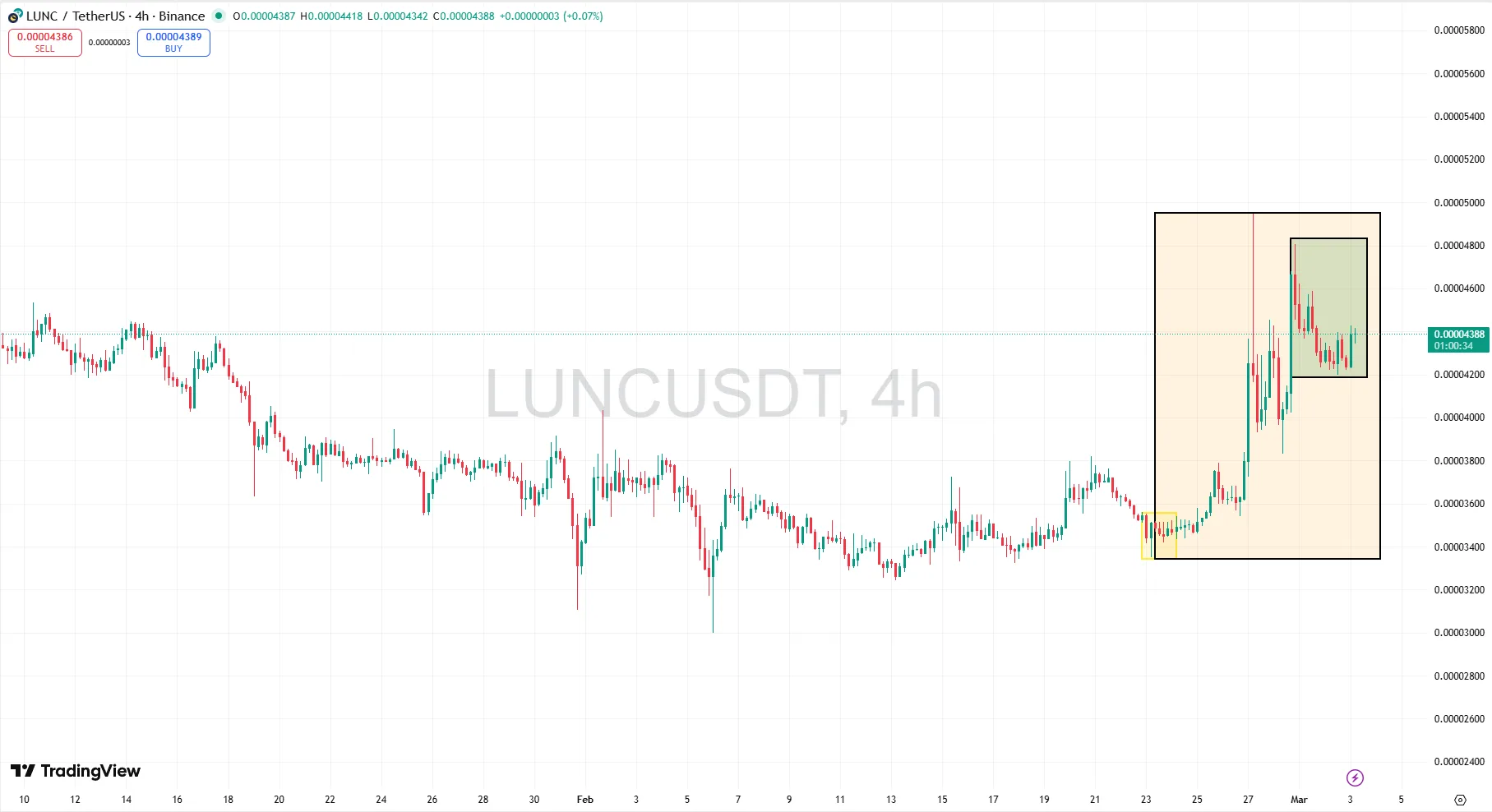
LUNC/USDT is showing constructive technical behavior on the 4 hour timeframe, suggesting that bullish momentum may continue in the near term. After an extended downtrend marked by lower highs and lower lows, the structure has shifted in favor of buyers.

This transition is not based on speculation but on clear price action developments visible on the chart.

Market Structure Shift From Downtrend to Uptrend

For several weeks, LUNC printed consistent lower highs and lower lows, confirming bearish control. That structure has now changed.

The market has:

  • Broken above the previous lower high
  • Established a strong impulsive move upward
  • Held above former resistance levels
  • Formed higher lows during consolidation

This sequence represents a classic transition from distribution to accumulation, followed by early trend expansion.

When price breaks a major structural high and maintains strength above it, the probability of continuation increases significantly.

Impulsive Expansion and Controlled Consolidation

The breakout leg showed strong vertical expansion, indicating aggressive buyer participation. Moves of this nature typically reflect coordinated positioning rather than retail driven volatility.

Following the expansion, price entered a tight consolidation range. Importantly, this consolidation is forming above the breakout zone rather than reversing sharply downward.

In trending markets, this pattern often signals continuation.

The current range suggests that buyers are absorbing supply before a potential next leg higher.

Key Technical Levels

Support Zone
0.000041 to 0.000042

Resistance Zone
0.000047 to 0.000048

As long as price holds above the 0.000039 to 0.000040 invalidation level on a 4 hour closing basis, the bullish structure remains intact.

Price Projection Scenarios

Scenario Target Zone Outlook
Short Term Breakout 0.000052 to 0.000055 Likely if resistance breaks with volume
Mid Term Expansion 0.000060 to 0.000065 Possible if momentum sustains
Extended Bullish Continuation Around 0.000075 Dependent on broader crypto strength

A confirmed breakout above 0.000048 with increased volume would strengthen the probability of reaching the short term target zone.

Risk Considerations

The bullish thesis remains valid while price holds above structural support.

A decisive breakdown below 0.000039 on the 4 hour timeframe would weaken the current outlook and shift bias toward neutral.

Risk management remains essential in all trading conditions.

Simple Explanation for New Traders

The market was falling for weeks. Buyers stepped in and pushed price higher. Instead of collapsing again, price is now moving sideways above the breakout area.

When markets rise strongly and then rest without dropping significantly, it often means buyers are preparing for another move upward.

Final Outlook

The 4 hour chart structure favors continuation.

Momentum has shifted from bearish to bullish. Consolidation is healthy. Structure remains intact above key support.

If resistance breaks with confirmation, LUNC USDT appears positioned for further upside in the short to mid term horizon.

As always, traders should combine structure analysis with disciplined risk management and awareness of overall market conditions.

LUNC Price Up 26 Percent in 7 Days as Market Momentum Accelerates

0

LUNC Surges 26 Percent in 7 Days as Market Momentum Accelerates

The price of LUNC has recorded a strong weekly performance, climbing more than 26 percent over the past seven days. According to data from CoinGecko, the rally places LUNC among the notable gainers in the current crypto market cycle.

This sharp upward movement reflects renewed buying pressure and increasing attention from traders. After weeks of consolidation, the breakout signals a shift in short term momentum and strengthens bullish sentiment around the asset.

Growing Market Confidence

A 26 percent increase within a single week is a significant move in the altcoin market. Such growth often indicates rising trading volume, improving market structure, and renewed investor confidence.

Market participants are closely watching whether this upward momentum can be sustained in the coming days. Continued buying activity and consistent on chain engagement could further support price stability and potential continuation of the trend.

Momentum Returns to the Spotlight

The latest data shows that LUNC is once again attracting attention across major tracking platforms. Price momentum combined with broader market participation can create a positive feedback cycle, drawing in both short term traders and long term supporters.

While volatility remains part of the crypto landscape, this 26 percent weekly gain highlights strong short term performance and reinforces LUNC’s presence in the competitive altcoin sector.

As the market evolves, traders and community members alike will be monitoring volume trends and overall ecosystem activity to determine the next phase of price action.

Over 900 Million LUNC Burned in the Last 2 Days

0

Over 900 Million LUNC Burned in the Last 2 Days

More than 900 million LUNC have been permanently removed from circulation within just two days. Between March 1 and March 2, 2026, a total of 913,989,117 LUNC were burned, marking a strong start to the month for the Terra Classic ecosystem.

This significant burn activity reflects continued efforts to reduce the circulating supply of LUNC and strengthen on chain economic metrics.

Daily LUNC Burn Breakdown

Below is the detailed daily burn data for the first two days of March 2026:

Month Date LUNC Burn
March 1 893,838,598.00
March 2 20,150,519.00
Total 913,989,117.00

March 1 recorded the largest contribution, accounting for the vast majority of the total two day burn volume.

Binance Burns Over 858 Million LUNC

A major portion of the March 1 burn came from Binance, which burned 858,230,264 LUNC on March 1, 2026.

The burn was executed as part of Binance’s ongoing monthly LUNC burn initiative. The tokens were removed using LUNC trading fees collected on the platform throughout February 2026.

This consistent monthly contribution from Binance continues to represent one of the largest single sources of LUNC burns across the ecosystem.

What This Means for Terra Classic

Token burns permanently reduce circulating supply. Sustained burn activity remains one of the most closely monitored metrics within the Terra Classic community.

With over 900 million LUNC removed in just two days, March has begun with strong momentum. If this pace continues, it could contribute to further tightening of supply dynamics across the network.

The Terra Classic community continues to monitor burn data closely as part of the broader long term recovery and stabilization strategy.