
Home Blog Page 14

Over 600,000 USTC Burned in the Last 22 Days

0

Over 600,000 USTC Burned in 22 Days Signals Continued Deflation on Terra Classic

The Terra Classic ecosystem continues to demonstrate steady deflationary progress, with more than 600,000 USTC burned over the past 22 days in March. This consistent burn activity reflects ongoing efforts by the community and ecosystem participants to reduce supply and support long term stability.

A total of 634,242 USTC has been permanently removed from circulation during this period. While daily burn figures vary, the overall trend shows sustained engagement and commitment to supply reduction.

One notable spike occurred on March 5, when over 350,000 USTC was burned in a single day. This accounted for a significant portion of the total burn and highlights how occasional large transactions can accelerate deflation.

Beyond major spikes, daily burn activity remains consistent, with smaller but steady contributions helping to maintain momentum across the ecosystem.

USTC Daily Burn Data

Month Date USTC Burn
March 1 14,070.00
March 2 16,396.00
March 3 7,786.00
March 4 6,869.00
March 5 350,200.00
March 6 4,234.00
March 7 19,059.00
March 8 4,777.00
March 9 16,551.00
March 10 14,732.00
March 11 35,089.00
March 12 7,598.00
March 13 2,490.00
March 14 10,701.00
March 15 3,746.00
March 16 59,297.00
March 17 11,923.00
March 18 6,039.00
March 19 5,710.00
March 20 11,770.00
March 21 14,602.00
March 22 10,603.00
Total 634,242

What This Means for Terra Classic

The ongoing burn activity plays a key role in the broader recovery strategy of Terra Classic. By reducing the circulating supply of USTC, the ecosystem aims to gradually improve price stability and rebuild market confidence.

Although the burn rate alone is not enough to fully restore USTC to its previous levels, it remains an important part of a multi layer approach that includes development, utility expansion, and community driven initiatives.

The consistency seen over these 22 days suggests that the burn mechanism is not a one time effort, but rather a sustained strategy supported by active participants across the network.

Conclusion

Burning over 600,000 USTC in less than a month is a clear indication that the Terra Classic community continues to push forward with its deflation goals. While large burn events can accelerate progress, the steady daily contributions ultimately form the foundation of long term supply reduction.

As the ecosystem evolves, continued burn activity combined with broader adoption and development will remain critical in shaping the future of USTC within the Terra Classic network.


Over 1.5 Billion LUNC Burned in the Last 22 Days

0

Over 1.5 Billion LUNC Burned in 22 Days Signals Continued Supply Reduction

The Terra Classic ecosystem continues to show strong commitment to reducing supply, with more than 1.5 billion LUNC burned in the first 22 days of March. This ongoing burn activity reflects consistent efforts from both the community and major contributors to strengthen the long term fundamentals of the network.

From March 1 to March 22, a total of 1,511,592,000 LUNC was permanently removed from circulation. This level of burn highlights sustained activity across the ecosystem, even outside major scheduled events.

The most significant burn occurred on March 1, where 893,838,598 LUNC was burned in a single day. A large portion of this came from Binance monthly LUNC burn program, contributing 858,230,264 LUNC. This event alone accounted for more than half of the total burn during the 22 day period, showing the continued importance of centralized exchange participation in the burn mechanism.

Following the initial spike, daily burn activity stabilized, with consistent contributions ranging between approximately 11 million to 45 million LUNC per day. This steady pace demonstrates organic on chain activity, including transactions, community initiatives, and smaller scale burn mechanisms.

Daily LUNC Burn Breakdown

Date LUNC Burned
March 1 893,838,598
March 2 20,150,519
March 3 28,273,814
March 4 86,426,717
March 5 25,557,466
March 6 20,131,764
March 7 23,569,133
March 8 12,580,442
March 9 25,561,534
March 10 17,562,991
March 11 45,688,509
March 12 26,446,204
March 13 32,944,907
March 14 19,548,720
March 15 19,410,340
March 16 35,053,415
March 17 39,473,724
March 18 38,024,806
March 19 17,461,316
March 20 30,345,515
March 21 42,292,808
March 22 11,248,758
Total 1,511,592,000

The data shows a clear pattern where large scheduled burns create major supply shocks, while daily burns maintain consistent downward pressure on total supply. This combination is critical for long term sustainability, as it balances immediate impact with ongoing ecosystem participation.

As Terra Classic continues to evolve, the burn mechanism remains one of the key pillars of its recovery strategy. With both community driven efforts and institutional support such as Binance involvement, LUNC supply reduction continues to move forward at a measurable pace.

Looking ahead, maintaining consistent burn volume alongside ecosystem growth will be essential. Increased utility, higher transaction volume, and expanded adoption of Layer 2 solutions could further accelerate burn rates and strengthen the overall network position.

The latest data reinforces one clear message. The burn is still active, consistent, and playing a central role in shaping the future of Terra Classic.

Learn why Bitcoin price movements affect Luna Classic

0

Why Bitcoin Price Drops Also Push Luna Classic (LUNC) Price Lower

The price movement of Bitcoin has a direct impact on the entire cryptocurrency market, including Luna Classic (LUNC). This is why many investors notice a consistent pattern: when Bitcoin goes down, LUNC usually follows and often drops even more.

This behavior is driven by a few key factors that shape how the crypto market works.


Bitcoin Sets the Market Direction

Bitcoin is widely seen as the main indicator of market strength.

When Bitcoin rises, confidence grows and investors are more willing to buy altcoins like LUNC.
When Bitcoin falls, the opposite happens. Confidence drops, and selling begins across the market.

This is why LUNC often moves in the same direction as Bitcoin.


Money Flows Out of the Market

A drop in Bitcoin usually means capital is leaving the crypto space.

Investors are not only selling Bitcoin. They are reducing exposure to all crypto assets.
As money exits the market, demand weakens.

With fewer buyers available, LUNC prices naturally decline.


Market Fear Spreads Quickly

Crypto markets are highly influenced by sentiment.

When Bitcoin starts falling, it creates uncertainty.
Traders react quickly by selling assets to protect their capital.

Even without negative news around LunaClassic, LUNC can still drop simply because the overall market feels risky.


Altcoins React More Strongly

LUNC is part of the altcoin category, which is generally more volatile than Bitcoin.

During a market downturn:

  • Bitcoin may fall steadily
  • LUNC can drop faster and more aggressively

This happens because investors see altcoins as higher risk and tend to exit them first.


Lower Liquidity Makes Moves Bigger

When Bitcoin declines, many buyers step back and wait.

This reduces liquidity across the market.
For LUNC, which has a smaller market size compared to Bitcoin, this effect is stronger.

Even moderate selling can lead to sharper price drops.


Simple Explanation

Bitcoin acts as the foundation of the crypto market.

  • Confidence decreases
  • Money leaves the market
  • Investors reduce risk
  • Altcoins like LUNC drop faster

Final Thoughts

Understanding the relationship between Bitcoin and LUNC helps explain why price movements often happen together.

Even if Luna Classic has no negative developments, its price can still decline when Bitcoin falls. This is because the broader market environment plays a major role in determining price direction.

For traders and investors, monitoring Bitcoin is essential, as it remains the leading signal for the entire crypto market.

Market Correction Ahead as Bitcoin Declines and Liquidations Surge

0

Market Correction Ahead as Bitcoin Declines and Liquidations Surge

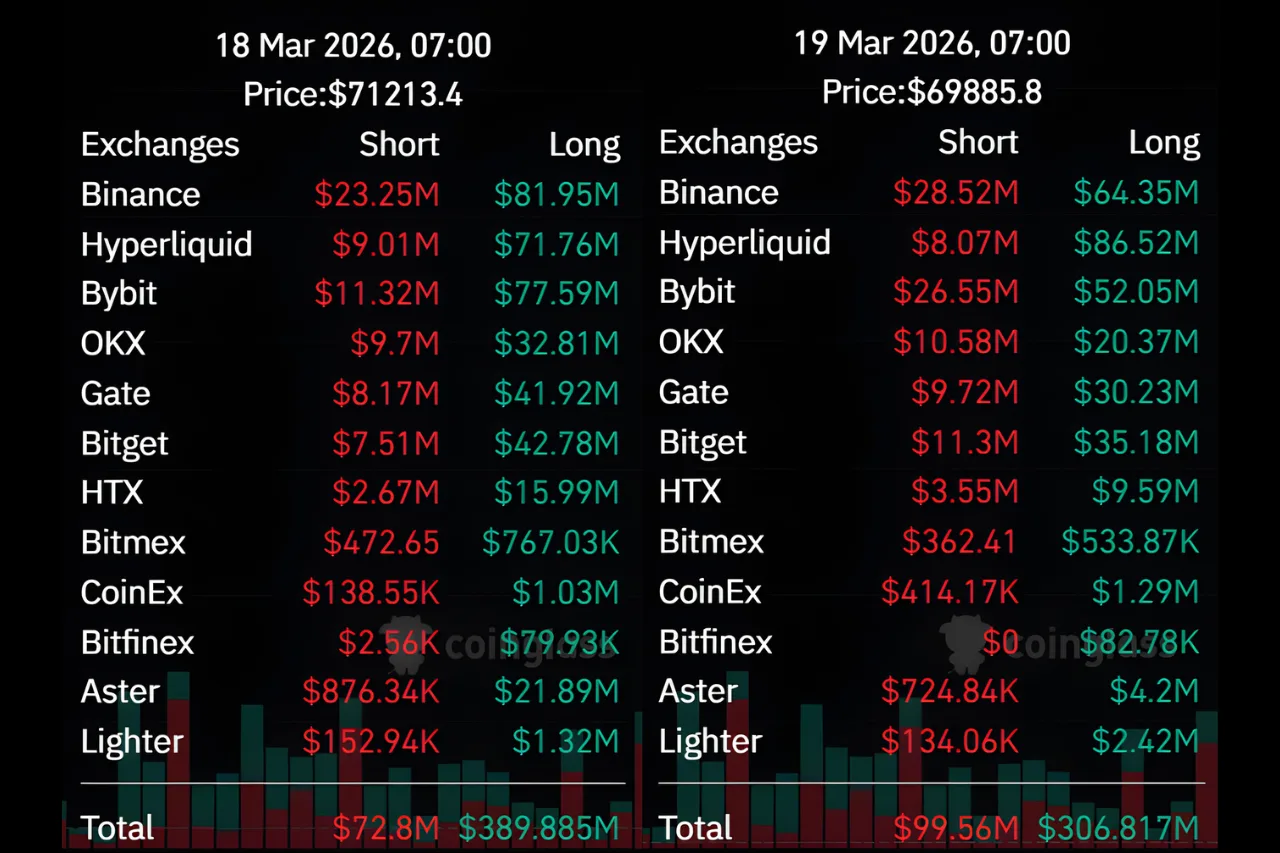
The cryptocurrency market has entered a period of short term weakness over the past 48 hours, raising concerns about a potential broader correction. This shift comes as Bitcoin continues to decline, pulling the overall market sentiment into a more cautious zone.

During this period, approximately 690 million dollars in long positions have been liquidated. This is a significant figure that highlights the intensity of the recent market move and the level of leverage that had built up prior to the downturn.

Why Liquidations Increase Selling Pressure

Long positions are trades where investors expect prices to rise. Many of these positions are often opened using leverage, meaning traders borrow funds to increase their exposure. While leverage can amplify profits, it also increases risk when the market moves in the opposite direction.

When the price of Bitcoin drops, leveraged long positions begin to lose value. Once these losses reach a certain threshold, exchanges automatically close these positions through a process called liquidation. This forces the system to sell the underlying assets at market price.

This forced selling creates additional downward pressure on the market. As more long positions are liquidated, more sell orders are triggered, accelerating the price decline. This chain reaction is often referred to as a liquidation cascade.

Impact on Market Trend

The recent wave of liquidations suggests that the market may have been overly optimistic, with too many traders positioned for continued upside. When the market fails to support that expectation, the unwinding of these positions can lead to sharp and rapid corrections.

This type of movement is common in highly leveraged markets like cryptocurrency. It often resets excessive speculation and brings prices back to more stable levels.

What to Watch Next

Traders are now closely monitoring key support levels for Bitcoin, as these areas will determine whether the market stabilizes or continues its downward movement. If selling pressure decreases and buyers step in, the market could consolidate before the next move. However, if liquidations continue, further downside may follow.

In the current environment, risk management and careful position sizing are becoming increasingly important as volatility remains elevated across the crypto market.

Bitcoin Drops to $69,000 as LUNC Declines 8 Percent Amid Market Pressure

0

Bitcoin Drops to 69000 as LUNC Declines 8 Percent Amid Market Pressure

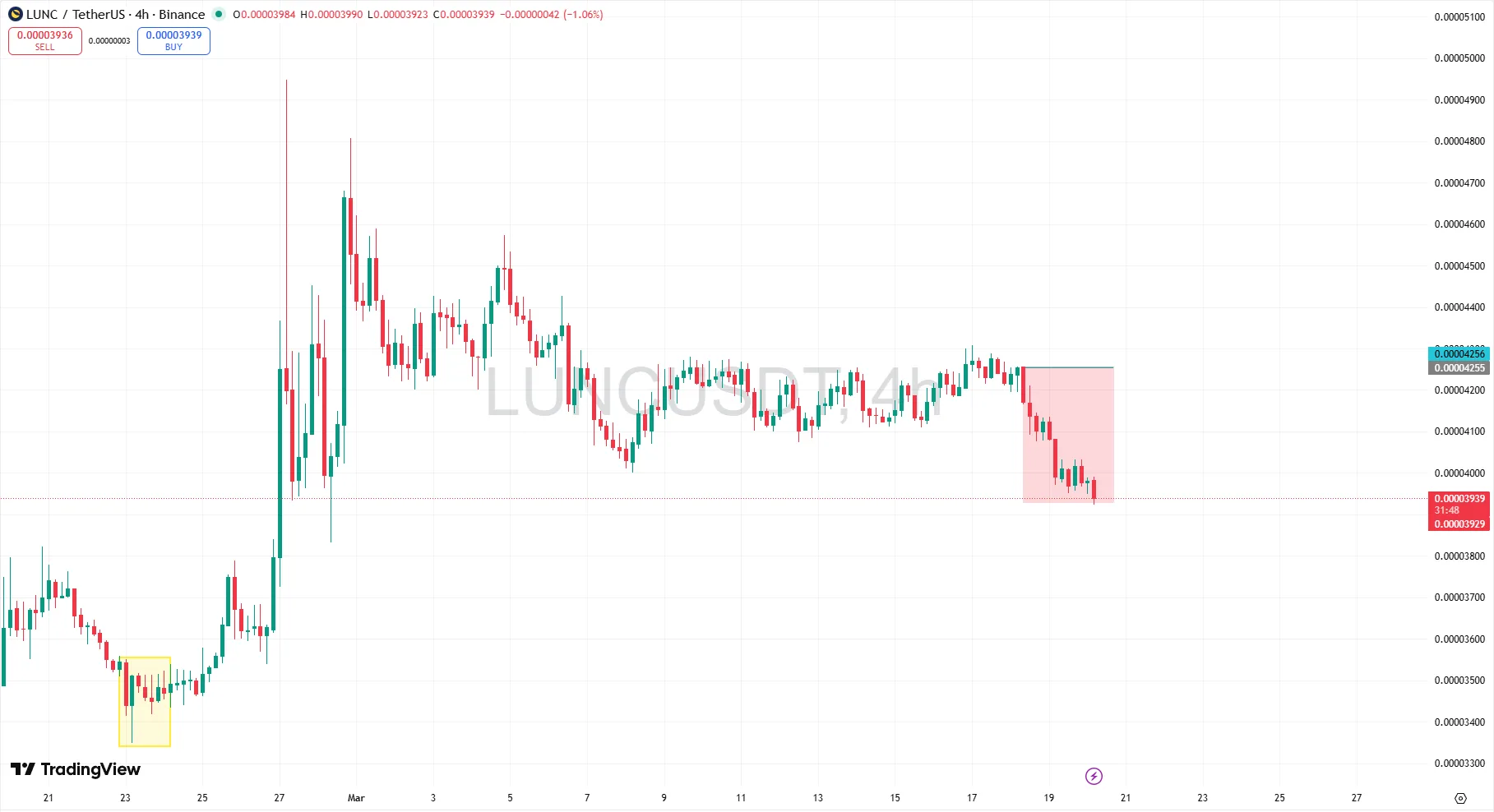
The cryptocurrency market has entered a period of renewed volatility following a sharp decline in Bitcoin, which dropped from 76000 to 69000 within the past 48 hours. This sudden move has triggered a broader market reaction, pushing major altcoins into a short term downtrend.

Among the affected assets is Terra Luna Classic, which has recorded an approximate 8 percent decline over the same period. The price action reflects the strong correlation between Bitcoin and the altcoin market, where sharp movements in BTC often set the direction for other digital assets.

Market Reaction and LUNC Price Movement

As Bitcoin lost key support levels, selling pressure quickly spread across the market. LUNC followed this trend, retracing from recent consolidation zones and moving back toward the 0.00004 range. This level is now being closely watched by traders as a psychological and technical support area.

The chart indicates a gradual shift from sideways movement into a downward structure, with lower highs forming in recent sessions. This suggests weakening momentum and reduced buying strength in the short term.

Key Factors Behind the Decline

Several factors contributed to the recent downturn

  • Strong profit taking after Bitcoin previous rally
  • Increased market uncertainty and cautious sentiment
  • Liquidations across leveraged positions amplifying the drop

These elements combined to create a ripple effect, impacting altcoins like LUNC more aggressively due to their higher volatility.

What Comes Next for LUNC

If Bitcoin stabilizes around current levels, LUNC may find support and attempt a consolidation phase. However, if BTC continues to decline, further downside pressure on LUNC cannot be ruled out.

Traders are currently monitoring

  • Support near 0.000039 to 0.000040
  • Resistance around 0.000042 to 0.000043
  • Overall Bitcoin market direction

Conclusion

The recent drop in Bitcoin to 69000 has once again demonstrated its influence over the broader crypto market. LUNC 8 percent decline highlights the sensitivity of altcoins to BTC movements.

Short term direction will largely depend on whether Bitcoin can regain stability or continue its downward trajectory, making the coming sessions critical for both BTC and LUNC.

LUNC Price Falls 5 Percent as Bitcoin Drops to $70,000 Level

0

LUNC Price Falls 5 Percent as Bitcoin Drops to 70,000 Level

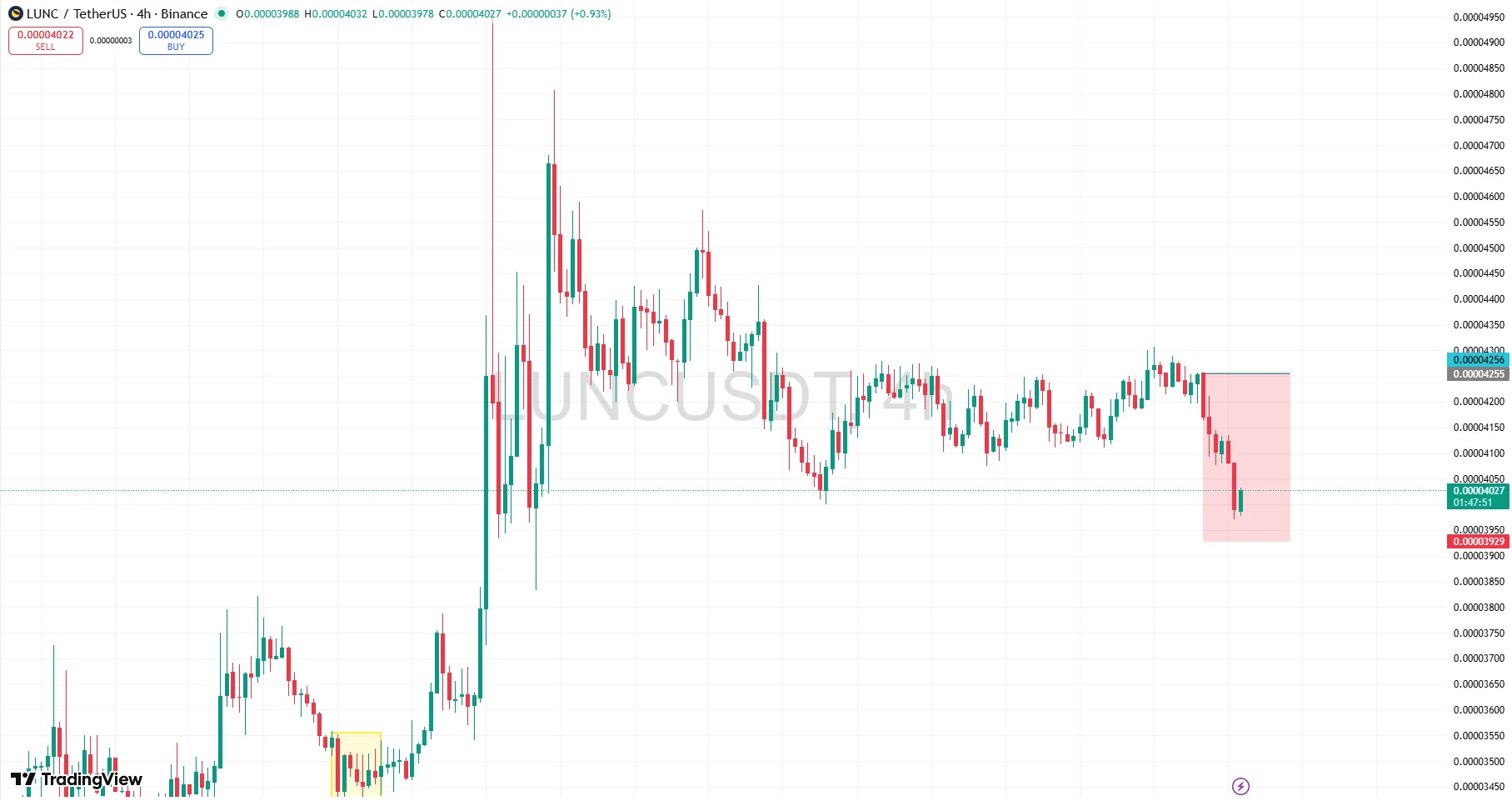
The price of LUNC has declined by approximately 5 percent over the past 24 hours, returning to the 0.00004 level. This movement comes as Bitcoin experiences a sharp drop from 76,000 to 70,000 within a single day, creating downward pressure across the broader cryptocurrency market.

Bitcoin Decline Impacts Altcoins

Bitcoin remains the primary driver of market sentiment. When its price moves sharply, altcoins typically follow. The recent drop to the 70,000 level has triggered a wave of selling activity, leading to a short term downtrend across multiple assets, including LUNC.

This type of correlation is common in crypto markets, where capital flows out of higher risk assets during periods of uncertainty.

LUNC Returns to Key Support Level

Following the market shift, LUNC has retraced back to the 0.00004 range. This level is considered an important psychological and technical support zone for traders.

LUNC returns to the 0.00004 level as market pressure increases

If the price holds above this level, it may indicate stability and potential consolidation. However, a break below could open the door for further downside in the short term.

Market Outlook

The current trend suggests that LUNC price action will remain closely tied to Bitcoin movements. If Bitcoin stabilizes around the 70,000 level, LUNC may enter a consolidation phase. On the other hand, continued weakness in Bitcoin could push LUNC lower.

Traders are advised to monitor key support levels and overall market sentiment before making decisions, as volatility remains high across the crypto space.

Nearly 600,000 USTC Burned in the Last 18 Days

0

Nearly 600,000 USTC Burned in the Last 18 Days Signals Ongoing Supply Reduction Effort

The Terra Classic ecosystem continues to demonstrate steady progress in its supply reduction strategy, with nearly 600000 USTC removed from circulation over the past 18 days.

A total of 591,557 USTC has been burned between March 1 and March 18, reflecting consistent community driven efforts to reduce supply and improve long term sustainability.

The burn activity shows a mix of moderate daily contributions and several significant spikes, with March 5 standing out as the largest single day burn, exceeding 350,000 USTC. Another notable increase occurred on March 16, with over 59,000 USTC burned.

This ongoing reduction in circulating supply is considered an important step in strengthening the overall economic structure of USTC within the Terra Classic network.

USTC Daily Burn Data

Month Date USTC Burn
March 1 14070
March 2 16396
March 3 7786
March 4 6869
March 5 350200
March 6 4234
March 7 19059
March 8 4777
March 9 16551
March 10 14732
March 11 35089
March 12 7598
March 13 2490
March 14 10701
March 15 3746
March 16 59297
March 17 11923
March 18 6039
Total 591557

Analysis

The data highlights how community participation continues to play a central role in supporting USTC recovery efforts. While daily burn amounts vary, the overall trend remains positive, with consistent contributions adding up to a meaningful reduction in supply.

Large burn events such as those seen on March 5 and March 16 often indicate coordinated efforts or significant transactions, which can accelerate the impact of the burn mechanism.

As the Terra Classic ecosystem evolves, sustained burn activity like this may contribute to improved market confidence and long term value stability.

Conclusion

The nearly 600000 USTC burned in just over two weeks reflects a strong and ongoing commitment from the Terra Classic community. Consistent supply reduction remains a key component in the broader strategy to restore balance and utility within the ecosystem.

If this trend continues, USTC could see further structural improvement supported by active participation and long term vision from its community.

Over 1.4 Billion LUNC Burned in the Last 18 Days

0

Over 1.4 Billion LUNC Burned in the Last 18 Days

The Luna Classic network continues to record consistent burn activity, with a total of 1,410,243,603 LUNC removed from circulation over the past 18 days. This data highlights daily burn contributions and provides a clear view of ongoing network activity.

Daily LUNC Burn Data

Month Date LUNC Burn
March 1 893,838,598.00
March 2 20,150,519.00
March 3 28,273,814.00
March 4 86,426,717.00
March 5 25,557,466.00
March 6 20,131,764.00
March 7 23,569,133.00
March 8 12,580,442.00
March 9 25,561,534.00
March 10 17,562,991.00
March 11 45,688,509.00
March 12 26,446,204.00
March 13 32,944,907.00
March 14 19,548,720.00
March 15 19,410,340.00
March 16 35,053,415.00
March 17 39,473,724.00
March 18 38,024,806.00
Total 1,410,243,603.00

Overview

The data shows a steady pattern of daily burns throughout the period, with varying volumes recorded each day. The highest burn occurred on March 1, followed by a series of smaller but consistent daily contributions.

This ongoing activity reflects continuous participation within the Luna Classic network, as burn transactions are recorded daily across the ecosystem.

Conclusion

Over the past 18 days, LUNC burn activity has remained active and consistent, resulting in more than 1.4 billion tokens removed from circulation. The data provides a transparent snapshot of daily contributions and highlights the steady pace of burn activity within the network.

What Is Luna Classic and How Is It Different from Luna 2.0

0

What Is Luna Classic and How Is It Different from Luna 2.0

Luna Classic is the original Terra blockchain that continued operating after the major collapse in 2022. Instead of shutting down completely, the network remained active through the efforts of its community. Validators, developers, and token holders chose to maintain the chain, ensuring that transactions, governance, and development could continue.

Luna Classic operates under the name LUNC, while its associated stablecoin is known as USTC. These assets remain part of the original Terra ecosystem that survived the collapse.

In contrast, Luna 2.0 is a completely separate blockchain. It was launched by Terraform Labs as a new version of the Terra network, but without the algorithmic stablecoin model that existed before. This means Luna 2.0 does not include USTC and follows a different direction in terms of development and structure.

The key difference between the two networks lies in their governance and philosophy. Terra Classic is fully community driven. There is no central ownership, and decisions are made through on chain proposals and voting. Anyone holding LUNC can participate in governance and help shape the future of the network.

Luna 2.0, on the other hand, started as a fresh ecosystem with its own roadmap and development path, separate from the original chain. While it has its own community, it does not share the same history or structure as Terra Classic.

Another important distinction is that both chains now evolve independently. Updates, improvements, and ecosystem growth happen separately, meaning developments on one network do not directly impact the other.

In simple terms, if you hold LUNC or USTC, you are part of the Terra Classic network. If you hold the new LUNA token, you are using the Luna 2.0 network.

Understanding this difference is essential for anyone involved in the Terra ecosystem, as it helps avoid confusion between the two chains and ensures accurate participation in each network.

LUNC Daily Burn Rate Keep Declines: Understanding the Cause and How to Fix it

0

LUNC Daily Burn Rate Declines in March 2026: Understanding the Cause and What Comes Next

The reduction of LUNC supply plays a major role in its tokenomics and remains one of the key factors attracting investors. A consistent burn mechanism helps strengthen long term value by gradually decreasing circulating supply.

However, recent data shows that the LUNC daily burn rate has been declining throughout March 2026.

In the first 17 days of the month, the burn rate has struggled to reach 100 million LUNC per day. The total amount burned from March 1 to March 17 stands at only 1.37 billion LUNC, highlighting a noticeable slowdown compared to previous periods.

The largest burn occurred on March 1, driven by the Binance monthly LUNC burn program, which contributed approximately 858 million LUNC. This single event accounts for a significant portion of the total burn for the month.

LUNC Daily Burn Data

Month Date LUNC Burn
March 1 893,838,598
March 2 20,150,519
March 3 28,273,814
March 4 86,426,717
March 5 25,557,466
March 6 20,131,764
March 7 23,569,133
March 8 12,580,442
March 9 25,561,534
March 10 17,562,991
March 11 45,688,509
March 12 26,446,204
March 13 32,944,907
March 14 19,548,720
March 15 19,410,340
March 16 35,053,415
March 17 39,473,724
Total 1,372,218,797

Why Is the LUNC Burn Rate Decreasing

The main reason behind the declining burn rate is low on chain volume.

LUNC operates with an on chain tax mechanism, where each transaction is partially allocated to three key areas: the oracle pool, the community pool, and the burn wallet.

When on chain activity decreases, fewer transactions occur across the network. As a result, the total amount of LUNC collected through tax also declines, leading directly to a lower daily burn rate.

In simple terms, less activity on the network means less LUNC being burned.

How Can the Burn Rate Be Improved

The solution is straightforward: increase daily on chain volume.

Higher transaction activity leads to more tax collection, which in turn increases the amount of LUNC sent to the burn wallet. Strengthening ecosystem usage, encouraging decentralized applications, and boosting overall network engagement are key steps toward restoring a stronger burn rate.

Conclusion

The recent decline in the LUNC daily burn rate is not caused by changes in the burn mechanism itself, but by reduced network activity.

As on chain volume drops, the burn naturally slows down. To reverse this trend, the focus must shift toward increasing real usage across the Terra Classic ecosystem.

Sustainable growth in activity will not only improve the burn rate but also reinforce confidence in LUNC’s long term recovery.