Luna Classic Oracle Pool Continues to Decline Over the Last Three Months
Over the past three months, the Luna Classic oracle pool has shown a steady and consistent decrease in balance.
This trend is clearly visible in recent on chain data, where both LUNC and USTC holdings within the oracle pool
continue to move lower over time.
The oracle pool plays an important role in the Terra Classic network. In simple terms, it is a reserve of tokens
used to reward validators and oracle operators for providing accurate price data to the blockchain. This data is
essential for maintaining network functionality, supporting smart contracts, and ensuring correct economic
calculations across the ecosystem.
As the oracle pool balance decreases, it usually indicates that rewards are being distributed faster than they
are being replenished. This can happen when network activity remains steady while inflows to the pool are limited.
While a declining oracle pool does not immediately signal a problem, it is an important metric that reflects
ongoing network usage and reward dynamics.
At the time of the latest snapshot, the oracle pool holds the following balances:
LUNC balance: 53,969,015,879
USTC balance: 176,480,239
These figures confirm a continued reduction compared to previous months. For the Luna Classic community,
monitoring the oracle pool remains important, as it directly relates to validator incentives and the long term
sustainability of network operations.
Over 3.84 Billion LUNC Burned in 17 Days Shows Strong On Chain Activity
The Terra Classic network has recorded a significant milestone in token reduction, with more than 3.84 billion LUNC permanently burned over the last 17 days. This consistent burn activity reflects sustained on chain volume and growing participation across the ecosystem.
Token burning plays a critical role in Terra Classic’s long term strategy by reducing circulating supply. As more transactions occur on chain, the burn mechanism removes LUNC from circulation, supporting a healthier token economy over time.
During this 17 day period, daily burn figures remained active, with several days recording exceptionally high totals. The strongest single day burn exceeded 690 million LUNC, while multiple other days surpassed the 300 million mark. These figures highlight the impact of increased network usage and ongoing community driven activity.
Below is a detailed breakdown of the daily LUNC burn data for the period.
LUNC Daily Burn Recap
Day
LUNC Burned
Day 1
602,506,463
Day 2
40,982,656
Day 3
76,774,565
Day 4
57,034,202
Day 5
691,616,593
Day 6
308,917,077
Day 7
275,683,055
Day 8
125,661,572
Day 9
226,866,684
Day 10
234,059,483
Day 11
168,749,439
Day 12
335,397,628
Day 13
233,673,361
Day 14
108,355,346
Day 15
128,830,335
Day 16
62,266,063
Day 17
162,927,071
Total
3,840,301,593
This level of sustained burning demonstrates that Terra Classic’s deflationary mechanics are actively working alongside ecosystem growth. Continued focus on building applications and increasing transaction volume remains one of the most effective ways to maintain and accelerate the LUNC burn rate.
If current activity levels continue, Terra Classic could see even stronger supply reduction trends in the coming months.
Did You Know Binance Has Already Burned Over 7.4 Billion LUNC This Year
Binance continues to demonstrate strong long term support for the Luna Classic ecosystem through its ongoing LUNC burn initiative. According to the latest yearly data, the exchange has already burned more than 7.49 billion LUNC this year, making it one of the most significant contributors to LUNC supply reduction.
The Binance burn mechanism works by allocating a portion of trading fees generated from LUNC spot and margin pairs. These tokens are then sent to a designated burn address, permanently removing them from circulation. This process directly reduces the circulating supply and helps counter inflationary pressure within the Luna Classic network.
Below is the complete monthly breakdown of LUNC burned by Binance throughout this year.
Binance LUNC Burn Recap
Month
LUNC Burned
January
1,721,471,820
February
736,146,374
March
760,073,176
April
521,961,991
May
413,653,487
June
498,530,317
July
375,565,485
August
441,100,594
September
455,227,785
October
356,538,666
November
652,627,275
December
562,133,714
Total
7,495,030,684
The data highlights Binance’s consistent burn activity across the entire year. January recorded the highest burn volume, while several other months exceeded 400 million LUNC. This steady pace reflects a sustained commitment rather than a short term initiative.
While token burns alone do not guarantee price increases, they remain a critical part of Luna Classic’s broader recovery strategy. When combined with community governance, protocol upgrades, and real network utility, continued burns help support healthier tokenomics over time.
As Luna Classic continues to evolve, Binance’s contribution remains a key pillar in reducing excess supply and reinforcing long term sustainability for the ecosystem.
USTC Burn Activity Update: Over 1.7 Million USTC Burned in Just 16 Days
The Terra Classic ecosystem continues to demonstrate steady progress in reducing the supply of TerraClassicUSD (USTC). Over the past 16 days, a total of more than 1.7 million USTC has been permanently removed from circulation, reflecting consistent on chain burn activity throughout mid December.
Token burning plays an important role in supply management by permanently removing tokens from the total supply. While daily burn amounts may fluctuate, the cumulative effect highlights sustained participation and ongoing efforts within the Terra Classic ecosystem.
Overview of the Latest USTC Burn
From December 1 to December 16, a total of 1,720,226 USTC has been burned. The data shows several notable days with higher burn volumes, particularly on December 6, which recorded the largest single day burn during this period.
This steady burn pace reinforces the long term objective of gradually reducing USTC supply through transparent and verifiable on chain activity.
Daily USTC Burn Breakdown
Month
Date
USTC Burned
December
1
15,068
December
2
14,622
December
3
44,933
December
4
189,151
December
5
157,437
December
6
603,331
December
7
135,725
December
8
51,193
December
9
18,630
December
10
162,388
December
11
24,001
December
12
112,496
December
13
27,710
December
14
37,447
December
15
109,253
December
16
16,841
Total
1,720,226
What This Means for the Terra Classic Ecosystem
Consistent USTC burns signal continued network activity and commitment to supply reduction. While burns alone do not guarantee immediate market impact, they form a foundational part of broader economic and governance efforts within the Terra Classic ecosystem.
As on chain mechanisms, community initiatives, and ecosystem utilities continue to develop, transparent burn tracking remains an important metric for monitoring long term progress.
Luna Classic Records Over 200 Million LUNC Burned Per Day on Average
The Luna Classic network continues to demonstrate steady deflationary progress, with burn activity maintaining a strong daily average throughout December. Recent on chain data shows that more than 3.67 billion LUNC has been permanently removed from circulation in just over two weeks, translating to an average daily burn of approximately 229 million LUNC.
This consistent burn rate reflects ongoing community commitment, validator participation, and application level contributions aimed at reducing the total supply over time. While daily figures naturally fluctuate, the overall trend highlights sustained activity rather than isolated spikes.
Daily LUNC Burn Breakdown
Below is the detailed daily burn recap for December, presented in a clear table format for transparency and easy reference.
Month
Date
LUNC Burned
December
1
602,506,463
December
2
40,982,656
December
3
76,774,565
December
4
57,034,202
December
5
691,616,593
December
6
308,917,077
December
7
275,683,055
December
8
125,661,572
December
9
226,866,684
December
10
234,059,483
December
11
168,749,439
December
12
335,397,628
December
13
233,673,361
December
14
108,355,346
December
15
128,830,335
December
16
62,266,063
Total
3,677,374,522
Average per day
229,835,907
What This Means for Luna Classic
An average daily burn above 200 million LUNC is a meaningful signal for the Luna Classic ecosystem. It indicates that burn mechanisms are actively functioning and that participation remains consistent across multiple days rather than relying on one time events.
While burn activity alone does not determine price performance, it plays an important role in long term supply reduction. When combined with network development, utility expansion, and broader market conditions, sustained burn rates can contribute to a healthier token economy.
Looking Ahead
If this pace continues, Luna Classic could see tens of billions of LUNC removed from circulation over the longer term. The focus now remains on maintaining consistency, improving utility driven burns, and ensuring transparency in reporting so the community can clearly track progress.
Over 3.6 Billion LUNC Burned in Just Over Two Weeks Signals Strong Community Momentum
The Terra Classic community continues to demonstrate its long term commitment to reducing the circulating supply of LUNC. In just over two weeks, more than 3.6 billion LUNC tokens have been permanently removed from circulation through on chain burns.
This steady burn activity highlights consistent participation from the ecosystem, including validators, applications, and community driven initiatives. Rather than a single large event, the data shows a sustained daily contribution, which is often viewed as a healthier and more organic approach to supply reduction.
Burn activity peaked on December 5, when over 691 million LUNC were burned in a single day. Several other days also recorded burns exceeding 300 million LUNC, reinforcing the view that burn mechanisms are actively being utilized across the network.
While token burns alone do not guarantee price appreciation, they play an important role in the broader Terra Classic recovery strategy. Combined with ongoing development, governance participation, and network upgrades, consistent burns help strengthen confidence in the ecosystem’s long term direction.
Below is a detailed recap of LUNC burned over the period.
Month
Date
LUNC Burned
December
1
602,506,463
December
2
40,982,656
December
3
76,774,565
December
4
57,034,202
December
5
691,616,593
December
6
308,917,077
December
7
275,683,055
December
8
125,661,572
December
9
226,866,684
December
10
234,059,483
December
11
168,749,439
December
12
335,397,628
December
13
233,673,361
December
14
108,355,346
December
15
128,830,335
Total
3,615,108,459
As Terra Classic moves forward, transparency around burn data and consistent reporting will remain essential. These figures provide a clear snapshot of ongoing efforts and underline the community’s role in shaping the future of LUNC.
Kraken Confirms Terra Classic LUNA Will Remain Listed After Review
Kraken has officially confirmed that Terra Classic LUNA will remain listed on its exchange, reversing an earlier announcement that included the asset among those scheduled for delisting.
In a follow up message to users, Kraken stated that after completing an internal review, the exchange decided to continue supporting LUNA on its platform. As a result, there is no longer any delisting scheduled for this asset, and users can continue to deposit, withdraw, and trade LUNA as usual on Kraken.
This clarification follows a previous announcement in which Kraken published a list of assets planned for delisting. Terra Classic LUNA was included in that list, which raised concerns across the Terra Classic community due to its importance for liquidity and market access.
Assets Previously Included in Kraken’s Delisting List
Ticker
Asset Name
UST
Terra Classic USD
LUNA
Terra Classic
LUNA2
Luna 2.0
NODL
Nodle
PDA
PlaysDAO
ETHW
EthereumPoW
TVK
The Virtua Kolect
TUSD
TrueUSD
MOVE
MoveZ
BRICK
Brick Token
After reconsideration, Kraken confirmed that Terra Classic LUNA will not be delisted. The exchange acknowledged that this updated decision differs from what was previously communicated and issued an apology for any confusion caused.
Kraken also reiterated that asset reviews are part of its ongoing oversight process to ensure regulatory compliance, security standards, and a reliable trading experience for users. The decision to maintain LUNA trading reflects Kraken’s continued support for Terra Classic market activity.
For the Terra Classic community, this confirmation provides reassurance that a major centralized exchange will continue offering trading access and liquidity for the Terra Classic ecosystem.
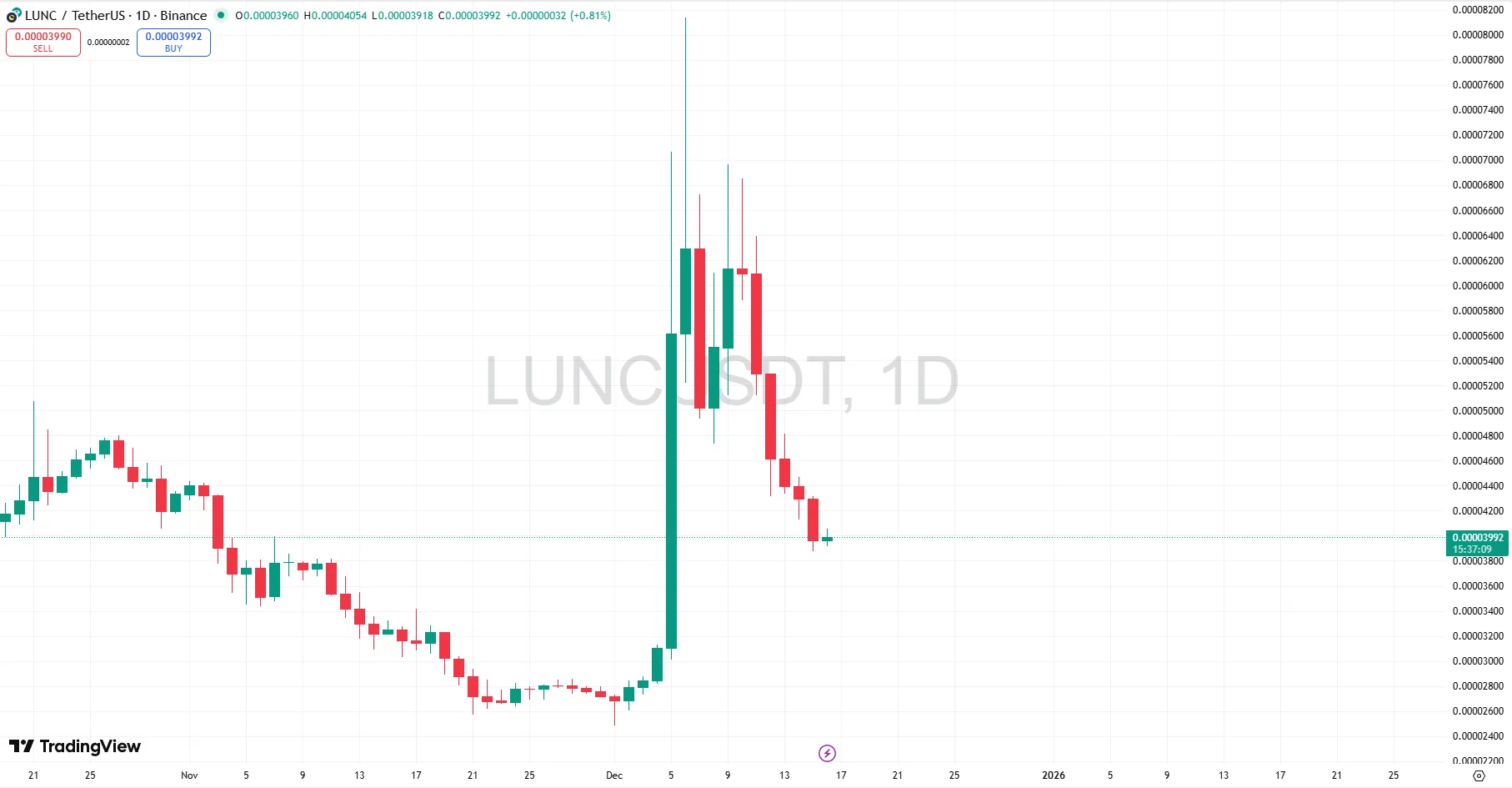
Luna Classic Falls 30 Percent as Bitcoin Led Market Sell Off Pressures Altcoins
Luna Classic has declined by nearly 30 percent over the past seven days, reflecting broader weakness across the cryptocurrency market. This move closely followed Bitcoin’s recent price drop, reinforcing the strong relationship between Bitcoin and altcoins.
Bitcoin continues to act as the primary driver of market sentiment. When Bitcoin experiences sharp corrections, altcoins such as Luna Classic typically follow. The latest downturn was driven by a combination of global macroeconomic developments, policy uncertainty, and structural market selling.
1. Bank of Japan Rate Hike Fears Triggered Global De Risking
The first major factor came from Japan. Markets reacted ahead of an expected Bank of Japan rate hike that could push interest rates to levels not seen in decades. Even a modest increase matters because Japan has long supported global risk assets through the yen carry trade.
For years, investors borrowed low interest yen to invest in higher risk assets such as equities and cryptocurrencies. As Japanese rates rise, this trade begins to unwind. Investors sell risk assets to repay yen liabilities, creating broad market pressure.
Historically, Bitcoin has reacted sharply to similar policy shifts. During the last three Bank of Japan tightening cycles, Bitcoin declined between 20 percent and 30 percent in the following weeks. Traders began pricing in this pattern ahead of the decision, pushing Bitcoin lower in advance.
2. US Economic Data Reintroduced Policy Uncertainty
The second factor was growing uncertainty around US monetary policy. Markets became cautious ahead of key inflation and labor market data. While the Federal Reserve recently cut interest rates, officials signaled that future easing would be gradual and dependent on economic data.
Bitcoin has increasingly traded as a liquidity sensitive macro asset. With inflation still above target and signs of potential labor market weakness, investors struggled to anticipate the Fed’s next move. This hesitation reduced speculative demand and encouraged short term traders to step aside.
As a result, Bitcoin lost momentum as it approached important technical levels, increasing downside pressure.
The third factor came from market structure. Wintermute, one of the largest crypto market makers, added significant selling pressure during the decline.
On chain and exchange data showed Wintermute offloading a large amount of Bitcoin, estimated at more than 1.5 billion dollars. The sales were reportedly part of risk rebalancing following recent volatility and derivatives market losses.
Because Wintermute provides liquidity across both spot and derivatives venues, its selling had an outsized impact. The timing was also critical, as the activity occurred during relatively low liquidity conditions. This accelerated Bitcoin’s drop toward the 85,000 dollar level and intensified market wide weakness.
As Bitcoin moved lower, Luna Classic followed the broader market trend. The recent price decline does not point to a network specific issue but highlights the continued dependence of altcoins on Bitcoin’s direction. Until Bitcoin stabilizes and macro uncertainty eases, Luna Classic and the wider altcoin market may remain under pressure.
150B LUNC staked in the last 24 hours What really happened
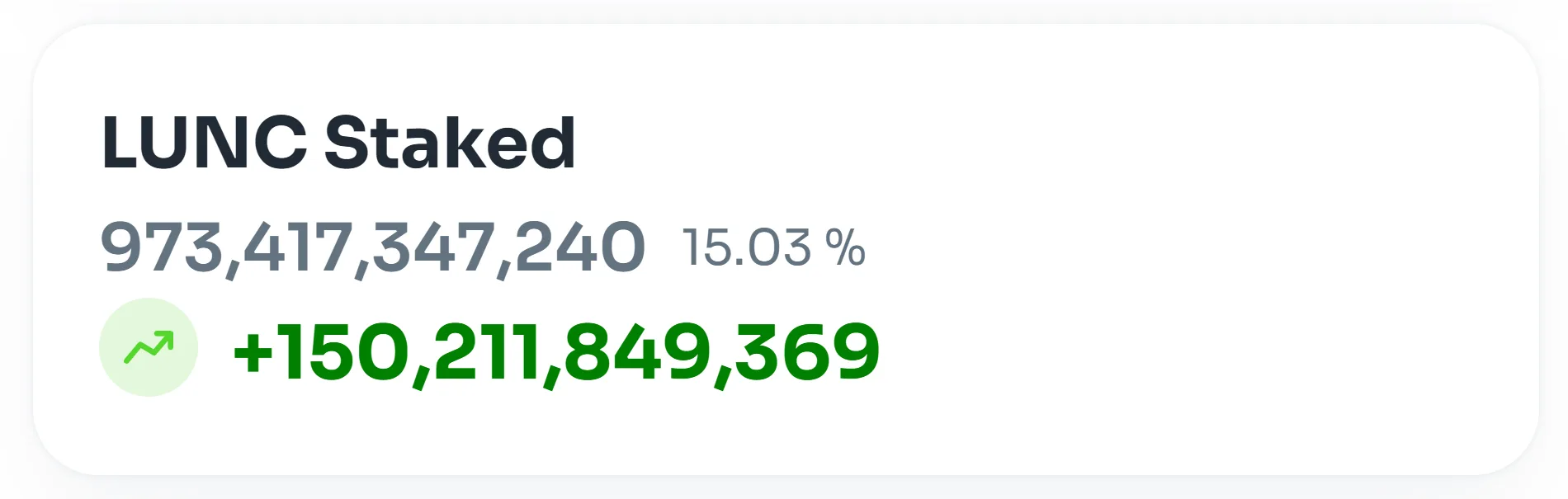
Reports circulating across the Terra Classic community claimed that more than 150 billion LUNC was staked within 24 hours. While blockchain data initially appeared to support this number, a closer analysis shows that the actual staking activity was far lower.
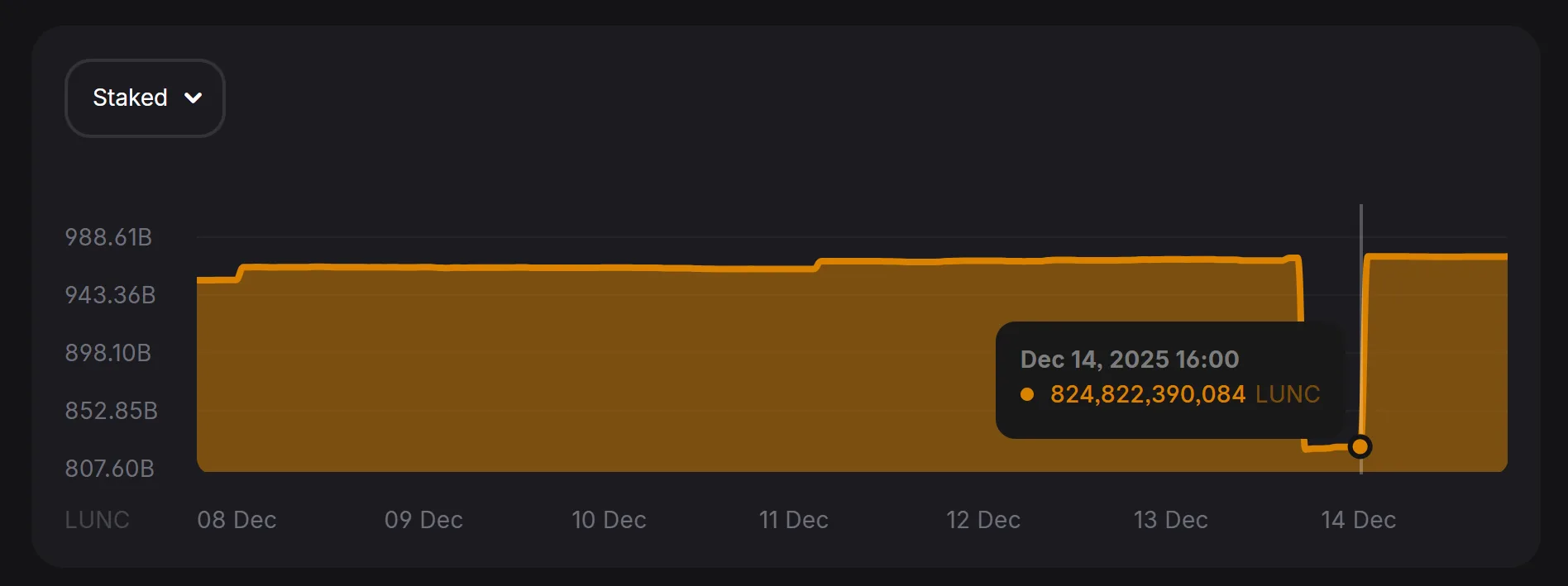
According to on chain data, the total staked amount briefly showed an increase of 150,211,842,609 LUNC. However, this spike was not caused by new delegations entering the network.
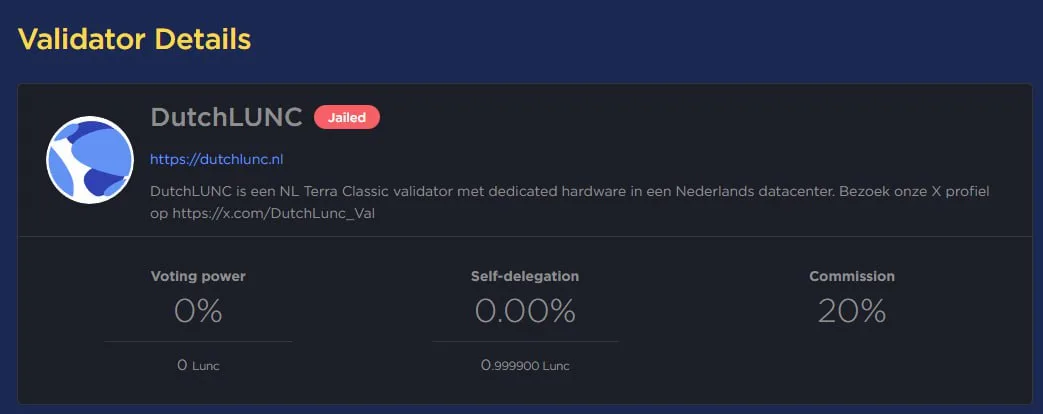
The sudden change occurred when the number one validator, Dutch LUNC, holding 148,801,347,809 LUNC in delegations, was temporarily jailed. When a validator is jailed, its delegated tokens are removed from the active staking set, causing the total staked balance to drop sharply.
During this period, the total staked LUNC fell to around 823 billion. This drop created the illusion of a massive staking inflow once the validator returned to normal operation.
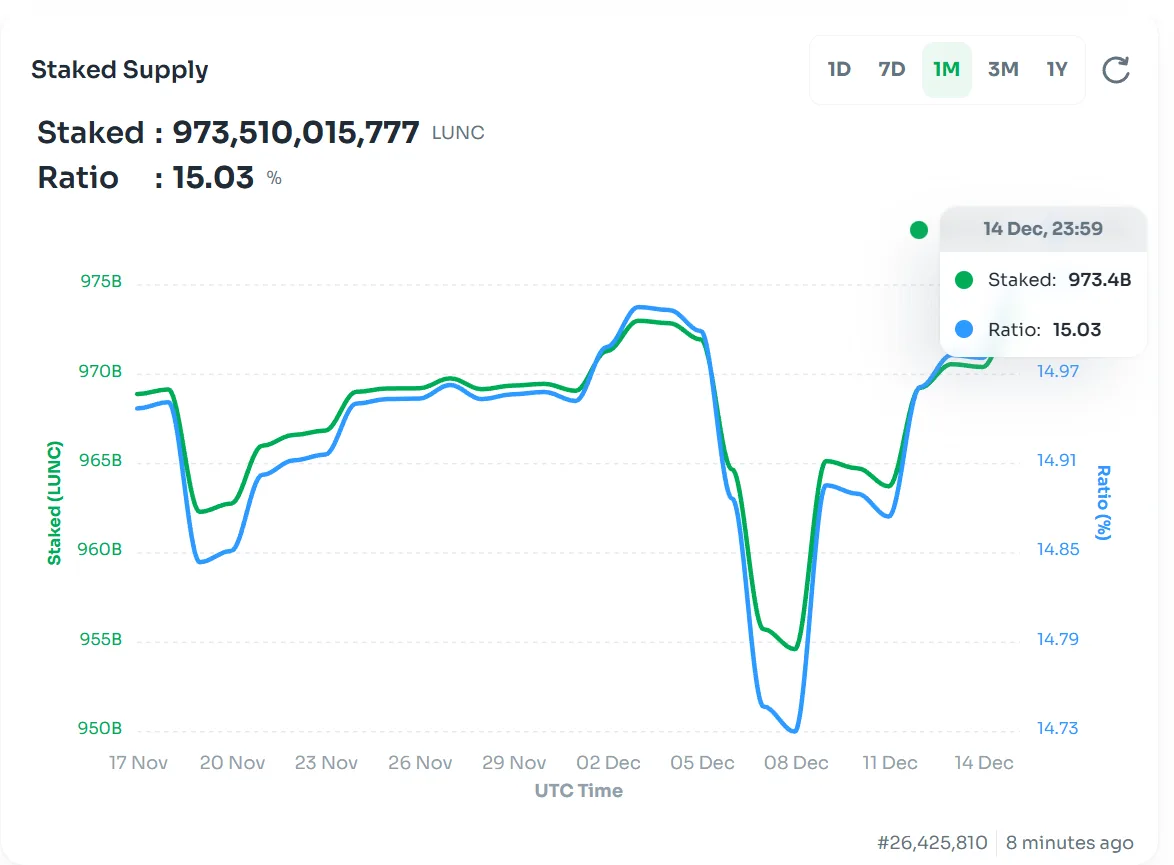
After Dutch LUNC was unjailed, its delegated stake was automatically restored. As a result, the total staked amount rebounded to approximately 972 billion LUNC. Following this recovery, additional new staking pushed the total to around 973 billion LUNC.
This means the real increase in staking over the last 24 hours was approximately 1.3 billion LUNC, not 150 billion.
Understanding validator mechanics is essential when interpreting staking data. Temporary validator events such as jailing and unjailing can significantly distort short term metrics, leading to incorrect conclusions if the context is ignored.
Despite the confusion, the data still shows steady and healthy participation in LUNC staking. Organic growth of more than one billion LUNC in a single day reflects continued confidence and engagement from the Terra Classic community.
USTC Burn Surpasses 1.5 Million Tokens in Just Two Weeks
The Terra Classic ecosystem continues to show steady progress in its token reduction efforts. Over the last two weeks, more than 1.5 million USTC tokens have been permanently removed from circulation through consistent daily burns.
This burn activity reflects ongoing community support for reducing excess supply and strengthening the long term stability of the Terra Classic ecosystem. While daily burn volumes vary, the overall trend demonstrates sustained participation and commitment from contributors across the network.
Several days recorded notably higher burn volumes, especially during the first half of the period, helping push the total burned amount to over 1.59 million USTC. These efforts contribute directly to lowering circulating supply, an important step in improving token economics over time.
Below is a detailed breakdown of the daily USTC burn activity recorded during this period.
USTC Daily Burn Summary
Month
Date
USTC Burn
December
1
15068
December
2
14622
December
3
44933
December
4
189151
December
5
157437
December
6
603331
December
7
135725
December
8
51193
December
9
18630
December
10
162388
December
11
24001
December
12
112496
December
13
27710
December
14
37447
Total
1594132
As burn activity continues, these reductions play a meaningful role in supporting the broader recovery strategy of Terra Classic. Consistent burns, combined with development and ecosystem growth, remain key pillars in shaping the future of USTC and the network as a whole.