Home Blog Page 27

Over 2.7 Billion LUNC Burned in the Last 19 Days

0

Strong LUNC Momentum as More Than 2.7 Billion Tokens Burned in 19 Days

The Terra Classic community continues to show strong momentum in its burn efforts. In the first 19 days of November, more than 2.7 billion LUNC have been removed from circulation. This activity highlights the ongoing commitment of the community to reduce supply and support the long term outlook for the network.

Although November 19 has not yet ended, early data shows steady progress that continues the trend of consistent burn contributions across the month.

Daily LUNC Burn Table

Month Date LUNC Burned
November 1 672,483,780
November 2 30,795,957
November 3 505,476,172
November 4 259,292,102
November 5 220,329,764
November 6 228,837,914
November 7 182,946,514
November 8 15,488,977
November 9 30,022,743
November 10 137,746,118
November 11 71,098,812
November 12 85,465,448
November 13 49,512,928
November 14 61,046,451
November 15 26,059,848
November 16 64,103,576
November 17 28,133,604
November 18 26,917,262
November 19 31,461,625

Total Burned: 2,727,219,595 LUNC

Note: November 19 data is not final.

Cosmos SDK v53 Upgrade Update

Orbit Labs Provides Progress Update on the SDK 53 Upgrade Testing Phase

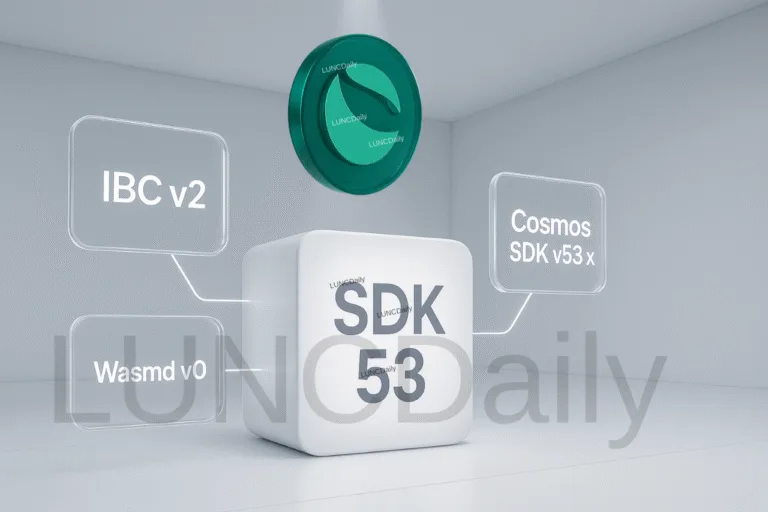
The Orbit Labs engineering team has shared the latest progress on the SDK 53 upgrade. Core development is now fully completed, meaning all major technical components required for the upgrade have been prepared.

The team is currently running unit and integration tests to verify that all upgraded modules work correctly. These tests cover the IBC v2 stack, Cosmos SDK v53.x, and Wasmd v0.54. The goal is to ensure every component operates smoothly and remains fully compatible within the system.

Testing is progressing smoothly, and the full unit and integration testing phase is expected to be completed within the next two weeks.

USTC Price Jumps 25% Then Falls Back Down

0

USTC Price Jumps 25 Percent Then Falls Back Down

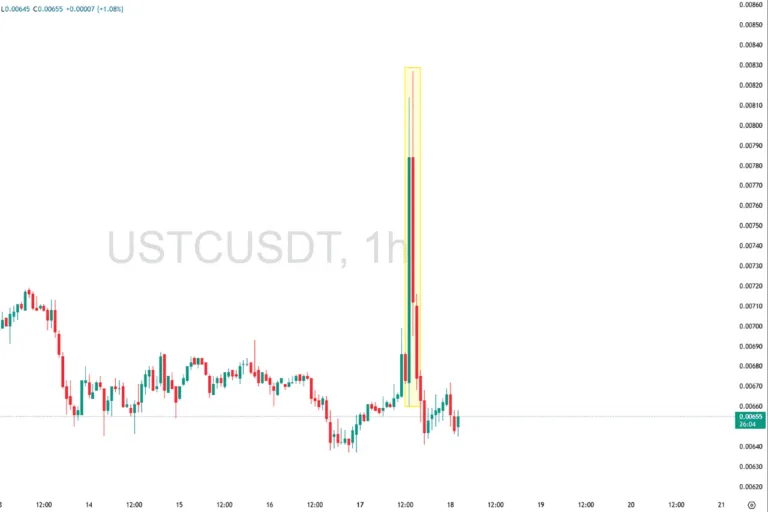
The price of USTC briefly rose by about 25% before quickly returning to its earlier level. The move happened within a short period, showing sudden volatility in the market.

This type of jump often occurs when a large buy order enters the market or when liquidity is low. The price can rise fast because there are not enough sell orders to balance the buys. When the buying slows down, the price usually falls back just as quickly.

For new traders, this shows that a sharp price spike does not always mean a strong trend. Sometimes it is only a short burst of activity. USTC has now returned to its normal range, and the market is waiting to see if a real trend will appear.

Nearly 400,000 USTC Burned in a Single Day

0

Daily USTC Burns Reach Nearly 400,000 in a Single Day

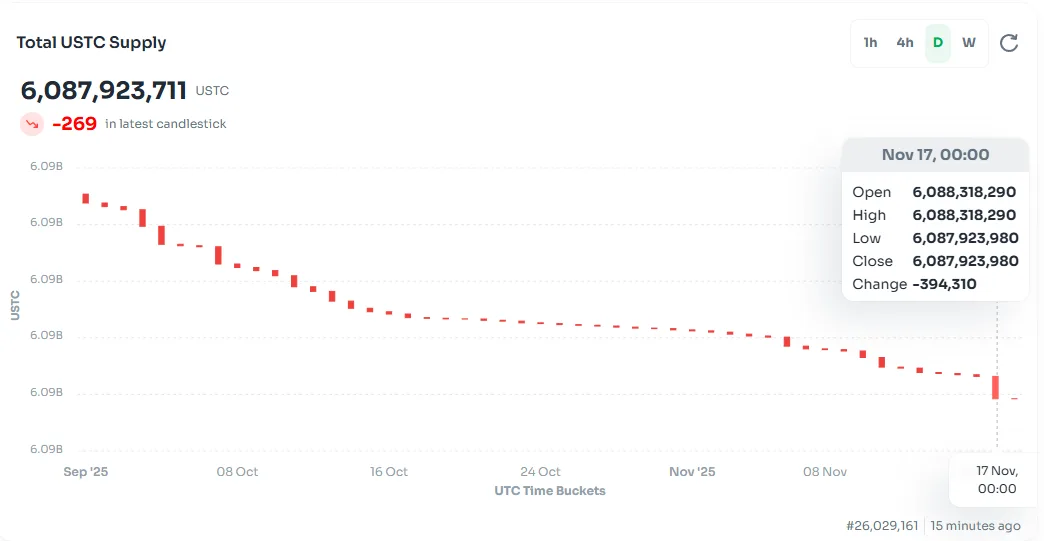
The Terra Classic community has recorded one of its strongest USTC burn days this month, with almost 400,000 USTC burned on November 17.

Below is a full breakdown of daily USTC burns for November so far and the total accumulated burn for the month.

November USTC Daily Burn

Month Date USTC Burn
November 1 16,784
November 2 21,155
November 3 35,884
November 4 33,414
November 5 20,066
November 6 159,089
November 7 49,063
November 8 11,890
November 9 25,819
November 10 113,195
November 11 169,638
November 12 18,428
November 13 77,754
November 14 17,900
November 15 21,957
November 16 28,570
November 17 394,310

Total USTC Burned This Month

1,214,916 USTC burned in total for the period shown.

Red Is the New Color in Crypto — LUNC Price Falls Over 70% in the Past Year

0

Red Is the New Color in Crypto

The crypto market has been facing one of its most challenging periods in recent weeks. The downturn is affecting many assets across the industry, and Terra Classic is among the most impacted.

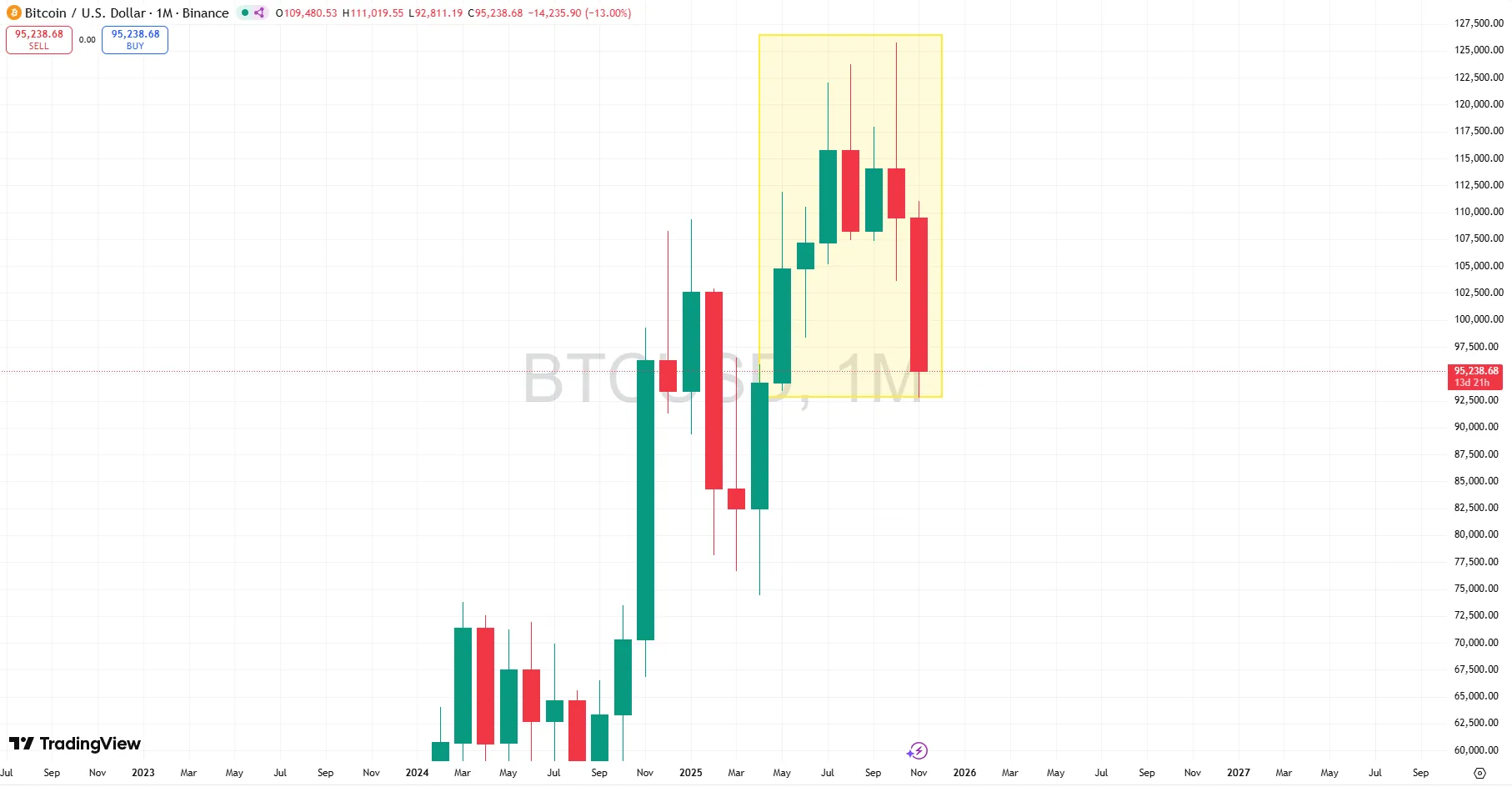
Bitcoin recently reached its lowest price in six months.
This decline has placed additional pressure on altcoins, and LUNC has been hit especially hard.

Bitcoin price chart showing six month low
Bitcoin price chart showing six month low.

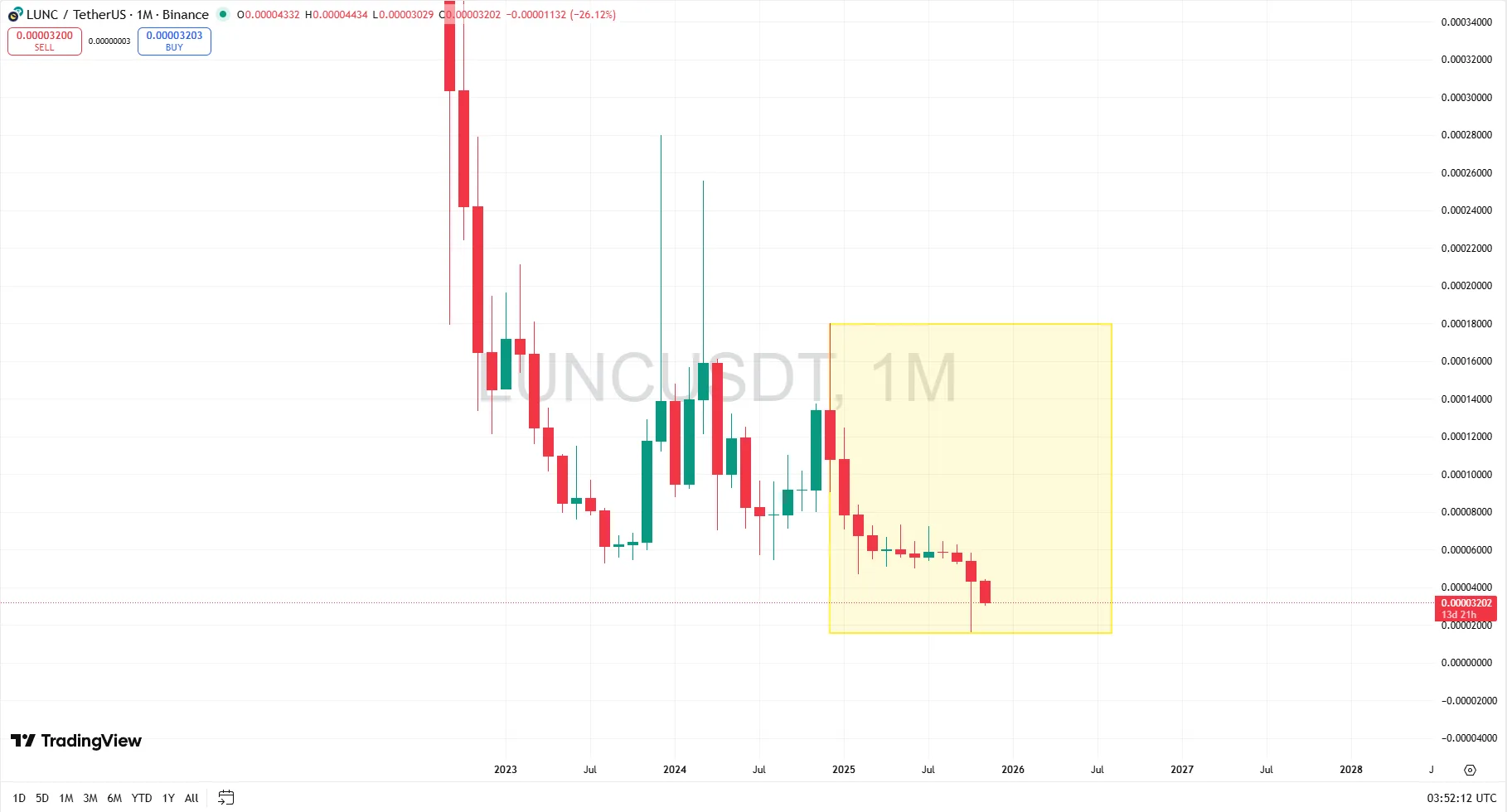
Over the past year, the price of LUNC has dropped by more than 70%, creating concern throughout the community.

LUNC price chart showing year to date decline
LUNC price chart showing year to date decline.

Many community members are feeling increased anxiety as the price continues to fall. Expectations for a stronger market in 2025 remain, but the current trend shows a market that has become increasingly red in the final weeks of the year.

With only a short time left before the year ends, the community is beginning to question whether an altseason will still occur or whether the market will continue to move downward.

Does the Public Inquiry into Binance’s Custody of Terraform Labs Remaining LUNC and USTC Holdings Proposal Create Legal Problems?

0

Does the Public Inquiry into Binance’s Custody of Terraform Labs Remaining LUNC and USTC Holdings Proposal Create Legal Problems

Overview

This proposal asks the Terra Classic community to request a public inquiry into the remaining LUNC and USTC held on Binance that originated from Terraform Labs wallets. The goal is to confirm the status, ownership, and compliance of these assets under the Final Judgment from SEC v. Terraform Labs and Do Kwon. The proposal does not accuse Binance of wrongdoing and focuses solely on transparency.

Why the Inquiry Is Necessary

  • Accurate accounting of remaining Terraform Labs assets
  • Transparency for governance decisions
  • Protection against unexpected asset movement
  • Completion of the Final Judgment requirements

Legal Clarity

This proposal remains fully aligned with the Final Judgment issued in SEC v. Terraform Labs and Do Kwon. It introduces no new legal obligations and supports transparent implementation of the court’s requirements regarding Terraform Labs owned assets.

1. Alignment With the Final Judgment

Section IV of the Final Judgment defines “Terra Form Crypto Assets” and requires all such assets to be burned, destroyed, or made inaccessible. This includes assets held on chain, off chain, by Terraform Labs, by the Luna Foundation Guard, or in any wallets controlled by these entities. The mandate applies to all locations, including centralized exchanges such as Binance. This proposal seeks disclosure and burning of Terraform Labs assets that remain on exchanges, in accordance with the court order.

2. No Impact on Investor Owned Assets

This proposal does not affect LUNC or USTC owned by private users. It applies only to assets that:

  • Originate from wallets listed in Trial Exhibit P301
  • Were deposited into Binance using memo tags
  • Qualify as “Terraform Crypto Assets” under the Final Judgment

No user wallets or balances are involved.

3. No Conflict With the SEC or Ongoing Litigation

The Final Judgment is active and enforceable. Do Kwon’s ongoing legal matters do not change the court’s requirement to destroy Terraform Labs linked assets. This proposal does not modify the judgment, interfere with litigation, challenge SEC authority, or create new obligations. It only requests community support to encourage exchange compliance with the existing burn mandate.

4. Request, Not Enforcement

The Terra Classic chain cannot compel Binance or any exchange. However, it is appropriate and lawful for the community to request disclosure, request confirmation of ownership, and request destruction of assets already ordered for burning. These actions fall within normal governance rights.

5. Purpose of This Proposal

The purpose is transparency and compliance. The proposal aims to ensure that remaining Terraform Labs assets on centralized exchanges are identified and burned, close the final category of unresolved funds, support the intent of the Final Judgment, and improve systemic safety for Terra Classic.

Conclusion

This proposal does not create legal problems. It remains factual, neutral, and aligned with the Final Judgment. Its purpose is to provide clarity and support responsible governance within the Terra Classic ecosystem.

2.64 Billion LUNC Burned in the Last 16 Days

0

2.64 Billion LUNC Burned in the Last 16 Days

The Terra Classic community recorded strong burn activity in the first half of November. From November 1 to November 16, a total of 2,640,707,104 LUNC was burned. The table below provides a clear daily breakdown.

Daily LUNC Burn Summary (November 1–16)
Month Date LUNC Burn
November 1 672,483,780
November 2 30,795,957
November 3 505,476,172
November 4 259,292,102
November 5 220,329,764
November 6 228,837,914
November 7 182,946,514
November 8 15,488,977
November 9 30,022,743
November 10 137,746,118
November 11 71,098,812
November 12 85,465,448
November 13 49,512,928
November 14 61,046,451
November 15 26,059,848
November 16 64,103,576
Total Burn (Nov 1–16) 2,640,707,104

The data reflects confirmed burns reported across the ecosystem during the first half of November.

The Benefits of Final Burn of Remaining TFL Wallets Proposal

0

The Benefits of Final Burn of Remaining TFL Wallets Proposal

Terraform Labs has fully left the crypto ecosystem. Most of the tokens connected to its past projects have already been removed from circulation. Shuttle bridge assets, Mirror Protocol tokens, Anchor Protocol tokens, and Luna Foundation Guard reserve assets have all been burned.

The only part left from Trial Exhibit P301 is a final group of eight wallets still holding USTC and LUNC. The Terra Classic community must approve a chain upgrade to remove these remaining assets from the total supply.

The community has supported this cleanup process for a long time. Two earlier burn proposals already removed leftover Anchor and Mirror assets. All LFG reserves were also destroyed under regulatory supervision. Now the last step is to finish the remaining wallets listed in the court documents.

Background on the Court Mandate

The court’s final judgment on Terraform Crypto Assets requires that private keys for wallets containing USTC MIR ANC LUNC wLUNA KRTC and LUNA 2.0 must be burned or destroyed. Terraform Labs was allowed to get rid of some assets that were not restricted, but all restricted assets must be permanently removed.

The remaining wallets fall under these rules, so the Terra Classic community must complete this final step.

TFL’s Burn Commitment and Community Progress

Terraform Labs announced during its shutdown that it would burn all assets listed in Trial Exhibit P301. The team successfully burned everything it could access, but some wallets could not be reached. These eight remaining wallets must now be handled by the community as part of Terra Classic’s move toward complete decentralization.

The community has already shown it can manage this type of work. Past governance proposals successfully destroyed leftover Mirror and Anchor assets. LFG reserves were burned under SEC oversight. With these tasks finished, the final step is to remove the remaining wallets.

Remaining Wallets and Asset Amounts

The proposal identifies eight wallets holding the following:

358,939,114.89 USTC, which is 3.72 percent of the total supply
302,672,270.36 LUNC, which is 0.0044 percent of the total supply

Burning these tokens will help complete the legal and technical process of removing Terraform Labs from the ecosystem.

Why a Signaling Proposal Is Required

These wallets are regular wallets and not smart contracts. Because of this, they cannot be burned using normal contract methods. A chain upgrade handler is required to move the tokens into the burn module.

The signaling proposal tells developers and validators to begin this process by:

Creating the upgrade handler using the existing code template
Running a testnet upgrade to confirm everything works correctly
Completing the mainnet upgrade to burn the tokens

This ensures the burn is safe and follows all governance rules.

Benefits of Completing This Burn

  1. Legal compliance
    Completes the final requirement in the court judgment regarding Terraform Crypto Assets.
  2. Supply reduction
    Permanently removes a significant amount of USTC and LUNC from circulation and supports long term token stability.
  3. Transparency and trust
    Confirms no hidden or unused Terraform controlled assets remain.
  4. Security and stability
    Removes abandoned wallets that could create legal or community uncertainty in the future.
  5. Strengthened governance
    Shows that the Terra Classic community can handle complex upgrades and complete the transition away from Terraform Labs.
  6. A clean foundation for future development
    With all remaining legacy assets removed, Terra Classic becomes a fully community owned ecosystem prepared for long term growth.

A Small Peek into the New LUNC Hyperlane UI Design

0

A Small Peek into the New LUNC Hyperlane UI Design

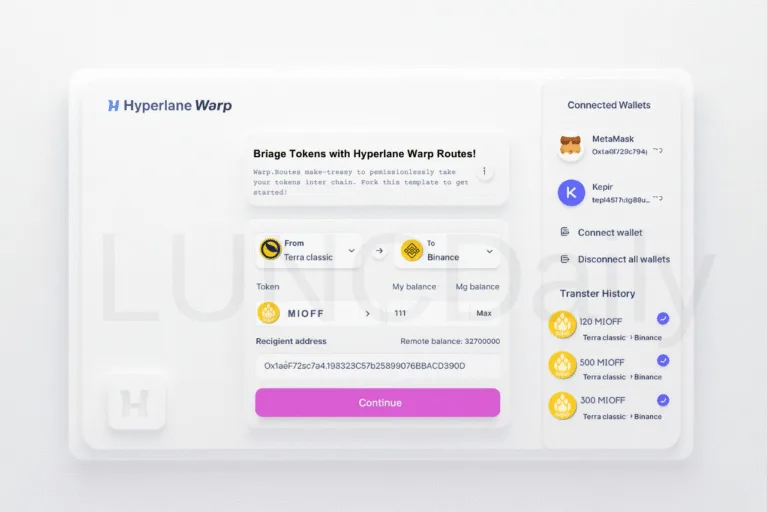
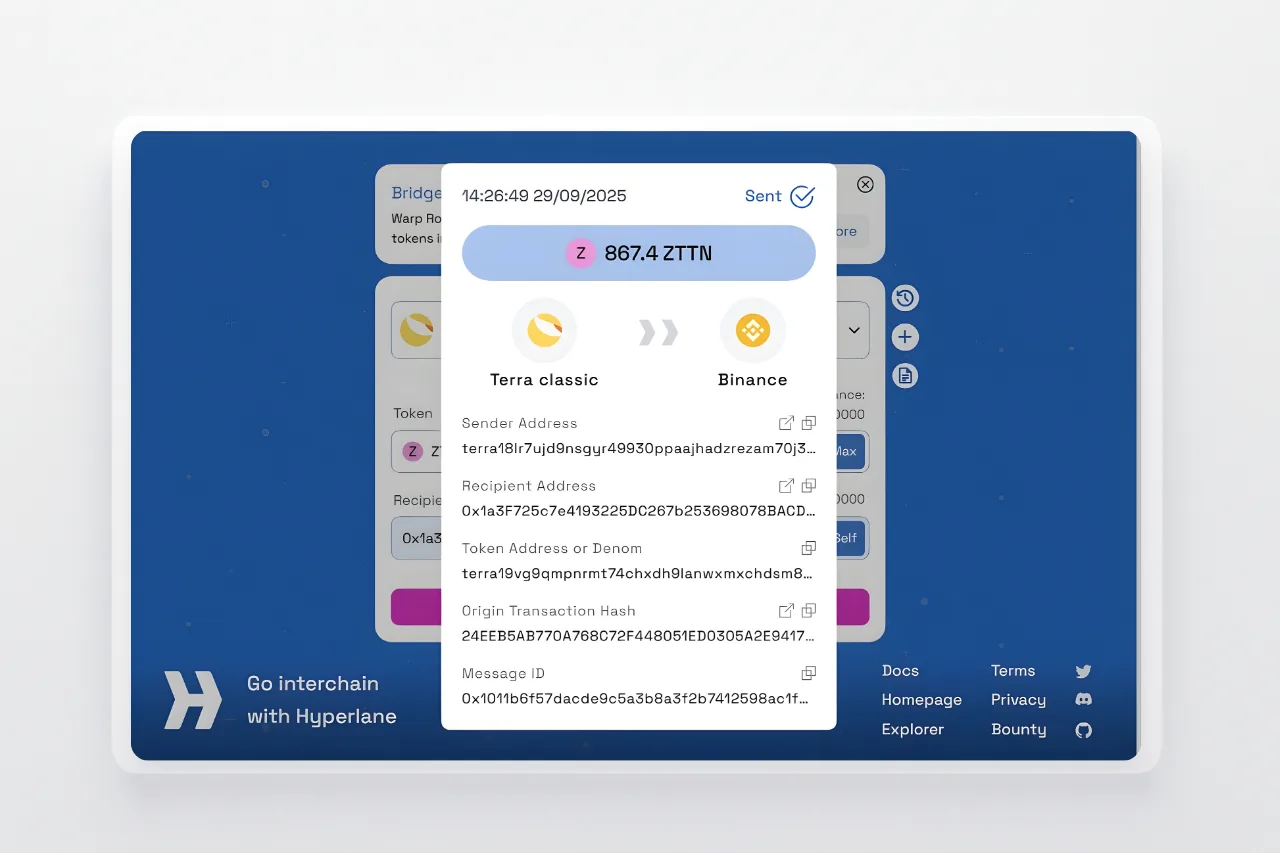
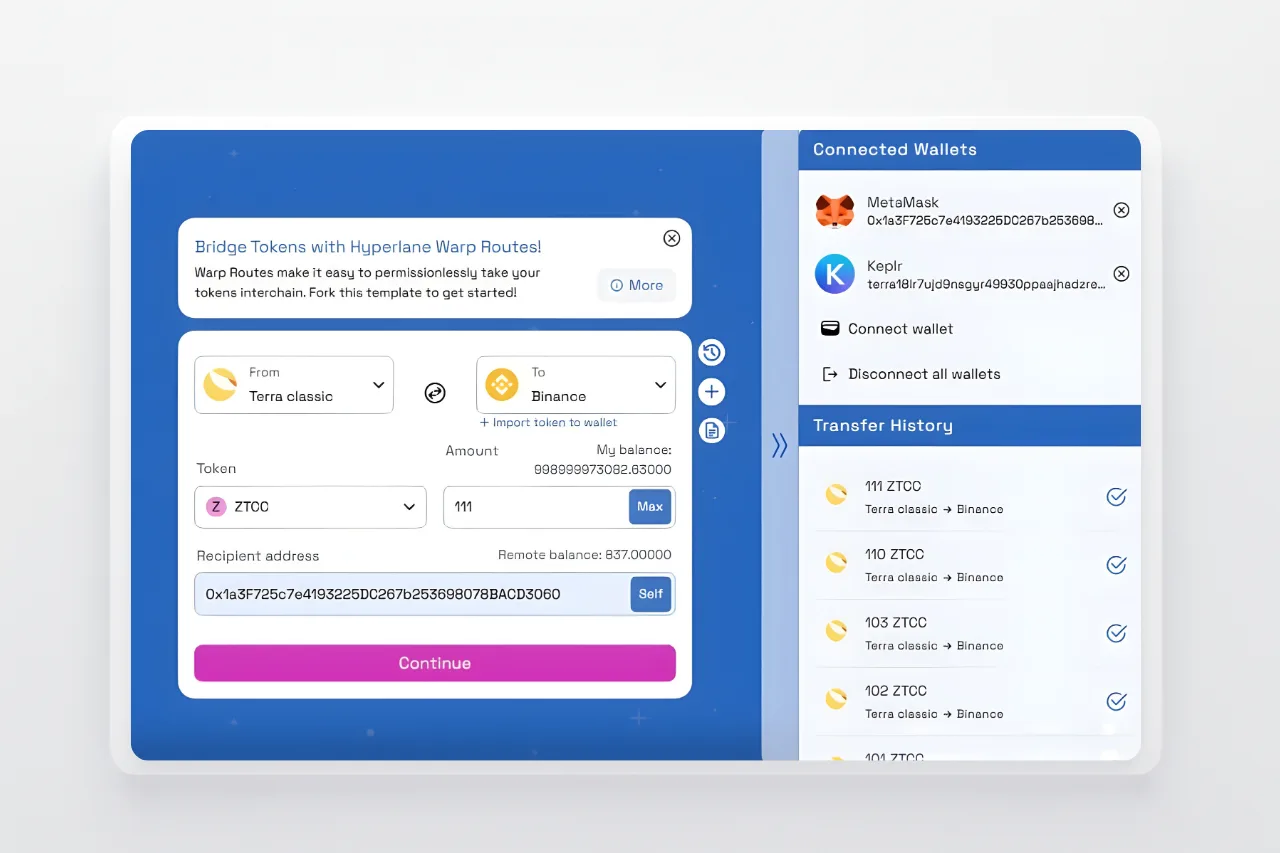
The LUNCDaily team has shared an early preview of the new Hyperlane UI design created by Igor Soares. This preview shows how Terra Classic can use Hyperlane in a safe, open, and community driven way while preparing for long term decentralization.

How the Bridge Will Be Managed

The Hyperlane bridge can be maintained by any qualified developer from the L1 team or the wider L2 community. To ensure security and transparency, official copies of all important code will stay inside the Classic Terra GitHub organization:

  • hyperlane warp ui template
  • hyperlane monorepo
  • cw hyperlane

These official copies keep the full commit history, allow easy auditing, and prevent reliance on external repositories. Any future update must go through a Pull Request and will be reviewed by the developers responsible for the classic terra repository.

Warp UI Setup and Community Support

Any developer can support or improve the UI. A complete and ready to use version will be kept in a dedicated branch with installation steps, a guide for adding bridges, and instructions for maintenance and customization.

Because the UI requires hosting, the code will remain open so any community member can run their own Warp UI instance.

Possible community operators include:

  • TerraPort
  • TRIT
  • Hexxgon
  • StrathCole
  • Garuda
  • Any other provider interested in supporting users

All operators are free to fork, host, customize, or create their own versions of the UI.

Making Operation Easier for the Community

Hyperlane is the most complex part of the integration. To lower the technical barrier, the UI is delivered fully prepared. Operators only need to:

  • Deploy and index a Terra Classic full node
  • Update network configuration settings
  • Apply the adjustments described in the technical proposal

This approach ensures the UI remains sustainable, decentralized, and reliable, and continues to operate even if contributors change.

5 Reasons Hyperlane Could Shape Terra Classic’s Multichain Future

0

Beyond Reconnection: How Hyperlane Could Shape Terra Classic’s Multichain Future

1. Interoperability and Strategic Direction

Hyperlane marks a major shift from earlier interoperability attempts. It is modular, permissionless, and fully community managed. Unlike centralized or third party bridge systems, Hyperlane lets Terra Classic integrate with any blockchain without depending on external infrastructure that may later disappear. Hyperlane uses Interchain Security Modules which allow the community to define how security works. Control stays with Terra Classic validators and developers. This makes connectivity sustainable, auditable, and decentralized.

2. Security, KYC, and Multisig Governance

A voluntary KYC verification was completed through SolidProof, supported by a multisig structure with validators and L1 developers. Hyperlane does not require KYC because it is a Layer 2 system, but completing it prevents future questions about legitimacy or contract control. The multisig model ensures that no individual can act alone, updates require collective approval, wrapped assets are never privately controlled, and all actions are traceable on chain. This keeps ownership and control decentralized and community driven.

3. Validator Reliability and Bridge Stability

Hyperlane needs a minimum number of validators to verify cross chain messages. Four voluntary validators currently participate and more can be added at any time. If a validator becomes inactive, Hyperlane allows quick updates to the security modules without disrupting the bridge. There are no financial incentives or asset custody responsibilities, so operational risk is low. Future validator additions will be handled through governance.

4. Infrastructure Reliability and Operational Costs

Hyperlane requires validators, relayers, and key management systems to operate continuously. The sustainability plan includes lightweight infrastructure, standardized configurations, initial technical support, and complete documentation. Validators maintain their own infrastructure. There are no significant ongoing costs because no assets are held in custody.

4A. Governance and Community Oversight

Important updates such as validator additions or contract changes will go through community governance proposals. The multisig model ensures transparency, collective decision making, reduced operational risk, and permanent public auditability.

4B. Technical Risk and Security Assurance

Identified risks include validator synchronization issues, incorrect security module configurations, third party RPC failures, and relayer instability. To address these risks, the deployment includes validation with the official Hyperlane team, independent audits, isolated testing, standardized validator setups, and message verification before activation.

4C. Sustainability and Future Maintenance

Any qualified developer can maintain the bridge. All relevant code will have official forks in the Classic Terra GitHub organization, including hyperlane warp ui template, hyperlane monorepo, and cw hyperlane. All changes must go through a pull request and be reviewed by Classic Terra developers. This protects transparency and security.

Warp UI Sustainability

The Warp UI will be fully prepared with installation documentation, bridge addition guides, and maintenance instructions. Anyone can host their own Warp UI. Possible operators include Terra Port, TRIT, Hexxgon, StrathCole, Garuda, and others. Operators only need to run a Terra Classic full node and apply configuration updates.

4D. User Experience and Adoption

The Warp UI will be designed to be simple and clear. Planned improvements include minimal steps, automatic wallet detection, clear explanations of networks and fees, support for LUNC, USTC, and CW20, and direct access to documentation. The goal is to make multichain transfers easy for all users.

5. Technical Scope and Public Verification

Payment will only occur after the community verifies the full deployment. The community will confirm that Hyperlane contracts are deployed on Ethereum, BSC, and Solana, the Warp UI is fully operational, message validation works correctly, on chain tests succeed, documentation is updated, and all requirements match Hyperlane’s official documentation. The payment proposal will only be submitted after full verification.