Home Blog Page 26

Luna Classic Burn Rate Slows as Daily LUNC Burns Fall Below 100 Million per day

0

As January moves into its middle phase, the Luna Classic burn rate shows a clear slowdown. Recent burn data indicates that daily LUNC burns are no longer reaching previous levels, raising concerns about reduced on chain activity across the network.

Over the last 19 days, only two days recorded burns above 100 million LUNC per day. This marks a sharp contrast compared to earlier periods when higher daily burns were more common. The situation becomes even more concerning when looking at the most recent data.

During the last 11 days, daily burns failed to exceed 50 million LUNC per day. This consistent decline highlights weakening transaction volume and reduced usage of the Terra Classic blockchain. Since LUNC burns are directly tied to on chain activity, lower network engagement naturally results in fewer tokens being permanently removed from circulation.

Despite the slowdown, the total amount of LUNC burned so far this month stands at approximately 6.1 billion tokens. However, a closer look at the data shows that around 5.2 billion LUNC of this total came from Binance’s monthly LUNC burn program. This means organic burns from daily network usage remain relatively low.

The data suggests that the current burn performance is heavily dependent on centralized exchange contributions rather than sustained on chain growth. For the burn rate to recover, Terra Classic would likely need increased transaction volume, stronger application usage, and broader community participation on the network.

Daily LUNC Burn Data for January

Month Date LUNC Burn
January 1 5,367,757,097
January 2 36,700,121
January 3 194,515,792
January 4 59,068,461
January 5 22,184,507
January 6 55,976,794
January 7 58,298,205
January 8 85,060,487
January 9 22,167,180
January 10 22,949,053
January 11 34,617,148
January 12 33,911,987
January 13 18,745,561
January 14 35,139,054
January 15 16,451,097
January 16 29,576,801
January 17 12,733,630
January 18 17,668,179
January 19 45,755,919
Total 6,169,277,073

Over 1.4 Billion LUNC Unstaked in 24 Hours as Price Declines

0

More than 1.4 billion Luna Classic LUNC tokens were unstaked in the last 24 hours, showing a noticeable shift in on chain activity.

According to the latest data, around 1,401,464,850 LUNC were unstaked during this period. This increase in unstaking appears to be driven by several factors, with the recent decline in Luna Classic price likely playing a key role.

When prices fall, some holders choose to unstake their tokens to maintain flexibility. Unstaking allows investors to react faster to market movements, whether to sell, rebalance their portfolios, or move assets to other opportunities. This behavior is common during periods of higher market uncertainty.

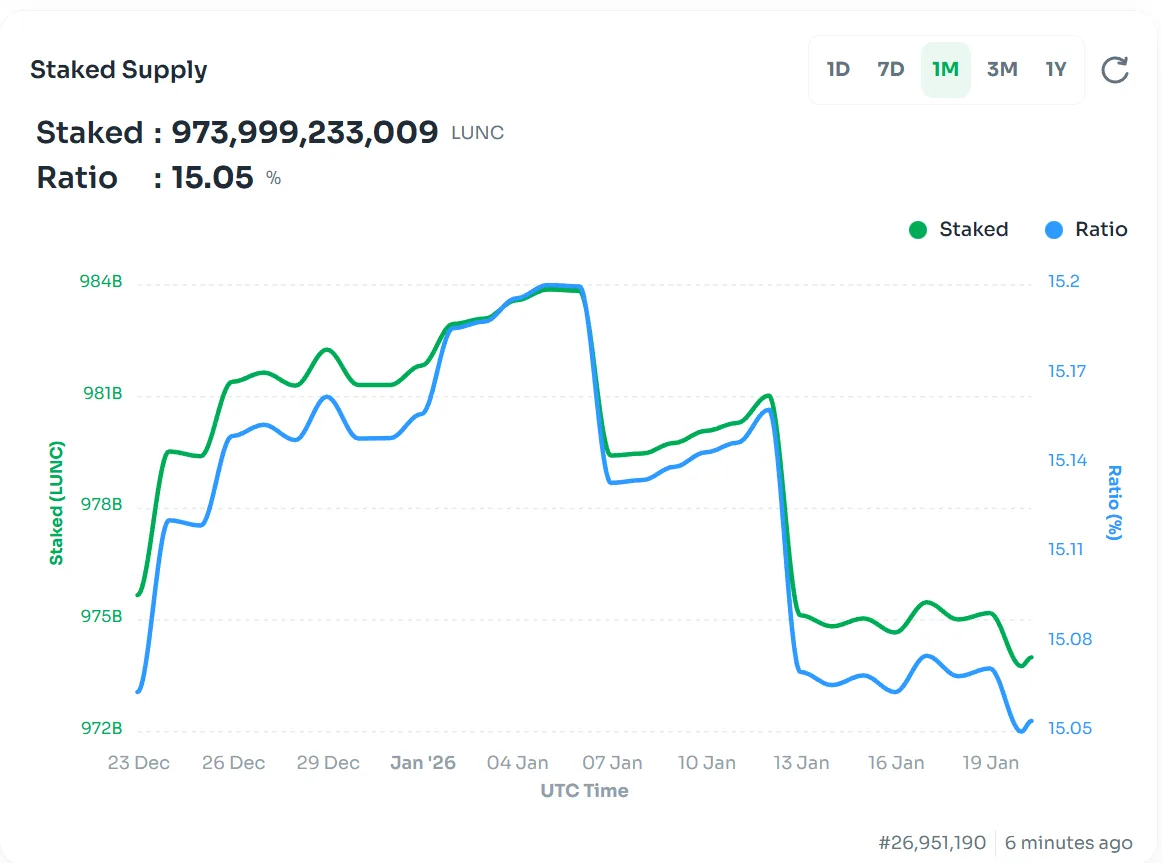
Despite the large unstaking activity, the overall staking level of Luna Classic remains relatively stable. Current staking statistics show approximately 973,999,178,425 LUNC staked, which represents about 15.05 percent of the total supply.

This indicates that while short term market conditions may influence some holders to unstake, a significant portion of the community continues to support the network through staking. Staked tokens help secure the blockchain and reflect long term confidence in the Luna Classic ecosystem.

Market participants will continue to watch staking and unstaking trends closely, as they often provide insight into investor sentiment and potential price movements in the near term.

Luna Classic Community Pool Shows Gradual Growth as On Chain Activity Continues

0

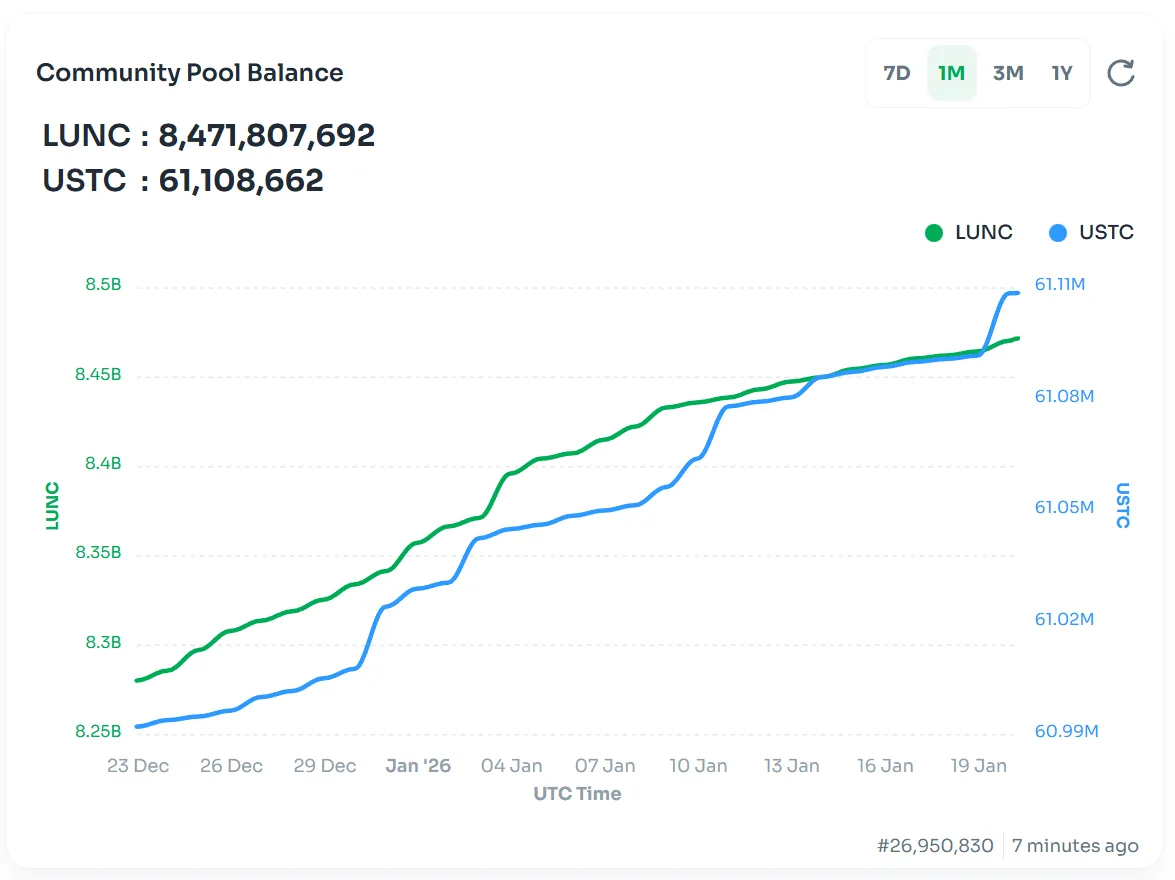
The Luna Classic community pool is showing a slow but steady increase, reflecting continued on chain activity across the network.

The community pool plays an important role in the Luna Classic ecosystem. It is used to fund development, maintenance, and improvement proposals that support the network. These funds can only be spent after a proposal passes through the official governance process, ensuring transparency and community control.

Period LUNC Balance USTC Balance
Beginning of January 8.36 Billion LUNC 61 Million USTC
20 January 8.47 Billion LUNC 61.1 Million USTC

While this growth may appear modest, it is still a positive sign. The increase shows that on chain transactions, fees, and network usage are continuing to contribute value to the ecosystem. This steady accumulation helps strengthen the community pool over time, providing more resources for future development initiatives approved by governance.

Overall, the gradual rise in the Luna Classic community pool highlights ongoing network participation and reinforces confidence that the ecosystem remains active and growing.

Luna Classic Price Falls 8.5% in the last 24 hours as 875 Million Dollars in Crypto Liquidated

0

Luna Classic Price Falls 8.5 Percent as Bitcoin Drops on $91,000 level

Luna Classic experienced a sharp price decline over the last 24 hours, reflecting a broader downturn across the cryptocurrency market.

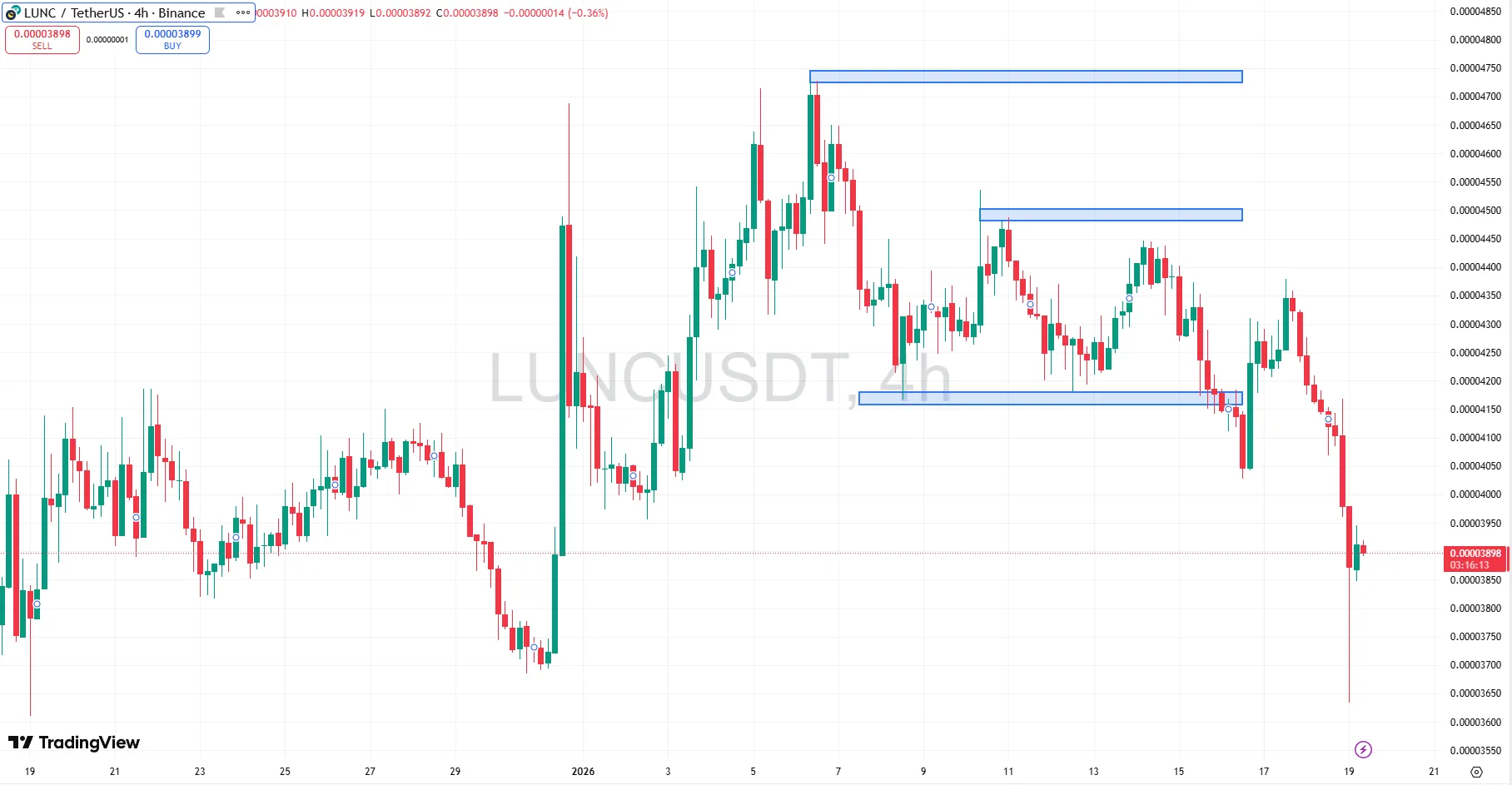
On Monday 19 January 2026, LUNC opened at 0.00003979 dollars. During the day, the price dropped quickly to 0.00003640 dollars, resulting in a decline of more than 8.5 percent within a short period of time.

At the time of writing, Luna Classic has partially recovered and is trading around 0.00003902 dollars. Despite this recovery, market sentiment remains cautious as volatility continues across major crypto assets.

This price movement is not unique to Luna Classic. The wider cryptocurrency market also experienced a sudden drop. The main trigger for this sell off was Bitcoin falling on the $91,000 level, which often acts as a key psychological support for the market.

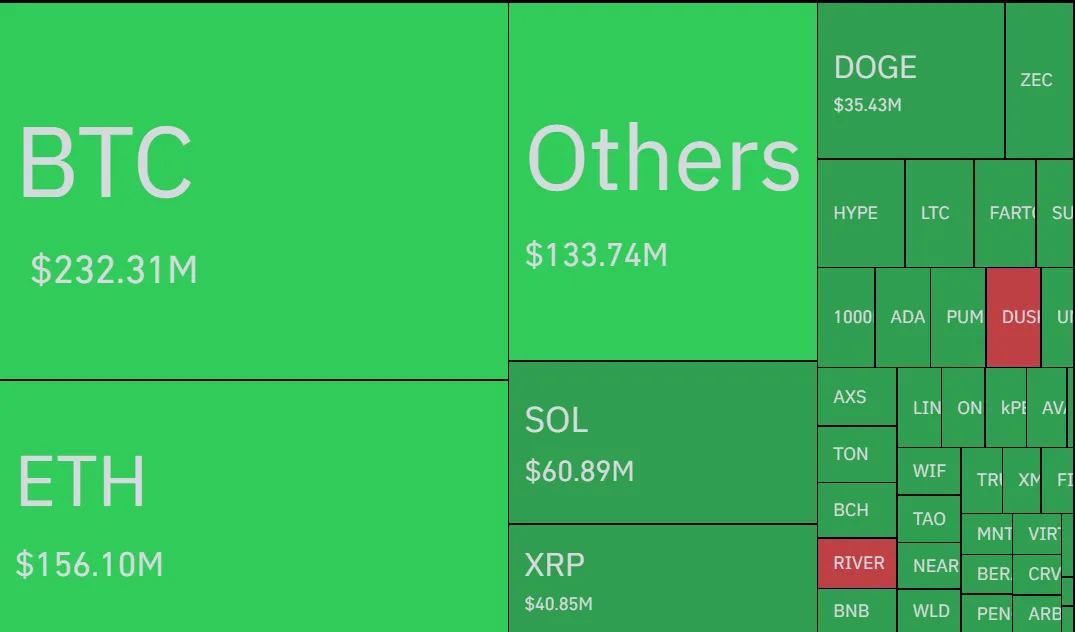
The impact of Bitcoin’s decline led to significant liquidations across leveraged positions. In the last 24 hours, total crypto liquidations reached approximately 874.83 million dollars. Long positions accounted for about 787.93 million dollars, while short positions made up around 86.91 million dollars.

These figures show that most traders were positioned for upward movement, making the market vulnerable to a sudden correction. As long as Bitcoin remains unstable, altcoins such as Luna Classic are likely to continue following broader market trends rather than moving independently.

For now, traders and investors are closely watching Bitcoin price action, as it remains the primary driver of short term direction for Luna Classic and the wider crypto market.

Nearly Half a Million USTC Burned in 18 Days

0

Almost half a million TerraClassicUSD USTC has been burned in the first 18 days of January, highlighting consistent on chain activity across the Terra Classic network.

Based on available data, a total of 462,581 USTC was permanently removed from circulation between January 1 and January 18. While daily burn numbers varied, the overall trend shows steady participation from users interacting with the network through transfers, swaps, and other on chain actions.

The highest daily burn occurred on January 10, when more than 115,000 USTC was burned in a single day. Other notable days include January 2 and January 9, each contributing significant burn amounts. These spikes often reflect increased network usage during periods of higher transaction volume.

USTC burns are directly tied to on chain activity. Every transaction contributes incrementally to reducing the total supply, making sustained usage a key factor in long term recovery efforts. Although the total burned amount remains modest compared to the overall supply, consistent burns demonstrate that the mechanism is actively working as designed.

As the month progresses, continued network engagement will be crucial to maintaining or increasing the burn rate. Growth in decentralized applications, trading activity, and user participation remains the most effective way to accelerate USTC supply reduction.

USTC Daily Burn Data January 2026

Date USTC Burned
January 1 33,407
January 2 93,158
January 3 15,065
January 4 7,253
January 5 15,637
January 6 7,618
January 7 9,758
January 8 33,196
January 9 58,758
January 10 115,023
January 11 8,474
January 12 7,387
January 13 18,707
January 14 6,542
January 15 9,397
January 16 9,043
January 17 8,298
January 18 5,860
Total 462,581

Over 6.1 Billion LUNC Burned in 18 Days

0

More than 6.1 billion LUNC has been permanently removed from circulation during the first 18 days of January. While this number may appear strong at first glance, a closer look shows that most of the burn activity came from a single source rather than organic on chain usage.

The largest LUNC burn occurred on January 1. This spike was driven by Binance’s monthly LUNC burn program, which uses trading fees collected during December. On that day alone, over 5.29 billion LUNC was burned, accounting for the vast majority of the total burn so far this month.

Outside of the Binance contribution, daily LUNC burns have remained relatively low and consistent, reflecting modest on chain activity across transactions, transfers, and decentralized applications on the Terra Classic network.

January LUNC Daily Burn Recap

Date LUNC Burned
January 1 5,367,757,097
January 2 36,700,121
January 3 194,515,792
January 4 59,068,461
January 5 22,184,507
January 6 55,976,794
January 7 58,298,205
January 8 85,060,487
January 9 22,167,180
January 10 22,949,053
January 11 34,617,148
January 12 33,911,987
January 13 18,745,561
January 14 35,139,054
January 15 16,451,097
January 16 29,576,801
January 17 12,733,630
January 18 17,668,179
Total 6,123,521,154

What the Data Shows

The data clearly indicates that January’s burn performance is heavily dependent on Binance. Without the January 1 burn, the remaining 17 days produced less than one billion LUNC in total burns.

This highlights a broader issue within the Terra Classic ecosystem. LUNC burns generated through the on chain tax mechanism are directly tied to network usage. When transaction volume and application activity decline, burn rates naturally slow down.

Why On Chain Activity Matters

Sustainable LUNC burning requires more than periodic exchange support. Increased on chain activity, such as decentralized applications, trading, staking related movements, and real utility use cases, is essential for long term burn consistency.

As the month progresses, the key metric to watch will not be the total burn number alone, but whether daily burns begin to rise through organic network usage rather than relying primarily on external programs.

Do you know how much LUNC burned in January without Binance?

0

January LUNC Burn Analysis Without Binance Shows Slowing On Chain Activity

The Terra Classic community closely monitors LUNC burns because they reflect real network activity and long term supply reduction.
January provides an important snapshot of how much LUNC is being burned organically through on chain transactions rather than
through centralized exchange programs.

Binance Contribution in January

At the start of January, Binance burned 5,295,992,495 LUNC. This burn came from Binance’s monthly burn program
and was funded by December 2025 trading fees. As with previous months, this burn did not come from on chain usage but from
exchange activity.

LUNC Burn Without Binance

When Binance burns are excluded and only on chain transactions are counted, the numbers look very different.

From January 1 to January 16, the Terra Classic network burned approximately 797 million LUNC.
This amount took 16 days to achieve, which highlights a slowdown in on chain activity.

With only around 15 days remaining in the month, it appears likely that January’s total on chain burn will be lower than
in previous months unless transaction volume increases significantly.

Why Is the Burn Rate So Low

LUNC has an on chain tax mechanism. Every transaction contributes to burning LUNC.
When burn numbers are low, it usually means one thing.

On chain transaction volume is low.

This is not a technical failure. It is a direct reflection of reduced network usage.
Fewer trades, transfers, and applications using the chain result in fewer tokens being burned.

How Can LUNC Burns Increase

The solution is straightforward.

To increase LUNC burns, on chain volume must increase.
More activity on decentralized exchanges, applications, and wallets directly results in higher burns
through the existing tax system.

Without stronger on chain usage, organic burns will continue to lag behind exchange based burns like those from Binance.

Daily LUNC Burn Data Without Binance

Month Date LUNC Burn
January 1 71,764,602
January 2 36,700,121
January 3 194,515,792
January 4 59,068,461
January 5 22,184,507
January 6 55,976,794
January 7 58,298,205
January 8 85,060,487
January 9 22,167,180
January 10 22,949,053
January 11 34,617,148
January 12 33,911,987
January 13 18,745,561
January 14 35,139,054
January 15 16,451,097
January 16 29,576,801
Total 797,126,850

Final Thoughts

January’s data shows that while Binance continues to play a major role in reducing LUNC supply,
organic network driven burns remain weak.

Sustainable long term progress depends on increasing real usage of the Terra Classic chain.
Higher on chain volume means higher burns.
The mechanism already exists.
What matters now is adoption, activity, and real utility.

Over 440,000 USTC Burned in Just 16 Days Signals Strong Terra Classic Community Activity

0

Over 440,000 USTC Burned in Just 16 Days Signals Strong Terra Classic Community Activity

The Terra Classic ecosystem continues to show steady progress in its supply reduction efforts.
Over the last 16 days of January, more than 440,000 USTC have been permanently removed from
circulation through on chain burn activity.

According to the latest burn recap, a total of 448,423 USTC was burned between January 1 and
January 16. This consistent burn activity highlights ongoing participation from traders and
community members who are contributing to long term supply reduction.

Burning tokens reduces the circulating supply, which is widely viewed as a positive mechanism
for strengthening the Terra Classic ecosystem. While daily burn amounts fluctuate, the overall
trend shows sustained engagement rather than isolated events.

Several days recorded notably higher burn volumes, including January 2, January 9, and
January 10. January 10 alone accounted for more than 115,000 USTC burned, making it the strongest
single day during this period.

USTC Daily Burn Breakdown

Month Date USTC Burned
January 1 33,407
January 2 93,158
January 3 15,065
January 4 7,253
January 5 15,637
January 6 7,618
January 7 9,758
January 8 33,196
January 9 58,758
January 10 115,023
January 11 8,474
January 12 7,387
January 13 18,707
January 14 6,542
January 15 9,397
January 16 9,043
Total 448,423

What This Means for Terra Classic

The steady pace of USTC burns suggests that on chain activity continues to support ecosystem
goals. Rather than relying on one time events, consistent daily burns help reinforce confidence
in long term recovery strategies.

As Terra Classic development and infrastructure improvements continue, sustained burn
participation remains an important metric for community engagement and network health.

If this trend continues, future months may show even stronger cumulative burn figures as
adoption and on chain utility grow.

LUNC Burn Activity Slows as Only 191 Million LUNC Burned in the Last 7 Days

0

The Terra Classic LUNC burn rate continues to show a noticeable slowdown, with recent data confirming a sharp decline in daily and weekly burn activity.

Over the last seven days, only 191 million LUNC has been burned. This marks a significant drop compared to earlier periods, as daily burns have struggled to exceed 50 million LUNC per day for more than eight consecutive days.

Despite this slowdown, the total amount of LUNC burned so far this month has surpassed 6 billion tokens. However, it is important to note that more than 5 billion LUNC of this total came from Binance monthly burn events, rather than ongoing on chain activity.

This trend highlights a growing reliance on centralized exchange burns, while organic on chain burns continue to weaken. Without major contributors like Binance, the current burn rate would be significantly lower.

Daily LUNC Burn Recap

Month Date LUNC Burned
January 1 5,367,757,097
January 2 36,700,121
January 3 194,515,792
January 4 59,068,461
January 5 22,184,507
January 6 55,976,794
January 7 58,298,205
January 8 85,060,487
January 9 22,167,180
January 10 22,949,053
January 11 34,617,148
January 12 33,911,987
January 13 18,745,561
January 14 35,139,054
January 15 16,451,097
January 16 29,576,801

Total burn in the last seven days
191,390,701 LUNC

Total burn for the month so far
6,093,119,345 LUNC

What This Means for Terra Classic

The declining daily burn rate suggests reduced on chain trading activity and fewer automated burn mechanisms contributing consistently. While large periodic burns from Binance provide temporary boosts, they do not reflect sustained network driven deflation.

For the Terra Classic ecosystem, this reinforces the importance of increasing real usage, on chain volume, and utility driven burn models if long term supply reduction goals are to remain achievable.

SDK 53 Progress Update in January and What It Means for the Luna Classic Network

0

In January, Orbit Labs shared important development updates regarding the Terra Classic blockchain with the successful testing of the Cosmos SDK v53 upgrade. This update represents a major technical milestone that prepares the network for future improvements while prioritizing stability and security.

January 11 SDK 53 Update
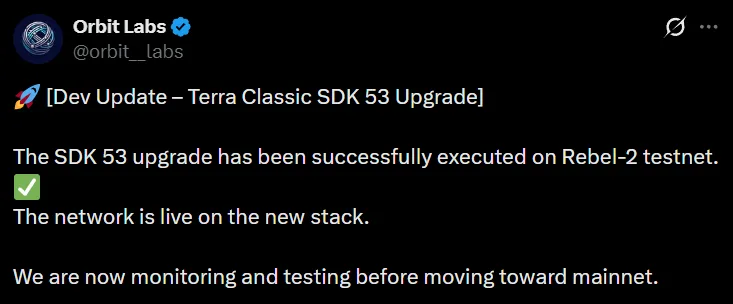
On January 11, Orbit Labs announced that the SDK 53 upgrade was successfully executed on the Rebel 2 testnet. Following the upgrade, the testnet went live on the new software stack and entered an active monitoring and testing phase.

Testing on a testnet is a critical step for any blockchain upgrade. It allows developers to safely identify bugs, performance issues, or compatibility problems without risking real assets. The successful deployment and live operation of Rebel 2 indicate that the new SDK version is functioning as expected so far.

The ongoing monitoring phase serves as a final safety measure. Developers are closely observing network behavior to ensure stability before proposing any move toward mainnet deployment. This approach helps reduce risk for validators, developers, and users across the Terra Classic ecosystem.

Overall, this testnet success marked a positive technical step forward and demonstrated readiness for a future mainnet upgrade.

January 13 SDK 53 Update
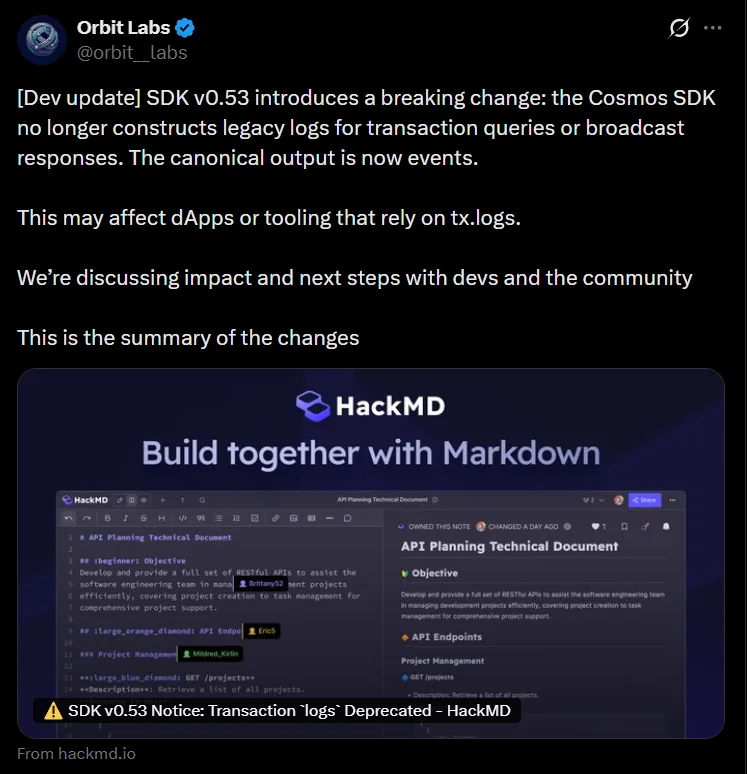
On January 13, Orbit Labs followed up with an important developer update highlighting a breaking change introduced by Cosmos SDK v53. This change affects how transaction data is returned by the blockchain.

With SDK v53, the Cosmos SDK no longer constructs legacy transaction logs. Instead, events are now the official and canonical output for transaction results. This applies to both transaction broadcasts and transaction queries.

This change is part of the broader ABCI 2.0 upgrade and affects all Cosmos SDK based blockchains, including Terra Classic and its related tooling.

What Changed in Simple Terms

Before SDK v53, many applications relied on transaction logs such as tx.logs and raw_log to read transaction results. These logs contained event data but were built using legacy structures.

After SDK v53, the SDK no longer creates these legacy logs. The only official and supported output is transaction events.

Applications that require message level details must now reconstruct them on the client side using event data.

What Did Not Change

Smart contracts continue to emit events as before. Events remain indexed and searchable across the network. Block explorers and indexers that already rely on events are not affected. Modern libraries such as CosmJS already follow this event based approach.

The blockchain still provides full transaction information, but in a cleaner and more structured format.

Who Is Affected

Older decentralized applications or tools that rely directly on tx.logs or raw_log may require updates. Legacy scripts or indexers not adapted for event parsing may also be impacted.

Applications already using events, modern explorers, and tools built on current Cosmos standards are not affected.

Why This Change Matters

Using events as the canonical output improves reliability and consistency across the ecosystem. It aligns Terra Classic with modern Cosmos SDK standards, reduces legacy behavior, and improves long term maintainability for developers.

What Happens Next

Orbit Labs, developers, and the Terra Classic community are reviewing the ecosystem impact of this change. Discussions are ongoing to determine whether a temporary compatibility layer is needed to support older tools during the transition.

Conclusion

The January SDK 53 updates represent a strong and positive step for Terra Classic. The successful testnet deployment confirms technical readiness, while the shift from legacy logs to structured events signals a move toward a more modern, reliable, and future proof blockchain infrastructure.

Although some older tools may require updates, the network itself remains fully functional and improved in clarity, stability, and long term sustainability. SDK 53 positions Terra Classic for safer upgrades, a better developer experience, and stronger ecosystem growth as it moves closer to mainnet deployment.