
Home Blog Page 30

Luna Classic Burn Rate Analysis Shows Why Burns Alone Are Not Enough

0

Luna Classic Burn Rate Analysis Shows Why Burns Alone Are Not Enough

Luna Classic Burn Rate Overview

Since the Terra Classic network collapse in 2022, token burning has been one of the main strategies used to reduce LUNC’s massive supply. While burns have helped improve sentiment and show long term commitment from the community and major exchanges, the data clearly shows that the burn rate alone is not enough to create rapid supply reduction.

As of January 3, 2026, Luna Classic has burned a significant amount of tokens, but the remaining supply is still extremely large.

Key Burn Statistics

Total LUNC burned since May 13, 2022 stands at approximately 436.07 billion tokens. The remaining circulating supply is about 6.471 trillion LUNC. The time period covered is roughly 3.6 years, from May 2022 to early January 2026.

Based on this data, the average burn rate is around 120 billion LUNC per year. When measured against the current supply, this equals roughly 1.8 to 1.9 percent reduction per year.

Is the Luna Classic Burn Rate Low

Yes. When compared to the total supply, the burn rate is considered low.

Burning about 120 billion tokens annually against a supply of more than 6.4 trillion reduces total supply very slowly. At this pace, it would take several decades for burns alone to make a major structural impact on LUNC’s supply.

While burns contribute to gradual deflation, they are not strong enough on their own to drive meaningful scarcity in the near or medium term.

Why Burns Alone Are Not Enough

The main limitation is scale. The remaining supply is simply too large relative to the annual burn amount. Even consistent burns over many years would only chip away at the total supply without fundamentally changing the supply dynamics.

Burns also do not automatically increase demand. Reducing supply helps only when there is growing interest, usage, and economic activity on the network.

Important Context Behind Burn Activity

Burn activity on Luna Classic is not linear. Some months see significantly higher burns due to Binance’s monthly burn program, spikes in trading volume, or special community initiatives.

If on chain utility increases, more applications launch, and real use cases grow, trading volume can rise. Higher volume directly increases transaction based burns, which can accelerate the effective burn rate over time.

This is why burns are most effective when paired with ecosystem development rather than treated as a standalone solution.

Strategic Takeaway for Luna Classic

Historically, the Luna Classic burn rate is low relative to the total supply. Strategically, burns still play an important role by supporting market sentiment and applying long term supply pressure. For real and lasting impact, Luna Classic needs higher transaction volume, stronger utility, and sustained ecosystem growth.

Burns work best as a supporting mechanism, not as the primary driver of recovery.
Over 120,000 USTC Burned in Early January 2026 as Supply Reduction Continues

0

Over 120,000 USTC Burned in Early January 2026 as Supply Reduction Continues

More than 120,000 USTC has already been burned during the first two days of January 2026, highlighting continued efforts to reduce the circulating supply of TerraClassicUSD. This early momentum reflects ongoing community driven and protocol related burn activity aimed at strengthening the long term outlook of USTC.

Based on the latest burn recap, a total of 126,565 USTC was permanently removed from circulation between January 1 and January 2. The majority of the burn volume occurred on the second day of the month, indicating an acceleration in burn activity at the start of 2026.

USTC Daily Burn Breakdown

Month Date USTC Burned
January 1 33,407
January 2 93,158
Total 126,565

Burning tokens reduces the available supply by sending them to an irrecoverable address. Over time, consistent burns can contribute to improved supply dynamics, especially when paired with broader ecosystem growth and utility development.

The early January burn figures set a positive tone for 2026, showing that USTC supply reduction efforts remain active and measurable. While burns alone do not guarantee price movement, they remain a key component of the Terra Classic ecosystem’s long term recovery strategy.

As the month progresses, the community will be closely watching whether this pace of USTC burns can be maintained or increased, reinforcing confidence in the ongoing commitment to restoring stability and value to the network.

Over 5.4 Billion LUNC Burned in the First Two Days of January 2026

0

Over 5.4 Billion LUNC Burned in the First Two Days of January 2026

The Terra Classic network has started January 2026 with a significant reduction in token supply. In just the first two days of the month, more than 5.4 billion LUNC have been permanently removed from circulation. This early burn activity highlights continued efforts across the ecosystem to reduce the overall supply of LUNC.

Token burns play an important role in the Terra Classic recovery process. By permanently removing tokens from circulation, burns help limit supply and support long term sustainability when combined with network usage and ecosystem growth.

LUNC Burn Summary for Early January 2026

The majority of the burn occurred on the first day of the year, followed by additional burns on the second day. Below is a breakdown of the daily burn activity.

Month Date LUNC Burned
January 1 5,367,757,097
January 2 36,700,121
Total 5,404,457,218

What This Burn Means for Terra Classic

Burning over 5.4 billion LUNC in just two days reflects strong participation from exchanges, validators, and community driven mechanisms. Large single day burns can significantly impact circulating supply, especially when combined with consistent monthly or transactional burns.

While token burns alone do not guarantee price growth, they remain a key component of Terra Classic’s long term strategy. Sustainable progress depends on multiple factors, including real network activity, development, and broader market conditions.

Looking Ahead

If burn activity continues at this pace throughout January, the month could become one of the stronger burn periods for Terra Classic in recent history. The community will be closely watching upcoming burn data to see whether this momentum continues.

As always, transparency and consistent reporting remain essential for maintaining trust and confidence within the Terra Classic ecosystem.

Community Owned DEX Discussion Gains Momentum in the Terra Classic Ecosystem

0

Community Owned DEX Discussion Gains Momentum in the Terra Classic Ecosystem

A new discussion within the Terra Classic community is gaining attention as members exchange views on the idea of a fully community owned decentralized exchange built around LUNC and USTC. The topic has already received multiple rounds of feedback from validators, developers, and community participants, showing growing interest in long term, utility focused infrastructure.

It is important to note that this is not a formal proposal. The concept is still at the discussion stage, where ideas, risks, and potential structures are being openly evaluated by the community.

At the center of the discussion is the idea of a community owned DEX with multiple utilities. One of the most discussed elements is the possibility of allocating 70 percent of trading fees toward buying back and burning USTC. Supporters see this as a volume driven and sustainable approach, while others emphasize the need for careful evaluation before any concrete steps are taken.

Overview of the Community Discussion

The discussion explores how a community owned DEX could function with full transparency, on chain fee distribution, and governance oversight. A key theme is the exclusive focus on LUNC and USTC to strengthen native utility and on chain demand within the Terra Classic ecosystem.

Another central point is the avoidance of inflationary incentives. Instead of minting new tokens or introducing emissions, all rewards and mechanisms discussed would rely solely on trading fees, preserving supply discipline.

Community members are currently weighing both the potential benefits and the risks to determine whether such an idea is viable, sustainable, and aligned with long term ecosystem goals.

Pros and Cons Being Discussed by the Community

Aspect Potential Strengths Potential Risks
Utility and Burns Trading activity could directly fund USTC buyback and burn, creating a transparent and sustainable deflation mechanism Burn effectiveness would depend entirely on sustained trading volume
Token Supply Integrity Fee funded incentives avoid inflation or dilution of LUNC and USTC Incentives may be less competitive compared to emission based platforms
Community Ownership On chain governance and verifiable fee flows could align incentives with the Terra Classic community Decision making may be slower due to community driven governance processes
Native Asset Focus Using only LUNC and USTC strengthens on chain demand and ecosystem utility Limited asset support could restrict early liquidity depth
Technical Direction Forking proven DEX architectures could reduce development risk Custom changes still require audits, testing, and long term maintenance
Security Considerations Transparent on chain logic improves trust and accountability Multi chain or bridge features increase technical complexity and security exposure
Incentive Design Multipliers, parking options, and referrals could encourage long term participation Complex mechanics may increase user friction if not clearly designed
Community Pool Exposure Strategic use of community resources could generate long term value Slow adoption may delay recovery or justification of initial spending

Key Discussion Points Moving Forward

Community feedback shows that while the idea has strong conceptual appeal, many members emphasize the importance of cautious evaluation. Areas such as liquidity bootstrapping, security architecture, user experience, and realistic adoption timelines remain open topics.

Transparency, incremental development, and continued open discussion are widely seen as essential before any transition from idea to implementation is considered.

Conclusion

The community owned DEX discussion reflects an ongoing effort within the Terra Classic ecosystem to explore sustainable, utility driven solutions. While the concept offers potential benefits such as fee based USTC burns and stronger native asset usage, it also introduces meaningful risks that require careful consideration.

As the discussion continues, community feedback will play a critical role in shaping whether this idea evolves further or remains a conceptual exploration.

LUNC Up 27% in a Single Day Before Pullback Raises Market Questions

0

On January 1, the Terra Classic LUNC price recorded a sharp and unexpected move, rising nearly 27 percent within a single day before falling back shortly after. This sudden price action caught the community by surprise, especially as it occurred without any major news releases or significant movement from Bitcoin or the broader crypto market.

At the start of the move, LUNC was trading around 0.00003692. Within a short period, the price climbed to approximately 0.00004688, marking one of the strongest single day increases seen recently. However, the rally did not last long, and the price retraced soon after reaching its peak.

What made this event particularly notable was the lack of a clear external catalyst. There were no official announcements, ecosystem updates, or macro market shifts that could easily explain the sudden surge.

According to on chain observations, strong buy activity appeared during the initial phase of the pump. Shortly after, automated trading activity seemed to increase, with bots aggressively selling into the rally and pushing the price back down.

This behavior has fueled discussions within the community. Some believe it supports the theory that LUNC price movements are being actively suppressed by automated trading strategies that capitalize on rapid upward momentum. While this perspective is shared by several community members, it remains a theory and not a confirmed explanation.

It is important to note that price volatility is common in crypto markets, especially for assets with active trading communities and relatively lower liquidity compared to top tier cryptocurrencies. Sudden pumps and pullbacks can result from a combination of trader sentiment, leveraged positions, and algorithmic trading behavior.

This analysis represents a perspective based on observed market activity. If anyone has a clearer or data driven explanation for this price movement, the community is encouraged to share their insights and contribute to a better understanding of LUNC market dynamics.

Binance Burns Over 11 Billion LUNC in 2025 Strengthening Long Term Supply Reduction

0

Binance Burns Over 11 Billion LUNC in 2025 Strengthening Long Term Supply Reduction

Binance has officially burned more than 11 billion LUNC throughout 2025, reinforcing its ongoing commitment to supporting the Luna Classic ecosystem. This burn activity is part of Binance’s established monthly LUNC burn program, which has played a significant role in reducing the circulating supply of the token over time.

The burns were funded using 50 percent of the trading fees collected from LUNC spot and margin trading on the Binance platform. By consistently allocating a portion of its trading revenue to token burns, Binance continues to provide transparent and measurable support for Luna Classic and its long term sustainability goals.

All LUNC tokens included in the 2025 burn program were accumulated from monthly trading activity and officially burned on the first day of the following month. Once burned, these tokens are permanently removed from circulation, contributing directly to long term supply reduction and strengthening the deflationary mechanism of LUNC.

Binance Monthly LUNC Burn Recap 2025

Month LUNC Burned
January 736,146,374
February 760,073,176
March 521,961,991
April 413,653,487
May 498,530,317
June 375,565,485
July 441,100,594
August 455,227,785
September 356,538,666
October 652,627,275
November 562,133,714
December 5,295,992,495
Total 11,069,551,359

The significant burn in December notably pushed the annual total beyond 11 billion LUNC, highlighting the impact of sustained trading activity and Binance’s structured burn mechanism.

As Binance continues this monthly process, the burn program remains one of the most consistent and impactful contributors to LUNC supply reduction. For the Luna Classic community, these ongoing burns represent steady progress toward a healthier token economy driven by transparency and long term commitment.

Binance Burns Over 5.2 Billion LUNC as Part of Monthly Burn Program

0

Binance Burns Over 5.2 Billion LUNC as Part of Monthly Burn Program

Binance has completed another major Luna Classic burn, removing more than 5.2 billion LUNC from circulation. This burn is part of Binance’s ongoing monthly LUNC burn program, which plays a significant role in reducing the total supply of the token.

The burn was funded using 50 percent of the trading fees collected from LUNC spot and margin trading on the Binance platform. By allocating a portion of its trading revenue to burns, Binance continues to directly support the Luna Classic ecosystem in a transparent and consistent way.

According to the latest report, Binance burned a total of 5,295,992,495 LUNC. These tokens were accumulated from trading fees generated throughout December and were officially burned on January 1. Once burned, the tokens are permanently removed from circulation, contributing to long term supply reduction.

This monthly burn mechanism has become one of the most impactful deflationary forces for LUNC. Each burn event helps reduce circulating supply while reinforcing confidence among community members and long term supporters of the Terra Classic network.

As Binance continues to execute its monthly burn program, the Luna Classic community closely monitors these updates, viewing them as a key factor in the ongoing recovery and sustainability of the ecosystem.

Over 2.2 Million USTC Burned in December 2025 as Terra Classic Supply Reduction Continues

0

Over 2.2 Million USTC Burned in December 2025 as Terra Classic Supply Reduction Continues

More than 2.2 million USTC tokens were permanently removed from circulation during December 2025. This continued burn activity reflects the Terra Classic community’s ongoing commitment to reducing the circulating supply of USTC and supporting long term ecosystem stability.

Throughout the month, USTC burns occurred consistently, with several notable spikes that contributed significantly to the final total. These burns were executed through on chain mechanisms and community driven initiatives aimed at strengthening the token’s economic structure.

By the end of December 2025, a total of 2,242,951 USTC had been burned. This result highlights steady progress in supply reduction efforts and demonstrates sustained participation from the Terra Classic ecosystem.

Daily USTC Burn Breakdown for December 2025

Month Date USTC Burned
December 1 15,068
December 2 14,622
December 3 44,933
December 4 189,151
December 5 157,437
December 6 603,331
December 7 135,725
December 8 51,193
December 9 18,630
December 10 162,388
December 11 24,001
December 12 112,496
December 13 27,710
December 14 37,447
December 15 109,253
December 16 16,841
December 17 122,039
December 18 60,992
December 19 15,841
December 20 19,067
December 21 13,430
December 22 16,322
December 23 11,530
December 24 5,892
December 25 11,038
December 26 26,368
December 27 13,383
December 28 25,301
December 29 18,598
December 30 131,522
December 31 31,402
Total 2,242,951

What This Means for USTC

Consistent burn activity plays an important role in managing token supply over time. While burning alone does not guarantee price movement, it helps reinforce discipline within the ecosystem and aligns with broader recovery and utility driven goals.

December 2025 shows that the Terra Classic community remains active and engaged in long term supply reduction strategies. As burn mechanisms continue alongside development and governance efforts, USTC’s economic framework continues to evolve in a more structured and transparent direction.

Over 4.7 Billion LUNC Burned in December 2025 as Supply Reduction Momentum Continues

0

Over 4.7 Billion LUNC Burned in December 2025 as Supply Reduction Momentum Continues

The Terra Classic community closed December 2025 with a strong milestone, recording a total of 4,726,330,807 LUNC burned within a single month. This consistent burn activity reflects the ongoing commitment of validators, applications, and community initiatives to reduce the circulating supply of LUNC through on chain mechanisms.

Throughout December, daily burn volumes showed steady participation, with several notable spikes driven by increased on chain activity and transactional volume. The most significant single day occurred on December 5, when more than 691 million LUNC were removed from circulation. Other high burn days followed, reinforcing the trend of sustained engagement across the ecosystem.

Burning LUNC plays a critical role in Terra Classic’s long term strategy. By gradually reducing total supply, the community aims to support network health, strengthen token economics, and rebuild confidence among participants and observers. While burn events alone do not determine price performance, they remain a key pillar of Terra Classic’s broader recovery and development efforts.

Daily LUNC Burn Breakdown for December 2025

Date LUNC Burned
December 1 602,506,463
December 2 40,982,656
December 3 76,774,565
December 4 57,034,202
December 5 691,616,593
December 6 308,917,077
December 7 275,683,055
December 8 125,661,572
December 9 226,866,684
December 10 234,059,483
December 11 168,749,439
December 12 335,397,628
December 13 233,673,361
December 14 108,355,346
December 15 128,830,335
December 16 62,266,063
December 17 162,927,071
December 18 85,584,019
December 19 37,754,603
December 20 40,899,393
December 21 38,092,070
December 22 83,014,850
December 23 43,898,770
December 24 90,472,510
December 25 80,129,950
December 26 46,332,749
December 27 40,906,672
December 28 49,217,138
December 29 67,105,240
December 30 57,989,347
December 31 124,631,903
Total 4,726,330,807

Conclusion

December 2025 stands as another strong month for Terra Classic’s supply reduction efforts. Burning more than 4.7 billion LUNC in thirty one days highlights the effectiveness of ongoing on chain activity and community driven initiatives. As Terra Classic moves forward, consistent burn participation remains an important indicator of ecosystem engagement and long term rebuilding progress.

Kick Off 2026 with an Exclusive €2026 New Year Poker Freeroll

0

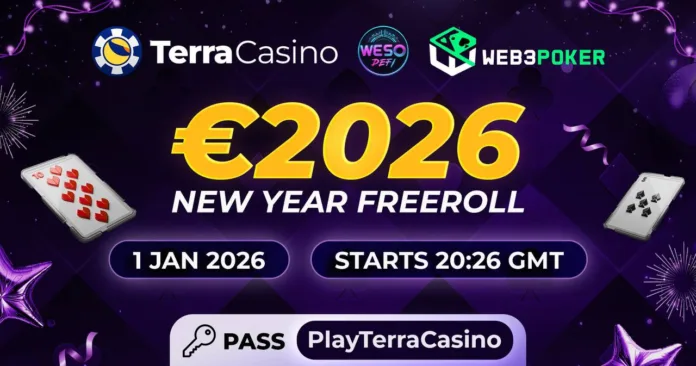
The new year is starting with excitement, strategy, and serious competition as TerraCasino, WESO DeFi, and Web3Poker come together to host a special €2026 New Year Freeroll Poker Tournament. Designed to celebrate the arrival of 2026 in style, this event offers players the chance to compete for a generous prize pool without any entry fee.

The freeroll tournament will take place on 1 January 2026, with cards in the air at 20:26 GMT. Open to poker enthusiasts of all levels, the event creates a perfect opportunity for both experienced players and newcomers to test their skills, enjoy the thrill of competition, and welcome the new year at the virtual poker table.

With a €2026 prize fund up for grabs and a festive atmosphere to match, this New Year Freeroll promises intense action, smart plays, and memorable moments. It’s the perfect way to start 2026—by playing poker, embracing Web3 innovation, and chasing victory from the very first day of the year.

👉 Join and play at https://terracasino.io ♠️✨