Home Blog Page 4

WEEX to Join Binance With Monthly LUNC Burns Starting September

0

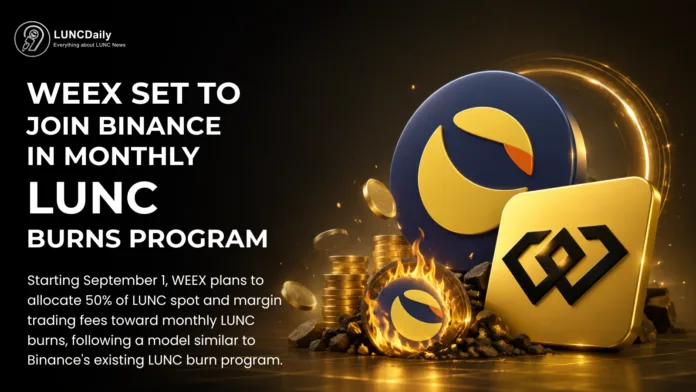
WEEX is set to become the first exchange to join Binance in implementing a monthly LUNC burn program.

Starting September 1, WEEX plans to allocate 50% of LUNC spot and margin trading fees toward monthly LUNC burns, following a model similar to Binance’s existing LUNC burn program.

The move would add another exchange to the ongoing effort to reduce the circulating supply of Terra Classic’s native token, LUNC.

WEEX Monthly LUNC Burn Program

Under the planned program, half of the fees generated from LUNC spot and margin trading on WEEX will be allocated to LUNC burns.

The burns are expected to take place on a monthly basis, creating a recurring mechanism that directs part of trading activity toward reducing the LUNC supply.

The program is scheduled to begin on September 1.

Affiliate Funded Burns Already Started

In addition to the monthly trading fee burn program, WEEX has already started its affiliate funded burn mechanism.

Affiliate revenue generated through the campaign will be divided into two equal portions.

50% will be used for additional LUNC buybacks and burns.

50% will be allocated to a shared community and partner pool for LUNC aligned initiatives.

This means the affiliate campaign is already contributing to the LUNC burn initiative before the main monthly trading fee program begins in September.

Expanding Exchange Support for LUNC Burns

Binance has been the largest exchange associated with a recurring LUNC burn mechanism. WEEX joining the effort would introduce another centralized exchange that directly allocates a portion of trading related revenue toward LUNC burns.

The combination of monthly trading fee burns and affiliate funded buybacks provides two separate mechanisms through which WEEX plans to support LUNC supply reduction.

With the monthly program scheduled to begin on September 1, the Terra Classic community will be able to track the contribution from WEEX alongside existing LUNC burn activity.
Over 600,000 USTC Burned in Just 7 Days

0

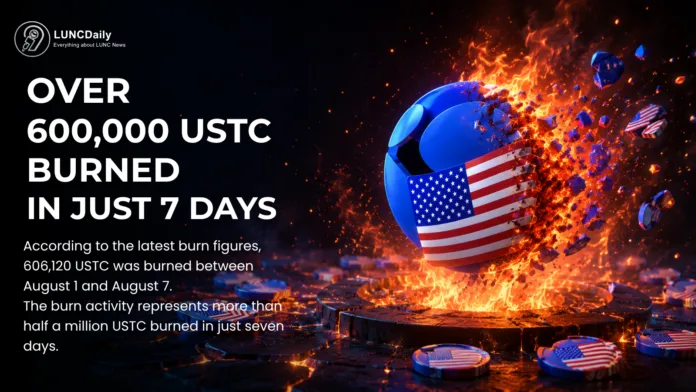
From August 1 to August 7, a total of 606,120 USTC was burned, marking another notable reduction in the USTC supply over a seven day period.

606,120 USTC Burned

According to the latest burn figures, 606,120 USTC was removed from circulation between August 1 and August 7.

The burn activity represents more than half a million USTC permanently removed from the supply in just seven days.

USTC burns reduce the total number of tokens available by sending USTC to burn addresses, where the tokens can no longer be used or transferred.

USTC Burn Activity Continues

The latest figures highlight continued burn activity within the Terra Classic ecosystem.

Between August 1 and August 7, the total of 606,120 USTC was burned. This provides another weekly snapshot of USTC burn activity and the ongoing reduction of the token supply.

As additional USTC is burned over time, these figures can be tracked to monitor the overall progress of supply reduction.

Weekly USTC Burn Summary

Period: August 1 to August 7, 2026
Total USTC Burned: 606,120 USTC
Duration: 7 days

The latest burn data shows that more than 600,000 USTC was burned in a single week.

Over 800 Million LUNC Burned in the Last 7 Days

1

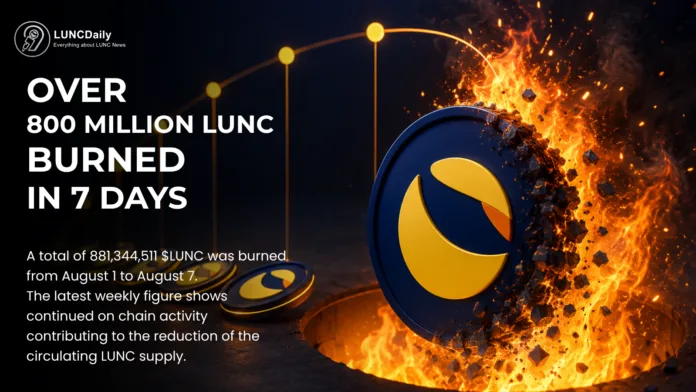
From August 1 to August 7, a total of 881,344,511 LUNC was burned, bringing another significant reduction to the Terra Classic supply.

881 Million LUNC Burned in One Week

The Terra Classic ecosystem recorded 881,344,511 LUNC burned between August 1 and August 7.

The latest weekly figure shows continued on chain activity contributing to the reduction of the circulating LUNC supply.

LUNC burns permanently remove tokens from circulation. Once burned, these tokens can no longer be used or transferred.

More Than 800 Million LUNC Removed

The latest weekly burn exceeded 800 million LUNC, reaching more than 881 million tokens in total.

This represents another substantial amount of LUNC removed from circulation within a seven day period.

The burn activity comes as the Terra Classic community continues to support mechanisms that permanently reduce the token supply.

LUNC Burn Activity Continues

Regular burn activity remains an important part of the Terra Classic ecosystem. Burns can come from different sources, including on chain transactions, community initiatives, and centralized exchange burn programs.

The 881,344,511 LUNC burned from August 1 to August 7 adds to the total amount of LUNC permanently removed from circulation.

As additional burns take place, the cumulative burn total will continue to increase.

Key Figures

Burn period: August 1 to August 7, 2026
Total LUNC burned: 881,344,511 LUNC
Weekly milestone: More than 800 million LUNC burned

The latest figures highlight another week of significant LUNC burn activity across the Terra Classic ecosystem.

Is LUNC Staking Still Worth It With a 3.48% APR?

0

LUNC staking remains an important part of the Terra Classic network, but the staking reward has continued to decline.

The current LUNC staking APR is around 3.48%, raising an important question for holders: Is staking LUNC still worth it at this level?

LUNC Staking APR Continues to Decline

Staking allows LUNC holders to delegate their tokens to validators and earn rewards while helping support the Terra Classic network.

However, the return from staking has gradually decreased. With the APR now at approximately 3.48%, the potential rewards are significantly lower than they were when staking offered a higher annual return.

For example, a user staking 1 billion LUNC at a 3.48% APR would receive approximately 34.8 million LUNC in annual rewards, assuming the APR remains unchanged and before considering factors such as validator commission.

The actual amount received can vary depending on staking conditions and validator fees.

Why Does the APR Matter?

APR is one of the main factors LUNC holders consider when deciding whether to stake.

A higher APR means more LUNC can be earned from staking over time. As the APR declines, the amount of additional LUNC earned from the same amount of staked tokens also decreases.

At 3.48%, staking still provides additional LUNC rewards, but the incentive is lower than it was during periods of higher APR.

Is 3.48% Still Worth It?

There is no single answer for every LUNC holder.

For long term holders who already plan to keep their LUNC, staking can still provide additional rewards while contributing to the network’s delegated stake.

However, users should also consider the tradeoffs. Staked LUNC is subject to an unbonding period, meaning the tokens cannot be immediately moved or sold after undelegation.

This makes staking more suitable for holders who are comfortable keeping their LUNC staked for a longer period.

The Bigger Question for LUNC Holders

The decline in APR highlights an important change in the LUNC staking environment.

When rewards were higher, staking offered a stronger incentive for holders to lock their tokens. With APR now at 3.48%, the decision becomes more dependent on each holder’s strategy and expectations for LUNC.

Some holders may prefer earning additional LUNC through staking, while others may prioritize keeping their tokens liquid and available.

Final Thoughts

At 3.48% APR, LUNC staking still provides rewards, but the incentive is clearly lower than it was in the past.

For long term LUNC holders, staking can remain a way to earn additional tokens while participating in network security. However, the lower APR means holders should carefully consider the potential rewards, validator commission, and unbonding period before staking.

The key question is no longer simply how much LUNC can be earned through staking, but whether the current 3.48% APR provides enough incentive for holders to lock their tokens.

Terra Classic Oracle Pool Drops to 39 Billion LUNC and 120 Million USTC

0

Terra Classic Oracle Pool Drops to 39 Billion LUNC and 120 Million USTC

The Terra Classic Oracle Pool has continued to decrease over the past year, with both LUNC and USTC balances falling significantly.

Around one year ago, the Oracle Pool held approximately 80 billion LUNC and 250 million USTC.

Today, the pool holds approximately 39 billion LUNC and 120 million USTC.

This means the LUNC balance has declined by roughly 41 billion LUNC, representing a decrease of more than 50% from the level recorded a year ago.

The USTC balance has also fallen by approximately 130 million USTC, which represents a decline of more than 50%.

Oracle Pool Balance Falls by More Than Half

The change highlights the continued reduction in assets held within the Terra Classic Oracle Pool.

Asset Around 1 Year Ago Today Approximate Change
LUNC 80 billion 39 billion 41 billion decrease
USTC 250 million 120 million 130 million decrease

The LUNC balance has fallen from approximately 80 billion to 39 billion, while the USTC balance has declined from approximately 250 million to 120 million.

What This Means for Terra Classic

The declining Oracle Pool balance is an important development to monitor within the Terra Classic ecosystem.

With approximately 39 billion LUNC remaining in the pool, the available balance is now significantly lower than it was one year ago.

The same trend can be seen with USTC, which has declined to approximately 120 million.

Future changes in the Oracle Pool balance will depend on activity and mechanisms affecting the pool.

For the Terra Classic community, tracking these balances provides another way to monitor changes across the network and its ecosystem.

Key Takeaway

The Terra Classic Oracle Pool has experienced a significant decline over the past year.

From approximately 80 billion LUNC and 250 million USTC, the pool now holds around 39 billion LUNC and 120 million USTC.

The reported figures show that both balances have decreased by more than half compared with their levels a year ago.

Over 572,000 USTC Burned in Just Six Days

0

More than half a million TerraClassicUSD (USTC) tokens were burned in just six days, highlighting continued burn activity across the Terra Classic ecosystem.

Between August 1 and August 6, a total of 572,991 USTC was burned, according to the reported burn activity during the period.

572,991 USTC Burned From August 1 to 6

USTC burn activity reached 572,991 tokens between August 1 and August 6.

The figure represents the total amount of USTC removed from circulation during the six day period. Token burns permanently remove tokens from the available supply by sending them to designated burn addresses.

The latest burn activity adds to the ongoing efforts to reduce the circulating supply of USTC.

Why USTC Burns Matter

USTC burns are part of the broader supply reduction activity surrounding the Terra Classic ecosystem.

Reducing the number of tokens in circulation can become an important factor in long term supply management. However, burns alone do not determine the market value of an asset.

The impact of continued USTC burns will depend on the pace of future burns, overall market conditions, and the level of activity across the ecosystem.

USTC Burn Activity Continues

The 572,991 USTC burned between August 1 and August 6 shows that burn activity continues to take place.

With more tokens being permanently removed from circulation, ongoing burn activity remains an important metric for the Terra Classic community to monitor.

Future burn figures will provide a clearer picture of how consistently the USTC supply reduction continues.

Terra Classic Community Encouraged to Increase On-Chain Activity After 1.5% Tax Activation

0

Terra Classic Community Encouraged to Increase On Chain Activity After 1.5% Tax Activation

The 1.5% on chain tax is now active on the Terra Classic network. The initiative was introduced with the goal of increasing the daily LUNC burn rate by applying a tax to every eligible on chain transaction.

With the tax now active, the next step depends on community participation. Higher on chain activity can generate more taxable transactions, which may contribute to a higher daily burn rate.

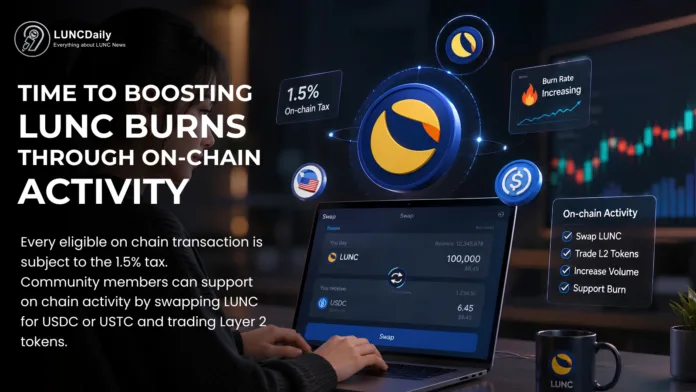
Every eligible on chain transaction is subject to the 1.5% tax. This means that increased network usage can directly support the burn mechanism.

One way community members can contribute is by using on chain swaps and trading. Users can swap LUNC for assets such as USDC or USTC directly on chain. Trading Layer 2 tokens on the Terra Classic network also creates additional on chain transaction volume.

As more users participate in on chain activity, the network processes more taxable transactions. This can help strengthen the overall burn rate while encouraging greater use of the Terra Classic ecosystem.


The success of the 1.5% on chain tax initiative will depend on continued community engagement and sustained on chain transaction volume over time.

Terra Classic Burns Nearly 690 Million LUNC in Five Days

0

The Terra Classic community continues to reduce the circulating supply of LUNC through ongoing burn activity.

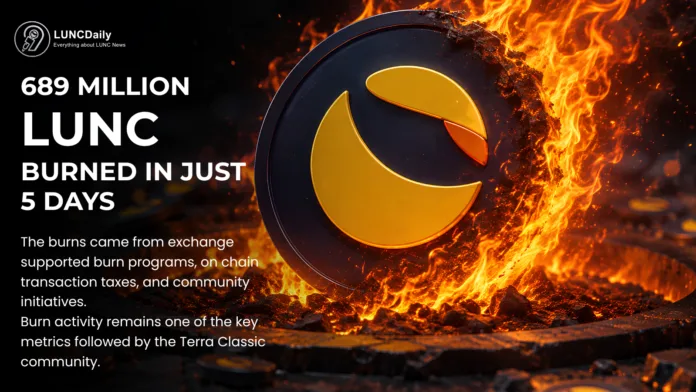
Between August 1 and August 5, a total of 689,800,973 LUNC was permanently removed from circulation. This means that more than 600 million LUNC was burned in just five days, highlighting continued participation in the network’s deflationary efforts.

Token burns permanently remove coins from circulation by sending them to an inaccessible wallet address. As the circulating supply decreases over time, the community continues to monitor burn activity as one of the key indicators of the Terra Classic ecosystem.

Burns come from multiple sources, including exchange supported burn programs, on chain transaction taxes, and community initiatives. Together, these efforts contribute to the long term reduction of the LUNC supply.

While burn activity alone does not determine market performance, it remains an important metric for many Terra Classic supporters who follow the network’s progress and ecosystem development.

Binance TH Learn to Earn Campaign Featuring Terra Classic

0

Binance TH has announced a new Learn to Earn campaign featuring Terra Classic (LUNC), making LUNC the selected token for this week’s educational event.

The campaign gives users an opportunity to learn more about Terra Classic while also earning the chance to receive LUNC token rewards. Participants are required to complete the educational activity and follow all participation requirements during the campaign period.

According to the event details, rewards are limited to the first 200 participants who successfully complete every required step before the promotion ends. Eligible users who finish the activity within the specified timeframe will have a chance to receive LUNC tokens.

Learn to Earn campaigns are designed to introduce users to blockchain projects through educational content while encouraging greater understanding of cryptocurrency ecosystems. By featuring Terra Classic in this week’s campaign, Binance TH is providing additional exposure to the LUNC community and helping more users discover the network.

Interested participants should review the official campaign requirements on Binance TH and ensure all participation steps are completed before the activity closes, as rewards are available on a first come, first served basis for eligible users.

As interest in Terra Classic continues, educational initiatives such as this help bring greater awareness of the ecosystem while giving new users an incentive to learn about the project.

Orbit Wire Expands Multi Chain Trading Support With Terra Classic, Terra, and Osmosis

0

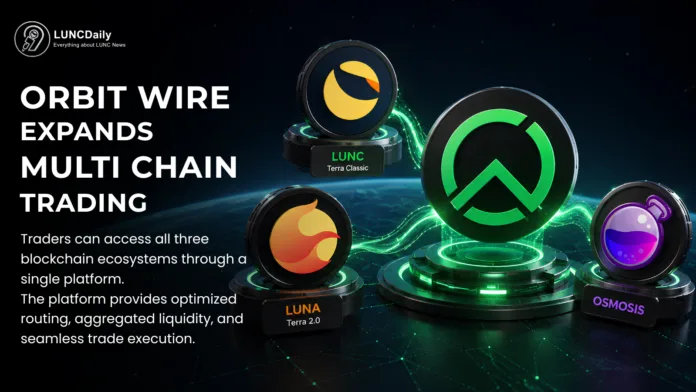
Orbit Wire continues to expand its reach across the Cosmos ecosystem, with the trading aggregator now available on Terra Classic (LUNC), Terra (LUNA), and Osmosis.

The expansion gives users access to trading across three blockchain ecosystems through a single platform. Traders can benefit from optimized routing, aggregated liquidity, and seamless execution without switching between multiple applications.

By connecting Terra Classic, Terra, and Osmosis, Orbit Wire simplifies the trading experience while providing access to a wider range of decentralized markets. The platform automatically routes trades through available liquidity sources to improve execution efficiency.


The latest milestone strengthens Orbit Wire’s multi chain ecosystem and reflects its ongoing commitment to making decentralized trading more accessible, efficient, and connected across the Cosmos network.