
If you’ve been staking your LUNC with Classic Nodes or Uncode Lounge, congratulations — you’re eligible to enjoy an unexpected bonus! In an exciting collaboration with Uncode Lounge, Classic Nodes has launched an exclusive $LTK airdrop campaign for its delegators. This initiative is more than just a reward; it’s a glimpse into the future of incentives designed to keep the Terra Classic ecosystem thriving.
XRP and LUNC Gain Momentum with Regulatory Clarity and ETF Approvals

XRP’s Regulatory Win Fuels Growth
XRP, trading at $3.47, has soared 381% year-to-date in 2025, thanks to the SEC dropping its appeal against Ripple. Judge Analisa Torres’ 2023 ruling clarified that XRP isn’t a security in secondary markets. Consequently, investor confidence has skyrocketed. Moreover, XRP futures ETFs, like ProShares Ultra XRP ETF, gained approval, while spot ETF applications from Franklin Templeton and WisdomTree await a 95% likely approval by late 2025. RippleNet processed $1.3 trillion in H1 2025, solidifying XRP’s role in cross-border payments.
LUNC Benefits from XRP’s Momentum
Terra Classic (LUNC), priced at $0.00008496, rides this wave. XRP’s regulatory clarity boosts the crypto market’s legitimacy, attracting investors to LUNC. The Terra Classic community drives revival efforts post-2022 collapse. For instance, governance upgrades like the Reverse Charge tax and Cosmos SDK 0.50 enhance usability. Additionally, Binance’s burn of 137 billion LUNC tokens reduces supply, potentially increasing value. The Shuttle Bridge closure and USTC repeg talks signal progress.
Shared Opportunities for XRP and LUNC
XRP’s partnerships with Santander and SBI Holdings set a precedent. Similarly, LUNC could attract institutional interest by proving stability. The GENIUS and CLARITY Acts foster a crypto-friendly environment, reducing barriers. As a result, LUNC’s focus on stablecoin integration and validator expansion to 130 positions it for growth. In short, XRP’s success paves the way for LUNC’s recovery, amplifying altcoin potential in 2025.
Bitcoin Drops to $115K Amid Tariff Tensions: LUNC Opportunities Emerge
Bitcoin (BTC) fell 3% to $113,231.41 on August 1, 2025, as President Trump’s new reciprocal tariffs triggered a crypto market sell-off, with $228 million in BTC liquidations. This guide explores why Bitcoin dropped, how tariffs impact crypto, and why Terra Luna Classic (LUNC) could benefit.
Why Did Bitcoin Drop to $115K?
The crypto market faced turbulence after Trump’s tariff announcement, which sparked a global stock market decline. Bitcoin, a leading cryptocurrency, saw intense selling pressure, worsened by a $6–8 billion profit-taking wave in July and an 80,000 BTC sell-off by an OG whale. The U.S. Dollar Index climbing above 100 added further strain on speculative assets like BTC, pushing prices down.
How Tariff Tensions Affect Crypto
Tariffs increase economic uncertainty, impacting investor confidence. As global markets react, cryptocurrencies like Bitcoin often face volatility due to their speculative nature. The recent $228M in Bitcoin liquidations highlights how macroeconomic factors, such as tariffs, can disrupt crypto valuations, driving investors to seek alternative assets.
Why LUNC Could Benefit
Terra Luna Classic (LUNC), trading at $0.00014, offers a compelling opportunity. Unlike Bitcoin, LUNC’s value is driven by community-led token burns, with nearly 50 billion tokens burned to reduce supply. In 2023, a single 106 million LUNC burn showcased its deflationary potential. These efforts could boost LUNC’s price, making it an attractive hedge during Bitcoin’s downturn.
LUNC’s Growing Appeal
As Bitcoin faces tariff-related pressure, investors may turn to altcoins like LUNC. Projects like Cremation Coin and Binance’s burn campaigns increase LUNC’s visibility, potentially drawing institutional interest. With ongoing burns and community momentum, LUNC could rally if market sentiment stabilizes, positioning it as a top altcoin to watch in 2025.
Discover Orbitar: The New Mobile Wallet for Terra Classic
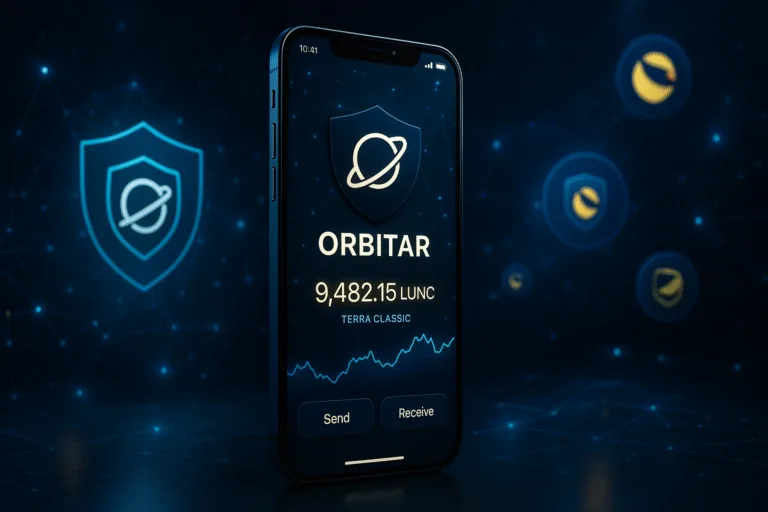
We’re thrilled to introduce Orbitar, the eagerly awaited mobile wallet crafted for the Terra Classic network. Designed with the community in mind, Orbitar fills the gap left since Station Wallet’s days, when Terra Classic was still LUNA. Our mission? To deliver a secure, intuitive, and community-focused wallet that empowers Terra Classic users.
Orbitar offers a seamless, all-in-one solution to manage your $LUNC, $USTC, and other network tokens with ease. Whether you’re at home or on the go, Orbitar puts total control of your assets at your fingertips. With a user-friendly interface and robust security, it’s built to provide peace of mind while handling your cryptocurrencies.
This is Orbitar’s first version, and we’re proud of what we’ve achieved. However, we know perfection is a journey. That’s why we’re counting on the Terra Classic community to shape its future. Your feedback, ideas, and support are vital to making Orbitar the ultimate wallet for Terra Classic. Together, we can refine and enhance this tool to meet your needs.
Why Choose Orbitar?
- Community-Driven: Built for and inspired by the Terra Classic community.
- Secure and Reliable: Prioritizes your trust and asset safety.
- Intuitive Design: Simplifies crypto management for all users.
- Total Control: Manage $LUNC, $USTC, and more, anytime, anywhere.
Get ready to rediscover a stress-free crypto experience with Orbitar. Join us on this exciting journey and help us create the best mobile wallet for Terra Classic. Share your thoughts and dive into the future of decentralized finance today!
Download Orbitar now and take control of your Terra Classic assets!
Why Is Crypto Crashing Right Now? Here’s What You Need to Know
Crypto prices have dropped sharply, leaving many investors wondering what is happening.
The main reason is the new tariffs announced by the United States. This caused fear in the global market and pushed investors to sell risky assets like Bitcoin and Ethereum.
Another reason is new rules for cryptocurrencies. The Genius Act now requires stablecoins to be fully backed and regulated. This makes the market uncertain, and some investors are pulling out.
Big investors are also taking profits after large gains earlier this year. At the same time, high-risk trading positions are being closed, making the drop even worse.
Lastly, recent hacks and scams have hurt trust in crypto platforms, making people more cautious.
Even though prices are falling, experts say downturns like this often create good opportunities for long-term investors.
LUNC Benefits from Visa Stablecoin Support on Four Blockchains
Visa’s Blockchain Expansion Boosts LUNC
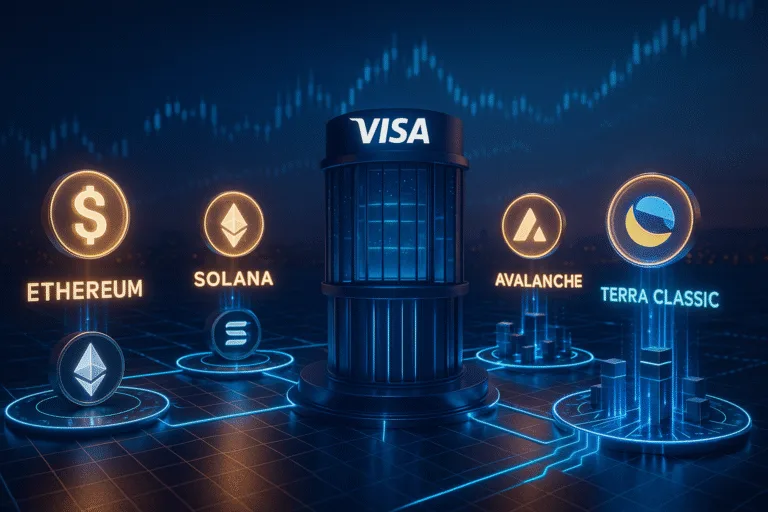
Visa now supports stablecoin transactions on Ethereum, Solana, Avalanche, and Terra Classic, creating new opportunities for LUNA Classic (LUNC). This move enhances LUNC’s role in the global payment ecosystem, leveraging Terra Classic’s efficient blockchain.
How LUNC Gains from Visa’s Support
Terra Classic, once known as Terra, uses LUNC for governance and stabilizing USTC. Despite the 2022 UST collapse, LUNC’s circulating supply exceeds 5.6 trillion tokens. Visa’s stablecoin platform increases LUNC’s visibility, driving adoption in cross-border payments. The 1.2% tax burn on LUNC transactions reduces supply, potentially increasing value as transaction volume grows.
Stablecoin Integration Enhances Terra Classic
Visa’s platform supports stablecoins like PayPal USD (PYUSD), USDG, and EURC alongside LUNC on Terra Classic. This creates a robust ecosystem for low-cost, fast settlements. LUNC benefits from improved liquidity and real-world utility, especially in Asia-Pacific markets with existing Terra partnerships.
A Bright Future for LUNC
Visa’s “multi-coin, multi-chain” strategy, as stated by Rubail Birwadker, bridges traditional finance and blockchain. For LUNC, this means greater integration into mainstream payments, boosting Terra Classic’s relevance. As stablecoin adoption rises, LUNC could see long-term growth.
LUNC Rebuilding: Why Terra Classic Outshines Other Blockchains
LUNC rebuilding is transforming Terra Classic into a leading blockchain. After the 2022 UST collapse, the community launched the Terra Ecosystem Revival Plan 2, creating Terra Classic (LUNC) and Terra 2.0 (LUNA). Now, LUNC is thriving with innovative DeFi projects and a dedicated community.
Why LUNC Rebuilding Matters
LUNC’s revival focuses on decentralized finance (DeFi). Platforms like Terraport drive smart contract innovation, while Stakebin.io offers analytics. Moreover, LUNC’s burn mechanism reduces its 5.6 trillion token supply, boosting value. Unlike inflationary blockchains, this deflationary model attracts investors.
LUNC vs. Other Blockchains
Terra Classic uses Proof-of-Stake (PoS) with Cosmos SDK and Tendermint for fast, secure transactions. For example, LUNC’s low fees outshine Ethereum’s high gas costs, making it ideal for global payments. Additionally, past partnerships, like Chai in South Korea, prove real-world use, unlike newer blockchains lacking adoption. Learn more about blockchain comparisons here.
The Future of LUNC Rebuilding
With support on exchanges like Binance and KuCoin, LUNC rebuilding gains momentum. Community governance ensures stability, while DeFi growth positions LUNC as a top choice for accessible payments. Consequently, Terra Classic blends proven tech with a vision for price-stable finance.
In conclusion, LUNC rebuilding showcases resilience and innovation. Its low-cost, scalable blockchain and deflationary tokenomics make it better than many competitors. Explore Terra Classic’s potential on official site and join the DeFi revolution today.
Binance Burns Over 440 Million LUNC: A Major Boost for Terra Classic
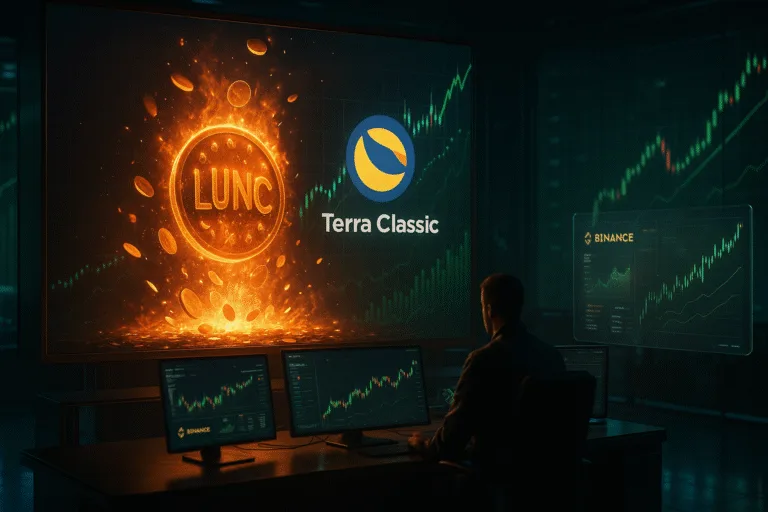
In a strong show of support for the Terra Classic (LUNC) community, Binance has completed another significant burn—this time removing over 440 million LUNC tokens from circulation. This ongoing commitment by Binance reinforces its role as a key contributor to the revival and long-term sustainability of the LUNC ecosystem.
The LUNC burn mechanism is one of the core strategies aimed at restoring value to the Terra Classic network after its catastrophic collapse in 2022. By permanently removing tokens from supply, burns create deflationary pressure, which may help stabilize and potentially increase the token’s value over time. Binance, as the largest LUNC burner by far, has now destroyed billions of LUNC tokens through its monthly burn campaigns—proving that centralized exchanges can play a vital role in decentralized projects.
The 440 million burn comes at a time when the Terra Classic community continues to push forward with development, marketing, and ecosystem growth. Validators, developers, and investors are working together to rebuild trust and utility in the network. From new DApps and wallet upgrades to community proposals and international promotion, the momentum behind LUNC is stronger than ever.
“We keep building, we keep promoting, and we keep burning,” has become a rallying cry for many in the Terra Classic space. This latest burn by Binance is not just a symbolic gesture—it’s a real and measurable contribution toward reducing supply and enhancing long-term value.
As LUNC holders celebrate this latest milestone, the message is clear: the community is active, committed, and determined. With continued support from key players like Binance, Terra Classic is proving that strong community action can drive meaningful recovery.
LUNC vs LUNA: Key Differences and Why LUNC Is Better
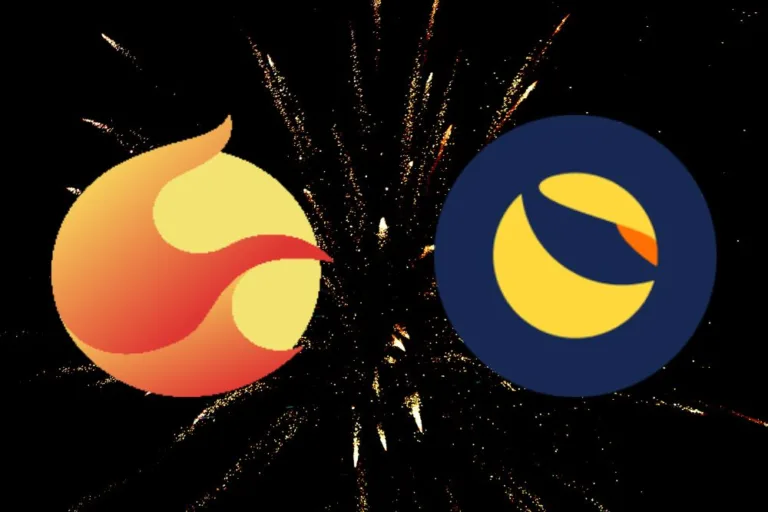
Terra Classic (LUNC) and Terra 2.0 (LUNA) are two separate blockchains born from the collapse of the original Terra ecosystem in May 2022. Though they share a common origin, they now serve very different purposes – and for many, LUNC holds a unique advantage.
LUNA (Terra 2.0) was created as part of Do Kwon’s revival plan following the de-pegging of UST and the crash of the original Terra chain. This “new” chain abandoned the algorithmic stablecoin model entirely and aimed to move forward with a clean slate, mainly focusing on development and dApp integration. LUNA has been supported by Terraform Labs and some centralized exchanges, but many community members felt it lacked the grassroots spirit of the original.
LUNC (Terra Classic) is the original chain, rebranded and run by its community. After the collapse, control of LUNC shifted to independent developers and validators — not Terraform Labs. Over time, the community has introduced significant changes, including token burns, staking rewards, governance participation, and decentralized upgrades. LUNC holders are focused on revitalizing the chain through utility, community-driven proposals, and integrations with platforms like Orbit Chain and Interchain Station.
Why LUNC Might Be Better:
- Community-led: LUNC is powered by builders, validators, and holders—not a single company.
- Token Burns: Billions of LUNC tokens have been burned, reducing supply and increasing scarcity.
- Stronger Governance: LUNC holders actively vote and propose changes, giving real power to the community.
- Ongoing Utility: Projects continue to build on LUNC, and recent upgrades show that the chain is alive and evolving.
While LUNA offers a more “clean” approach, LUNC represents resilience, community strength, and real decentralization. For many investors, that makes LUNC not just different—but better.
Rujira Network Takes Over Terra Station – Massive Updates Ahead for LUNC and USTC?
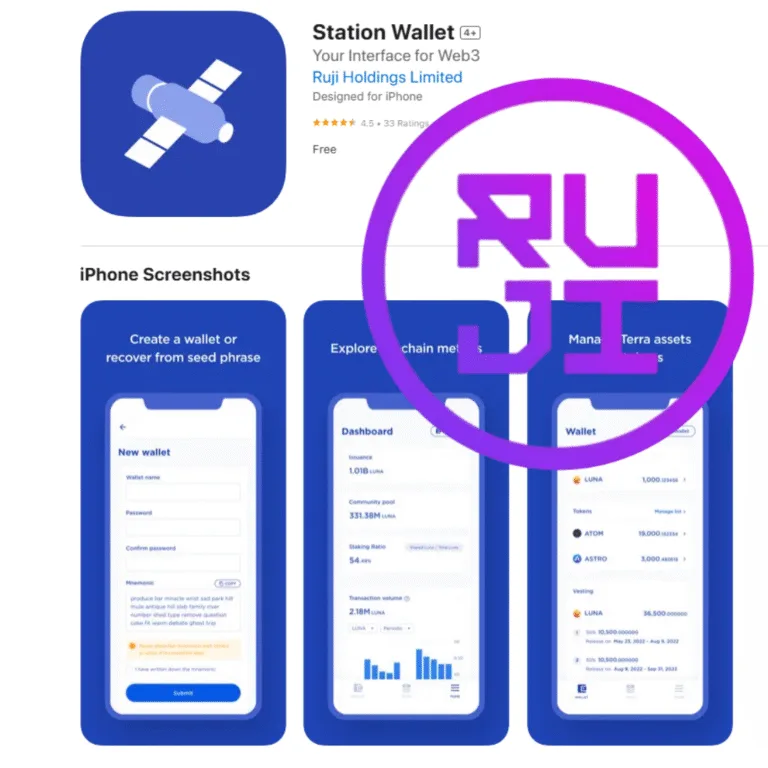
Terra Station Wallet is now officially owned by Rujira Network.
After Terraform Labs’ collapse left the wallet without major updates, a new verified developer (Ruji Holdings Limited) is stepping in.
This could mean more upgrades, stronger support, and a major boost for the Terra Classic ecosystem.
The Terra Station Wallet, a key infrastructure of the Terra blockchain, is now officially owned and managed by Rujira Network. This update is reflected on the official Terra Station application on the Apple Store, which now lists Ruji Holdings Limited as the developer.
Following the collapse of Terraform Labs (TFL), Terra Station had experienced a long period without significant upgrades or improvements. The transition to Rujira Network introduces a new development team with the potential to restore active support and deliver long-awaited updates.
This development is significant for the Terra Classic (LUNC) and TerraClassicUSD (USTC) communities. With a dedicated and verified entity now maintaining Terra Station, users can expect:
● More frequent updates and maintenance to improve wallet security and usability.
● Enhanced infrastructure support, potentially leading to better ecosystem stability.
● Renewed developer engagement, which could accelerate progress toward LUNC and USTC’s long-term recovery.
Overall, the official handover signals a positive step forward for the Terra Classic ecosystem. A fully supported Terra Station Wallet under new leadership could play a vital role in revitalizing confidence, driving adoption, and enabling future upgrades that were previously stalled after TFL’s collapse.