Home Blog Page 78

No More Confusion: Easy Explanation of Terra Classic’s Market Module 2.0

0

The Terra Classic community is discussing a proposal to improve how people swap between LUNC and USTC. Many users think this is about bringing USTC back to $1, but it’s not a re-peg plan and does not treat USTC as a stablecoin.

Here’s an easy explanation of what’s changing and why it matters.

What Will Change
1. No More Minting Tokens
In the past, the Market Module could “mint” new tokens during swaps. This won’t happen anymore. Instead, a swap pool will be used, filled with 60% of the burn tax collected from the previous period. This makes sure swaps only use existing tokens.

2. Real Price Swaps
The system will now use real market prices from the oracle instead of always saying USTC = $1. This means if USTC is worth 200 LUNC, you’ll get exactly that amount in swaps.

3. Swap Fees Help Burns
Every swap has a 0.35% fee. Half of it will be burned, and the other half will support the Oracle Pool, which helps the chain.

4. Unused Tokens Get Burned
If tokens stay unused in the swap pool, they’ll be burned automatically at the start of the next period. So, nothing is wasted.

How It Works (Example)
● Imagine 667M LUNC is collected from burn taxes.

● 60% (400M LUNC) goes into the swap pool.

● If someone swaps 2M USTC for LUNC, all 400M LUNC from the pool could be used up.

● Later, if people swap LUNC for USTC, the pool refills with LUNC, allowing more swaps again.

Why This Helps
● Safe and Controlled: No minting means no risk of hyperinflation.

● Fair Pricing: Swaps use actual market prices, not fixed numbers.

● Burns Still Happen: Even if swaps redirect some tokens to the pool, unused tokens are burned later.

● Arbitrage Opportunity: Since on-chain prices update every 30 seconds, traders might find price differences between exchanges and the module, leading to more activity.

Common Questions
● Will this create more LUNC and cause inflation?
No. Only existing tokens are used.

● Is this trying to make USTC $1 again?
No. USTC will stay a market-based token, not a stablecoin.

● What about Binance burns?
Binance stopped burning before because of minting. Since minting is removed here, Binance burns should continue normally.

● What trading volume can we expect?
Hard to know exactly, but past data shows around $30K–$40K per month could happen.

● Is it risky?
Technical risks will be carefully tested and reviewed. The main risk is that people might expect too much from this change.

● Can we go back to the old system later?
Yes. The update is designed so it can be reversed if needed.

Development Plan
Developer StrathCole will build this voluntarily if the community supports it through a governance vote. The coding might take 2–3 weeks, followed by detailed testing and optional security audits.

Summary
This proposal introduces a safe, limited-supply swap system for LUNC and USTC. It avoids creating new tokens, uses real market prices, and continues to burn unused tokens. The goal is to make swaps more reliable while still reducing supply over time.

Stablecoin Regulation Advances: A Boost for LUNC and Crypto Market

0

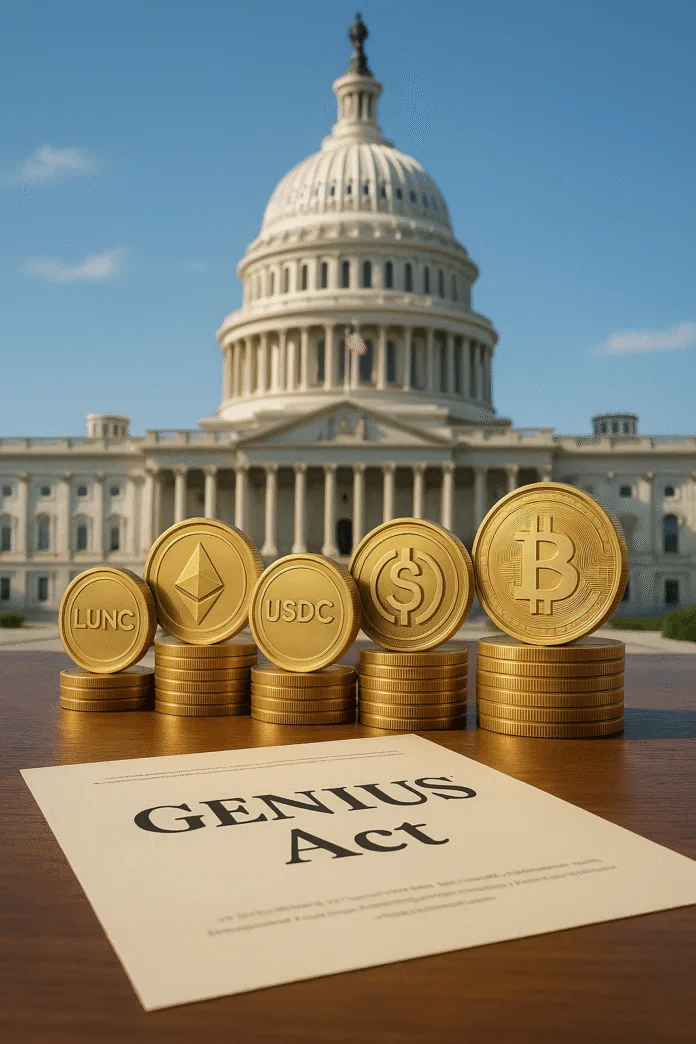
The U.S. House of Representatives recently passed the GENIUS Act, a landmark bill establishing a regulatory framework for U.S. dollar-pegged stablecoins. Signed into law by President Donald Trump on July 18, 2025, this legislation mandates that stablecoin issuers maintain liquid reserves, such as U.S. dollars or Treasury bills, and disclose holdings monthly. This move is expected to enhance consumer trust and drive stablecoin adoption for everyday payments, potentially growing the $260 billion market to $2 trillion by 2028, according to Standard Chartered estimates.

The bill’s passage has sparked optimism in crypto markets, with crypto-related stocks like Coinbase and Circle seeing significant gains. Ether, the second-largest cryptocurrency, climbed 2% to $3,506.48, hitting a six-month high, as investors anticipate its role in decentralized finance amid stablecoin restrictions on yield generation.

Notably, the Terra Classic (LUNC) ecosystem stands to benefit significantly. LUNC, tied to the Terra blockchain, has faced challenges since the 2022 TerraUSD collapse, which wiped out $40 billion in value. However, the new regulatory clarity could bolster confidence in stablecoin ecosystems, indirectly supporting LUNC’s recovery. With stablecoins gaining legitimacy, platforms like Terra Classic may see increased activity, as investors and developers leverage its infrastructure for stablecoin-based applications. LUNC’s price has shown positive momentum, reflecting market enthusiasm for regulated digital assets.

While critics, including some Democrats, argue the bill lacks robust anti-money laundering protections and favors corporate interests, the bipartisan support (308-122 House vote) signals a shift toward mainstream crypto adoption. For LUNC, this regulatory milestone could mark a turning point, fostering growth and stability in its ecosystem.

Latest Proposals for Terra Classic: Shaping the Future of the Chain

0

Terra Classic (LUNC), the original blockchain post the 2022 UST depeg crisis, continues to evolve through community-driven governance. Recent proposals, particularly those in 2025, signal a robust effort to enhance stability, utility, and adoption, critical for the chain’s long-term viability.

A pivotal proposal, #12186, upgrades the Cosmos SDK to version 50.13, alongside Wasm v0.53.2, as announced by Luncverse and TerraNewsEN. This upgrade, backed by Antier, focuses on improving governance, security, and dApp readiness, addressing critical bugs and ensuring compatibility with legacy contracts. Such enhancements are vital for stabilizing the network, attracting developers, and rebuilding trust post-2022.

Another significant proposal, the Market Module 2.0, aims to reactivate the link between LUNC and USTC. By reintroducing mechanisms to stabilize USTC’s peg, this proposal could restore confidence in the ecosystem’s algorithmic stablecoin, a cornerstone of Terra Classic’s original vision. This move is crucial for increasing chain utility and investor interest.

Proposals #12179 and #12180, passed in May 2025, inject liquidity into Terraswap DEX and the LUNC/USDC pool on Terraport. These measures enhance swap efficiency and trading volumes, fostering ecosystem growth and user adoption. The community’s focus on liquidity underscores its commitment to making Terra Classic a competitive player in DeFi.

Additionally, a whitelisted wallet management system by BLV_Labs, ready for testnet, aims to exempt key addresses from Burn Tax, streamlining operations for CEXs and DAOs. This could boost off-chain burns and chain activity, further reducing LUNC’s supply.

These proposals collectively prioritize stability, decentralization, and economic alignment. By addressing past flaws and enhancing infrastructure, they position Terra Classic for a sustainable future, potentially reigniting broader adoption.

LUNC Revival: How the Community Can Drive Attention and Growth

0

The Terra Classic (LUNC) community is known for its dedication, but gaining broader attention requires focused actions. Here are the key steps the community can take to help LUNC grow:

1. Deliver Real Utility
Highlight active projects and real use cases within Terra Classic to show real value and attract new users.

2. Boost Visibility
Maintain strong engagement on social platforms, share accurate updates, and run campaigns to increase global awareness.

3. Support Supply Reduction
Continue backing token burns and proposals that help reduce LUNC’s circulating supply, making it more valuable over time.

4. Back Developers
Encourage and support projects building on Terra Classic through funding, promotion, and community testing.

5. Educate Newcomers
Create simple guides and content to help new investors understand LUNC’s progress and future potential.

6. Stay United
A professional, collaborative community image builds investor confidence and strengthens LUNC’s reputation.

Why Invest in LUNC: The Significance of Terra Classic Upgrade v3.5.0 and SDK 50.13

0

Terra Luna Classic (LUNC) presents a compelling investment opportunity in the evolving crypto landscape, driven by recent developments and community-driven upgrades. The Terra Classic ecosystem is undergoing a renaissance, with the v3.5.0 chain upgrade and SDK 50.13 update signaling a robust commitment to enhancing utility, security, and interoperability. These advancements, combined with LUNC’s deflationary mechanisms, make now an opportune time to consider investing.

The v3.5.0 upgrade, set for August 15, 2025, introduces simplified tax handling, streamlining transactions by automatically deducting taxes, thus boosting chain utility. This upgrade fosters a developer-friendly environment, enabling seamless integration of decentralized applications (dApps) from the broader Cosmos ecosystem. By removing barriers for developers, Terra Classic aims to expand its ecosystem with projects like Terraport and Garuda DEX, enhancing real-world utility and adoption. The community’s near-unanimous support (99.94% “Yes” votes) underscores confidence in these changes, potentially driving LUNC’s value higher as utility grows.

The SDK 50.13 update, proposed by Luncverse and backed by Antier Solutions, modernizes Terra Classic’s infrastructure with enhanced governance, security, and dApp readiness. This upgrade, currently in voting, strengthens ties with the Cosmos network, improving interoperability and scalability. Costing $55,000 and spanning 25 weeks, it reflects a strategic investment in the chain’s future, potentially catalyzing a price breakout if approved.

LUNC’s tokenomics further bolster its appeal. With over 60 billion tokens burned, including Binance’s 1.35 billion, the supply reduction supports long-term price appreciation. Despite past challenges, LUNC’s current price of $0.00006166 and rising trading volumes signal growing market interest. Investors should conduct thorough research, but Terra Classic’s upgrades and community momentum make it a promising bet for 2025.

Beginner-friendly explanation about the Terra Classic v3.5.0 upgrade (Upgrade v12)

0

What This Proposal Is About
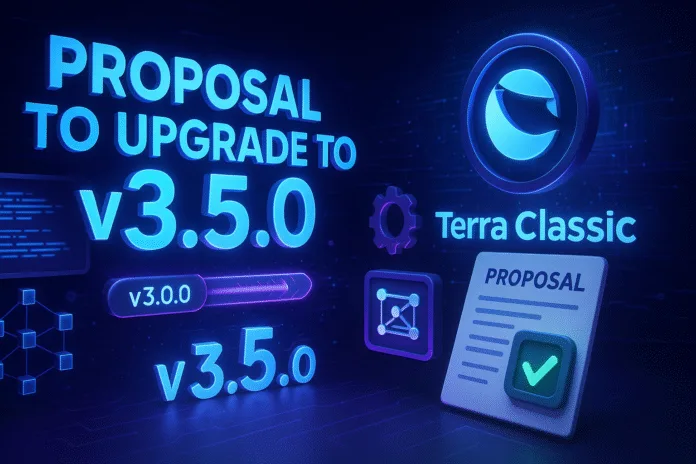
This proposal asks the Terra Classic community to upgrade the blockchain software (called the terrad client) to version 3.5.0.

What Will Happen :
● The blockchain will pause for a short time at a specific block height.

● Validators (people who run the network) will install the new version of the software.

● After that, the blockchain will restart with the upgrade.

What’s New in This Upgrade :
● A new system called the TaxExemption Module will be added.

● This allows certain wallets or groups of wallets (called zones)can be made tax-exempt. These groupings and tax rules are controlled by governance decisions, and the chain enforces them directly.

● The way taxes are handled will be built directly into the chain, making it simpler and more efficient.

Who Needs to Do Something
● Validators → Must update the software.

● Regular users → No action needed; wallets and apps will continue working normally.

The upgrade is needed because:

● Better Tax Handling – Right now, tax rules are not fully managed by the blockchain itself. This upgrade adds a built-in tax system, making it more reliable and easier to manage.

● Tax-Exempt – It introduces a way for approved wallets or groups (zones) which can help businesses, apps, and certain users save costs.

● Future Compatibility – Upgrading keeps the network’s software up to date and secure, making it ready for future features and improvements.

● Smooth Operation – Without this upgrade, the network might face limitations or inefficiencies in handling taxes and future upgrades.

Proposal to Upgrade to v3.5.0

0

A new release of the terrad client has been created on 25 Jul 2025 . The release notes for the new version can be viewed here:https://github.com/classic-terra/core/releases/tag/v3.5.0

This release introduces a new on-chain module enables tax-exempt transactions based on address groupings called zones. Tax logic is now handled natively by the chain using zone-based rules set via governanceg. The technical release notes can be found at https://github.com/classic-terra/documents/blob/main/chain-updates/v3_5_0.md

Proposal

This proposal seeks validator and community approval to update the terrad client to v3.5.0 (upgrade name v12). The chain will be halted at 24650205 which will approximately be processed on Aug 15 2025 15h30PM UTC. The actual halt time is an early estimate, can vary and depends on the chain’s block speed until the specified height is reached. Upon passing of this proposal, an automatic chain halt will be scheduled at the specified height. The validators are going to be asked to install the new version of the terrad client after the chain halt occured.

Upgrade Instructions for Validators

As soon as the chain automatically halts at the designated upgrade block height follow the upgrade procedure. Please don’t execute these commands before the chain has halted:

$ git clone https://github.com/classic-terra/core core-v3.5.0
$ cd core-v3.5.0
$ git checkout v3.5.0
$ make build && make install 

In case you already have a local copy of the repository inside the local folder core:

$ cd core
$ git stash
$ git fetch --all
$ git fetch --tags
$ git checkout v3.5.0
$ make build && make install

Check the correct installation:

$ terrad version
v3.5.0

After that, restart the client with terrad start or your system service and wait for consensus. During that period, don’t restart the client if not otherwise asked to do so.

Infrastructure Providers

Infrastructure providers who run mantlemint accelerated LCDs are asked to build and install the updated mantlemint version from source after the upgrade block height is reached:

https://github.com/classic-terra/core/releases/tag/v3.5.0-rc.0

Testing and Rollback

An upgrade to v3.5.0 release candidate was conducted on rebel-2 testnet on … and the changes were tested extensively. If for some unforeseen (and unlikely) reason the new release will not be able to produce new blocks on mainnet then the upgrade name v12 can be applied to the previous release v3.4.0. In this case validators are going to be asked to roll back to a previous state and apply a patched v3.4.0 release.

Effects of Voting

  • YES – you agree to schedule an upgrade to v3.5.0
  • NO – you don’t agree to schedule an upgrade to v3.5.0
  • ABSTAIN – you want the proposal to reach quorum and align with the majority vote
  • VETO – you strongly disagree and want the prop to fail with a 33,33% veto threshold

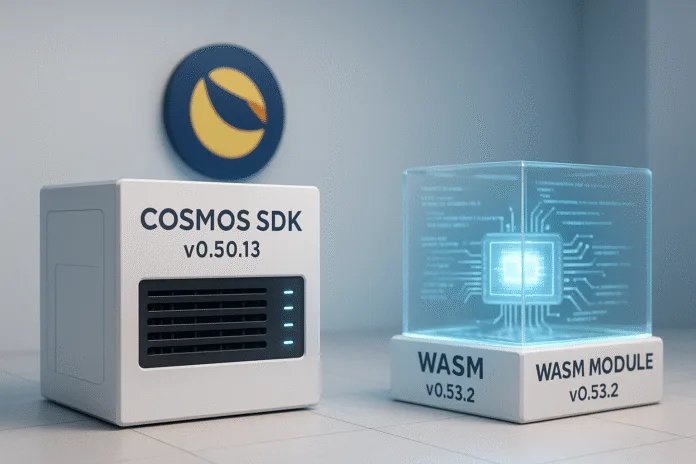
What Do Cosmos SDK and Wasm Mean, and Why Are They Important?

0

Terra Classic is preparing for a major technical upgrade. The goal is to improve the network’s security, performance, and long-term reliability.

What is the Cosmos SDK
The Cosmos SDK is a software framework used to build blockchains. It is open source and allows developers to create both public and private blockchains. Public chains can use a Proof of Stake system where validators secure the network, while private chains can use Proof of Authority, where control is limited to selected validators.

Blockchains built using the Cosmos SDK are called application specific blockchains because they are designed for specific use cases. Terra Classic is one example of this. It currently runs on an older version, SDK v0.47.17. The proposed upgrade will move it to version 0.50.13.

Why the Cosmos SDK Upgrade is Important
Upgrading to SDK v0.50.13 brings several benefits:

● A more advanced system for handling transactions called ABCI++

● Stronger security, including fixes for known issues in the older version

● Better tools for developers to create and maintain applications

● A more flexible structure that makes it easier to manage upgrades

● Improved community control through governance-based settings

This upgrade also ensures that existing applications and features will continue to work without interruption. Terra Classic’s custom modules like Oracle, Market, and Treasury will be updated to match the new SDK structure.

What is the Wasm Module
The Wasm Module, short for WebAssembly Module, is the system that runs smart contracts on Terra Classic. A Wasm module is a precompiled unit of code that allows for fast and secure execution. It works across different platforms and provides the performance needed to support advanced applications.

Smart contracts are programs that automatically execute actions based on set conditions. They are an essential part of decentralized applications.

Currently, Terra Classic uses Wasm version 0.46.0. The proposed upgrade will move to version 0.53.2.

Why the Wasm Upgrade Matters :
● Smart contracts will continue to work as they do today

● Developers will be able to use the latest features and improvements

● Terra Classic’s custom smart contract connections, such as oracle and tax modules, will remain supported

This upgrade allows Terra Classic to stay compatible with the latest smart contract standards while keeping its existing contracts stable.

What Happens to Terra Classic’s Custom Modules
Terra Classic includes several unique modules that need special attention during the upgrade. These include:

● The Oracle Module, which tracks price data used in stablecoin systems

● The Market Module, which supports token swaps and liquidity

● The Treasury Module, which manages taxes and economic policy settings

Each of these modules will be carefully tested and adjusted. The development team will also add temporary tools to make sure everything continues to work correctly during the transition.

Why This Upgrade is Necessary
There are several reasons why this upgrade is important for Terra Classic:

● It removes old code and outdated changes made in earlier versions, as part of a broader effort led by Orbit Labs

● It fixes known security issues in the current software

● It gives developers modern tools to build more reliable and advanced applications

● It improves the network’s ability to adapt to future updates

This upgrade also ensures that developers and validators can work more efficiently, while keeping the network stable for everyday users.

Final Thoughts
Upgrading to Cosmos SDK v0.50.13 and Wasm v0.53.2 is an important step forward for Terra Classic. It makes the blockchain stronger, more secure, and easier to maintain without disrupting any existing features or applications.

For regular users, everything will continue to work as expected. For developers and validators, this upgrade provides a better foundation to build and innovate. Most importantly, it prepares Terra Classic for long-term sustainability and growth within the Cosmos ecosystem.

Big Win for Crypto Fans as the GENIUS Act Becomes Law

0

The United States just made a major move in crypto. On July 18, 2025, President Trump officially signed the GENIUS Act, a new law focused on stablecoins. This is the first-ever national law in the US made just for crypto payments.

So what does it mean?
If a company wants to issue stablecoins in the US, they now have to:

● Back every coin with real US dollars or safe assets

● Show the public monthly reports on their reserves

● Keep user funds safe if they go out of business

This law gives crypto users more safety and more trust. It also avoids some old rules from the SEC or CFTC. Instead, banks and trusted financial agencies will watch over stablecoin companies.

Experts say this could bring billions of dollars into the crypto market. Big institutions are already getting ready to launch new stablecoins under the new rules.

More Crypto Laws Are Coming
The US House also passed a second major bill called the CLARITY Act. This one explains who controls what between the SEC and CFTC when it comes to crypto trading. It still needs to pass in the Senate, possibly later this year.

Another bill, called the Anti CBDC Act, also moved forward. It blocks the government from creating its own digital dollar that could be tracked by the Fed.

Why It Matters
The GENIUS Act is a big win for crypto adoption in the US. It gives companies a clear way to follow the rules, protects users, and brings more trust to stablecoins.

If the Senate also passes the other two bills, crypto in the US could become stronger and more secure than ever.

LUNC, ETH, XRP and Solana Could Be the Next Big Gainer as Altcoins Start to Wake Up

0

As the crypto market cools down, some altcoins are showing early signs of life and Terra Classic (LUNC) is one of the top tokens analysts are watching closely. Alongside XRP, Solana, and Ethereum, LUNC is flashing bullish signals that could lead to a potential rally in the coming weeks.

Why LUNC Is Getting Attention Right Now

Even as Bitcoin struggles to stay above $115,000, LUNC is holding steady and gaining strength. Analysts from CryptoRank and other trusted platforms are pointing out that LUNC’s chart looks similar to past rally setups. While many coins are going sideways or down, LUNC is building support and showing signs that buyers are quietly stepping in.

Wallet activity and trading volume for LUNC are also staying healthy — a sign that the community is still active and preparing for a possible move up.

What About the Other Altcoins?

LUNC isn’t alone. XRP, Solana, and Ethereum are also looking strong, but each has a different story:

● XRP just saw a huge price drop, but experts say the long-term trend is still okay. A big liquidation event shook out weak hands, and now the token may be setting up for a rebound.

● Solana is holding up well thanks to steady developer growth and active users. Its price is above key technical levels that usually mean strength.

● Ethereum is quietly outperforming Bitcoin and may be preparing for its next big move. It remains one of the most used blockchains in crypto.

What This Means for New Investors

Analysts believe this period of consolidation is a good time to watch the market closely. If Bitcoin stays stable or slowly climbs, altcoins like LUNC could lead the next wave of gains. Technical charts and on-chain data are showing early signs of a breakout, but nothing is guaranteed in crypto.

If you’re new to crypto, it’s important to do your own research, manage your risk, and avoid chasing pumps. But for those watching LUNC, this might be a key moment to stay alert.