

The collapse of the Terra ecosystem in May 2022 marked one of the most dramatic events in crypto history. It accelerated what became known as the 2022 crypto winter and erased tens of billions of dollars in market value within days.
Recent documents and allegations have raised questions about the role of major trading firms, particularly Jane Street, in the sequence of events that led to the downfall of TerraUSD and Luna.
This article outlines the key developments in a clear and structured manner.
Background: Changes Before the Collapse
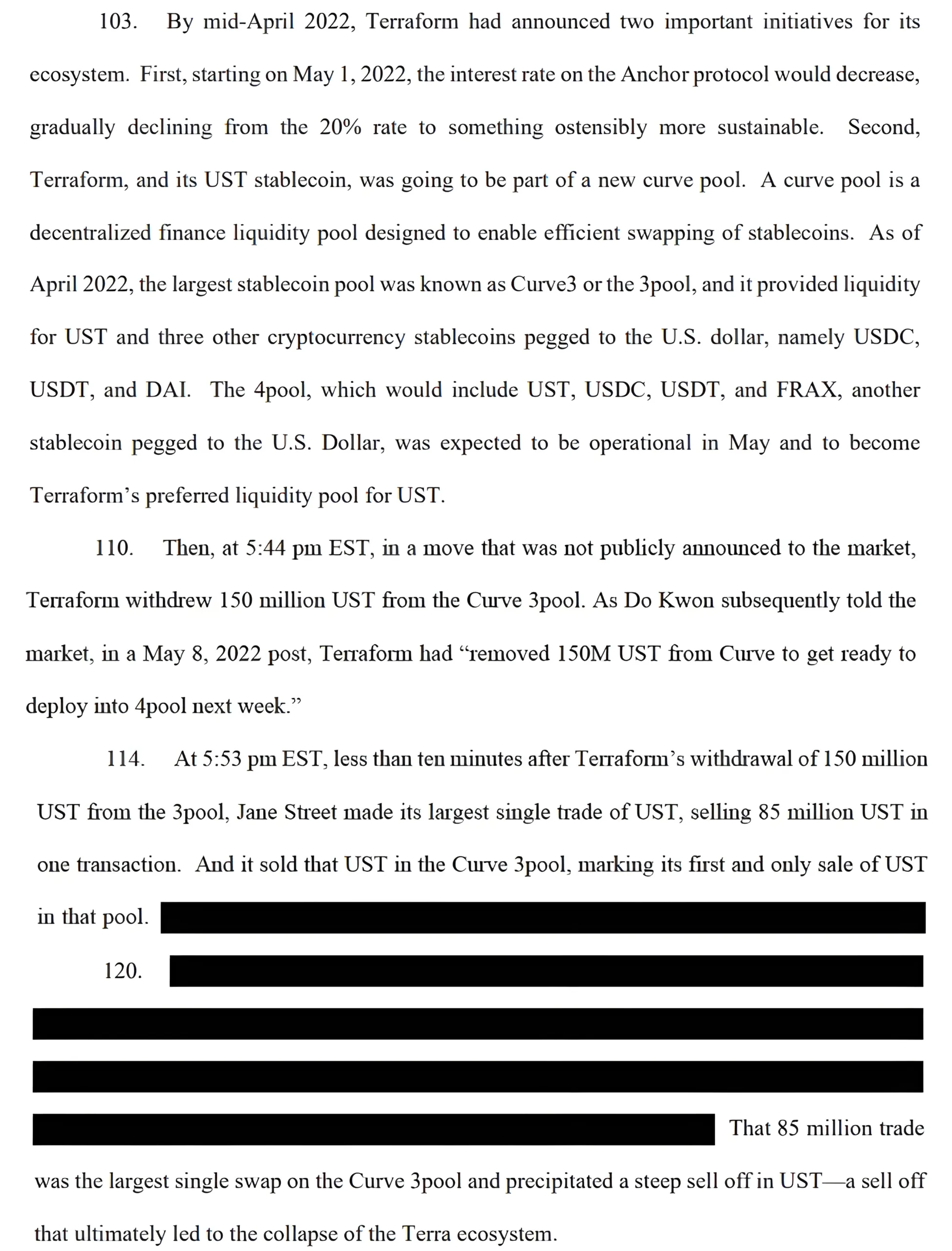
In mid April 2022, Terraform Labs announced two significant updates.
First, the yield on Anchor Protocol would begin decreasing from 20 percent to a more sustainable level starting May 1, 2022. Anchor had been a major driver of demand for UST due to its high returns.
Second, Terraform planned to move UST liquidity from the Curve 3pool to a new 4pool. The 3pool on Curve Finance was one of the largest stablecoin liquidity pools at the time, supporting UST, USDC, USDT, and DAI.
These structural changes reduced liquidity depth in the existing pool during a sensitive transition period.
May 8, 2022: Liquidity Withdrawal and Large Sale
On May 8, 2022 at 5:44 pm EST, Terraform withdrew 150 million UST from the Curve 3pool. The withdrawal was not publicly announced at the time. Later, Terra founder Do Kwon stated that the move was intended to prepare liquidity for the upcoming 4pool deployment.
Less than ten minutes later, at 5:53 pm EST, Jane Street executed a sale of 85 million UST in a single transaction within the same pool.
According to documents cited in legal proceedings, this was Jane Street’s first and only UST sale in that pool and represented the largest single swap ever recorded in the Curve 3pool.
The transaction significantly increased selling pressure and destabilized UST liquidity conditions.
UST Loses Its Peg
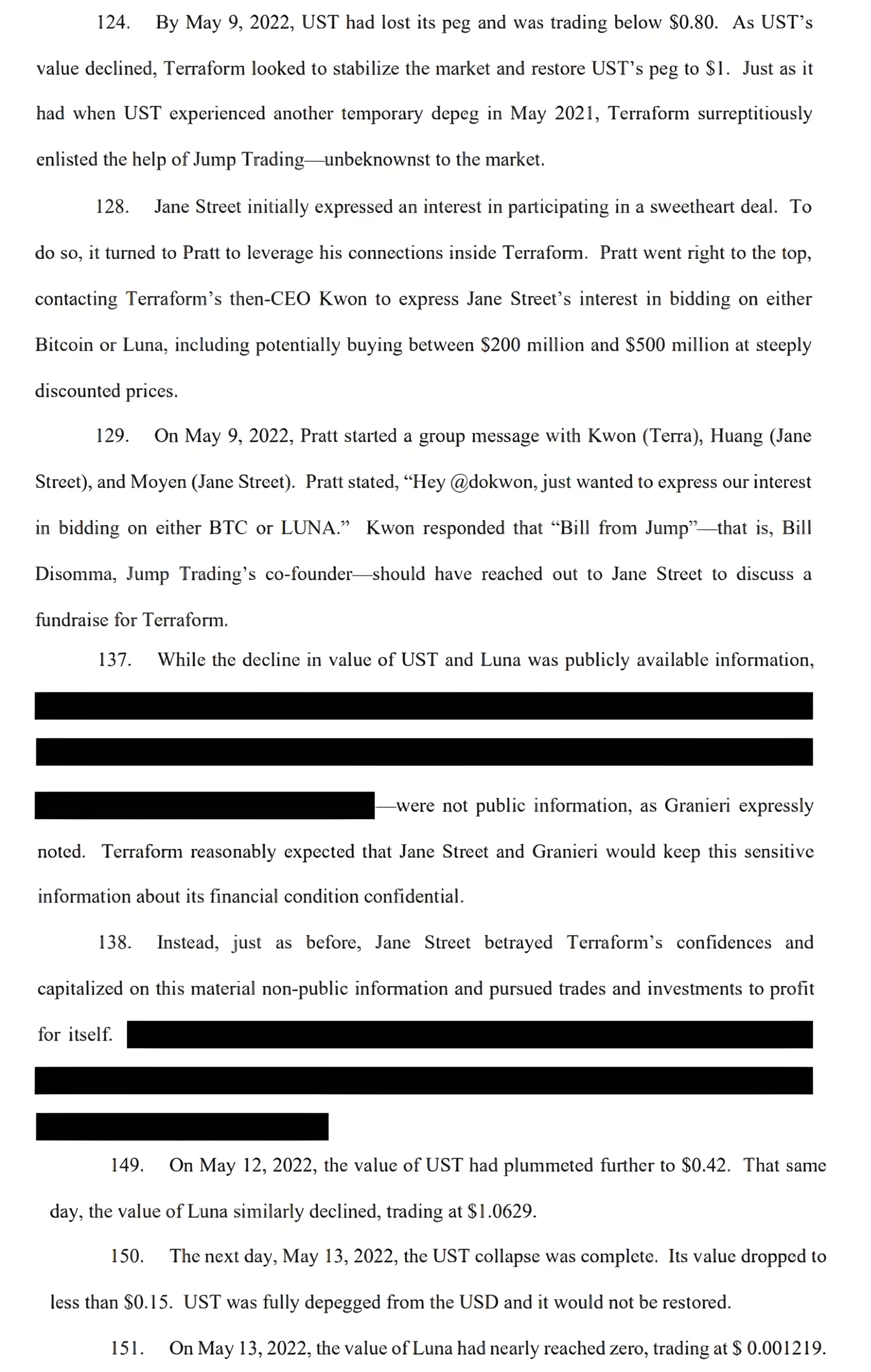
By May 9, 2022, TerraUSD had fallen below its one dollar peg and was trading under 0.80 dollars.
Terraform attempted to stabilize the peg, reportedly seeking assistance from large trading firms as it had done during a previous temporary depeg in 2021.
However, confidence deteriorated rapidly. As redemptions accelerated, the algorithmic relationship between UST and Luna amplified the crisis. Selling UST led to the minting of new Luna tokens, dramatically increasing supply and pushing Luna’s price downward.
Interest in Discounted Asset Purchases
During the unfolding crisis, Jane Street reportedly expressed interest in participating in a potential deal involving discounted assets.
Communications referenced in documents indicate discussions about possible purchases of either Bitcoin or Luna ranging from 200 million to 500 million dollars.
At the time, Terraform was exploring fundraising options to defend the peg and restore market stability.
Allegations of Non Public Information Use
Legal documents allege that certain financial condition details were not publicly available and were expected to remain confidential.
It is claimed that Jane Street may have used material non public information while pursuing trades and potential investments. Some sections of the filings remain redacted.
These allegations have not resulted in final judicial conclusions and remain part of ongoing legal and public debate.
Final Collapse
By May 12, 2022, UST had dropped to 0.42 dollars and Luna traded near 1.06 dollars.
On May 13, UST fell below 0.15 dollars and never regained its peg. Luna’s price collapsed to near zero, effectively wiping out the ecosystem’s value.
The Terra collapse became one of the defining moments of the 2022 crypto winter, triggering widespread contagion across the digital asset market.
Conclusion
The Terra collapse was the result of multiple interconnected factors, including liquidity shifts, large scale trading activity, structural design vulnerabilities, and declining market confidence.
Allegations regarding the actions of Jane Street continue to generate discussion within the crypto industry. While the full legal and factual picture remains subject to investigation, the events of May 2022 stand as a case study in liquidity risk, market structure fragility, and the speed at which confidence can evaporate in digital asset ecosystems.
Understanding these events is essential for investors, developers, and policymakers seeking to prevent similar systemic failures in the future.