



Why LUNC Staking Ratio Is Rising Despite Price Decline
Over the past seven days, the price of Terra Classic has declined by approximately 12 percent. However, during the same period, the staking ratio has continued to increase, rising from 15.14 percent to 15.21 percent.
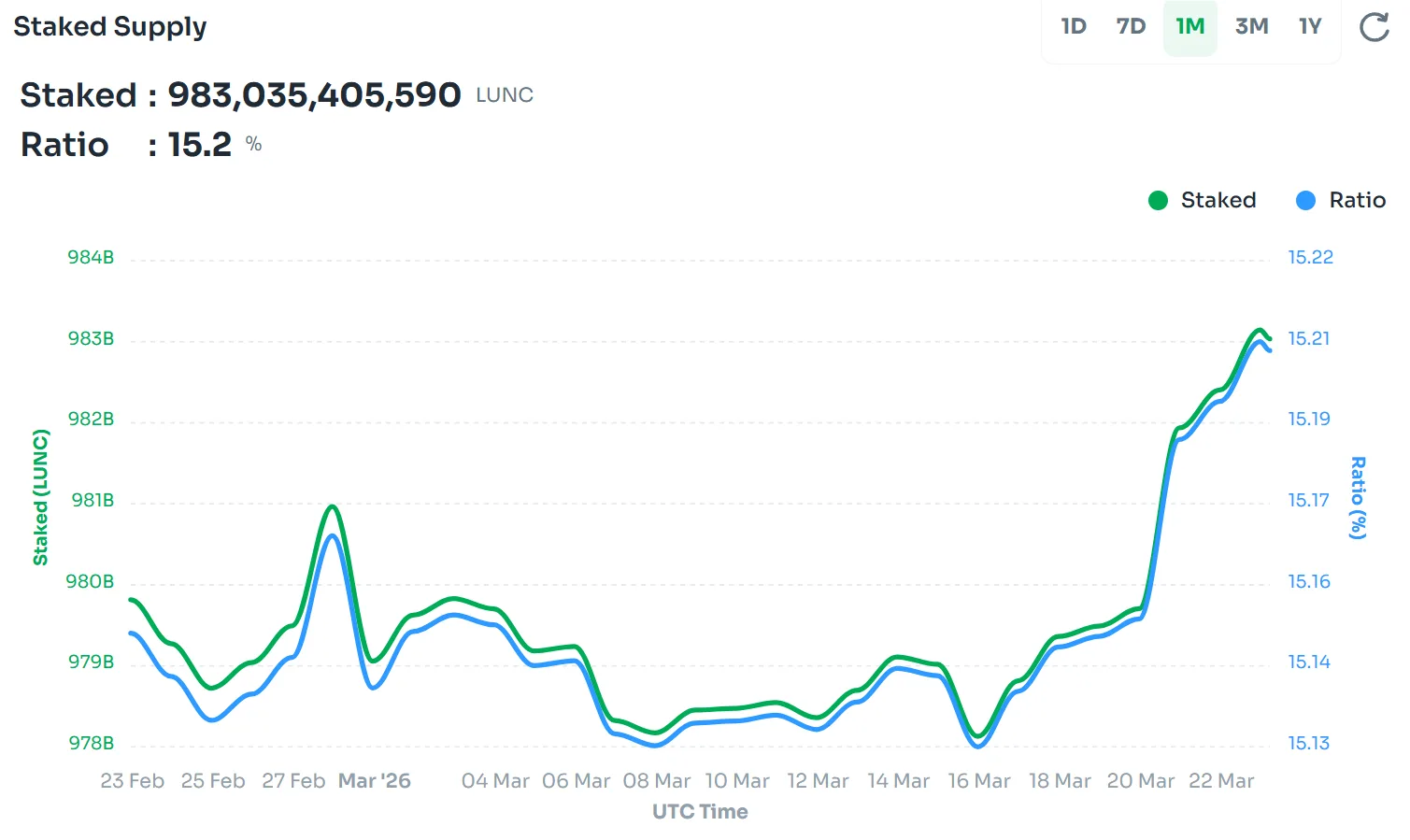
At first glance, this may seem contradictory. Typically, a falling price can reduce investor confidence. However, the current trend suggests a different narrative is unfolding within the Terra Classic ecosystem.
What the Rising Staking Ratio Means
An increasing staking ratio indicates that more holders are locking their tokens instead of selling them on the market. This behavior reflects a growing level of confidence among the community.
Rather than reacting to short term price movements, many participants appear to be focusing on long term value. By staking their LUNC, they are effectively reducing circulating supply while supporting network stability.
Strong Community Confidence
The data suggests that the Terra Classic community remains resilient. Even as the market experiences downward pressure, holders are choosing to commit their assets rather than exit positions.
This trend often signals belief in future developments, ecosystem growth, or upcoming improvements that may not yet be reflected in price action.
Supply Dynamics and Market Impact
As more tokens are staked, fewer coins are available for trading. This reduced liquid supply can play a key role in future price movements.
If demand returns while supply remains constrained, it can create conditions for stronger upward momentum. In this context, rising staking activity can be seen as a foundational factor for potential recovery.
Short Term Volatility vs Long Term Positioning
Price declines in crypto markets are not uncommon, especially in highly volatile assets. What stands out in this case is the divergence between price action and investor behavior.
While short term traders may react to market dips, long term participants are increasing their exposure through staking. This contrast highlights two different strategies coexisting within the market.
Conclusion
The recent increase in LUNC staking ratio, despite a 12 percent price decline, reflects growing confidence within the Terra Classic community. It shows that many holders are focused on long term value rather than short term fluctuations.
This trend could become a key factor in shaping future price dynamics, especially if broader market conditions begin to improve.