


USTC Staking Proposal Key Benefits and Ecosystem Impact
USTC Staking Proposal Key Benefits
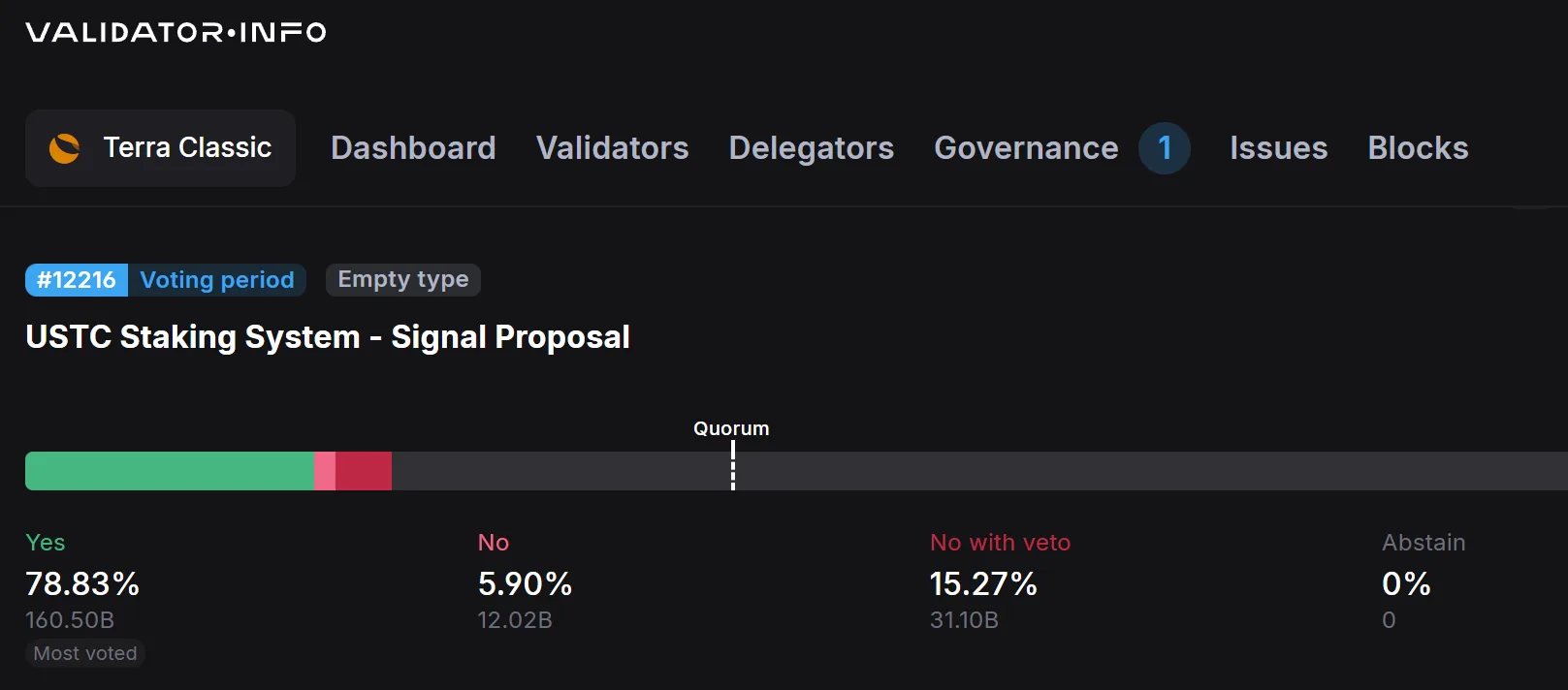
The USTC staking proposal has entered the voting stage, with more than 78 percent of votes currently in favor. This proposal focuses on introducing a structured staking mechanism for USTC without immediate minting or funding requirements.
Below is a clear breakdown of the key benefits and their impact on the Terra Classic ecosystem.
Supply and Market Impact
The proposal is designed to significantly improve market structure through supply control mechanisms.
Between 20 percent and 33 percent of USTC is expected to be removed from liquid circulation through staking participation. This reduction directly lowers immediate sell pressure and decreases the presence of large sell walls on exchanges. As a result, the overall market becomes more stable and less reactive to short term selling activity.
Holder Behavior Transformation
USTC staking encourages a shift in user behavior from short term trading to long term participation.
By introducing staking, idle USTC holdings are transformed into yield generating assets. This incentivizes holders to commit their tokens for longer periods, strengthening price stability and reducing speculative volatility.
Rewards and Sustainability
The proposal introduces a structured and controlled reward system.
The model targets an approximate annual percentage return of 10 percent. Rewards are distributed gradually through controlled emissions rather than immediate minting. Funding sources remain flexible and may include the community pool, protocol fees, ecosystem support, and optional inflation if required in the future.
On Chain Growth
Staking plays a critical role in increasing blockchain activity.
By moving liquidity from centralized exchanges to on chain staking, overall network participation increases. This shift strengthens the Terra Classic network by driving more transactions and engagement directly on chain.
USTC Utility Expansion
The proposal introduces a major new use case for USTC.
Staking complements existing utilities such as gas fees, decentralized exchange trading, liquidity pools, and the Market Module 2 framework. This positions USTC as an active economic asset rather than a passive holding.
Ecosystem Synergy
USTC staking is designed to create positive effects across the broader ecosystem.
It strengthens LUNC staking rewards by enabling USTC based incentives. Validators benefit from improved sustainability, while delegators gain enhanced returns. This interconnected system creates a reinforcing cycle of growth and participation.
Market Module 2 Support
The proposal directly supports the efficiency of Market Module 2.
By improving liquidity conditions, it enhances LUNC and USTC arbitrage opportunities. This contributes to better scalability and smoother market operations within the ecosystem.
Controlled Supply Dynamics
The staking model introduces a balanced approach to supply management.
While a portion of USTC is locked as staked principal, rewards are released gradually at an estimated rate of around 547,000 USTC per day in the model. This controlled distribution reduces long term structural sell pressure and avoids sudden inflation shocks.
Community and Governance Control
The proposal is fully governed by the community.
It allows for data driven adjustments after launch, ensuring flexibility and responsiveness to market conditions. At the current stage, there is no immediate minting or funding requirement, making it a low risk starting point for development.
Recovery Path for Users
The staking proposal also serves as a recovery mechanism.
It provides a new earning opportunity for users affected by the depeg, reintroducing meaningful participation in the ecosystem. This helps rebuild confidence while offering practical utility for existing holders.
Conclusion
The USTC staking proposal represents a strategic step toward improving supply dynamics, strengthening user engagement, and expanding utility within the Terra Classic ecosystem.
By combining controlled rewards, governance oversight, and ecosystem integration, the proposal aims to create a more stable and sustainable foundation for USTC moving forward.