Home Blog Page 23

Over 244K USTC Burned in Just 4 Days

0

Over 244K USTC Burned in Just Four Days

More than 244,000 USTC has been burned in the first four days of December. The numbers show a strong increase in activity, especially on December 4, which has not finished yet.

This early progress reflects growing on-chain activity and continued community support for strengthening USTC’s token economics.

Daily Burn Summary

Date USTC Burned
December 1 15,068
December 2 14,622
December 3 44,933
December 4* 169,843
Total 244,466

*December 4 is still ongoing and the final number may increase.

The sharp rise on December 4 shows strong participation from the community. If this trend continues, December may become one of the most active burn months in recent periods.
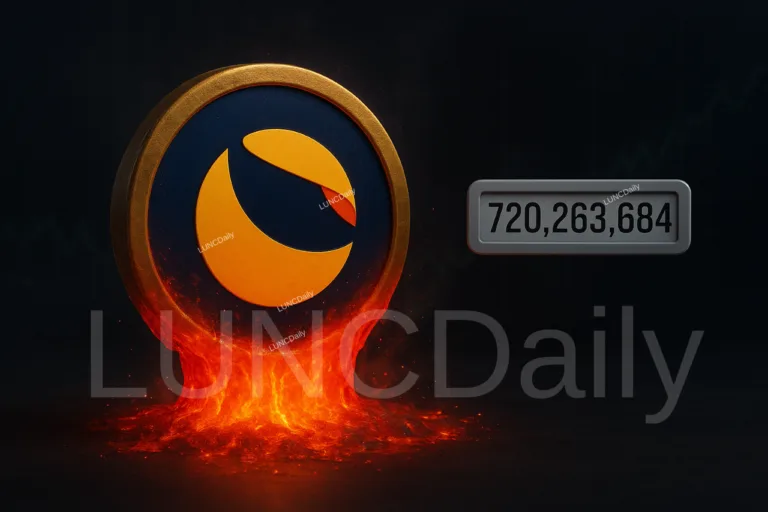

Over 720 Million LUNC Burned in Just 3 Days

720 Million LUNC Burned in Three Days

More than 720 million LUNC were burned in the first three days of December 2025. This strong start shows higher on-chain activity and continued support from the Terra Classic community.

LUNC Burn Recap (December 2025)

Date LUNC Burned
December 1 602,506,463
December 2 40,982,656
December 3 76,774,565
Total 720,263,684

This early-month burn highlights strong community participation and growing momentum for reducing the LUNC supply.

9 Days Left Until Do Kwon’s Sentencing in U.S. Federal Court

0

Nine Days Left Until Do Kwon’s Sentencing in U.S. Federal Court

Do Kwon is scheduled to be sentenced by United States District Judge Paul Engelmayer on December 11 in Manhattan. This date marks an important milestone in the ongoing legal proceedings surrounding his case in the United States.

The sentencing hearing will take place at the United States District Court in Manhattan, where Judge Engelmayer will determine the final outcome based on the charges presented. This decision follows a long period of international legal movement that ultimately brought the case into the United States judicial system.

With nine days remaining until the hearing, global attention continues to focus on what the final judgment will be. The crypto community, legal observers, and market analysts are monitoring the situation closely, waiting to see the implications of the court’s decision when Do Kwon appears before the judge.

Why Binance Remains a Critical Force for the LUNC Ecosystem

Why Binance Remains a Critical Force for the LUNC Ecosystem

Many in the LUNC community question whether Binance is still important for the future of Terra Classic. To understand this, we need to look at Binance’s history and its current contribution to the ecosystem.

Before the crash, Binance was a major investor in Terra Luna. After the collapse, Binance continued supporting the community through its monthly LUNC burn program, using trading fees to reduce supply. At first, Binance burned 100 percent of all LUNC trading fees. When the community proposed using a portion of Binance’s previously burned tokens to fund the community pool, Binance reduced the burn rate to 50 percent, which remains in place today.

Is Binance important for LUNC? The answer is yes. Here are the main reasons:

  1. Since 2022, a total of 426.56 billion LUNC has been burned. Binance contributed 17.79 percent of that amount, burning 75.89 billion LUNC.
  2. Binance is the largest exchange that has not delisted LUNC or USTC, while other major platforms such as Kraken have already announced delisting.
  3. Binance continues its monthly LUNC burn program using trading fees, providing consistent supply reduction.
  4. Binance holds nearly 2 trillion LUNC, equal to about 28.08 percent of the total supply, making it a major stakeholder.

In summary, Binance remains a key supporter of LUNC, contributing through burns, trading access, and substantial token ownership. Its involvement continues to strengthen the Terra Classic ecosystem.

LUNC Staking Reaches 15 Percent After 1.5 Billion LUNC Is Added

LUNC Staking Reaches 15 Percent After 1.5 Billion LUNC Is Added

The Terra Classic network recorded a clear increase in staking during the last 24 hours. A total of 1,570,262,808 LUNC were added, bringing the total staked amount to 972,632,121,793 and returning the staking ratio to 15 percent.

The rise in staking shows that more community members are choosing to support the network. Higher staking reduces the circulating supply and strengthens network security. It also reflects growing confidence in the long term recovery of Terra Classic.

The community now looks toward continued progress that can support long term growth and further improve network stability.

Over 3 Years, Only 426.53 Billion LUNC Burned – What Is the Next Plan for 2026?

0

LUNC Burn Progress After Three Years

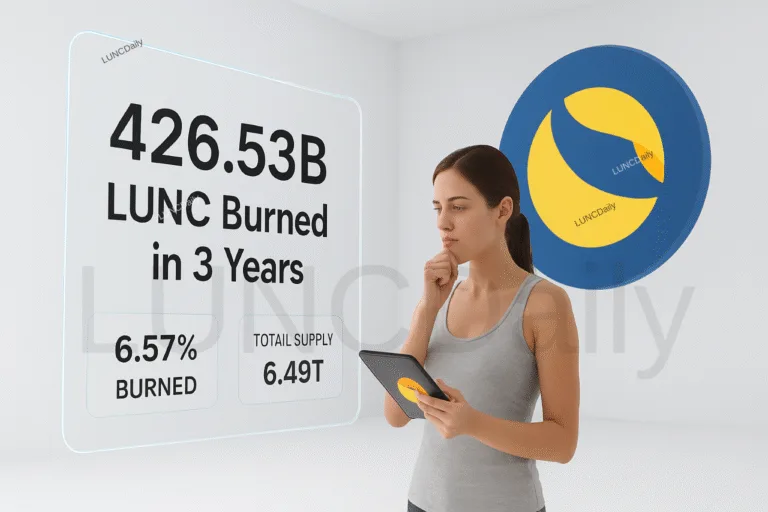
The Terra Classic community has completed more than three years of continuous burning efforts. From May 2022 to December 2025, a total of 426.53 billion LUNC has been removed from circulation.

The burn amount comes from two primary sources. The table below presents the data more clearly.

Burn Source Amount Burned (LUNC)
On chain transaction burns 80.71 billion
Direct burns to burn wallet (including Binance program) 345.82 billion
Total LUNC burned 426.53 billion
Total LUNC supply 6,493,711,041,405
Percentage burned 6.57 percent

Even after three years and seven months, only 6.57 percent of the total supply has been burned. This slow reduction highlights the challenges the community is facing.

Recently, LUNC was delisted from several centralized exchanges, with Kraken being the latest. These developments indicate a need for the community to review its direction and create a new, sustainable plan for 2026. A strategic approach will be important to maintain investor interest and ensure long term ecosystem stability.

Why LUNC Burns Stay Low Despite High Daily Trading Volume

Why LUNC Burns Stay Low Despite High Daily Trading Volume

Many Terra Classic supporters wonder why LUNC burns stay low even though CoinMarketCap and CoinGecko show daily trading volumes of three to five million dollars. This article explains the reason in a simple and clear way.

Understanding Where Burn Tax Applies

In our previous article about on chain and off chain activity, we explained the difference between the two. The main point to understand is this:

The burn tax only applies to on chain transactions. It does not apply to off chain transactions.


Why High Volume Does Not Equal High Burns

Most LUNC trading happens off chain on centralized exchanges. Off chain transactions do not include the burn tax, so they do not reduce the supply. This is why burns remain low even when trading volume appears high.

How to Increase LUNC Burns

There are two common approaches to increasing the burn rate:

Raise the Tax

Some people suggest increasing the on chain tax. While this seems simple, higher taxes can discourage users because they lose more value with every transaction.

Increase On Chain Activity

The most effective method is to encourage more on chain activity. Every on chain action contributes to burns, including:

  • Trading LUNC
  • Trading USTC
  • Trading Layer 2 tokens
  • Sending tokens between wallets

The more activity that happens on chain, the more LUNC is burned.

Conclusion

LUNC burns depend on on chain transactions. If most trading continues to occur off chain, burn numbers will remain low. Increasing on chain usage is the key to boosting the burn rate and supporting long term recovery.

Understanding On-Chain and Off-Chain: A Simple Guide for the LUNC Community

0

Understanding On-Chain and Off-Chain: A Simple Guide for the LUNC Community

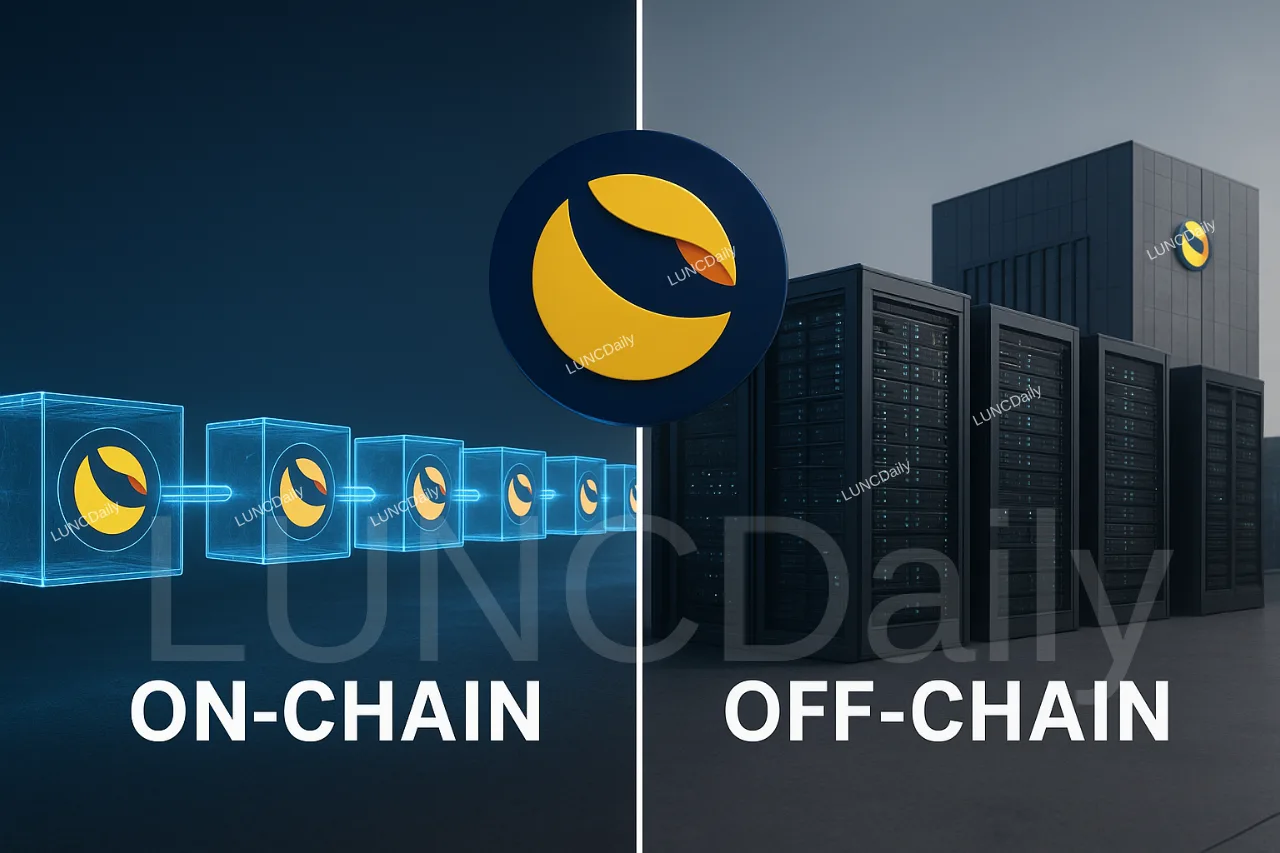
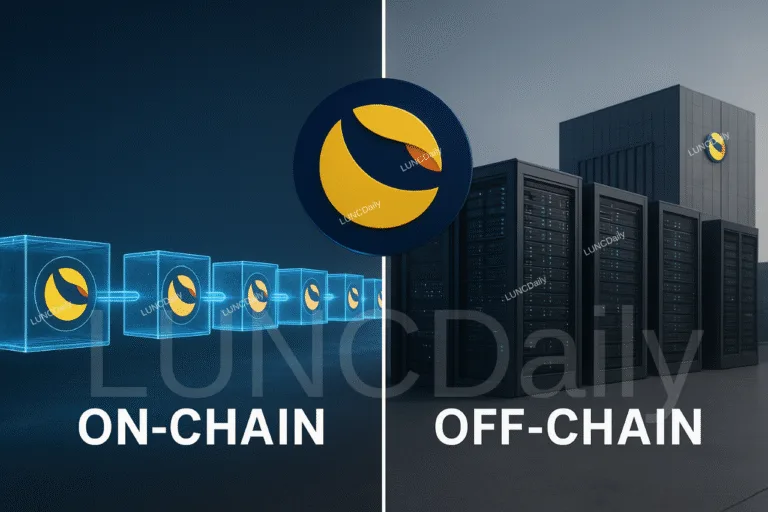
Many in the LUNC community often wonder about the difference between on-chain and off-chain activity. These terms explain where transactions are recorded and how transparent they are. This guide breaks them down in simple language.

On-Chain

Definition: Transactions and data recorded directly on the blockchain.

Transparency: Fully public, permanent, and verifiable by anyone.

Examples:

  • Trading LUNC or USTC on a decentralized exchange built on the LUNC chain.
  • Sending LUNC from one wallet to another using Terra Station, Keplr, or similar wallets.

Off-Chain

Definition: Transactions or data handled outside the blockchain.

Transparency: Not fully public and not recorded on-chain.

Examples:

  • Trading LUNC on centralized exchanges such as Binance.
  • Internal balance updates within custodial platforms that do not create blockchain transactions.

Why This Matters

Understanding the difference helps you know where your activity is recorded and who controls the data. On-chain activity offers full transparency, while off-chain activity relies on the platform managing the records. Both have their uses depending on your needs.

Start New Month with New Low for LUNC

0

Start New Month with New Low for LUNC

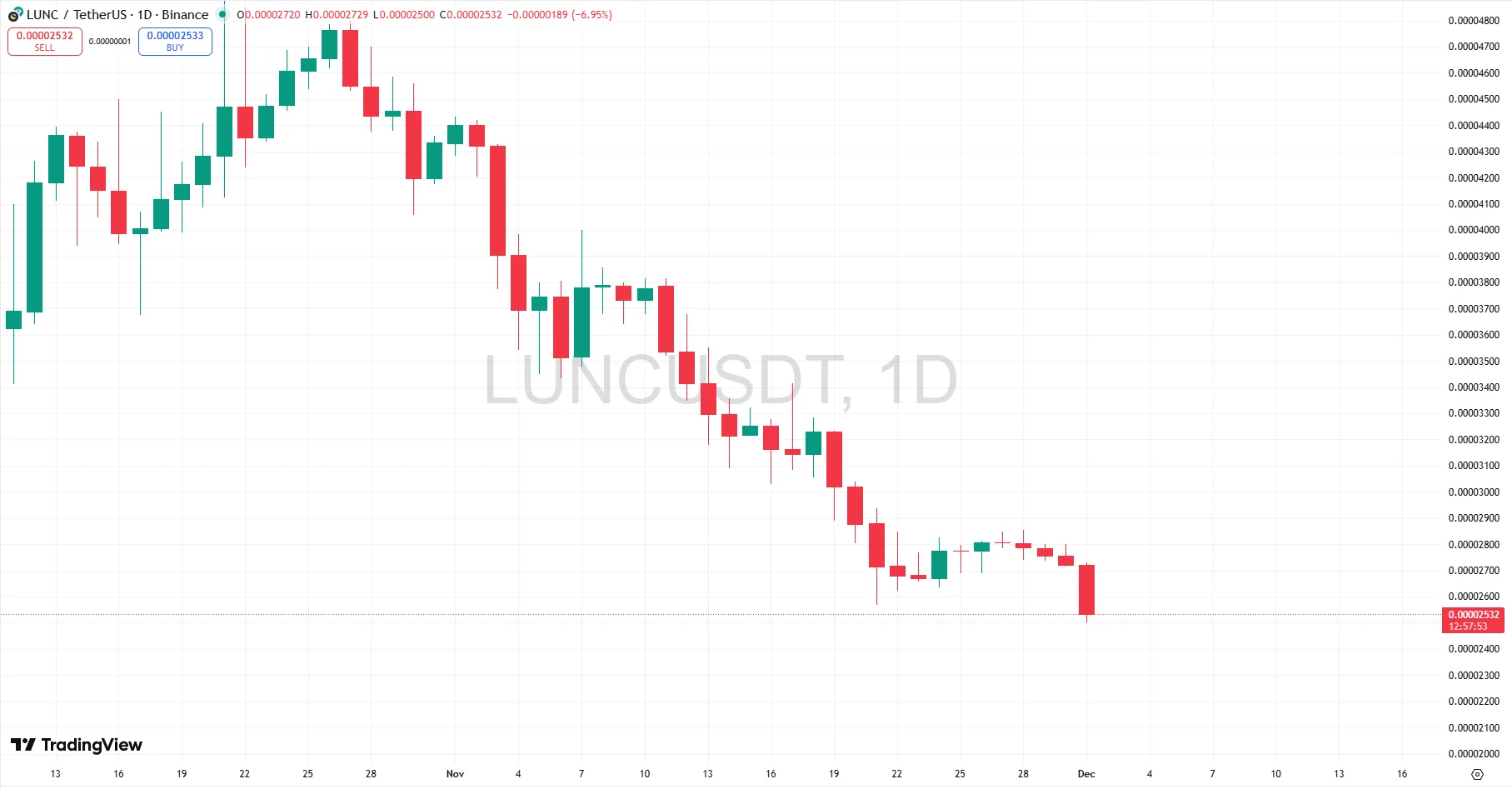
Luna Classic began the month with a sharp decline as the price dropped 7.9 percent today, falling to $0.000025. The downturn followed a sudden pullback in Bitcoin, which fell to the $85,000 level.

The unexpected drop in Bitcoin sent shockwaves across the crypto market. The first day of December brought surprising volatility despite the absence of negative news, policy updates, or regulatory triggers. The market experienced a broad correction without any clear catalyst.

More than $576 million in positions were liquidated during the downturn. Long positions accounted for approximately $541.86 million, while short positions saw $34.20 million liquidated. The scale of these liquidations reflects the volatility that continues to shape the crypto landscape.

The Luna Classic community is now watching to see whether the market stabilizes or continues to react to Bitcoin movements as December begins with heightened uncertainty.

November LUNC and USTC Burn Recap Shows Steady Community Commitment

0

November LUNC and USTC Burn Recap Shows Steady Community Commitment

The Terra Classic community continued its commitment to reducing supply throughout November, recording significant burn activity for both LUNC and USTC. These consistent daily contributions support long-term value and strengthen the recovery of the Terra Classic ecosystem.

LUNC Burn Recap for November

A total of 3,552,441,353 LUNC was burned in November. Daily burn levels remained steady, with several high-volume days contributing to the month’s strong overall performance.

Date LUNC Burn
1 672,483,780
2 30,795,957
3 505,476,172
4 259,292,102
5 220,329,764
6 228,837,914
7 182,946,514
8 15,488,977
9 30,022,743
10 137,746,118
11 71,098,812
12 85,465,448
13 49,512,928
14 61,046,451
15 26,059,848
16 64,103,576
17 28,133,604
18 26,917,262
19 134,556,897
20 112,415,488
21 111,721,810
22 40,758,046
23 77,642,930
24 53,816,937
25 54,514,663
26 170,924,890
27 28,225,413
28 24,774,563
29 19,355,027
30 27,976,719
Total 3,552,441,353

USTC Burn Recap for November

USTC recorded a total burn of 1,551,309 USTC in November. Although smaller in scale compared to LUNC, these burns remain important for stabilization efforts.

Date USTC Burn
1 16,784
2 21,155
3 35,884
4 33,414
5 20,066
6 159,089
7 49,063
8 11,890
9 25,819
10 113,195
11 169,638
12 18,428
13 77,754
14 17,900
15 21,957
16 28,570
17 394,310
18 13,899
19 31,977
20 49,569
21 43,912
22 11,674
23 6,933
24 26,407
25 26,773
26 50,823
27 22,241
28 15,316
29 8,929
30 27,940
Total 1,551,309

The combined burn activity reflects the ongoing dedication of the Terra Classic community to reducing supply and supporting long-term ecosystem recovery.