Home Blog Page 32

Trust Wallet Has Been Hacked and Why LUNC Users Must Be Careful

0

Trust Wallet Browser Extension Security Incident Explained and Why LUNC Users Must Be Careful

Recent reports have raised serious concerns about the security of the Trust Wallet browser extension.
Community investigations initially suggested that a supply chain attack may have been introduced
through an update released on December 24. According to multiple reports, users who imported their
seed phrases into the extension experienced immediate and unauthorized wallet draining.

More than six million dollars in digital assets are believed to have been stolen, with exploiters
using multiple wallet addresses to distribute the funds. These early findings led to widespread
warnings advising users to stop using the Trust Wallet browser extension until official clarification
was provided.

Official Statement From Trust Wallet

Trust Wallet has since released an official statement addressing the incident. According to the
company, the security issue affects only a specific version of the browser extension.
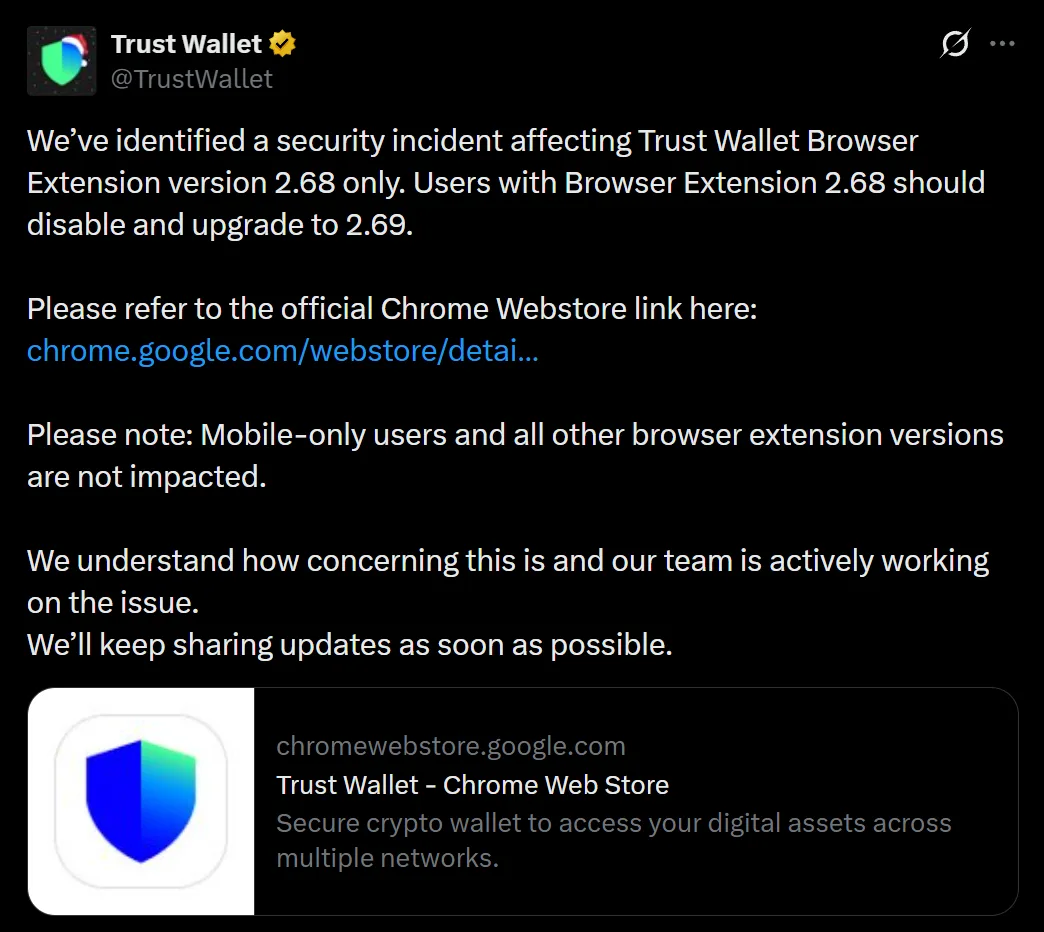
Trust Wallet stated that they have identified a security incident impacting Trust Wallet Browser
Extension version 2.68 only. Users running browser extension version 2.68 are advised to disable
it immediately and upgrade to version 2.69.

The company also confirmed that mobile only users are not impacted by this incident. Additionally,
all other browser extension versions outside of version 2.68 are reported to be unaffected.

Trust Wallet acknowledged the seriousness of the situation and stated that their team is actively
working on resolving the issue. They also confirmed that further updates will be shared as soon
as possible.

What Security Researchers Observed

Before the official clarification, security researchers and community members analyzing the issue
pointed to a file within the extension code named 4482.js. Reports indicated that a recent update
added hidden code that silently transmitted wallet related data outside the extension.

This code allegedly posed as analytics functionality while monitoring wallet activity. It reportedly
triggered when a seed phrase was imported, sending sensitive data to an external domain identified
as metrics trustwallet dot com.

The domain was reportedly registered only days before the incident and later taken offline, raising
further suspicion. An alleged message linked to the attacker stated, “He who controls the spice
controls the universe,” which reinforced concerns about deliberate malicious intent.

Why This Matters for the LUNC Community

This incident is especially important for the Terra Classic community because Trust Wallet is widely
used for storing and transacting LUNC. Many community members rely on the browser extension for
everyday transactions, staking interactions, and wallet access.

Although Trust Wallet has confirmed that only browser extension version 2.68 is affected, LUNC
holders are urged to double check their wallet version immediately. Users who imported seed phrases
into the affected version may face increased risk.

Until the situation is fully resolved and independently verified, caution remains essential. The
LUNC community is encouraged to prioritize wallet security, avoid unnecessary seed phrase imports,
and use only verified and updated wallet software.

Protecting private keys and seed phrases is critical. Once exposed, funds can be drained instantly
and irreversibly. Staying informed and following official security guidance is essential for
safeguarding LUNC assets and maintaining trust across the Terra Classic ecosystem.
Why Jump Trading Is Being Sued Over the Terra Collapse?

0

Why Jump Trading Is Being Sued Over the Terra Collapse

Jump Trading, one of the world’s largest high frequency trading firms, is facing a major lawsuit connected to the collapse of the Terra ecosystem. The administrator managing the wind down of Terraform Labs has filed a legal claim seeking four billion dollars in damages, alleging that Jump Trading played a hidden role in propping up TerraUSD before its eventual failure.

According to the lawsuit, Jump Trading allegedly carried out large scale, undisclosed purchases of TerraUSD during multiple periods when the stablecoin lost its one dollar peg in 2021 and 2022. These interventions are said to have artificially supported the price of UST, making it appear as though Terra’s algorithmic stabilization mechanism was working as intended.

The complaint argues that this activity created a false sense of security across the market. Investors and users were led to believe that UST was stabilizing naturally, when in reality its price was being supported by a powerful trading firm with significant market influence and advanced trading infrastructure. As a result, structural weaknesses within the Terra system remained hidden.

The Terraform Labs estate further alleges that Jump Trading was not acting as a neutral liquidity provider. Instead, the firm is accused of using its position and inside knowledge to profit from the volatility it helped manage. Court filings claim that Jump Trading earned approximately one billion dollars through trading advantages and preferential token arrangements, while retail investors remained unaware of the firm’s involvement.

When Terra ultimately collapsed in May 2022, the failure triggered an estimated forty billion dollar loss across UST and LUNA. The lawsuit claims that the earlier artificial stability magnified the scale of the collapse by encouraging continued participation in a system that was fundamentally unstable.

The case also highlights the broader issue of market power in the cryptocurrency industry. Jump Trading’s technological scale and data processing capabilities are described as far exceeding those of many competitors. While the lawsuit does not allege the use of illegal infrastructure, it argues that this imbalance amplified the market impact of Jump’s trades and raises serious concerns around transparency and market integrity.

If the court rules in favor of the Terraform Labs estate, the outcome could set an important legal precedent. It may help define clearer boundaries between legitimate market making and market manipulation in crypto markets. Any recovered funds would likely be directed toward compensating creditors and victims affected by the Terra collapse.

As the case moves forward, it is expected to draw close attention from regulators, investors, and the wider crypto community, as it may shape how large trading firms are allowed to operate in digital asset markets in the future.

$4 Billion Lawsuit Alleges Jump Trading Played Key Role in Terraform’s Collapse

0

$4 Billion Lawsuit Alleges Jump Trading Played Key Role in Terraform’s Collapse

The administrator overseeing the wind down of Terraform Labs has filed a $4 billion lawsuit against high frequency trading firm Jump Trading, accusing the company of secretly manipulating markets and contributing to the collapse of the Terra ecosystem.

The lawsuit claims that Jump Trading’s actions created a false sense of stability around TerraUSD UST, masking deep structural weaknesses that later led to one of the largest failures in crypto history.

Terraform Labs Estate Targets Jump Trading Executives

The complaint names Jump Trading, its co founder William DiSomma, and Kanav Kariya, the former head of Jump’s crypto division. According to the filing, the defendants engaged in undisclosed trading activity that allowed them to profit while misleading the broader market.

Court documents cited by The Wall Street Journal state that Jump allegedly intervened during multiple UST de pegging events in 2021 and 2022. These interventions were not publicly disclosed and were carried out at a scale large enough to influence market perception.

Allegations of Artificial Price Support

At the center of the lawsuit is the claim that Jump aggressively purchased UST whenever the algorithmic stablecoin traded below its one dollar peg. The Terraform Labs estate argues that these purchases artificially inflated demand and gave investors the impression that UST’s peg mechanism was functioning normally.

Rather than stabilizing the system, the complaint claims these actions delayed the recognition of serious design flaws. As a result, confidence in the Terra ecosystem remained high until it collapsed abruptly, amplifying losses for investors.

Claims of Profiteering and Inside Advantage

The estate argues that Jump Trading was not acting as a neutral liquidity provider. Instead, it allegedly used its market position, technological advantages, and inside knowledge to extract profits from volatility it helped manage.

According to the filing, Jump is accused of earning approximately $1 billion through preferential token arrangements and strategic trading advantages. During this period, retail investors were allegedly unaware that UST’s stability relied on behind the scenes support rather than organic market demand.

Terra’s Collapse and Its Lasting Impact

In May 2022, the Terra ecosystem unraveled, wiping out an estimated $40 billion across UST and LUNA markets. The lawsuit claims that the illusion of stability created by earlier interventions made the eventual collapse more damaging than it might have been otherwise.

The complaint argues that if the true fragility of the system had been visible earlier, investors may have reduced exposure before the final breakdown.

Broader Implications for Crypto Markets

Industry analyst Colin Wu has highlighted Jump Trading’s advanced quote data processing capabilities, noting that its technological scale far exceeds that of many competitors. While the lawsuit does not accuse Jump of using illegal infrastructure, it argues that this scale significantly amplified the market impact of its trades.

If the Terraform Labs estate succeeds, the case could set an important legal precedent. A ruling in its favor may help define clearer boundaries between legitimate market making and market manipulation in crypto markets.

Any recovered funds would likely be used to compensate creditors and victims of the Terra collapse, while also reshaping expectations for transparency and disclosure among large trading firms operating in the digital asset space.

Nearly One Trillion LUNC Now Staked as Network Participation Reaches 15%

0

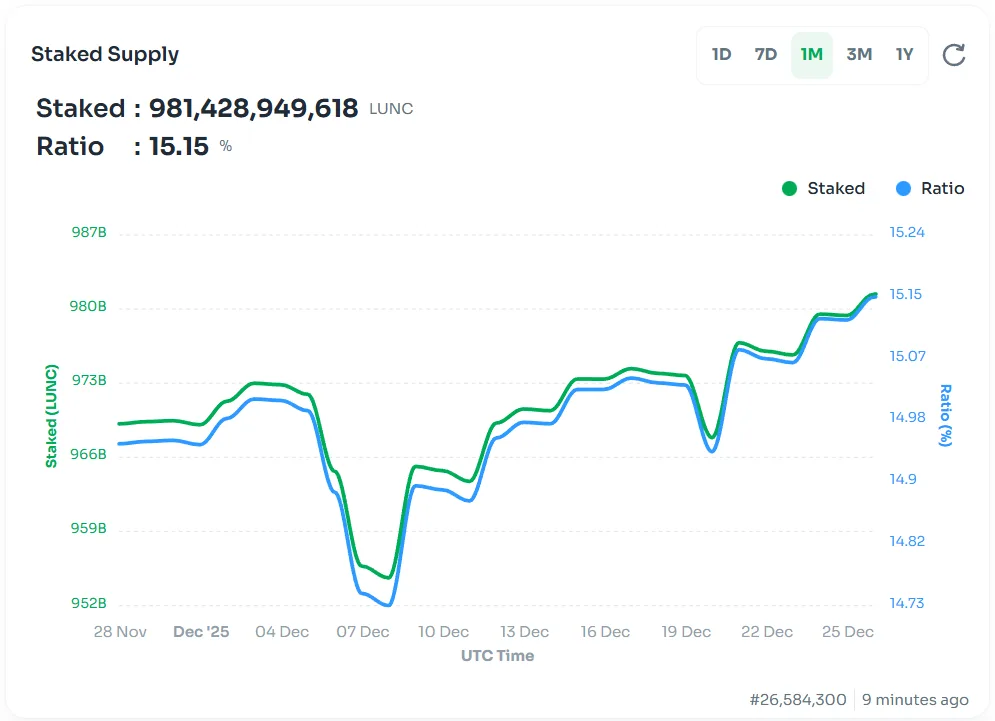
The Terra Classic network continues to show strong signs of long term commitment from its community, with staking levels approaching a major milestone. Almost one trillion LUNC are now locked in staking, reflecting growing confidence in the network’s stability and governance process.

According to the latest data, a total of 981,428,949,618 LUNC are currently staked. This represents approximately 15.15 percent of the total LUNC supply. These tokens are locked by holders who actively support the network by delegating to validators, helping secure the blockchain and participate in on chain governance.


Staking plays a critical role in the Terra Classic ecosystem. By locking LUNC, participants reduce the circulating supply, which can help limit short term selling pressure. At the same time, stakers contribute directly to network security and decentralization, ensuring that the blockchain remains resilient and community driven.
The steady increase in the staking ratio over recent weeks suggests renewed engagement across the ecosystem. Despite market volatility, many holders appear focused on long term participation rather than short term speculation. This behavior is often seen as a positive indicator of trust in ongoing development efforts and community led initiatives.

With nearly one trillion LUNC already locked, the Terra Classic network is moving toward a stronger and more stable foundation. If this trend continues, higher staking participation could further enhance network security, governance effectiveness, and overall ecosystem confidence in the months ahead.

Nearly 2 Million USTC Burned in the Last 25 Days

0

USTC Burn Update: Nearly 2 Million Tokens Burned in the Last 25 Days

The Terra Classic ecosystem continues its steady progress in reducing the circulating supply of TerraClassicUSD USTC. Over the last 25 days, a total of 1,996,377 USTC has been permanently removed from circulation through on chain burn activity.

This ongoing burn effort reflects the community’s commitment to restoring long term value and improving the overall health of the Terra Classic network. While daily burn volumes vary, the cumulative impact demonstrates consistent participation from traders and ecosystem contributors.

Burning USTC plays a critical role in reducing supply over time. Each transaction sent to a burn address permanently removes tokens, helping balance supply and demand. Although daily amounts may appear small in isolation, the combined total highlights the importance of sustained activity.

USTC Daily Burn Recap

Month Date USTC Burn
December 1 15,068
December 2 14,622
December 3 44,933
December 4 189,151
December 5 157,437
December 6 603,331
December 7 135,725
December 8 51,193
December 9 18,630
December 10 162,388
December 11 24,001
December 12 112,496
December 13 27,710
December 14 37,447
December 15 109,253
December 16 16,841
December 17 122,039
December 18 60,992
December 19 15,841
December 20 19,067
December 21 13,430
December 22 16,322
December 23 11,530
December 24 5,892
December 25 11,038
Total 1,996,377

What This Means for Terra Classic

Consistent USTC burns signal long term dedication from the Terra Classic community. While supply reduction alone does not guarantee price movement, it is a foundational step toward restoring confidence and improving token economics.

As more users trade on chain and participate in burn related activities, the cumulative effect can strengthen the ecosystem over time. Transparency through regular burn reports also helps the community track progress and stay informed.

The Terra Classic journey continues, driven by community action and measurable on chain results.

Over 4.3 Billion LUNC Burned in the Last 25 Days

0

Over 4.3 Billion LUNC Burned in the Last 25 Days as Terra Classic Community Maintains Momentum

The Terra Classic network continues to demonstrate strong community driven commitment to reducing the circulating supply of LUNC. Over the past 25 days, a total of 4,340,147,758 LUNC has been permanently removed from circulation through consistent daily burns.

This steady burn activity highlights ongoing participation from traders, platforms, and community initiatives that support the long term sustainability of the Terra Classic ecosystem. While daily burn amounts naturally fluctuate based on trading volume and network activity, the overall trend reflects continued engagement and discipline.

Large burn spikes were recorded on several days, particularly during periods of increased on chain activity, reinforcing the importance of consistent participation rather than reliance on single events.

Daily LUNC Burn Breakdown

Month Date LUNC Burned
December 1 602,506,463
December 2 40,982,656
December 3 76,774,565
December 4 57,034,202
December 5 691,616,593
December 6 308,917,077
December 7 275,683,055
December 8 125,661,572
December 9 226,866,684
December 10 234,059,483
December 11 168,749,439
December 12 335,397,628
December 13 233,673,361
December 14 108,355,346
December 15 128,830,335
December 16 62,266,063
December 17 162,927,071
December 18 85,584,019
December 19 37,754,603
December 20 40,899,393
December 21 38,092,070
December 22 83,014,850
December 23 43,898,770
December 24 90,472,510
December 25 80,129,950
Total 4,340,147,758

What This Means for Terra Classic

Burning tokens does not guarantee immediate price movement, but it plays a critical role in reducing long term supply pressure. Sustained burns, combined with real network usage, governance improvements, and infrastructure development, strengthen Terra Classic’s position as a community governed blockchain.

The consistency seen over the last 25 days shows that the LUNC ecosystem remains active and engaged, laying a foundation for gradual progress rather than short term speculation.

As long as on chain activity continues and community support remains strong, LUNC burns will remain a key pillar in Terra Classic’s ongoing recovery efforts.

Why the LUNA Classic Burn Rate Is Declining and How On Chain Trading Can Reverse the Trend

0

Why the LUNA Classic Burn Rate Is Declining and How On Chain Trading Can Reverse the Trend

The LUNA Classic burn rate has continued to decline in recent weeks, raising concerns across the community about the long term effectiveness of the burn mechanism.

Currently, the average daily LUNC burn has dropped to approximately 187,529,387 LUNC per day. This decline is not caused by changes to the burn tax itself, but primarily by lower on chain trading volume.

On the Terra Classic network, every on chain transaction is subject to a burn tax. This means that each trade directly contributes to reducing the total LUNC supply. When on chain activity slows down, fewer transactions occur, and the total amount of LUNC burned naturally decreases.

To increase the burn rate, the key requirement is simple: higher on chain volume.

The community can help drive this by actively trading LUNC using pairs such as USTC, USDC, or supported layer 2 tokens directly on chain. Unlike off chain or centralized trading, on chain trading ensures that each transaction contributes to network activity and token burning.

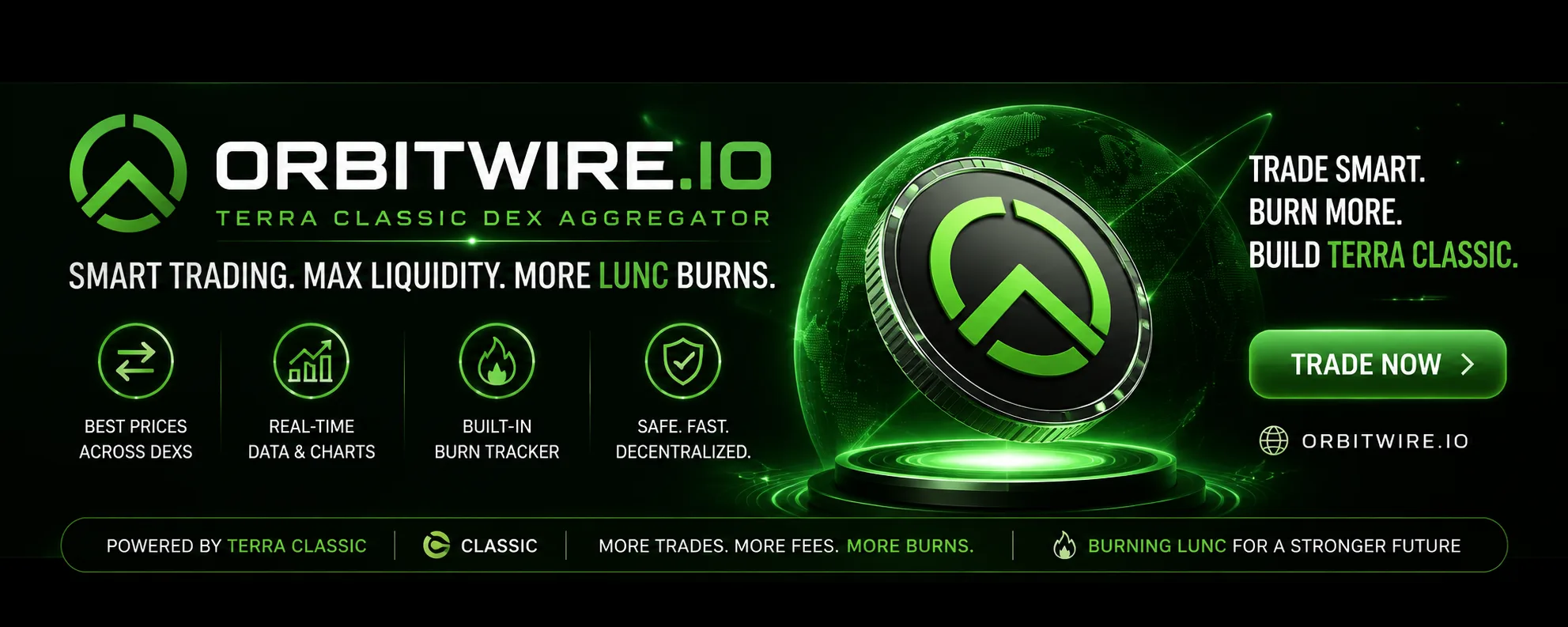
Several trading platforms built directly on the Terra Classic network play an important role in this process. One such platform is Orbit Wire, an on chain trading platform developed specifically for LUNC. Every transaction executed on Orbit Wire generates real on chain volume, directly supporting the burn mechanism.

Trade on chain and support the burn at:


Increasing on chain trading activity is one of the most effective ways the community can actively participate in strengthening the Terra Classic ecosystem while accelerating the LUNC burn rate.

Binance Opens LUNC USDC Spot Trading Pair to Expand Terra Classic Market Access

0

Binance Opens LUNC\USDC Spot Trading Pair to Expand Terra Classic Market Access

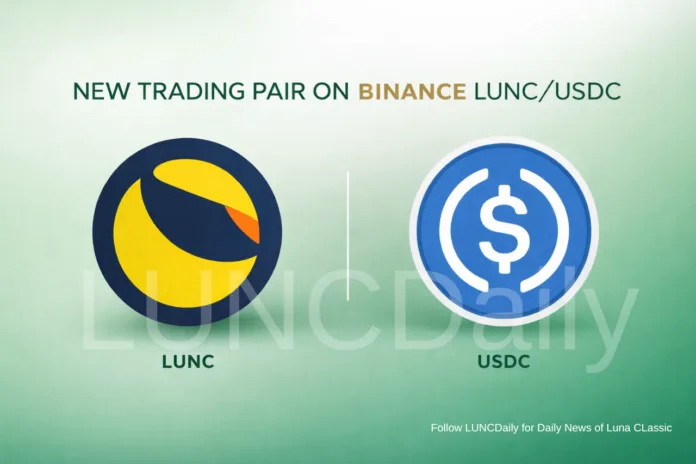
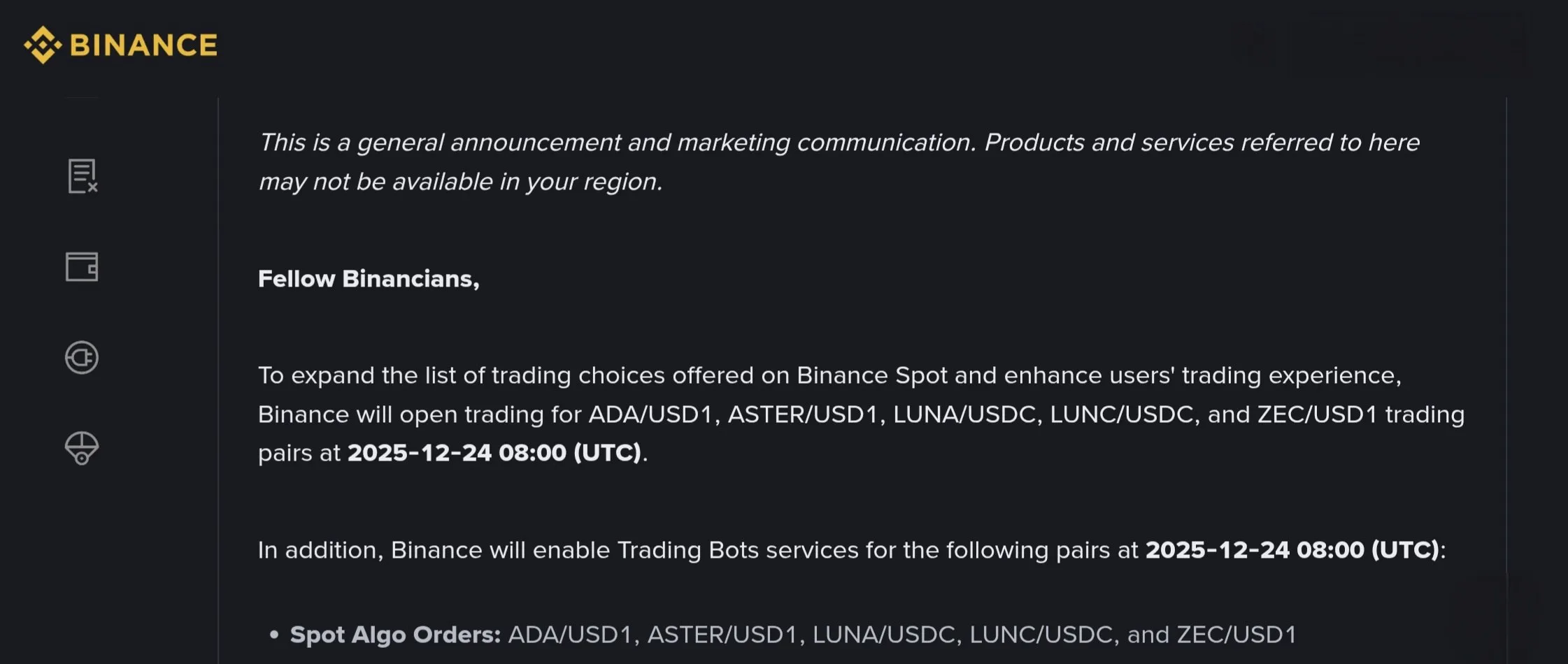
Binance has announced the launch of a new LUNC/USDC spot trading pair, marking another important step in improving market access and liquidity for the Terra Classic ecosystem. The new trading pair will go live on 24 December 2025 at 08:00 UTC, allowing users to trade LUNC directly against USDC on Binance Spot.
The introduction of the LUNC/USDC pair enables traders to enter and exit positions using a stablecoin without relying on intermediary assets.


This simplifies the trading process and reduces friction for users who prefer stablecoin based trading strategies.

In addition to standard spot trading, Binance will also activate Trading Bots support for the LUNC/USDC pair at the same time. This allows users to deploy automated strategies such as Spot Algo Orders, helping traders manage risk and optimize entries and exits in changing market conditions.

The addition of LUNC/USDC is expected to enhance overall trading efficiency by improving liquidity and offering more flexible trading options. Stablecoin pairs typically attract higher participation from both retail and professional traders due to reduced volatility compared to fiat denominated markets.

For the Terra Classic community, this development strengthens LUNC’s presence on one of the world’s largest exchanges. Increased trading accessibility and automation tools can support healthier market activity and provide users with more advanced ways to interact with LUNC.

As exchange infrastructure continues to expand around Terra Classic, the availability of stablecoin trading pairs such as LUNC USDC reflects ongoing interest in maintaining active and accessible markets for the token.

Terra Classic Records Over 4.1 Billion LUNC Burned in Just 22 Days

0

Terra Classic Records Over 4.1 Billion LUNC Burned in Just 22 Days

The Terra Classic network has achieved a major milestone, with more than 4.1 billion LUNC burned in the last 22 days. This progress highlights the continued commitment of the Terra Classic community to reducing the circulating supply and strengthening the long term value of the LUNC ecosystem.

Token burning plays a crucial role in Terra Classic’s economic model. By permanently removing LUNC from circulation, the network aims to create a healthier supply dynamic while reinforcing confidence among holders, developers, and ecosystem participants.

Between December 1 and December 22, consistent daily burn activity contributed to a total of 4,125,646,528 LUNC removed from supply. Several days stood out with exceptionally high burn volumes, reflecting strong on chain activity and ongoing community driven initiatives.

Below is a detailed daily breakdown of LUNC burned during this 22 day period.

Daily LUNC Burn Recap

Month Date LUNC Burned
December 1 602,506,463
December 2 40,982,656
December 3 76,774,565
December 4 57,034,202
December 5 691,616,593
December 6 308,917,077
December 7 275,683,055
December 8 125,661,572
December 9 226,866,684
December 10 234,059,483
December 11 168,749,439
December 12 335,397,628
December 13 233,673,361
December 14 108,355,346
December 15 128,830,335
December 16 62,266,063
December 17 162,927,071
December 18 85,584,019
December 19 37,754,603
December 20 40,899,393
December 21 38,092,070
December 22 83,014,850
Total 4,125,646,528

What This Means for Terra Classic

Burning over 4.1 billion LUNC in less than a month demonstrates steady on chain engagement and reinforces the effectiveness of ongoing burn mechanisms. While token burns alone do not guarantee price appreciation, they are a vital component of Terra Classic’s broader recovery strategy.

As burn activity continues alongside development, governance updates, and ecosystem growth, Terra Classic remains focused on long term sustainability rather than short term speculation.

🌍 Welcome to LUNC Tools World

0

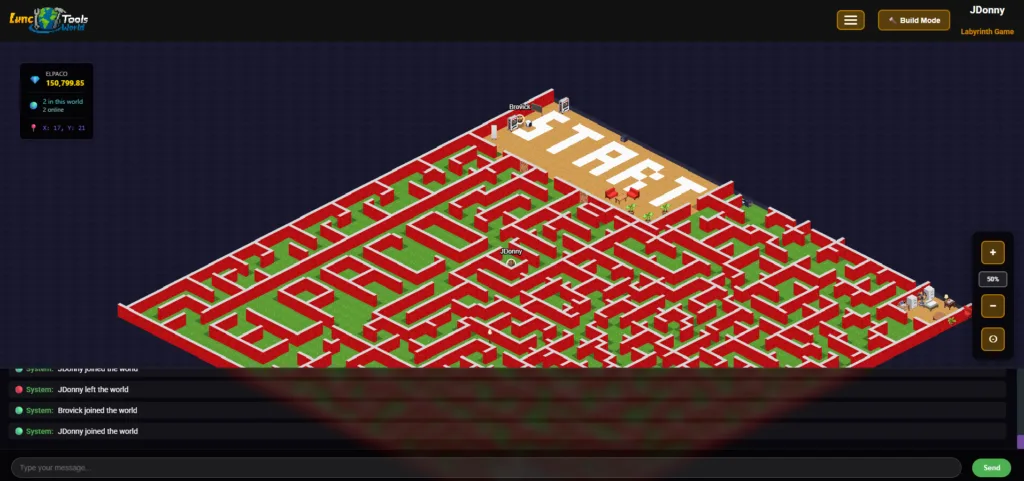
Welcome to LUNC Tools World — a brand-new social world-building platform where creativity, community, and interactive gameplay come together.

👉 Start your own world now: https://world.lunc.tools/

LUNC Tools World isn’t just about creating places to visit. It’s about building living worlds, designing real experiences, and giving creators the tools to turn imagination into interaction.

Whether you want to build a social hub, a game, or something entirely new — this is your playground.


🛠 What Is LUNC Tools World?

LUNC Tools World is a browser-based social platform that lets you:

  • 🎨 Build custom pixel-art worlds
  • 🧱 Design rooms, environments, and interactive spaces
  • 💬 Socialize and chat with others in real time
  • 👥 Collaborate with friends and community members
  • 🕹 Turn worlds into playable experiences

LUNC Tools World is designed to be accessible wherever you are.

You can build, explore, and create on:

  • 🖥 Desktop
  • 📱 Mobile
  • 📲 Tablet

Because everything runs directly in your browser, there’s nothing to download or install. Whether you’re fine-tuning a world at your desk or checking in on your creation from your phone, your world is always with you.

This means everyone — regardless of device — can have their own world, their own ideas, and their own space to create.


🤖 Bots — Create Real Gameplay & Mechanics

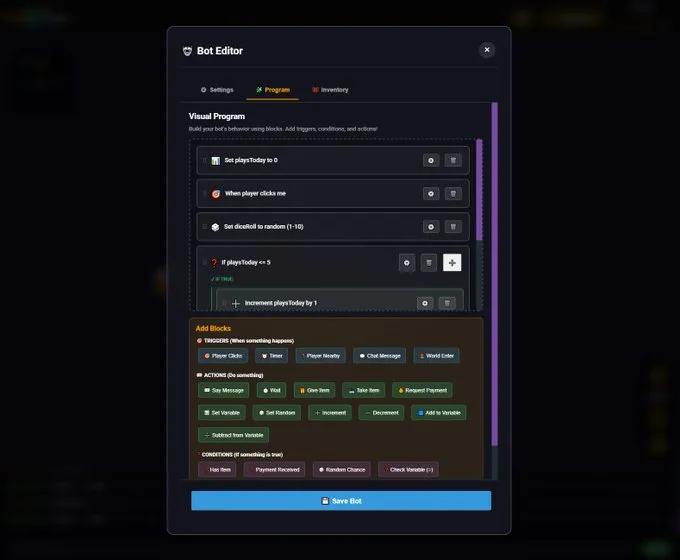
At the heart of LUNC Tools World is a powerful Bot System that allows creators to build actual game logic and interactive mechanics inside their worlds.

Bots let you go far beyond static environments. With them, you can:

  • Create NPCs that respond to player actions
  • Design quests, challenges, and mini-games
  • Track variables like visits, plays, or progress
  • Add cooldowns, limits, and conditions
  • Introduce random chance and rewards
  • Build crypto-powered mechanics and interactions

Bots are created using a visual, block-based editor, making complex behavior easy to understand and build — no coding required.

This system gives creators the freedom to experiment, iterate, and bring their worlds to life.


🧠 Visual Programming Made Simple

The Bot Editor is designed to be both powerful and approachable. You build logic by connecting blocks such as:

  • “When something happens…”
  • “If a condition is met…”
  • “Then perform an action…”

This approach makes it possible for anyone — from beginners to advanced creators — to design interactive systems that feel dynamic and responsive.


🌱 Don’t Just Create a World. Create an Experience.

With LUNC Tools World, worlds are more than spaces — they’re interactive ecosystems.

You can build:

  • 🎯 Games and challenges
  • 🏪 NPC-run shops
  • 🏆 Competitive experiences
  • 🎲 Randomized events and rewards
  • 💰 Crypto-enabled interactions

Every world can be unique, shaped by the creativity of its builder and the community that explores it.


🚀 Start Building Today

LUNC Tools World is just getting started — and the earliest creators will help define what this universe becomes.

If you’ve ever wanted to build a world, design gameplay, or create something people can truly interact with, now is the time.

👉 Join LUNC Tools World: https://world.lunc.tools/

Follow us on Telegram and X for updates, guides, and community showcases.

🌍 Build Worlds. Add Logic. Create Experiences.
Welcome to LUNC Tools World.