


The global stablecoin market is expanding at a pace far beyond earlier predictions. A new report from Citi projects that stablecoin issuance could climb to $1.9 trillion in a base scenario and as much as $4.3 trillion in an optimistic scenario by 2030.
According to the report published on Thursday (September 25, 2025), the issuance of stablecoins has already increased from $200 billion at the start of 2025 to $280 billion. This sharp rise prompted Citi to revise its previous forecast of $1.6 trillion in the base case and $3.7 trillion in the optimistic case.
Transactions Could Reach Hundreds of Trillions
If stablecoins circulate with the same velocity as fiat currencies, they could support annual transactions of up to $100 trillion in the base case and as high as $200 trillion in the optimistic case by 2030. Citi describes this as blockchain’s “ChatGPT moment,” where digital-native companies accelerate real-world adoption.
Yet, stablecoins are not expected to be the only drivers of on-chain finance. Tokenized bank deposits could potentially reach even larger transaction volumes, propelled by corporate demand for regulatory clarity, real-time settlements, and integrated compliance. Citi projects that bank-issued tokens could surpass $100 trillion in transaction volume by the end of the decade, even if only a fraction of traditional finance moves on-chain.
The Dominance of the US Dollar and Emerging Hubs
The study underlines the continuing role of the US dollar as the dominant currency, with most on-chain transactions denominated in dollars, thereby reinforcing demand for US government bonds. However, hubs like Hong Kong and the United Arab Emirates are emerging as testbeds for digital asset innovation and adoption.
Implications for Terra Classic (LUNC)
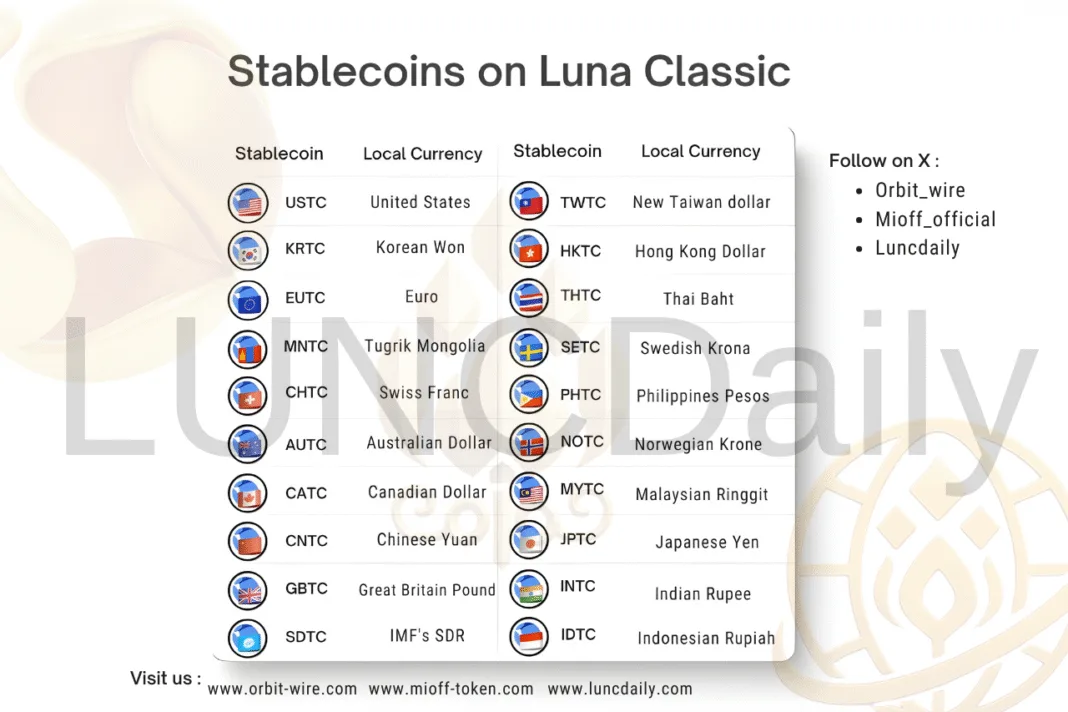
The findings provide important context for ecosystems like Terra Classic (LUNC), which already supports more than 20 different stablecoins.
As the stablecoin market expands toward the multi-trillion-dollar range, networks with existing stablecoin infrastructure such as LUNC could be well-positioned to capture some of this growth. Potential benefits include higher transaction volumes, deeper liquidity, and greater developer activity.
Yet, the opportunity also comes with a challenge: with this massive potential, could LUNC become an active part of the new on-chain financial system—or risk being left behind? The answer may depend on how the community continues to innovate, attract partnerships, and maintain trust within the ecosystem.