Home Blog Page 55

What Are the Community Pool and Oracle Pool on Terra Luna Classic?

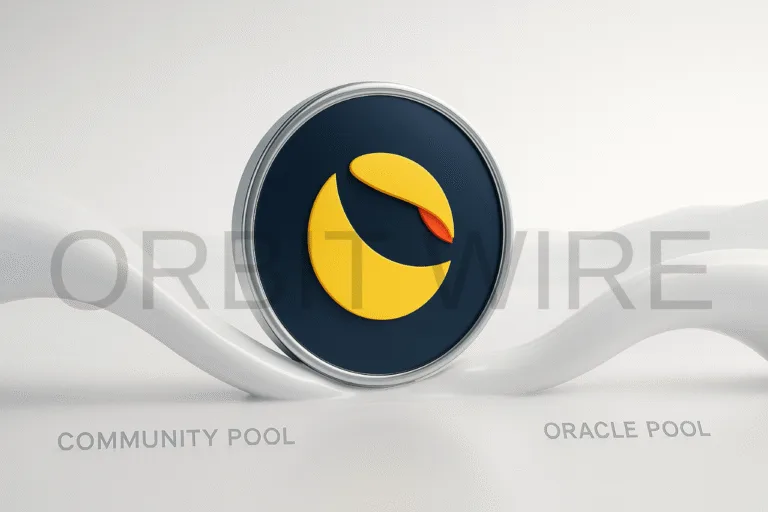
Community Pool
The Community Pool acts as the main treasury of the Terra Luna Classic network. It collects funds from transaction taxes and is used to finance ecosystem development, governance proposals, and other initiatives that help the blockchain grow.

Oracle Pool
The Oracle Pool is reserved for rewarding validators who provide price data to the network. This pool ensures validators are properly incentivized to maintain accurate and secure information.

Key Points

● Both pools are funded from a portion of transaction taxes.

● The Community Pool supports projects and proposals, while the Oracle Pool funds validator rewards.

● Recent upgrades aim to make these pools sustainable over the long term.

● The community is discussing ways to prevent the Oracle Pool from running low.

Orbit Wire Ecosystem: Powering Luna Classic Through Culture, Media, and Community

0

What is Orbit Wire?
Orbit Wire ecosystem, an ecosystem designed to make Luna Classic more visible and attract a wider audience.

Orbit Wire has two main parts:
● MIOFF – promotes Luna Classic through cultural events and real-world festivals.
● LUNCDaily – a news and media platform that reports on Luna Classic, giving the community regular updates and increasing global awareness.
Together, they combine entertainment and information to market Luna Classic more effectively.

How the Ecosystem Funds Itself
A small part of every MIOFF transaction goes back into Orbit Wire. This supports both festivals and LuncDaily media coverage without depending only on outside funding.

Why Visibility Matters
Good technology alone is not enough. Projects need marketing and real-world exposure to grow. Orbit Wire uses festivals, news coverage, and buybacks to keep Luna Classic in the spotlight.

How to Support the Mission
● Delegate to the Orbit Wire Validator to help secure the Luna Classic network.
● Buy MIOFF to directly fund festivals and media efforts.

The Bigger Goal
MIOFF and Orbit Wire show that blockchain adoption comes from more than technology. It takes visibility, culture, and community action to succeed.

LUNC Staking Made Simple: Earn Rewards and Support the Network

Staking Terra Classic (LUNC) is a way to earn passive income while helping secure the blockchain. Instead of selling your coins, you lock them with a trusted validator who verifies transactions. In return, you receive rewards in LUNC.

How it works

● You delegate your LUNC to a validator.

● There is a 21-day waiting period to unstake coins.

● Fewer coins available on the market can help reduce selling pressure.

More than just rewards
Staking also strengthens Terra Classic. Validators must act honestly or risk losing part of their stake, which protects the network. Stakers can also vote on governance decisions, shaping the future of LUNC.

Where rewards come from
Rewards are funded by transaction fees. Validators collect fees when adding blocks and share them with users who stake their coins. This keeps the system sustainable, users secure the network, validators process transactions, and both earn rewards.

MIOFF: The Festival Token Driving Luna Classic Adoption

MIOFF is not just another LUNC blockchain token. It introduces several key features that make it appealing to both investors and the wider community:

1. Built on Luna Classic
By choosing Luna Classic, MIOFF directly contributes to strengthening one of the most recognized blockchains in the industry.

2. Weekly Buyback Programs
Regular buybacks create consistent demand for MIOFF while reinforcing community confidence in the token.

3. Real-World Festivals
Through the real festivals, MIOFF promote Luna Classic and showcase its community spirit to a global audience.

The Role of the Orbit Wire Ecosystem

MIOFF is part of the Orbit Wire ecosystem, a broader initiative created to increase the visibility of Luna Classic. This ecosystem brings together two distinct elements that work in harmony:

● MIOFF, which represents the cultural and festival side

● LuncDaily, which serves as the media and news platform

Together, they balance entertainment with information, creating a comprehensive marketing effort for Luna Classic.

Why Focus on Promoting Luna Classic

The team behind MIOFF and Orbit Wire believes that one of the core drivers of blockchain success is visibility through marketing. While technology and utility are essential, projects cannot thrive without awareness. Festivals and media campaigns serve as powerful tools to place Luna Classic in front of new audiences.

How the Ecosystem Sustains Itself
Sustainability is built into the model. A percentage of every MIOFF transaction is allocated to maintaining and developing the Orbit Wire ecosystem. This ensures that growth does not rely solely on outside funding but is continuously supported by the activity of the community itself.

The Bigger Picture
MIOFF represents more than a token. It is part of a vision where blockchain adoption is driven by culture, visibility, and community action. By blending festivals, media outreach, and consistent buybacks, the project creates multiple pathways for promoting Luna Classic.

How to Support the Mission
Supporters who believe in the mission can contribute in two simple ways:

● Delegate to the Orbit Wire Validator, which strengthens the network

● Purchase MIOFF, which directly fuels the ecosystem and its initiatives

Both actions provide tangible support to the effort of promoting Luna Classic to a global stage.

Conclusion
MIOFF and the Orbit Wire ecosystem highlight a powerful truth about blockchain: adoption requires more than technology. It requires visibility, community involvement, and real-world connections. By focusing on festivals, media, and continuous ecosystem support, MIOFF is positioning itself as a driving force behind the revival and growth of Luna Classic.

The AI Revolution Proves Why USTC Could Be the Stablecoin of the Future

0

In today’s digital world, algorithms are everywhere. They drive the artificial intelligence that recommends what we watch, and even powers self-driving cars. At their core, algorithms are step-by-step instructions, and AI combines thousands of them to learn, adapt, and improve on its own.

This same principle is transforming cryptocurrency. Digital assets are not just tokens of value; they are programmable systems governed by code. When AI shows how adaptive logic can outperform static rules, it is worth asking how this technology connects to blockchain and to stablecoins in particular.

Unlike stablecoins backed by cash or commodities, algorithmic stablecoins rely on programmed supply adjustments to keep their price steady. TerraClassicUSD (USTC) is a prime example. Its original design aimed to maintain stability using code alone, without the need for centralized reserves. Although USTC has faced major challenges, the concept behind it reflects a future where money can regulate itself automatically, much like AI systems that learn and self-correct.

With rapid advancements in artificial intelligence, the idea of algorithm-backed stability is more relevant than ever. Just as AI systems analyze vast amounts of data to make better decisions, improved blockchain algorithms could balance supply and demand in real time to preserve price stability.

The world is entering an age where adaptive systems dominate every sector. If stablecoins evolve alongside AI learning, rebalancing, and refining themselves, USTC could become more than a digital currency. It could stand as proof that programmable money, guided by smarter algorithms, is the future of decentralized finance.

Terra Luna Classic Outperforms the Market Despite Recent Decline

According to data from CoinGecko, Terra Luna Classic (LUNC) has recorded a price decline of 5.80 percent over the past seven days. While this represents a negative movement, LUNC is performing better than the broader cryptocurrency market and many of its peers.

During the same period, the global cryptocurrency market dropped by 8.40 percent, showing that LUNC has managed to hold up relatively well compared to overall market conditions. In addition, when measured against other smart contract platform cryptocurrencies, which fell by 6.30 percent, LUNC continues to show stronger resilience.

Although the price trend is still downward, the smaller decline indicates that LUNC is outperforming both the wider market and similar categories of digital assets.

This relative strength could suggest that investor sentiment toward LUNC remains more stable compared to other cryptocurrencies in the current downturn.

The Hidden Power Behind Terra Classic: Why Validators and Delegators Keep LUNC Alive

The Terra Classic blockchain does not run on autopilot. Behind every block and transaction are two essential groups that keep the network secure and functional: validators and delegators.
Without them, LUNC would not exist as a reliable or decentralized system.

1. Who Are Validators?

Validators operate full nodes, verify every transaction, and produce new blocks. They are the backbone of the network, ensuring that Terra Classic runs smoothly and honestly. In return, they earn staking rewards from transaction fees and block rewards.

Their responsibilities also include governance. Validators use their voting power to decide on key proposals that shape the future of the network.

2. Who Are Delegators?

Delegators are LUNC holders who do not run validator nodes themselves. Instead, they delegate their tokens to trusted validators to help secure the blockchain. In return, they earn a portion of the staking rewards without having to handle the technical work. Importantly, delegators always keep full ownership of their tokens while they are staked.

3. Why Are They So Important?

● Security: Validators protect the network from fraud and attacks, while delegators provide the economic weight that backs them.

● Decentralization: When LUNC holders spread their stakes across many validators, the network stays balanced and avoids giving too much power to a single entity.

● Governance: Voting power in Terra Classic is tied to staking. Both validators and delegators directly shape decisions on upgrades, funding, and network rules.

● Rewards: Staking offers income for both groups, but only when validators perform well. Reliable validators with good uptime ensure consistent returns.

4. A Built-In System of Accountability

If a validator behaves dishonestly or fails to stay online, both they and their delegators can be penalized in a process called “jailed”. This system discourages bad behavior and encourages delegators to carefully choose validators with strong reputations, reliable performance, and fair commission rates.

The Bottom Line

Validators and delegators are the heartbeat of Terra Classic. Validators provide the technical strength and governance leadership, while delegators empower them with staking support. Together, they make LUNC secure, decentralized, and community-driven.

LUNC’s Secret Engine: How Proof of Stake Powers Terra Classic

The Terra Classic (LUNC) blockchain does not rely on energy-hungry mining. Instead, it uses a modern system called Proof of Stake (PoS) to keep the network secure, fast, and fully decentralized.

What is Proof of Stake in LUNC?
Proof of Stake is a consensus mechanism where participants lock up their LUNC tokens to support the blockchain. These participants are divided into two roles:

● Validators create and verify new blocks.

● Delegators lend their voting power by staking with trusted validators and earn a share of the rewards.

This process not only secures the blockchain but also gives every LUNC holder a voice in important decisions.

Why Does It Matter?
● By staking LUNC, token holders do more than earn rewards. They help:

● Protect the network against attacks by giving validators an incentive to act honestly.

● Support governance by voting on proposals that decide the future of Terra Classic.

Drive long term stability through an efficient system that consumes far less energy than mining.

Validators who misbehave—such as going offline or attempting to cheat—face penalties known as “jail,”.

Built for the Cosmos Ecosystem
Terra Classic runs on Tendermint BFT, a Proof of Stake engine used in the Cosmos network. This makes it compatible with other blockchains in the ecosystem and gives it room to grow through future integrations.

The Bottom Line
Proof of Stake is not just a technical feature. It is the backbone of LUNC’s revival, allowing the community to secure the network, earn staking rewards, and influence governance decisions—all while building on scalable technology.

Terra Classic vs Terra 2.0: Key Differences and Why Developers Should Build on Terra Classic Blockchain

In the evolving world of blockchain technology, understanding the Terra Classic vs Terra 2.0 divide is crucial for developers and investors alike. Terra Classic (LUNC) is the original Terra blockchain, renamed after the 2022 crash of its algorithmic stablecoin UST. It retains the native token LUNC and operates as a community-driven network using Proof-of-Stake consensus via the Cosmos SDK. In contrast, Terra 2.0 (LUNA) emerged as a fresh fork without the flawed stablecoin mechanism, aiming for a clean slate under Terraform Labs (now dissolved). Launched in May 2022, Terra 2.0 focuses on decentralized applications (dApps) but lacks the original’s algorithmic elements, running parallel to Classic with its own LUNA token.

The core differences lie in governance and focus. Terra Classic is now fully community-led, free from founder Do Kwon’s influence, emphasizing token burns to reduce supply and revive value. Terra 2.0, while innovative, has faced volatility and lower adoption, with its market cap often trailing Classic’s.

Why is it better for developers to build on Terra Classic blockchain in 2025? Recent upgrades, like the v3.5.0 release on August 15, have transformed it. This update reintroduces the Market Module for LUNC-USTC stability, boosts transaction speeds, enhances validator incentives, and strengthens security through CometBFT and Wasmvm improvements. Additionally, Proposal 12142 upgrades to Cosmos SDK v0.47, reducing technical debt, ensuring smart contract compatibility, and aligning closely with the Cosmos ecosystem for seamless interoperability.

These changes make Terra Classic more attractive: low fees, fast processing, and robust tools draw dApp builders. Community governance fosters transparency, while token burns and incentives support sustainable growth. Unlike Terra 2.0’s stagnant vibe, Classic’s active ecosystem promises real use cases, from DeFi to NFTs. For developers seeking stability and innovation, Terra Classic stands out as the superior platform in 2025.

Why Repegging USTC is Crucial for LUNC’s Price Rise and Investor Trust

In the volatile world of cryptocurrencies, the Terra Classic ecosystem stands at a crossroads. TerraClassicUSD (USTC), once a stablecoin pegged to the US dollar, dramatically depegged in May 2022, triggering a massive crash that wiped out billions in value. This event not only eroded investor confidence but also left Luna Classic (LUNC) in a hyperinflated state. Today, repegging USTC to $1 is seen as a pivotal step to revive the network, enabling LUNC to surge in price, pump with renewed momentum, and rebuild trust among investors.

The Link Between USTC Repeg and LUNC Stability

Repegging USTC would restore the algorithmic balance that originally tied it to LUNC through mint-and-burn mechanics. By burning excess LUNC tokens to support the peg, the circulating supply decreases, creating scarcity that could drive up LUNC’s price. Recent proposals, like the USTC Repeg Whitepaper, outline strategies such as market modules and hard peg burns to achieve this. For instance, community-driven initiatives aim to incentivize burns, potentially pushing LUNC toward $1 valuations as demand grows.

Boosting Investor Confidence and Market Pump

Investor trust is the backbone of any crypto project. A successful USTC repeg would signal stability, attracting new capital and partnerships. Without it, LUNC risks stagnation amid skepticism over its massive supply. Repegging could spark a price pump, as seen in past rallies following repeg announcements, where LUNC soared 15%. This renewed credibility would encourage long-term holding, reducing sell-offs and fostering a bullish cycle.

Challenges and the Path Forward

While challenges like large token supplies persist, ongoing efforts—including validator proposals and community burns—show promise. For LUNC to truly rise, repegging USTC isn’t just important; it’s essential for sustainable growth and investor loyalty.

In summary, repegging USTC paves the way for LUNC’s resurgence, turning past failures into future gains. As the Terra Classic community unites, the potential for a massive pump and restored trust is within reach.