Home Blog Page 9

Terra Classic Enters Critical Phase: LUNC Community Votes on Cosmos SDK v0.53 & IBC v2 (Eureka) Upgrade – Phase 2

0

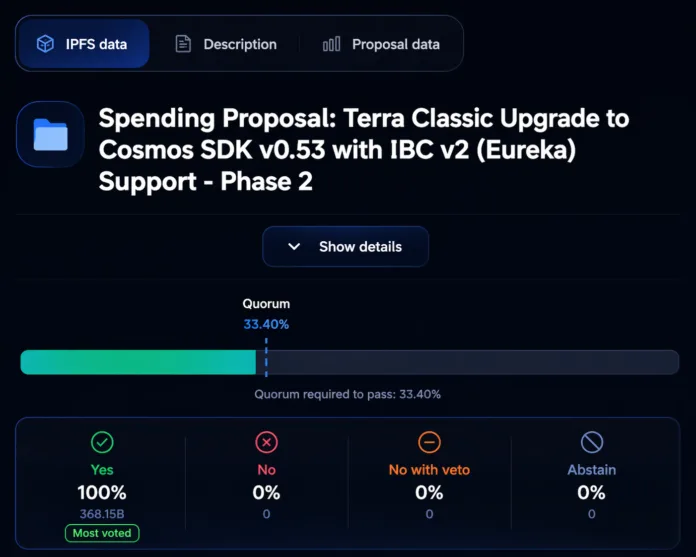
The Terra Classic (LUNC) ecosystem is once again at a pivotal moment, as the community actively votes on a key spending proposal aimed at advancing the network’s long-term technical evolution. The proposal—titled “Terra Classic Upgrade to Cosmos SDK v0.53 with IBC v2 (Eureka) Support – Phase 2”—represents the next step in a broader modernization strategy designed to strengthen interoperability, scalability, and developer adoption.

Following the successful completion of Phase 1, which initiated the groundwork for upgrading the chain, Phase 2 focuses on finalizing implementation and ensuring the network is fully aligned with the latest Cosmos infrastructure. This upgrade is particularly significant because it introduces Cosmos SDK v0.53, a major release that enhances performance and provides a smoother upgrade path for future developments.  

At the core of this proposal is the integration of IBC v2 (Eureka), a next-generation version of the Inter-Blockchain Communication protocol. This upgrade simplifies cross-chain interactions and enables more efficient connectivity with external ecosystems, allowing Terra Classic to interact seamlessly with major blockchains.   The result is a more open and liquid network capable of attracting new decentralized applications and liquidity flows.

The governance vote reflects Terra Classic’s community-driven nature, where validators and delegators directly shape the chain’s future. The proposal is currently in the voting phase, reinforcing the importance of decentralized decision-making in steering critical upgrades.  

From a strategic perspective, this upgrade aligns with LUNC’s broader roadmap, which emphasizes cross-chain expansion, infrastructure stability, and renewed developer engagement. Enhanced interoperability is widely viewed as a bullish catalyst, as it can increase network utility, transaction volume, and overall ecosystem relevance.  

As voting progresses, the outcome of Phase 2 could mark a defining milestone for Terra Classic—positioning it not just as a recovering chain, but as a competitive player in the evolving multichain landscape.

LUNC Deflation Accelerates as Staking Surges: A Turning Point for Terra Classic

0

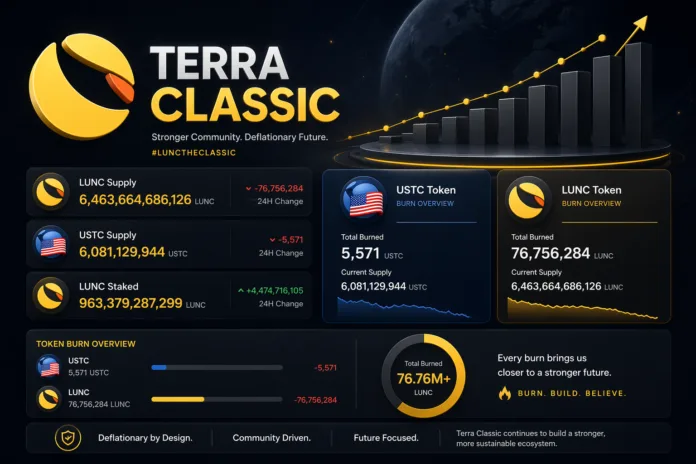
The latest on-chain data from StatsBin highlights a significant shift in the dynamics of the Terra Classic ecosystem, signaling renewed momentum and growing investor confidence. Over the past 24 hours, the total LUNC supply has decreased by 76.7 million tokens, bringing the circulating supply down to approximately 6.46 trillion LUNC. This consistent reduction underscores the ongoing burn mechanisms that remain central to the network’s long-term recovery strategy.

At the same time, staking activity is experiencing a powerful upswing. The total LUNC staked has climbed to over 963 billion tokens, with an impressive daily increase of more than 4.47 billion LUNC. This surge in staking reflects strengthening community commitment, as more holders choose to lock their assets, reducing liquid supply and reinforcing network security.

Meanwhile, USTC supply also recorded a modest decline of 5,571 tokens, settling at just over 6.08 billion. While smaller in scale compared to LUNC, this continued contraction aligns with broader efforts aimed at stabilizing and potentially restoring value within the Terra Classic ecosystem.

The combination of decreasing supply and increasing staking participation presents a fundamentally bullish structure. Reduced circulating supply can create upward pressure on price over time, particularly when paired with growing demand and ecosystem utility. Additionally, higher staking ratios often indicate long-term holder conviction rather than short-term speculation.

These metrics collectively point toward a maturing network that is actively transitioning from recovery to sustainable growth. If current trends persist, Terra Classic may be positioning itself for a stronger market narrative—one built on discipline, decentralization, and community-driven resilience.

In a market driven by data, the numbers are clear: Terra Classic is not standing still—it is evolving.

Steady Growth in Community Pool Signals Strength for LUNC and USTC

0

The latest data from the community pool reflects a notable and steady increase in both LUNC and USTC balances over the observed seven-day period. This upward trajectory highlights renewed activity, engagement, and contribution within the ecosystem, reinforcing confidence among participants and supporters.

LUNC’s community pool balance has reached approximately 7.99 billion, marking a significant rise of over 65 million within just one week. This consistent climb suggests sustained inflows, likely driven by on-chain activity, governance participation, and increased network utilization. The growth pattern, while gradual at times, includes sharp upward movements that indicate moments of heightened contribution or redistribution events.

Similarly, USTC has shown a positive trend, with its balance surpassing 61.5 million and gaining nearly 50,000 over the same timeframe. Although the scale differs from LUNC, the steady increase demonstrates parallel momentum and a shared recovery path within the ecosystem. The incremental nature of USTC’s growth reflects stability and a consistent accumulation pattern rather than volatility.

The visual trend lines reveal synchronized upward movement between the two assets, suggesting coordinated ecosystem dynamics. These could stem from governance decisions, fee redistribution mechanisms, or broader participation from the community. Importantly, the absence of sharp declines points to a relatively stable environment where contributions outweigh withdrawals.

This growth in the community pool is more than just a numerical increase—it represents strengthening foundations. A larger pool enhances the network’s ability to fund development, support validators, and drive future initiatives. It also signals trust from participants who continue to allocate resources back into the ecosystem.

Overall, the data paints a positive picture. With both LUNC and USTC showing steady gains, the trajectory suggests resilience, gradual rebuilding, and a community that remains actively engaged in shaping the network’s future.

Terra Classic: Steady Progress Amid Ongoing Supply Reduction

0

The Terra Classic ecosystem continues to demonstrate gradual but meaningful progress as it moves through a period of restructuring and long-term recovery. Over the past week, the network has recorded a noticeable reduction in both LUNC and USTC supply, reflecting the ongoing commitment of the community to implement deflationary mechanisms and strengthen the overall economic model.

Supply reduction remains one of the central pillars of Terra Classic’s strategy. Through a combination of transaction burns, validator contributions, and ecosystem initiatives, the circulating supply is being slowly decreased. While the total number of tokens remains high, consistent reductions over time are crucial in creating scarcity and supporting potential value appreciation. This approach requires patience and persistence, as meaningful impact is achieved through sustained effort rather than short-term changes.

At the same time, staking continues to play a vital role in maintaining the network’s security and decentralization. A significant portion of LUNC is actively staked, showing that many holders are committed to supporting the blockchain rather than simply trading the asset. Staking not only helps secure the network but also allows participants to engage in governance decisions, contributing to the direction and evolution of the ecosystem.

However, fluctuations in staking levels are a natural part of any blockchain network. Changes in market conditions, price movements, and individual strategies can influence how much is staked at any given time. Short-term decreases do not necessarily indicate a loss of confidence, but rather the dynamic nature of participation within the ecosystem.

Another important aspect of Terra Classic’s progress is transparency. The availability of real-time on-chain data allows the community to track key metrics and evaluate the effectiveness of ongoing initiatives. This level of visibility helps build trust and keeps participants informed about the current state of the network.

Despite the challenges that Terra Classic has faced in the past, the current trajectory suggests a project that is actively rebuilding. The combination of supply reduction, strong community involvement, and continuous development efforts points toward a more sustainable future. While there is still a long road ahead, the steady progress being made highlights the resilience of the ecosystem and the determination of its supporters.

In the broader context of the cryptocurrency market, Terra Classic serves as an example of how a community-driven project can adapt and evolve. By focusing on long-term fundamentals rather than short-term hype, the ecosystem is positioning itself for gradual recovery and potential growth.

Only 4 Days Left Until SDK 53 Upgrade on Terra Classic Network

0

Terra Classic Approaches Major SDK 53 Upgrade

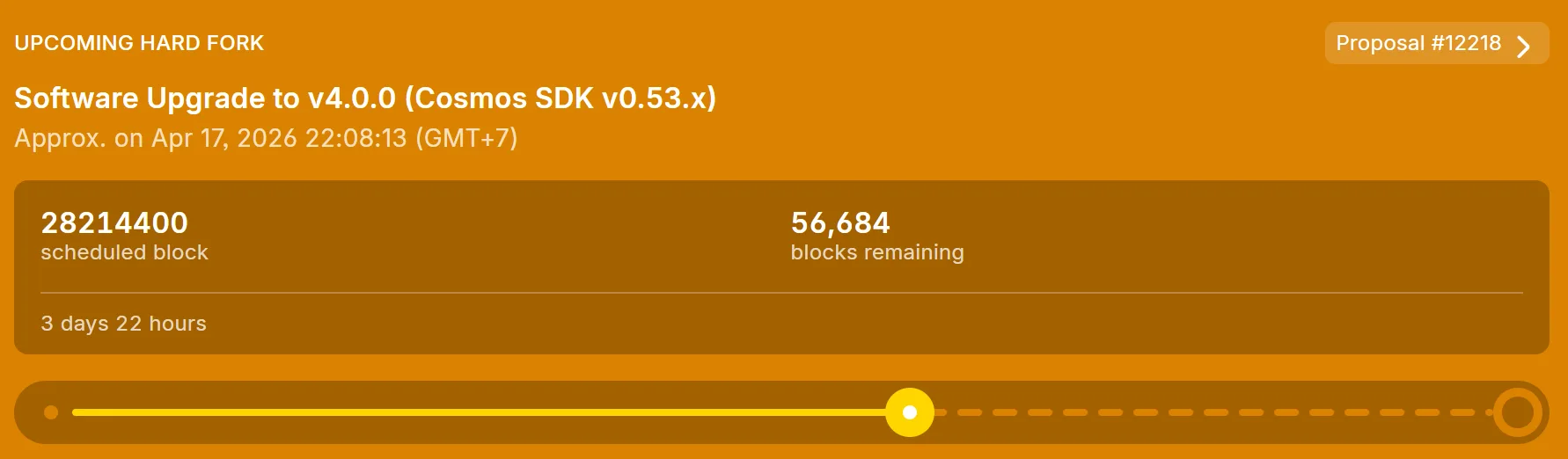
The Terra Classic network is preparing for a significant software upgrade to version 4.0.0, based on Cosmos SDK v0.53.x. The upgrade is scheduled to take place on April 17, 2026 at approximately 22:08:10 GMT+7.

With only four days remaining, the community is entering the final phase of preparation for one of the most important technical updates in recent months.

Upgrade Timing and Network Details

The upgrade will occur at a specific block height, ensuring a coordinated transition across the network. At the time of announcement, more than fifty thousand blocks remain before the upgrade is activated.

This block based scheduling allows validators, developers, and infrastructure providers to align their systems in advance and reduce the risk of disruption.

What the Upgrade Includes

Version 4.0.0 introduces integration with Cosmos SDK v0.53.x, which brings improvements to performance, security, and overall network efficiency.

This update is part of Terra Classic’s ongoing effort to modernize its infrastructure and remain aligned with the broader Cosmos ecosystem.

Why This Upgrade Matters

The SDK 53 upgrade is an important step in strengthening the foundation of the Terra Classic network. It supports continued development, improves reliability, and helps ensure long term sustainability.

For validators and node operators, updating software before the scheduled block height is essential to remain in sync with the network.

Final Preparations Underway

As the countdown continues, the Terra Classic community is focused on ensuring a smooth transition. With the upgrade date approaching, all participants are encouraged to complete necessary updates and monitor network progress closely.

The next few days will be critical as Terra Classic moves toward this major milestone.

Over Half Million USTC Burned in Just 12 Days

0

Over Half Million USTC Burned in Just 12 Days

The Terra Classic ecosystem continues to demonstrate steady progress as over half a million USTC tokens have been burned within a 12 day period. This ongoing burn activity reflects consistent efforts to reduce circulating supply and strengthen the overall network structure.

Token burning is an important mechanism that permanently removes tokens from circulation. For USTC, this process supports long term sustainability by gradually decreasing available supply while maintaining active participation across the ecosystem.

Below is a detailed breakdown of daily USTC burn activity during the first 12 days of April.

USTC Daily Burn Data

Month Date USTC Burn
April 1 16868
April 2 20039
April 3 37076
April 4 96245
April 5 47806
April 6 18718
April 7 8737
April 8 7007
April 9 88683
April 10 23753
April 11 103015
April 12 37057
Total 505004

The highest daily burn occurred on April 11, with more than 103000 USTC removed from circulation. Significant burn activity was also recorded on April 4 and April 9, indicating periods of increased contribution.

What This Means for USTC

Burning over half a million USTC in less than two weeks highlights strong and consistent activity within the Terra Classic ecosystem. While token burns do not directly determine market price, they remain a key factor in long term supply reduction.

As development and participation continue, sustained burn activity may contribute to improved fundamentals and increased market attention. Monitoring these trends will be important in evaluating the future direction of USTC.

Nearly 1.2 Billion LUNC Burned in Just 12 Days as Supply Reduction Accelerates

0

Nearly 1.2 Billion LUNC Burned in Just 12 Days as Supply Reduction Accelerates

The Terra Classic ecosystem continues to demonstrate strong momentum in its supply reduction efforts, with nearly 1.2 billion LUNC burned in just the first 12 days of April.

A total of 1,197,678,366 LUNC has been permanently removed from circulation during this period. This ongoing burn activity reflects consistent participation from the community, validators, and supporting platforms, all contributing to the long term goal of reducing supply.

The burn mechanism remains one of the key pillars of the Terra Classic recovery strategy. By steadily decreasing the circulating supply, the network aims to improve overall token economics while reinforcing investor confidence.

Notably, several days recorded significantly higher burn volumes, indicating bursts of activity and coordinated efforts within the ecosystem.

Daily LUNC Burn Data

Month Date LUNC Burn
April 1 573,619,288
April 2 34,922,719
April 3 26,311,510
April 4 38,246,082
April 5 15,728,479
April 6 34,294,683
April 7 28,877,673
April 8 63,011,189
April 9 47,629,542
April 10 185,845,480
April 11 118,670,096
April 12 30,521,625
Total 1,197,678,366

Key Highlights

April 1 recorded the largest single day burn, contributing more than 573 million LUNC. This accounts for nearly half of the total burn during the 12 day period.

Another notable spike occurred on April 10, with over 185 million LUNC burned, followed by strong activity on April 11 with more than 118 million LUNC removed from circulation.

These spikes suggest coordinated efforts or major contributors participating in the burn process, reinforcing the strength of the Terra Classic ecosystem.

Outlook

As burn activity continues at this pace, the Terra Classic network is steadily progressing toward its long term supply reduction goals. Sustained burns, combined with ongoing development such as network upgrades and ecosystem expansion, may play a crucial role in shaping future market sentiment.

The consistent reduction in supply highlights the community’s commitment to rebuilding and strengthening the Terra Classic ecosystem.

LUNC Price Analysis: Bullish Ahead as Momentum Accelerates

0

LUNC Breaks Out as Bullish Momentum Strengthens

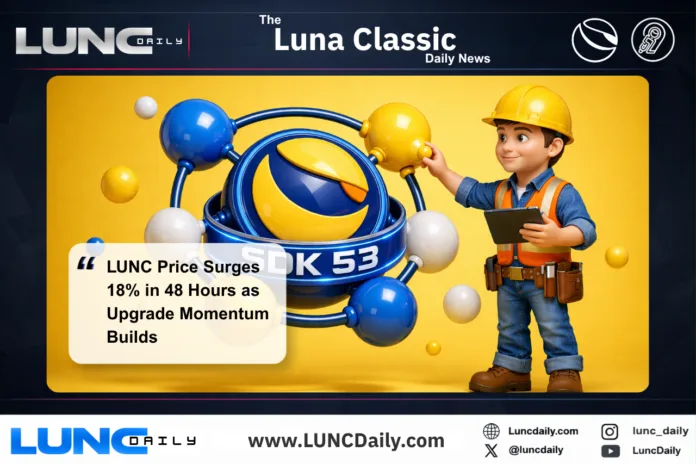
Terra Classic (LUNC) has recorded a strong price increase of approximately 18 percent over the past 48 hours, signaling a clear shift in market momentum. While much of the broader crypto market remains stable, LUNC is showing independent strength supported by both technical structure and fundamental developments.

This move has positioned LUNC as one of the more active assets in the current market environment.

Clear Breakout from Accumulation Phase

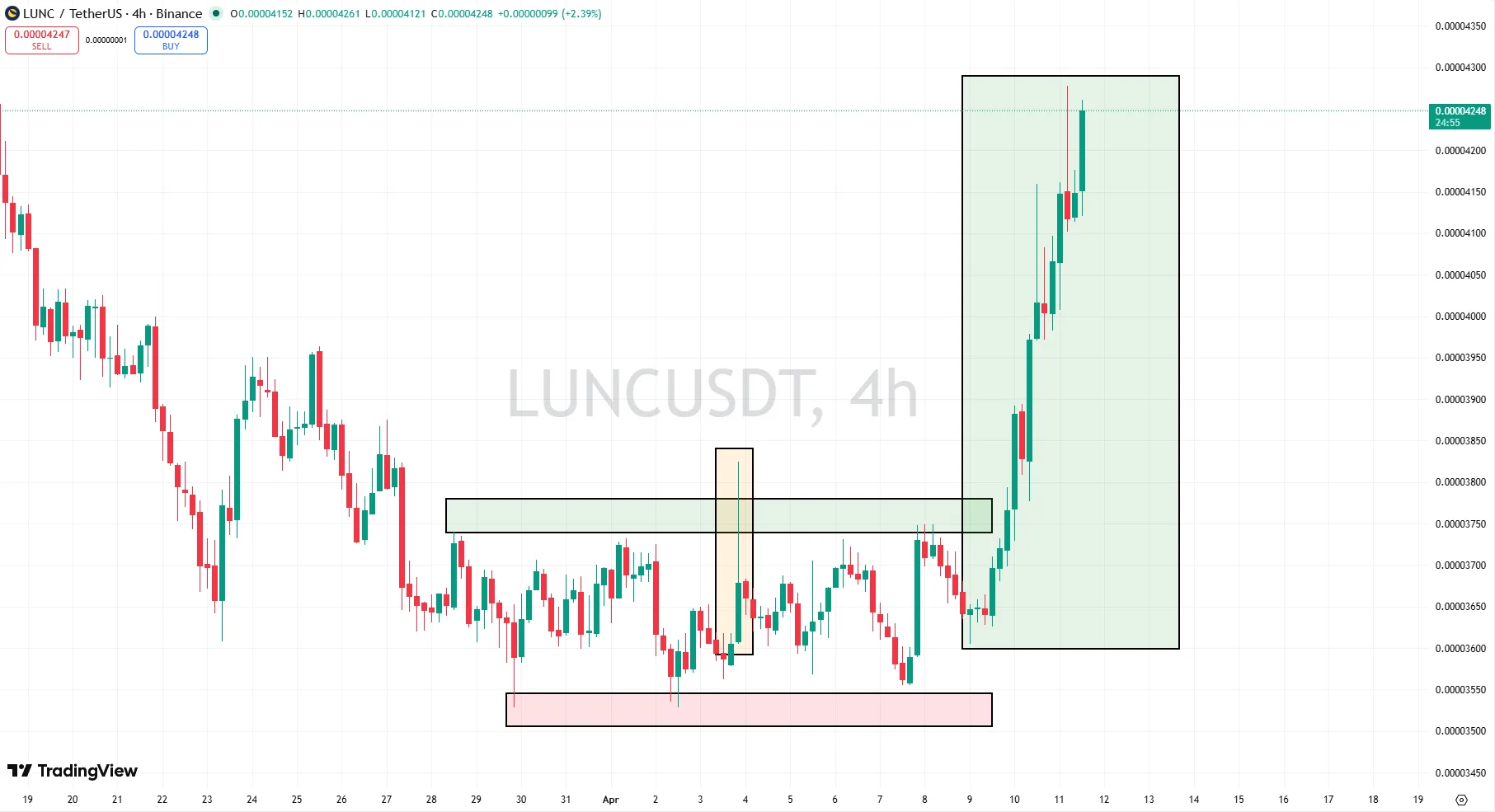
On the 4 hour timeframe, LUNC recently completed a classic accumulation pattern. Price traded sideways within a defined range near the 0.000035 to 0.000036 level, forming a stable base.

This phase is typically where larger market participants begin building positions.

Following this period, LUNC tested a key resistance zone near 0.0000375 multiple times. After several attempts, price successfully broke above this level, confirming a bullish breakout.

Once the resistance was cleared, price accelerated rapidly with strong upward candles and minimal pullbacks. This type of movement reflects strong buyer control and increasing demand.

Why This Breakout Is Important

Breakouts from consolidation zones often mark the beginning of a new trend phase. In this case, the move is supported by strong price structure, increased buying pressure, and sustained momentum after the breakout.

The fact that LUNC is moving while the broader market remains relatively flat further highlights the strength of this trend.

SDK 53 Upgrade Driving Market Interest

A key factor behind the current price action is the growing anticipation surrounding the upcoming SDK 53 upgrade on the Terra Classic network.

The proposal is currently active and progressing through governance, with implementation scheduled for April 17. This upgrade represents a significant technical advancement and is expected to improve network performance and functionality.

Markets often react ahead of major upgrades, as investors position themselves early in anticipation of potential long term value growth.

Rising Whale Activity Signals Confidence

The structure of the recent move suggests increased participation from larger holders.

This can be observed through strong and consistent bullish candles, limited retracements during the upward move, and clean continuation after resistance breakout.

Such patterns are commonly associated with institutional or high value traders entering the market.

For newer traders, this indicates that experienced participants are showing confidence in the current direction.

Bullish Outlook Remains Intact

As long as LUNC holds above the previous resistance level near 0.0000375, the bullish structure remains valid. This level now acts as support.

Short term pullbacks may occur after a strong move, but these are typically part of a healthy trend and can provide opportunities for continuation.

With momentum building and a major upgrade approaching, market attention on Terra Classic is expected to remain elevated.

Conclusion

LUNC has delivered a textbook bullish breakout supported by both technical confirmation and fundamental catalysts. The combination of a completed accumulation phase, a strong resistance break, and growing interest around the SDK 53 upgrade creates a solid foundation for continued momentum.

As the upgrade date approaches, LUNC is increasingly positioning itself as an active and evolving project within the crypto market.

LUNC Price Up 18% in the Last 48 Hours – What Really Happened?

0

LUNC Price Surges 18 Percent in 48 Hours as Upgrade Momentum Builds

Terra Classic (LUNC) has recorded a strong price increase of more than 18 percent over the past 48 hours, standing out in a market that remains largely stable.

While most cryptocurrencies are moving sideways, including Bitcoin holding near the 70000 level, LUNC is showing clear bullish momentum. This divergence has caught the attention of traders and investors across the market.

What Is Driving the LUNC Price Increase

The recent price movement appears to be closely linked to growing anticipation around the upcoming SDK 53 upgrade on the Terra Classic network.

The SDK 53 proposal is currently live and in the voting phase, marking an important step forward for the ecosystem. This upgrade represents one of the most advanced developments within the Cosmos ecosystem and is expected to improve overall network performance and capabilities.

The implementation of SDK 53 is scheduled for April 17, making it a key near term catalyst for LUNC.

Rising Whale Activity Signals Renewed Confidence

As the upgrade date approaches, large holders are beginning to return to the market. Increased whale activity often signals renewed confidence, especially during periods of technical development and network improvement.

This shift suggests that major participants are positioning themselves ahead of the upgrade, anticipating potential long term value growth.

Terra Classic Continues to Evolve

The recent price surge and growing interest highlight an important point. Terra Classic is far from inactive. The network continues to evolve through upgrades, community governance, and ongoing development.

With SDK 53 on the horizon and market attention increasing, LUNC is once again positioning itself as an active and developing blockchain within the broader crypto ecosystem.

Over 1 Billion LUNC Burned in Just 10 Days as Network Activity Accelerates

0

Terra Classic Surpasses 1 Billion LUNC Burned in 10 Days as Network Activity Accelerates

The Terra Classic network has reached a significant milestone, with more than 1 billion LUNC burned within the first 10 days of April. This achievement reflects increasing on chain activity and continued efforts by the community to reduce supply.

A total of 1,048,486,645 LUNC has been permanently removed from circulation between April 1 and April 10. This steady burn rate highlights growing engagement across the network as interest builds around upcoming developments.

Strong Daily Contributions Drive Momentum

The burn activity has remained consistent throughout the period, with notable spikes on certain days. April 1 recorded the highest single day burn, followed by another strong surge on April 10.

Below is the detailed breakdown of daily LUNC burns:

Month Date LUNC Burn
April 1 573,619,288
April 2 34,922,719
April 3 26,311,510
April 4 38,246,082
April 5 15,728,479
April 6 34,294,683
April 7 28,877,673
April 8 63,011,189
April 9 47,629,542
April 10 185,845,480
Total 1,048,486,645

What This Means for Terra Classic

Token burns play a key role in the Terra Classic ecosystem by reducing the overall supply of LUNC. As supply decreases, it can contribute to improved market dynamics over time, especially when combined with rising demand and network usage.

This latest milestone signals that the Terra Classic community remains active and committed to long term ecosystem growth. Consistent burn activity, alongside ongoing development efforts, continues to strengthen confidence in the network.

Looking Ahead

With over 1 billion LUNC already burned in just 10 days, the pace of supply reduction is drawing attention. If this level of activity continues, April could become one of the most impactful months for LUNC burns in recent history.

As the ecosystem evolves and new upgrades approach, market participants will be closely watching whether this momentum can be sustained in the weeks ahead.