

Home Blog Page 104

Regulatory Shifts in 2025: What They Mean for Terra Classic (LUNC)

0

As global regulators increase their oversight of the cryptocurrency industry, 2025 is becoming a pivotal year for policy development. While most attention is focused on major assets like Bitcoin and Ethereum, community-led projects such as Terra Classic (LUNC) are also affected by these changes. Understanding the regulatory landscape is crucial for both investors and developers within the LUNC ecosystem.

1. United States: Strategic Bitcoin Reserve and Pro-Crypto Sentiment
President Donald Trump recently signed an executive order to establish a Strategic Bitcoin Reserve, positioning the United States as a strong supporter of cryptocurrency. This move reflects a broader trend toward crypto-friendly policies, with federal agencies working to define clearer frameworks for digital asset regulation.

For LUNC, this shift in sentiment could be beneficial. Increased mainstream adoption and regulatory clarity may open opportunities for community-driven tokens to gain broader acceptance on U.S.-based platforms. If LUNC can align with use cases such as decentralized finance (DeFi), governance innovation, or digital asset staking, it may benefit from this pro-crypto momentum.

2. United Kingdom: FCA Proposes Stricter Rules for Crypto Firms
The UK’s Financial Conduct Authority (FCA) has announced new regulatory guidelines that will include capital requirements, insider trading regulations, and measures to prevent market abuse. These rules are expected to be fully implemented by 2026.

For the LUNC ecosystem, this could present both challenges and opportunities. On one hand, platforms listing LUNC in the UK may require the project to meet higher compliance standards, which could lead to temporary trading restrictions. On the other hand, projects that demonstrate transparency, effective governance, and a clear utility model may become more attractive to UK-based investors and institutions.

3. Canada: Approval of Spot Solana ETFs Sets a New Standard
Canada has approved the world’s first spot Solana exchange-traded funds (ETFs), allowing retail and institutional investors to gain exposure to digital assets through traditional investment platforms. These ETFs also support staking, highlighting a growing interest in passive income opportunities within the crypto sector.

This development signals a shift toward regulated crypto investment products. For LUNC, it underscores the importance of offering staking-based rewards and building trust with retail users. If Terra Classic can position itself as a secure, transparent, and reward-generating blockchain, it may be able to participate in similar ETF-style models in the future.

4. Australia: Licensing Requirements Underway for Crypto Companies
The Australian Securities and Investments Commission (ASIC) has proposed new licensing rules that will require crypto companies to obtain an Australian Financial Services Licence (AFSL). These rules are expected to be finalized and implemented by mid-2025.

For projects like LUNC, operating in Australia will soon require a more formal organizational structure. Community leaders may need to consider legal representation, compliance teams, or strategic partnerships with regulated entities to maintain accessibility in the Australian market.

Strategic Implications for LUNC
To remain competitive and accessible in this evolving regulatory environment, the Terra Classic community should prioritize several key areas:

1. Transparency
Maintaining clear records of validator activity, funding allocation, and development progress will be essential for building trust with regulators and exchanges.

2. Utility Development
LUNC’s continued growth depends on expanding its real-world use cases, including decentralized applications, staking rewards, and non-fungible token (NFT) integration.

3. Partnerships
Collaborating with regulated fintech providers, compliance consultants, and legal experts will help ensure long-term viability in stricter markets.

4. Regulatory Readiness
Preparing for potential audits, developing compliance documentation, and understanding local regulations will be critical for future exchange listings and institutional engagement.

Conclusion
The regulatory landscape in 2025 is shifting toward increased accountability, investor protection, and institutional adoption. For Terra Classic, these changes present both challenges and opportunities. By embracing transparency, improving governance, and aligning with regulatory standards, LUNC can position itself not only as a resilient project but also as a credible player in the next phase of the digital asset economy.
LUNC Holds Steady as Market Eyes Next Move — Forecast and Technical Levels to Watch

0

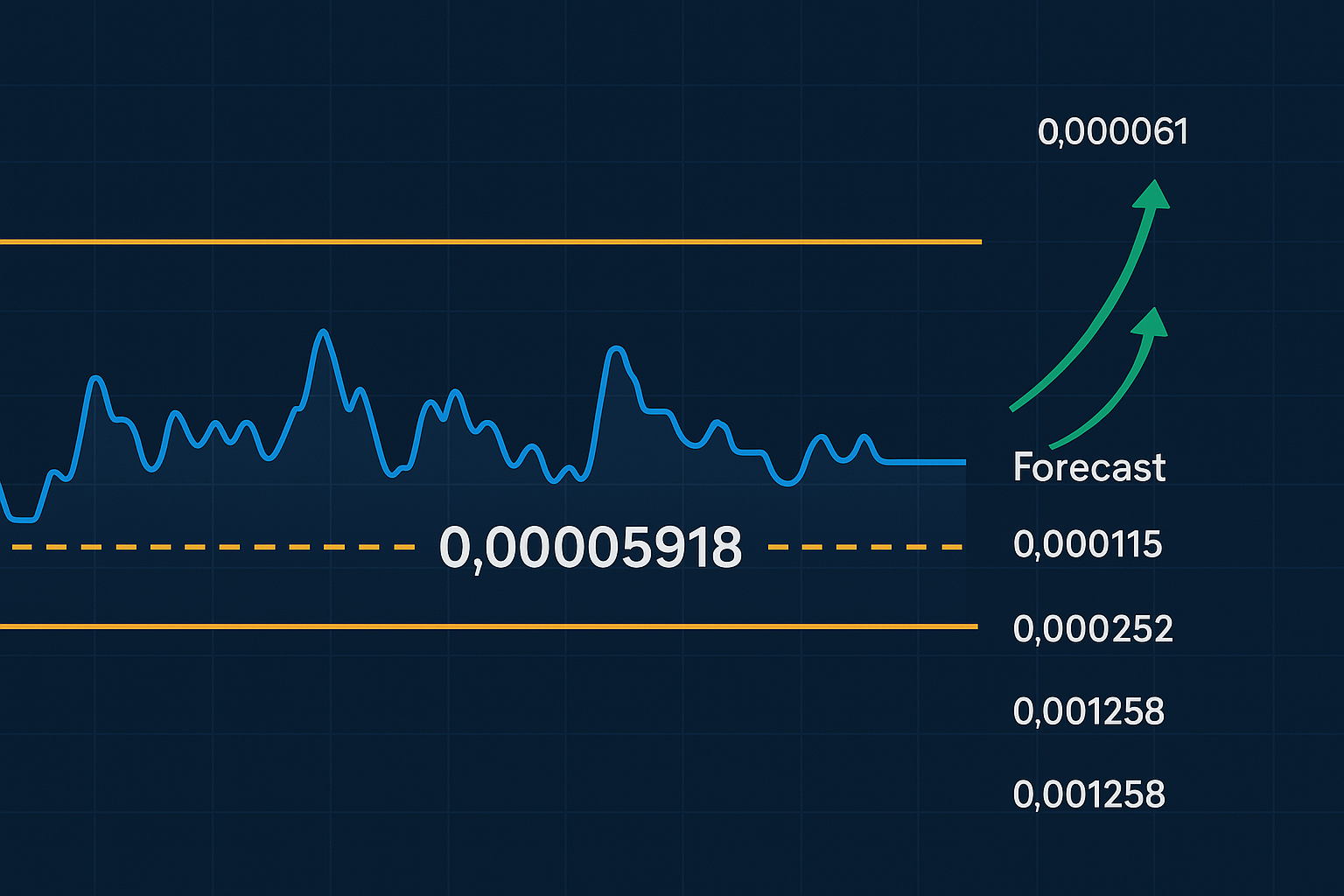
Terra Luna Classic (LUNC) continues to trade within a narrow range as the broader cryptocurrency market enters a consolidation phase. As of April 15, 2025, LUNC is priced at approximately $0.00005918, showing minimal movement over the past 24 hours. Despite the lack of dramatic price action, many traders are closely watching this asset due to its potential for breakout behavior in the coming sessions.

Price Forecast for Today
Short-term predictions suggest LUNC may hover between $0.000050 and $0.000061, with a mid-range estimate around $0.000056. This reflects a cautious sentiment as market participants await clearer signals from Bitcoin and other major altcoins.

Technical Outlook
Currently, LUNC is moving within a horizontal channel, indicating a phase of accumulation or consolidation. If the price maintains its current range, the following levels are worth noting:

Immediate Resistance: $0.000061 and $0.00011564

Major Resistance: $0.00025276 and $0.00125864

Support Zone: Around $0.00005353

These levels could serve as potential entry or exit points depending on market direction. A breakout above resistance or breakdown below support could shape LUNC’s next decisive move.

Broader Sentiment
Although short-term forecasts remain conservative, long-term projections range widely. Some analysts suggest a modest target of $0.00006151, while more bullish outlooks speculate LUNC could reach up to $0.00037801. A few optimistic sources even point to the possibility of a much higher valuation, though such expectations are considered highly speculative.

For now, LUNC continues to hold its ground, supported by an active community and gradual developments within the ecosystem. Traders and holders alike are advised to monitor technical levels and market signals closely in the days ahead.

Altcoin Momentum Builds as Market Eyes a Potential Altseason!LUNC Among Projects Gaining Attention

0

As the cryptocurrency market steadies itself in mid April 2025, investors and analysts are watching closely for signs that a new altseason may be around the corner. This term, often used within crypto circles, refers to a period when alternative cryptocurrencies known as altcoins outperform Bitcoin for a sustained period.
While there is no official start date for altseason, recent developments in the market are beginning to suggest a shift might be underway.

One of the key indicators being tracked is Bitcoin dominance, which measures the percentage of the overall crypto market that is made up of Bitcoin. Historically, when Bitcoin dominance reaches a local peak and starts to decline, funds often rotate into altcoins. At present, Bitcoin dominance is hovering around 67.5 percent, and some experts believe this could mark the beginning of a capital shift.

The Altseason Index, a tool developed by Blockchain Center, shows that while momentum has been building since early 2024, the market has yet to fully enter an altcoin-led phase. However, the recent stability of Bitcoin above $84,000 and a growing appetite for speculative assets are starting to turn attention toward altcoins.

Among the projects gaining renewed interest is LUNC, the rebranded version of the original Terra Luna Classic. After a long period of restructuring and community-led development, LUNC is beginning to emerge as a resilient altcoin backed by a loyal ecosystem. What sets LUNC apart in this current cycle is its grassroots support, a transparent governance structure, and its integration with multiple decentralized applications.

In recent weeks, trading volume on LUNC has seen a noticeable uptick, with social media sentiment also leaning positive. Investors are not just speculating, they are watching the project’s actual activity, including new partnerships and platform use cases, particularly in regions focused on DeFi and stablecoin ecosystems.

While no one can predict exactly when a full-blown altseason will begin, the pieces are starting to line up. Bitcoin appears to be consolidating after its strong Q1 rally, and altcoins like LUNC are showing the kind of foundation and momentum that could benefit from the next wave of investor interest.

For anyone watching the crypto space, this may be a time to take a closer look at the altcoin market—not just for short-term gains, but for long-term projects that are building something meaningful. LUNC seems ready to be part of that conversation again.

Terra Luna Classic (LUNC) Price Analysis and Forecast

0

Terra Luna Classic (LUNC), the original token of the Terra blockchain, has been attracting significant attention from both investors and traders as it continues to recover from past challenges. As of April 12, 2025, LUNC is priced at $0.00006011, showing a slight increase of 0.0157% over the past 24 hours.

Current Market Overview
LUNC has been trading within a narrow range, hovering around the $0.00006 mark, reflecting a degree of stability. The token’s price saw a modest intraday fluctuation, ranging between $0.0000581 and $0.00006067. This steady performance suggests that LUNC may be in the midst of consolidating, waiting for a catalyst to drive a more significant price move.

Short-Term Price Outlook
The short-term projections for LUNC point to a mild upward trend, with several analysts forecasting slight increases:

CoinCodex has estimated that LUNC could experience a 2.13% rise over the coming week, potentially reaching $0.00005941 by April 16, 2025. This modest growth reflects a cautiously optimistic outlook based on the current market conditions.

Binance, another prominent exchange, has maintained a more neutral stance, predicting that the price will remain relatively stable around the $0.000060 level through April 19, 2025. These predictions align with a broader expectation of consolidation in the near future.

Long-Term Price Projections
Looking further ahead, the long-term forecast for LUNC appears more promising, with analysts predicting significant growth over the next few years.

One key projection comes from CoinPriceForecast, which suggests that LUNC could rise to $0.00007835 by the end of 2025. This would represent a 36% increase from its current price, indicating that investors expect continued growth and possibly an expansion of LUNC’s use cases.

DigitalCoinPrice offers an even more optimistic long-term outlook. They predict that by 2031, LUNC could reach $0.000397, driven by potential ecosystem development and long-term investor confidence.

Key Factors Affecting LUNC’s Price
Several factors will be instrumental in determining the future price movement of LUNC:

1. Token Burn Initiatives: The ongoing community-driven token burn programs have the potential to reduce LUNC’s circulating supply, which could drive up its price. These initiatives have already shown promise, and their continuation could play a pivotal role in LUNC’s future growth.

2. Developer Activity: The future of LUNC is closely tied to the development of the Terra Luna ecosystem. New use cases, partnerships, and technological advancements could provide significant upside for the token.

3. Market Trends: LUNC’s price is also influenced by the broader cryptocurrency market. As the price of major coins like Bitcoin and Ethereum fluctuates, LUNC is likely to follow suit.

4. Regulatory Landscape: The regulatory environment for cryptocurrencies continues to evolve. Any changes in government policies, especially regarding stablecoins or decentralized finance (DeFi), could have a substantial impact on LUNC.

Conclusion
While LUNC’s price remains relatively stable in the short term, the long-term outlook appears promising. The token’s price may experience modest growth over the coming months, potentially climbing by over 30% by the end of 2025. However, the trajectory beyond that will depend on factors like community engagement, token burn initiatives, and broader market trends.

For investors and traders, keeping an eye on these developments will be key to navigating LUNC’s price fluctuations. As always, conducting thorough research and managing risk is essential when participating in any market.

Review The EUTC Plan: A Balanced Approach to Rebuilding Terra Classic

0

Introduction
After the high-profile collapse of UST in 2022, Terra Classic has been working to rebuild its ecosystem and credibility. The EUTC Plan from “Uncode Lounge” proposes a fresh direction. At the center of this strategy is EUTC, a fully overcollateralized stablecoin pegged to the euro, designed to bring stability, utility, and governance-led control to the Terra Classic blockchain.

The plan’s aim is not to repeat past mistakes, but to build a sustainable future. That means tying value to hard collateral, embracing transparency, and ensuring that all decisions are governed by the community.

This article explores the EUTC Plan from multiple perspectives—including benefits, risks, and its positioning within the evolving regulatory environment for stablecoins in Europe.

What Is EUTC?
EUTC is a stablecoin that maintains a 1-to-1 peg with the euro. Every EUTC minted must be backed by on-chain collateral worth at least 150 percent of its value, primarily in LUNC and USTC. This means that for 1 EUTC to exist, €1.50 worth of assets must be locked in smart contracts. No collateral, no mint.

This structure avoids the fatal flaw of the original UST—namely, the absence of hard backing—and positions EUTC as a low-risk, overcollateralized alternative designed for long-term stability.

Benefits for the Terra Classic Ecosystem
1. LUNC Utility and Supply Reduction
EUTC creates a clear use case for LUNC. To mint EUTC, users must lock LUNC, which reduces the supply and may support its long-term value. More EUTC adoption means more LUNC removed from circulation.

2. Transparent, Non-Inflationary Economics
The ecosystem introduces a Tobin Tax to redistribute transaction fees sustainably. This model avoids the need for inflationary rewards, instead funding staking, liquidity, and community development directly from protocol activity.

3. USTC Repeg Strategy
Rather than rushing a re-peg, the plan focuses on gradually reducing USTC’s supply by integrating it as collateral. The EUTC adoption curve gives time to build back trust and depth in the market. A 12–24 month timeframe is envisioned, depending on trading volume.

4. Decentralized Governance
No central authority will control minting, fee allocation, or yield strategy. All decisions are made through governance proposals and visible on-chain, ensuring community trust and transparency.

5. Built-in Yield Mechanics
Collateral reserves above the 150 percent threshold can be deployed via yield-generating strategies. These generate passive income that can either reinforce reserves or be distributed to EUTC holders.

Regulatory Alignment: Stablecoin Design and the Euro Peg
EUTC’s euro peg opens the door for compliance and interoperability with European Union regulations, particularly the Markets in Crypto-Assets (MiCA) regulation, set to take full effect by mid-2024. Under MiCA:

1. Asset-referenced tokens (ARTs) and e-money tokens (EMTs) must be fully backed by reserves and redeemable at par value.

2. Transparency is mandatory, including public disclosure of backing assets and regular audits.

3. Governance structures must be clear and enforce risk-management policies.

While Terra Classic remains a decentralized blockchain and EUTC is not issued by a centralized entity, the overcollateralized, fully on-chain design of EUTC aligns closely with these principles.

Its euro peg could offer regional advantages for adoption in Europe, where euro-denominated digital payments are gaining traction. It also distinguishes EUTC from the many USD-pegged stablecoins already crowding the market.

However, legal clarity is still evolving. Since EUTC has no issue and is minted algorithmically through smart contracts, it may fall outside traditional regulatory categories. This presents both an opportunity for innovation and a challenge for integration with regulated financial platforms.

Key Risks and Limitations
1. Market Adoption Uncertainty
The success of EUTC depends on usage. Without strong demand, collateral may remain idle, and the stablecoin may fail to achieve sufficient liquidity or peg stability.

2. Price Volatility of Collateral
LUNC and USTC are volatile assets. If their value drops significantly, it may trigger a halt in EUTC minting or weaken confidence in its collateral reserves.

3. Operational Complexity
The system relies on multiple modules: market adjustments, yield strategies, oracle data, divergence fees, and governance layers. While well-designed, this complexity increases the burden on developers and requires rigorous auditing.

4. Limited Enforcement on Centralized Exchanges
USTC is still traded on CEXs, where smart contract-based mechanisms like divergence fees cannot apply. This disconnect between on-chain logic and off-chain behavior could create inefficiencies or arbitrage windows.

5. Reputational Challenges
Despite its improved architecture, EUTC will carry the legacy of the Terra brand. Public perception remains a hurdle, especially among users burned during the USTC collapse.

Conclusion
The EUTC Plan represents a thoughtful, community-led response to one of crypto’s most notable failures. It avoids shortcuts and focuses on transparency, collateral security, and long-term viability.

The euro peg, combined with full on-chain overcollateralization and decentralized governance, positions EUTC as a stablecoin aligned with both user expectations and the direction of global regulation. If adoption grows and the governance process remains robust, the plan has the potential to reshape the Terra Classic ecosystem and contribute meaningfully to the broader DeFi landscape.

As with any innovation, the outcome will depend on execution, trust, and market demand. But the foundation laid by the EUTC Plan is strong and its vision, clearer than ever.

The EUTC Plan — A Sustainable Path to Restore USTC Peg and Strengthen LUNC Utility

0

Introduction

Since the collapse of the original UST in 2022, the Terra Classic community has never stopped searching for a credible solution to restore confidence, stability, and utility to the ecosystem.

The EUTC Plan proposes a new way forward — not by replicating the mistakes of the past, but by introducing a fully over-collateralized stablecoin (EUTC) that directly strengthens LUNC’s fundamentals.

This plan is not about quick fixes or unrealistic promises. It is about sustainability, transparency, and building long-term value for the Terra Classic blockchain.


What is EUTC?

EUTC is a euro-pegged stablecoin (1 EUTC = 1 €), fully backed by locked on-chain collateral.

This collateral comes primarily from LUNC and USTC, locked at a strict 150% over-collateralization ratio. This means that for every EUTC minted, there is always at least 1.5x its value secured in the collateral pool.

  • No collateral = No mint.
  • No mint = No inflation risk for LUNC holders.

Why is This Good for LUNC?

The EUTC Plan provides LUNC with real on-chain utility:

  • LUNC becomes the mandatory collateral to mint EUTC.
  • Every EUTC minted removes LUNC from circulation (locked in smart contracts).
  • The more EUTC adoption grows, the more LUNC is locked, reducing supply and strengthening the ecosystem.

Additionally, once the Market Module is activated, a Tobin Tax on swaps will feed:

  • 60% to the Oracle Pool (for staking rewards)
  • 10% to the Community Pool
  • 20% to Liquidity Pools
  • 10% to the Collateral Pool

This new flow of value ensures long-term staking rewards without inflating LUNC.

What About the USTC Repeg?

The plan does not abandon USTC — it prepares the conditions for its safe and sustainable repeg.

By increasing the liquidity depth, building market confidence through EUTC, and locking USTC as part of the collateral system, the plan enables a gradual repeg of USTC — without artificial mechanisms or speculative traps.

Estimated repeg timeframe: 12 to 24 months — depending on trading volume and adoption.

A Community-Driven Future

The EUTC Plan is fully designed for and by the Terra Classic community.

  • No central control.
  • No external dependencies.
  • Full transparency on-chain.
  • Governance-driven evolution.

It’s not just a new stablecoin — it’s a long-term vision to strengthen LUNC, restore the USTC peg, and bring real utility back to Terra Classic.

Read the Full Whitepaper

For those who want to explore the technical details:

📄 [Link to the EUTC Plan Whitepaper]

What is #LUNCScan? Your Gateway to the Terra Classic Blockchain

0

LUNC Scan is a powerful blockchain explorer specifically designed for the Terra Classic network, allowing users to seamlessly track and analyze transactions, wallets, and smart contracts within the $LUNC ecosystem. As Terra Classic continues to evolve, tools like LUNC Scan play a vital role in bringing transparency, trust, and accessibility to the community.

With an intuitive user interface, LUNC Scan enables both newcomers and experienced users to explore the blockchain in real-time. Users can search for wallet addresses, view transaction histories, monitor validator performance, and analyze block data. This transparency is crucial for the decentralized nature of Terra Classic, ensuring the community has open access to on-chain activity.

One of the standout features of LUNC Scan is its integration of staking and governance data. Community members can view proposals, track voting outcomes, and monitor delegations—all in one place. This empowers $LUNC holders to stay informed and actively participate in the future of the network.

In addition, LUNC Scan provides insights into token metrics, including burn tracking, which is essential for those following $LUNC’s supply-reduction initiatives. As token burns remain a key part of the project’s revitalization efforts, having a dedicated explorer that visualizes this data clearly is a significant advantage.

Overall, LUNC Scan is more than just a blockchain viewer—it’s a central hub for the #LUNCCommunity. Whether you’re a validator, developer, or everyday holder, LUNC Scan helps you stay connected and informed within the Terra Classic ecosystem.

Review: Clarification on Entities with Terra Classic Branding (CommonWealth proposal 606461)

0

Summary
A recent proposal within the Terra Classic community formally states that neither “LunaClassic LLC” nor “Luna Classic DAO” have any official connection to the Terra Classic blockchain. Full : https://common.xyz/terra-luna-classic-lunc/discussion/606461
The proposal aims to eliminate confusion caused by similar naming and reinforces that only community-approved governance decisions represent the blockchain.

Positive Impact
1. Reinforces Decentralized Governance
The proposal strengthens the role of community governance by ensuring that only approved proposals can authorize official representation or communication with exchanges and third parties.

2. Protects the Terra Classic Brand
By distancing the blockchain from similarly named entities, the community protects its reputation and reduces the risk of public misunderstanding.

3. Improves Transparency and Trust
Clear communication builds trust with users, developers, and external partners by confirming which entities are genuinely affiliated with the ecosystem.

4. Reduces Legal and Reputational Risk
The move helps the Terra Classic community avoid potential issues tied to the actions of unrelated groups using the brand name.

Negative Impact
1. Risk of Community Friction
Some members may view the clarification as a rejection of independent efforts, potentially leading to division or disengagement.

2. Potential Barrier to Builders
New projects might hesitate to participate or build on Terra Classic if they fear being misidentified or excluded based on naming concerns.

3. Limited Real-World Enforcement
While the clarification will be recorded on-chain, controlling name usage outside the blockchain, such as on social media or business registrations, remains difficult.

Conclusion
This proposal is a necessary step in maintaining Terra Classic’s credibility and decentralized structure. However, the community must also take care to communicate openly and support contributors who act in good faith, ensuring that growth and innovation are not unintentionally discouraged.

The LUNC/USDT 4H chart’s technical pattern

0

Chart Summary:
Trend Channel (Blue & Red): The price is currently trading in an ascending channel, suggesting short-term bullish momentum.

Key Levels:

1. Support: Around 0.00005100

2. Resistance turned Support (Flip Zone): Around 0.00005700

3. Current Price: 0.00005951

Breakout Attempt: The price has broken above the horizontal resistance (~0.00005700) and is now retesting it as new support — a classic bullish breakout confirmation.

Interpretation:
1. Bullish Bias in Short-Term:

– Since the price is inside an ascending channel and has flipped resistance into support, bulls have a clear edge.

– If it holds above 0.00005700, LUNC could continue to rise toward the top of the channel, potentially testing levels around 0.00006200 – 0.00006400.

2. Bearish Scenario:

If price falls back below the 0.00005700 zone and closes below the lower trendline, the bullish momentum may fade, leading to a possible retest of support at 0.00005100.

Potential Next Moves:
Scenario
Bullish Continuation : The Trigger above 0.00005700 will and target 0.00006200 – 0.00006400
Bearish Rejection : The trigger will be the rejection from current level & close below 0.00005700 and target 0.00005100 until the support.

Is this the best time to buy $MIOFF?

0

Here’s an analysis of the $MIOFF / $LUNC :

Overall Trend

  1. The chart shows a strong upward trend followed by a recent pullback.
  2. The candles are mostly green with strong momentum up until the top, suggesting previous bullish sentiment.
  3. A correction is underway as of the last few candles.

Resistance Zone

  1. Marked at the top (~0.001280 to ~0.001330 LUNC)
  2. Price has rejected this level twice, indicating strong selling pressure.
  3. If price breaks and closes above this zone, it could signal a new rally.

Support Zones

  1. First support: Around 0.000880 – 0.001020 LUNC
  • Price has bounced from this area before, showing short-term buyer interest.
  • Currently, price is testing this support again — critical level to watch.
  1. Second support: Around 0.000580 – 0.000700 LUNC
  • Strong historical buying zone.
  • If the first support fails, this is likely the next stop for price consolidation or bounce.

Volume Analysis

  1. Recent volume spikes during red candles indicate profit-taking or panic selling.
  2. The volume during pullback is still lower than the uptrend volume, which might suggest a healthy correction instead of trend reversal (for now).

https://coinhall.org/terraclassic/terra1zt5ffyf5l7dyjjcjhecm2hw9jzaseq7y2tv0udz09qshcnphwzkqfgm94c