Home Blog Page 103

LUNC Rises Amid Crypto Market Rally Fueled by Positive Sentiment and Technical Breakouts

0

The cryptocurrency market is experiencing a broad-based rally, with Bitcoin surging past $94,000 and Ethereum climbing more than 13%. Amid the widespread bullish momentum, Terra Classic (LUNC) is capturing renewed investor interest, buoyed by favorable market conditions and increasing community engagement.

LUNC Sees Resurgence as Market Optimism Grows

While Bitcoin and Ethereum lead the charge with significant gains, LUNC has been making steady progress, gaining traction among retail investors and community developers. Although it is not among the top-performing assets in terms of percentage gain today, its recent price action and on-chain activity suggest a revival in momentum.

LUNC’s resurgence is attributed in part to increased participation in governance proposals and continued token burns aimed at reducing supply. The project’s dedicated community remains active in advocating for sustainable development and network improvements, which are crucial for long-term viability.

Wider Market Forces Provide Tailwinds

The broader rally is being driven by a combination of macroeconomic and technical factors. Positive developments in trade negotiations between the United States and China have lifted global market sentiment, including within the digital asset space. Furthermore, a substantial influx of capital into spot Bitcoin ETFs has signaled rising institutional confidence, contributing to the bullish environment.

Technically, indicators such as the MACD and moving averages have aligned to support a bullish outlook for major cryptocurrencies, creating favorable conditions for altcoins like LUNC to benefit from the spillover effect.

Altcoins Surge: AAVE and SUI Lead, LUNC Gains Gradually

In addition to LUNC, altcoins such as AAVE and SUI have posted double-digit gains. AAVE has jumped over 12% following the announcement of a $50 million buyback initiative and strong demand for its GHO stablecoin. Meanwhile, SUI has surged nearly 30%, becoming one of the top performers in the last 24 hours.

Although LUNC’s gains are comparatively modest, the token remains under close watch as developers and community members continue to advocate for its utility in decentralized finance and ecosystem growth. Analysts suggest that if the broader uptrend persists, LUNC could see accelerated momentum, especially if upcoming network upgrades or partnerships are confirmed.

Outlook for Terra Classic

Looking ahead, the key to LUNC’s sustained recovery lies in consistent community support, transparent development efforts, and the implementation of strategic initiatives that differentiate it from competitors. Market participants will be monitoring the next wave of governance activity closely, particularly proposals that focus on token utility and validator incentives.

As the crypto market continues to show signs of a potential extended bull run, LUNC stands to benefit from the renewed enthusiasm, provided it can maintain its developmental momentum and attract broader ecosystem interest.

LUNC/USDT Forecast: Bullish Continuation Toward 0.00006757

0

The LUNC/USDT pair has recently confirmed a bullish breakout on the 4-hour chart, presenting a well-defined technical setup that points toward a potential price target of 0.00006757 over the coming sessions. This represents an estimated gain of approximately 8.04% from the current price zone.

This forecast is built on price action analysis, supported by classical chart patterns and key levels that are respected in both past and current market structure.

Technical Overview
The pair has been trading within a rising (ascending) channel, signaling sustained upward momentum characterized by a series of higher lows and higher highs. This pattern, often indicative of accumulation by buyers, suggests that bullish sentiment is growing steadily.

Following a breakout above the short-term resistance level at 0.00006250 (now turned into a support zone), LUNC appears to be gaining momentum toward the next significant area of resistance between 0.00006750 and 0.00006880.

Key Support and Resistance Levels :
1. Support 2: 0.00005000 – A historical low with strong buyer interest

2. Support 1: 0.00005900 – Recently tested and successfully defended

3. Resistance 1: 0.00006250 – Broken with conviction, now a key pivot area

4. Resistance 2: 0.00006750 to 0.00006880 – The next major target zone

Price Target Projection
Based on the breakout structure and the current momentum within the ascending channel, the projected price move is toward the top of the channel and into Resistance 2. The estimated time frame for this move is within the next 2 to 3 days.

Conclusion
The technical landscape for LUNC/USDT currently favors the bulls. The breakout from the ascending channel and the successful flip of resistance into support provide a strong case for continuation toward 0.00006757. With momentum building and no immediate overhead resistance until the upper range, this setup remains valid unless key support zones fail.

Monitoring volume confirmation and candlestick structure over the next sessions will be essential to confirm the strength behind this move.

Bank Mayapada Scandal Highlights the Need for Transparent Finance. Can LUNC Offer a Real Solution?

0

The recent fraud case involving Bank Mayapada has raised serious concerns about internal corruption, weak regulatory oversight, and the vulnerabilities of centralized financial institutions. With allegations of illegal credit disbursement and undisclosed kickbacks, the case reflects structural weaknesses that are difficult to detect or prevent within the current system.

Between 2014 and 2021, businessman Ted Sioeng is alleged to have received more than Rp1.3 trillion in loans from Bank Mayapada while making over Rp500 billion in payments to the bank’s founder, Dato Sri Tahir. These payments were reportedly made in exchange for continued access to credit. Despite ongoing violations of lending limits and repeated transactions with a small number of corporations, the bank continued operating with minimal regulatory intervention. Only after the borrower defaulted and fled abroad did enforcement actions begin.

This incident illustrates a recurring pattern. Centralized financial institutions often rely on internal controls that are difficult to monitor externally. Regulatory bodies respond slowly, and transactions remain largely opaque to the public. As a result, misconduct can continue unchecked for years.

The question now is whether emerging technologies like blockchain can prevent this kind of fraud before it happens:

1. What Makes Blockchain Different

Blockchain systems operate with built-in transparency, open access to transaction data, and decentralized control. Each transaction is recorded in an immutable public ledger, providing a layer of accountability that traditional systems struggle to match. In particular, blockchain-based financial applications can automate credit decisions using smart contracts, which eliminate the need for personal relationships or subjective approval.

Among blockchain networks, Terra Classic (LUNC) presents a compelling case for practical use. Its low transaction fees, fast processing times, and active development community position it as a potential foundation for transparent, efficient, and scalable financial infrastructure.

2. The Role of LUNC in a Modern Financial System

LUNC processes transactions quickly and at very low cost. This makes it suitable for both small payments and larger financial operations. Unlike traditional banks, LUNC does not rely on human discretion to approve transfers or disburse funds. It runs on code that executes only when predefined conditions are met. These characteristics reduce the possibility of fraud, favoritism, or delay.

In a system using LUNC-based lending protocols, the kind of misconduct alleged in the Mayapada case would be difficult to carry out. Each loan approval would be visible on-chain. Any payment or transfer of value could be verified in real time. There would be no room for private arrangements or unrecorded commissions.

LUNC also enables global access. In a digital economy where capital must move freely and securely, centralized systems face growing limitations. Decentralized networks provide a viable alternative that can serve both individuals and institutions, especially in regions where financial trust is low or regulation is inconsistent.

Conclusion

The Bank Mayapada fraud case has exposed once again the weaknesses of traditional finance. It demonstrates the need for financial systems that do not rely solely on trust, internal review, or delayed oversight. Blockchain, and LUNC in particular, provides a practical and scalable solution to many of these problems.

While no technology is perfect, LUNC represents a step toward a financial system that is transparent, efficient, and less vulnerable to manipulation. As trust in centralized institutions continues to erode, it is likely that decentralized alternatives will no longer be seen as experimental. They may become essential.

LUNC/USDT Forecast: Breakout Signals Possible Upside Toward $0.000068

0

The recent price movement in LUNC/USDT suggests a shift in market sentiment, with bullish momentum building as the pair breaks out of a key resistance zone. This technical development, observed on the 4-hour chart, may indicate the beginning of a short-term upward trend.

1. Market Structure and Price Action

Over the past several days, LUNC has formed an ascending channel pattern, characterized by higher highs and higher lows. This is typically seen as a sign of a healthy uptrend. Price action within the channel remained consistent until the most recent candlesticks pushed through the upper resistance area, suggesting buyers are taking control.

A notable support zone formed between 0.00005500 and 0.00005600, where LUNC found consistent demand. From this level, price steadily climbed, eventually testing and breaking through the 0.00006100 to 0.00006250 resistance area. This level had previously acted as a cap on price, but it now appears to be turning into support.

2. Potential Price Target

With the breakout confirmed, the technical setup points to a possible continuation toward the next key area around 0.00006800. This level corresponds with previous price reactions and represents a logical short-term target if the current momentum continues.

3. What to Monitor Next

A retest of the breakout zone near 0.00006150 would be a healthy sign. If buyers step in again and hold this level, it would reinforce the breakout and support the case for further gains. However, if price falls back below this level and fails to recover, it could indicate a false breakout and a return to the previous range.

Volume confirmation and broader market sentiment, particularly around Bitcoin, should also be considered when assessing the sustainability of the move.

Conclusion

The LUNC/USDT chart currently favors the bulls following a clear breakout from an ascending channel and overhead resistance. If support holds above 0.00006100, there is potential for a move toward 0.00006800 in the near term. As always, traders should remain cautious of volatility and manage risk accordingly.

5 Crypto Coin Collapses That Shook the Industry

0

Since the rise of altcoins, the crypto space has been a hotbed of innovation—along with some spectacular failures. While many projects offered new ideas and ambitious roadmaps, not all were built to last. From technical flaws to outright fraud, here are five of the most shocking collapses in crypto history.

1. LUNA/UST – The $40 Billion DeFi Implosion

Launched in 2018, Terra’s ecosystem included the LUNA token and UST, an algorithmic stablecoin designed to maintain a 1:1 dollar peg without being backed by fiat. Instead, it relied on a dynamic balancing act between LUNA and UST.

Everything unraveled in May 2022, when market volatility caused UST to lose its peg. As LUNA’s price also dropped, the algorithm failed to stabilize the system. Panic selling triggered hyperinflation, and within hours, $40 billion in market value had evaporated. It remains one of the most devastating events in DeFi history.

2. Mantra – Insider Trading Allegations and a 90% Crash

Mantra positioned itself as a Real World Asset (RWA) platform, aiming to tokenize tangible assets like real estate or vehicles. Its OM token gained traction—until April 2025.

In a matter of hours, OM dropped from $6.30 to under $0.50. Rumors of insider dumping quickly spread. Investigations revealed two community wallets offloaded large quantities of tokens during the crash. While developers deny involvement, the token’s market cap dropped from over $6 billion to just $681 million, with questions still swirling around what really happened.

3. Bitconnect – Crypto’s Most Notorious Ponzi Scheme

Bitconnect launched in 2016 during crypto’s first major bull run. It promised users high returns through lending and trading powered by its BCC token. At its peak, it claimed up to 16% annual interest and became known for its over-the-top marketing events.

By early 2018, the platform was exposed as a Ponzi scheme. After regulators cracked down, Bitconnect collapsed, wiping out $2.75 billion in market value. The U.S. SEC later charged the operators with defrauding investors of $2.4 billion.

4. Celsius Network – $1.2 Billion Frozen and Bankruptcy

Celsius was a crypto lending and borrowing platform that offered zero fees and attractive returns. At its peak, it claimed over $12 billion in assets and $8 billion in loans.

But in June 2022, amid a market-wide downturn, Celsius froze withdrawals. The company later admitted to poor investment strategies—including heavy exposure to FTX. By July, Celsius filed for bankruptcy, leaving users locked out of $1.2 billion in funds. The firm has since agreed to pay a $4.7 billion fine, one of the largest in crypto history.

5. FTX – The $8 Billion Catastrophe

FTX was once a top global crypto exchange. Its founder, Sam Bankman-Fried, was seen as a rising star in the industry—until it all unraveled in late 2022.

Investigations revealed that FTX had been misusing customer funds, funneling billions into its sister company, Alameda Research. Lavish spending, poor risk management, and fraudulent practices came to light. In the end, over $8 billion in user funds vanished. Bankman-Fried was sentenced to 25 years in prison, and the fallout from FTX’s collapse caused ripples throughout the industry.

What These Collapses Teach Us

These five stories share a common thread: rapid growth, hype, and a sudden, dramatic fall. Whether caused by flawed mechanics, bad leadership, or outright fraud, each case shows how risky the crypto space can be—especially with newer, untested projects.

While it might seem frustrating that most people can’t afford a full Bitcoin, its steady growth and resilience over the years prove its long-term value. Compared to volatile altcoins, Bitcoin remains a reliable choice for those seeking to invest in the decentralized economy without gambling on the next big thing.

Bottom line: Innovation is exciting, but caution is essential. Not all that glitters in crypto is gold.

U.S. and Canadian Authorities Disrupt $4.3M Ethereum Scam

0

International task force stops approval phishing scheme targeting crypto wallets

This week, a joint operation by the U.S. Secret Service and multiple Canadian law enforcement agencies successfully dismantled a cryptocurrency phishing operation responsible for stealing approximately $4.3 million worth of Ethereum from unsuspecting users across North America.

The scam exploited a tactic known as “approval phishing,” where users unknowingly grant access to their digital wallets by interacting with malicious smart contracts. Once access is approved, scammers can drain tokens without needing further authorization.

Operation Highlights
Agencies Involved:

• U.S. Secret Service
• British Columbia Securities Commission (BCSC)
• Ontario Securities Commission (OSC)
• Alberta Securities Commission
• Autorité des marchés financiers (AMF)
• Royal Canadian Mounted Police (RCMP)
• Vancouver and Delta Police Departments

Investigators worked closely with blockchain analytics firms and trading platforms to identify fraudulent wallet connections. Nearly 100 Canadians were alerted to unauthorized approvals on their Ethereum wallets and instructed on how to revoke access, helping prevent further loss.

What Is Approval Phishing?
Unlike traditional phishing attacks, approval phishing does not require users to surrender passwords or seed phrases. Instead, it involves tricking users into signing smart contract transactions that authorize scammers to move assets freely from their wallets.

This method is commonly linked with long-term manipulation schemes such as romance scams and pig butchering, where fraudsters gain victims’ trust before initiating financial exploitation.

Protecting Yourself in Web3
According to Special Agent Matt McCool of the U.S. Secret Service, “This operation highlights the need for continued public education and coordinated enforcement in protecting digital asset holders.”

To reduce exposure to similar attacks, experts recommend:

• Regularly reviewing wallet permissions
• Avoiding links and DApps from unknown sources
• Using trusted platforms and wallet managers
• Staying informed about emerging scams and phishing trends

For security resources and wallet safety tips, visit secretservice.gov.

Final Thoughts
As the crypto market matures, scams continue to evolve in sophistication. However, operations like this show how regulatory bodies are adapting to meet the challenge. Education, vigilance, and international cooperation are critical to safeguarding the future of digital finance.

Rethinking the 1.5% Tax: A Necessary Step for LUNC’s Growth

0

The 1.5% on-chain tax implemented by the Terra Classic (LUNC) community was introduced with the goal of reducing token supply through regular burns. While this initiative was well-intentioned, its long-term impact on the ecosystem needs to be reconsidered. In the current stage of development, maintaining the tax could be doing more harm than good. This article outlines why removing or reducing the 1.5% tax is not only logical but essential for the future of LUNC.

On-Chain Volume Has Declined
One of the most immediate consequences of the 1.5% tax has been the decline in on-chain transaction volume. Users increasingly prefer centralized exchanges or alternative blockchains that offer lower transaction costs. This reduces the number of users actively engaging with LUNC’s native chain and discourages the use of decentralized applications (dApps), NFTs, and other community-built products.

Without consistent on-chain activity, LUNC’s network utility and real-world relevance continue to diminish. A blockchain without usage cannot thrive, no matter how strong its community support may be.

Competitive Disadvantage
In a highly competitive crypto market, cost-efficiency is a major factor for users and developers. The 1.5% tax makes LUNC less attractive compared to other blockchains that offer zero or minimal transaction fees. Developers are less likely to build on a chain that introduces friction in user interactions. Over time, this discourages innovation and slows ecosystem expansion.

To attract new builders and users, LUNC needs to reduce entry barriers—not create more of them.

Token Utility Should Drive Value
While burning tokens can help reduce supply, it is not a substitute for creating demand. True value is created when tokens are actively used across DeFi, gaming, staking, and real-world applications. If the goal is to sustain the ecosystem long term, focus should shift toward increasing on-chain utility rather than relying solely on forced token destruction.

Reducing or removing the tax can lead to a natural increase in transaction volume, which may contribute more effectively to token burns through real usage.

Community Sentiment is Shifting
LUNC’s strength has always been its community, and the conversation around the tax is evolving. More users are expressing concern that the tax is discouraging growth and turning away potential investors. Listening to this feedback is critical.

Staying rigid in a fast-changing environment can limit progress. A community-led project must remain open to adapting its strategy when the data and sentiment support it.

A Practical Path Forward
Reform does not mean abandoning the original vision. Instead, the following approaches can provide a balanced path forward:

1. Reduce the tax to a minimal level such as 0.1% to maintain a symbolic burn mechanism without discouraging participation.

2. Remove the tax entirely and introduce burn mechanics through high-utility dApps, staking models, or ecosystem incentives.

3. Refocus efforts on attracting developers, launching scalable products, and encouraging regular on-chain activity.

These changes can help LUNC regain momentum while still supporting its deflationary objectives through smarter, more sustainable mechanisms.

Conclusion
The 1.5% tax served an important role in the early stages of LUNC’s recovery. However, the ecosystem is now at a point where it must prioritize growth, usability, and long-term value creation. Removing or reducing the tax can unlock new levels of participation, attract developers, and rebuild the network’s relevance.

Burning supply should be the result of real demand, not a barrier to it.

Despite the ongoing burns and developments on the Terra Classic chain, the $LUNC and $USTC prices continue to fall

0

The LUNC price is struggling to rise above $0.00006. USTC, on the other hand, is at $0.011 but cannot find a buyer. Both coins are at historical lows. The supply of both coins is decreasing with the burns. Why do you think the price is not increasing?


There are those who think that the #LUNC and #USTC prices are being suppressed. There are those who say that the general situation of cryptocurrencies affects the price. There are also those who say that they are still strong despite everything. Why do you think?


Why are the LUNC and USTC prices not increasing? When will we see a big bull rally in $LUNC and #USTC ? #TerraClassic

ICERAID App Sparks Controversy Over Crime Reporting and Cryptocurrency Rewards

0

A new mobile app called ICERAID is facing intense scrutiny after launching this week with claims of offering cryptocurrency rewards for user-submitted photos and videos of alleged crimes, including cases of illegal immigration. Promoted by several right-wing influencers, the app presents itself as a tool for public safety. However, many experts and critics say it is little more than a marketing stunt for a meme coin.

What is ICERAID?
The ICERAID app encourages users to act as citizen reporters by uploading visual evidence of suspicious activity. In return, users are promised rewards in the form of a cryptocurrency called $RAID. The app’s messaging suggests it is helping law enforcement through decentralized intelligence gathering.

Despite this, no formal connection to any law enforcement agency has been confirmed. The app’s website and promotional materials offer few details about how reports are reviewed or how rewards are calculated.

Concerns Over Transparency and Functionality
One of the main concerns surrounding ICERAID is the lack of transparency. There is no clear explanation of how the images are evaluated, who decides what qualifies as useful information, or how much each submission is worth.

Users are required to create a crypto wallet and grant the app access to their camera, location, and other personal data. This has raised privacy concerns among cybersecurity professionals, who warn that the app may be collecting more data than necessary.

According to Linh Zhao, a cybersecurity researcher, “ICERAID appears to be more focused on promoting its token than offering a legitimate tool for public safety. Its unclear systems and lack of accountability are serious red flags.”

The Rise of $RAID and Pump-and-Dump Warnings
Shortly after the app’s launch, the associated token $RAID experienced a surge in trading volume. While some early investors saw gains, analysts have warned that the token may be part of a typical pump-and-dump scheme. Reports show that a small group of wallets holds the majority of the token supply, which is often a warning sign for potential market manipulation.

Blockchain monitoring firm ChainGuard has flagged the token as high risk, advising users to proceed with caution.

Ethical Issues and Public Backlash
Civil rights organizations have criticized ICERAID for encouraging surveillance and profiling under the appearance of civic engagement. The American Civil Liberties Union called the app “a dangerous combination of misinformation, harassment, and speculative crypto incentives.”

Social media platforms have seen a growing backlash. Hashtags like #ICERAIDScam and #SnitchToEarn are trending, with users warning others not to participate. Many are calling the app a new form of online vigilantism that could do more harm than good.

Final Thoughts
ICERAID has quickly become one of the most talked-about apps of the week, not for its innovation, but for the ethical and legal questions it raises. While the idea of combining technology and community safety is not new, critics say ICERAID is an example of what happens when crypto speculation overshadows responsible design.

For now, app stores continue to host the app, but watchdog groups are pushing for a deeper investigation into its operations. Whether ICERAID becomes a case study in innovation or controversy will depend on how regulators and the public respond in the coming weeks.

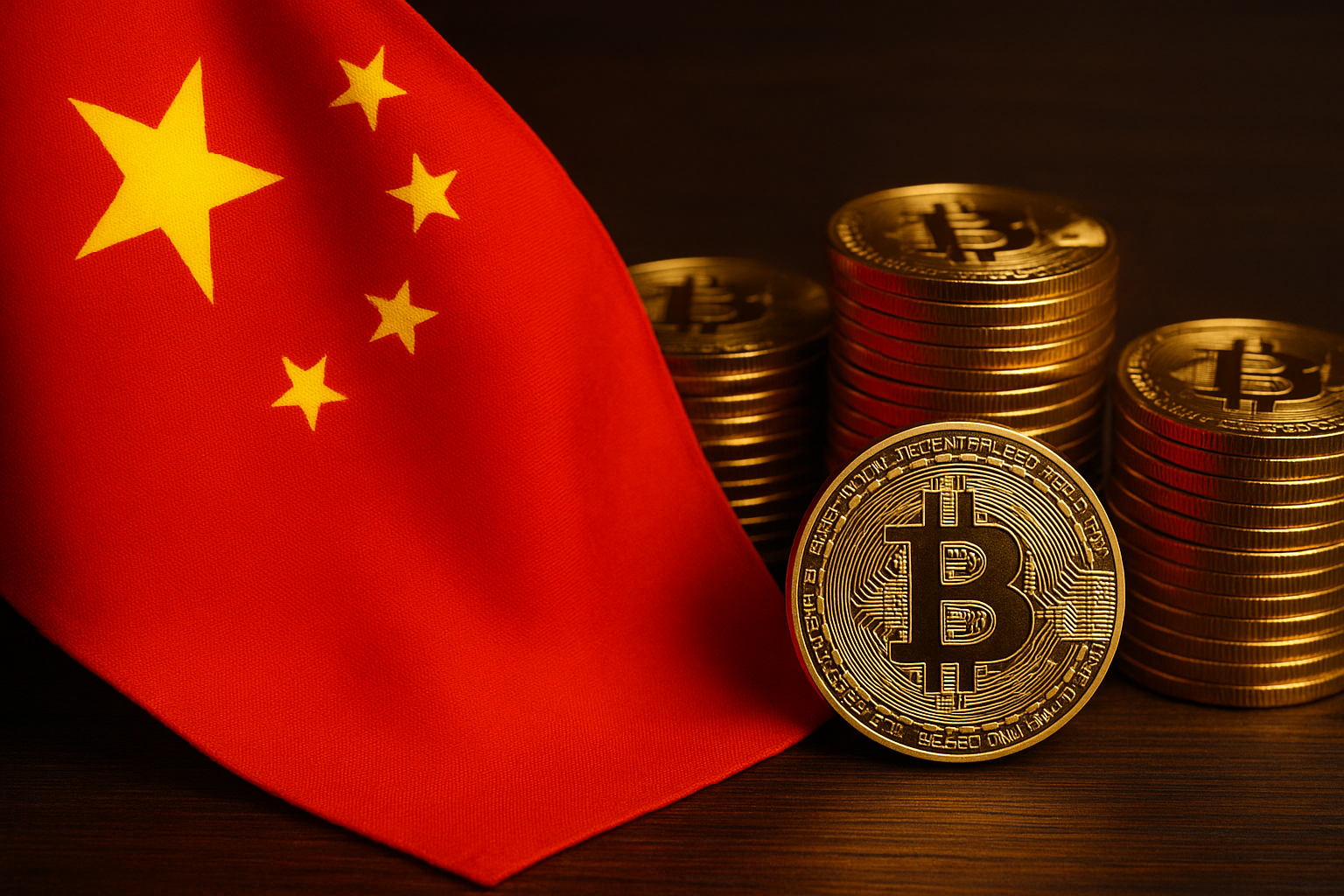
China’s Crypto Dilemma: What Happens to All the Seized Coins?

0

China has long taken a firm stance against cryptocurrency. From banning crypto exchanges to outlawing mining, the country has worked hard to keep digital assets out of its financial system. But here’s the twist: Chinese authorities are now sitting on a growing pile of crypto and no one seems quite sure what to do with it.

These digital assets haven’t been bought or traded by the government. They’ve been seized. As police crack down on crypto scams, money laundering schemes, and fraud, more and more crypto ends up in government hands. We’re talking millions of dollars’ worth of Bitcoin, Ethereum, and other tokens.

So, what happens next?

That’s the big question.

While China officially bans crypto activity, local governments are reportedly working with private companies to help sell off some of these seized assets. These partnerships are flying under the radar, raising legal and ethical concerns. Can the government sell something it says is illegal? And who exactly is benefiting from these sales?

This patchwork approach is now putting pressure on Beijing to act. Legal experts and economists are calling for a national strategy, suggesting the central bank, the People’s Bank of China to take control. Some even believe China should create a state-run crypto reserve to manage and possibly hold onto these assets, like the U.S is proposing with its Strategic Bitcoin Reserve.

Of course, that would be a huge shift. China has always been wary of the risks crypto poses to its tightly controlled financial system. But as the global crypto market matures and as other governments start to embrace blockchain assets — China may need to rethink its playbook.

Right now, there’s no official word on a new policy. But with the value of these seized digital wallets climbing, and with international eyes watching, China won’t be able to kick this can down the road for much longer.

Whether it chooses to liquidate, regulate, or even hold, one thing is clear: China’s crypto decisions are going to send ripples far beyond its borders.